Artwork
青楼美人合|The Courtesan Itsuhata with Her Pipe
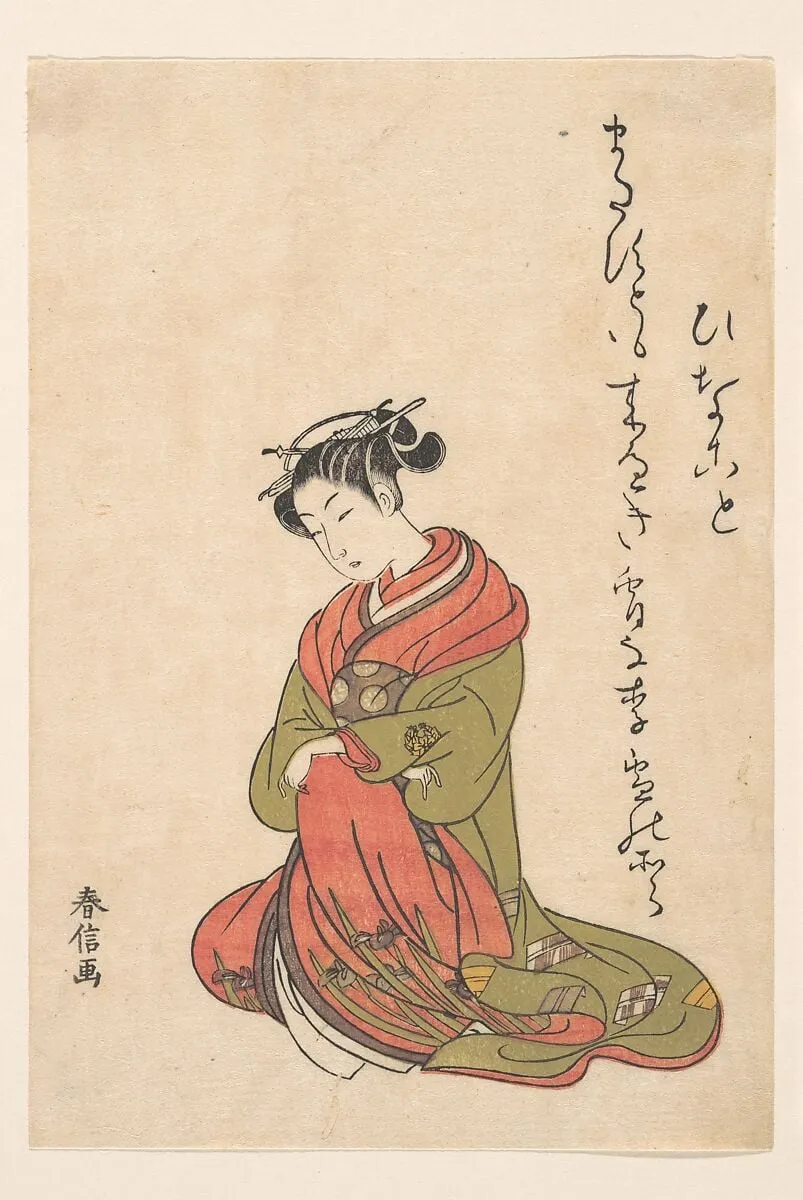
青楼美人合|The Courtesan Itsuhata with Her Pipe is an ink print by the Romanticist artist Suzuki Harunobu. It dates from 1765 and is held in the collection of the Metropolitan Museum of Art.
About this work
Overview
The Metropolitan Museum of Art holds this example, one of many prints that helped popularize full-color printing in Japan during the 1760s.
Created around 1765 by Suzuki Harunobu, this woodblock print belongs to a series depicting courtesans of the Yoshiwara pleasure district. Rendered in yonkyokuban format, it combines ink and color on paper, reflecting the refined aesthetic of mid-Edo period ukiyo-e. The Metropolitan Museum of Art holds this example, one of many prints that helped popularize full-color printing in Japan during the 1760s.
Subject & Meaning
The figure is Itsuhata, a courtesan identified by her name and status, shown in a moment of quiet repose. Holding a pipe and a fan, she embodies the cultivated leisure associated with high-ranking courtesans. The plain background isolates her form, emphasizing her composure and the subtle rituals of her daily life. The inclusion of Japanese text identifies her and situates the image within a literary or poetic context common in such prints.
Technique & Style
Harunobu employed delicate lines and restrained color palettes, using red, green, and subtle gradients to define the robe and accessories. The print’s clarity and balance reflect his mastery of nishiki-e, or full-color woodblock printing. The absence of elaborate scenery directs focus to the figure’s posture and attire, while the fine detailing in her hairpiece and fan reveals a sensitivity to texture and form.
History & Provenance
This print was produced during a period when Harunobu revolutionized ukiyo-e by introducing multi-block color printing to a broader audience. It likely circulated among urban elites and collectors in Edo. The Metropolitan Museum of Art acquired it as part of its broader collection of Japanese prints, preserving it as an example of early full-color woodblock artistry from the 1760s.
Context
In mid-18th century Edo, courtesan portraits were popular subjects in ukiyo-e, reflecting the cultural fascination with the Yoshiwara district’s social world. Harunobu’s prints distinguished themselves by emphasizing quiet dignity over overt spectacle. This work aligns with a shift toward more intimate, psychologically nuanced depictions of women, moving away from earlier, more theatrical portrayals.
Legacy
Harunobu’s innovations in color printing influenced generations of ukiyo-e artists. This print exemplifies his contribution to elevating genre scenes into refined visual poetry. Though produced for mass consumption, its compositional restraint and attention to detail helped define the aesthetic standards of later Edo-period printmaking, leaving a lasting imprint on Japanese visual culture.
Artist & collection

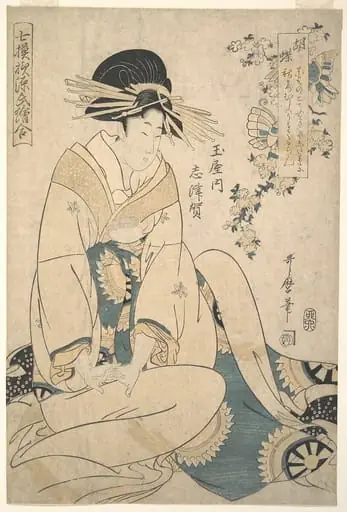 玉屋内 志津賀|A Courtesan
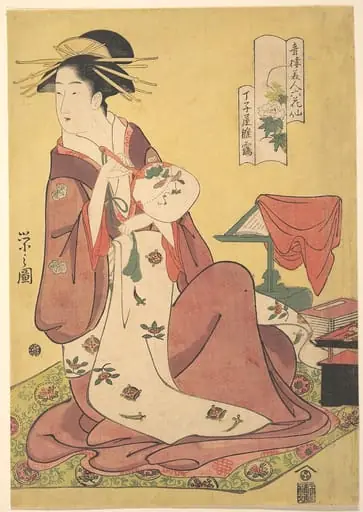 鳥文斎栄之画 「青楼美人六花仙 丁子屋雛鶴鸖」|The Courtesan Hinazuru of the Chōjiya Brothel (Chōjiya Hinazuru), from the series Beauties of the Pleasure Quarters as Six Floral Immortals (Seirō bijin rokkasen)
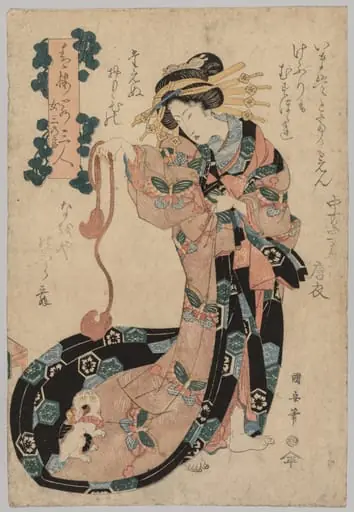 Courtesan
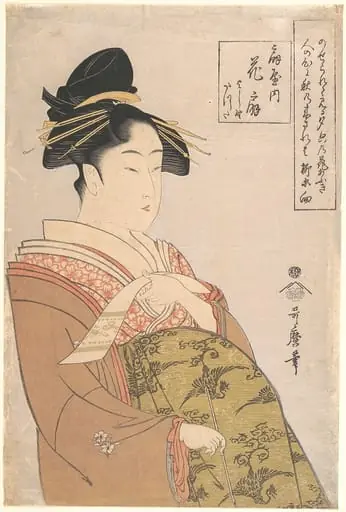 「扇屋内花扇図」|The Courtesan Hanaōgi of the Ōgiya Brothel in Yoshiwara (Ōgiya uchi Hanaōgi, Yoshino, Tatsuta)
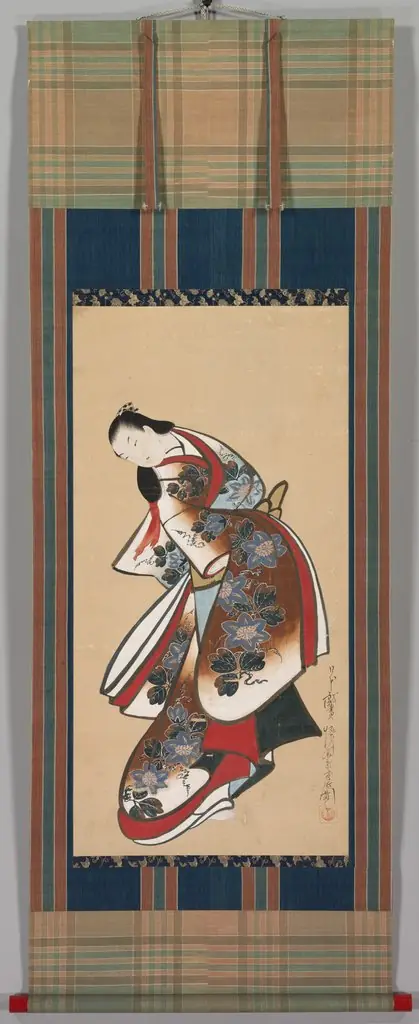 Courtesan
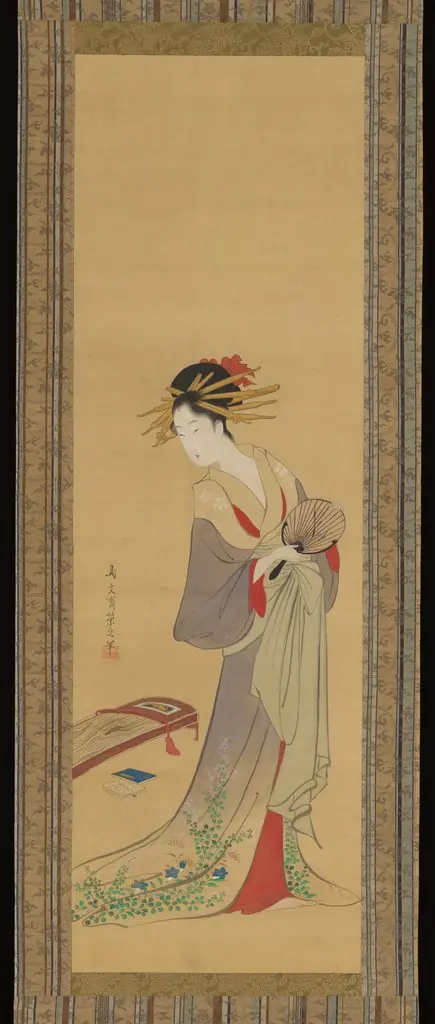 Courtesan with Fan and Koto