Artwork
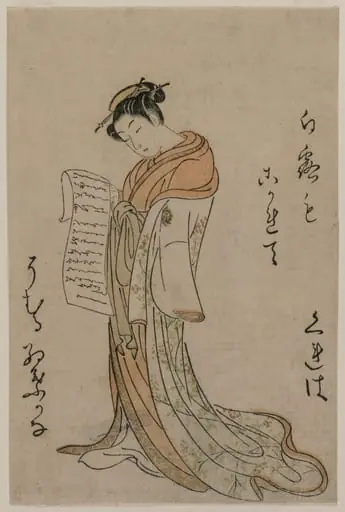
「青楼美人六花仙 扇屋花扇」|The Courtesan Hanaōgi of the Ōgiya Brothel (Ōgiya Hanaōgi), from the series Beauties of the Pleasure Quarters as Six Floral Immortals (Seirō bijin rokkasen)
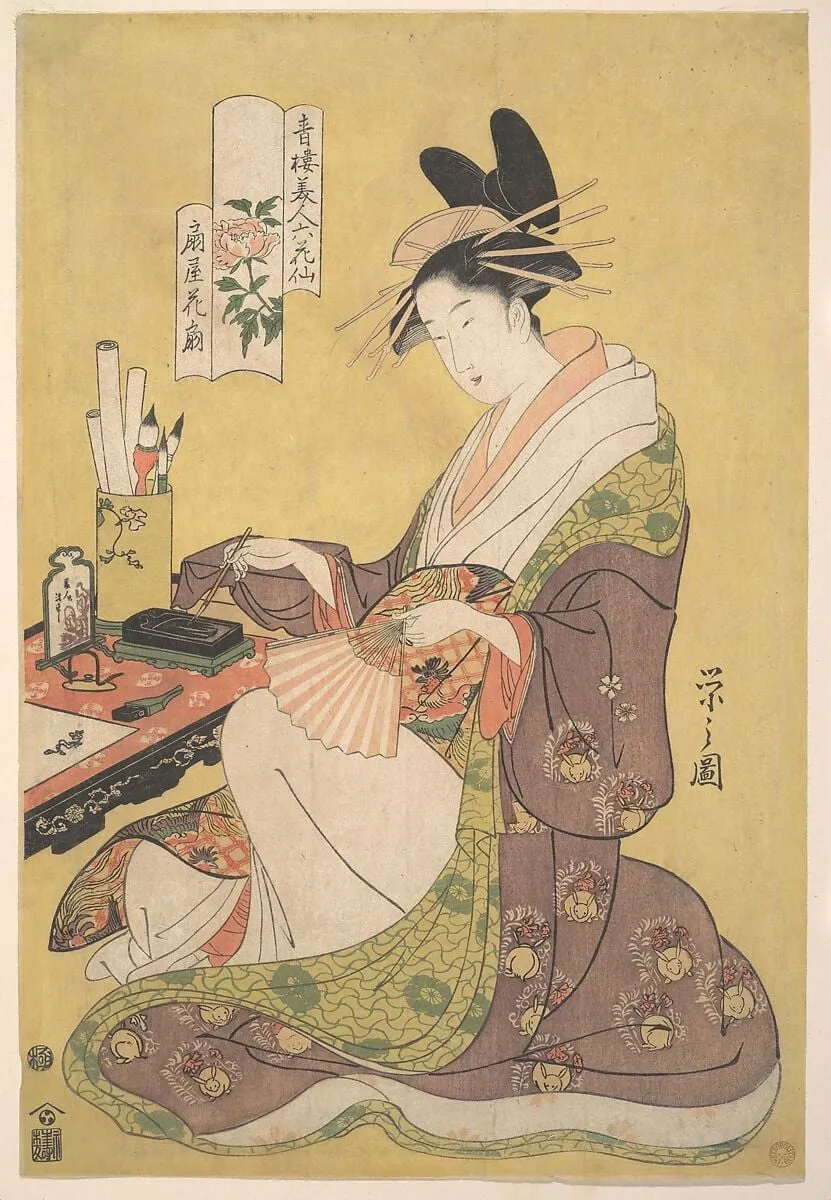
「青楼美人六花仙 扇屋花扇」|The Courtesan Hanaōgi of the Ōgiya Brothel (Ōgiya Hanaōgi), from the series Beauties of the Pleasure Quarters as Six Floral Immortals (Seirō bijin rokkasen) is an ink print by the Romanticist artist Chôbunsai Eishi. It dates from 1794 and is held in the collection of the Metropolitan Museum of Art. Chōbunsai Eishi’s multicolored woodblock print portrays a courtesan from the Ōgiya house, identified as Hanaōgi, seated at a low desk.
About this work
Overview
Chōbunsai Eishi’s multicolored woodblock print portrays a courtesan from the Ōgiya house, identified as Hanaōgi, seated at a low desk. She is shown in the act of writing, a fan held in her left hand, while her right hand hovers over the paper. The figure is dressed in a richly patterned kimono of green, pink and white, set against a muted yellow backdrop.
Subject & Meaning
The image belongs to a series that likens six celebrated pleasure‑quarter beauties to floral deities, linking their elegance to the timeless allure of blossoms. By depicting Hanaōgi engaged in a cultured activity—calligraphy—the print underscores the cultivated refinement expected of high‑ranking courtesans, suggesting both artistic talent and genteel poise.
Technique & Style
Executed as a nishiki-e, the work combines multiple woodblocks to achieve subtle colour gradations and fine line work. Eishi’s characteristic emphasis on elongated, graceful figures is evident in the courtesan’s slender posture and delicate facial features. The composition balances decorative patterning on the kimono with a restrained interior setting, typical of late‑18th‑century bijin‑ga.
History & Provenance
Created around 1794, the print formed part of Eishi’s early bijin‑ga output before his later shift toward actor portraits. It entered the collection of The Metropolitan Museum of Art, where it is catalogued as an example of Edo‑period pleasure‑quarter imagery and the artist’s transition from samurai service to professional printmaking.
Artist & collection

Artist
Chōbunsai Eishi (鳥文斎 栄之; 1756–1829) was a Japanese ukiyo-e artist. His last name was Hosoda (細田). His first name was Tokitomi (時富). His common name was Taminosuke (民之丞) and later Yasaburo (弥三郎). Pupil of Kano Eisen'in…

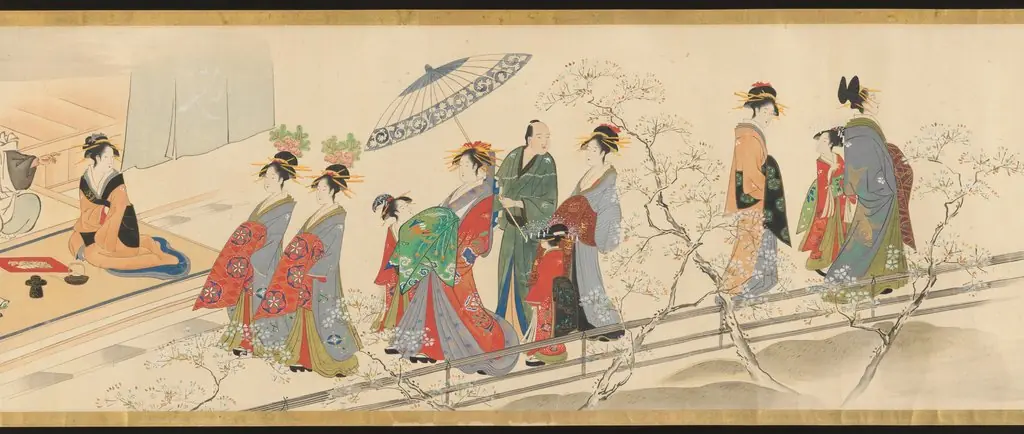 Three Gods of Good Fortune Visit the Yoshiwara; or “Scenes of Pleasure at the Height of Spring”
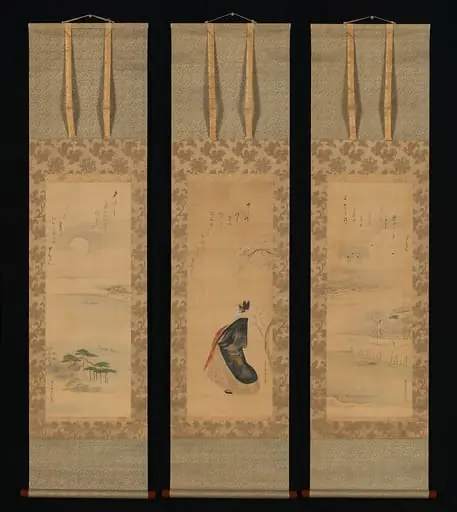 蜀山人(大田 南畝)賛 雪・月・花図 |Snow, Moon, and Cherry Blossoms (Yoshiwara in Three Seasons)
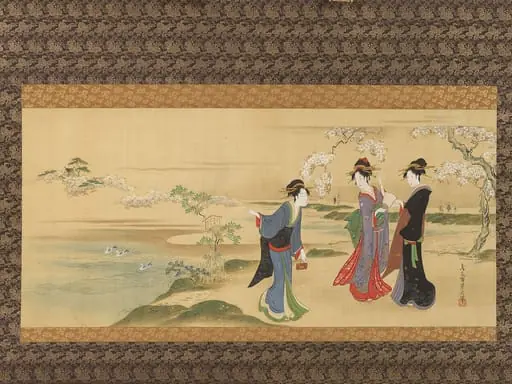 Untitled
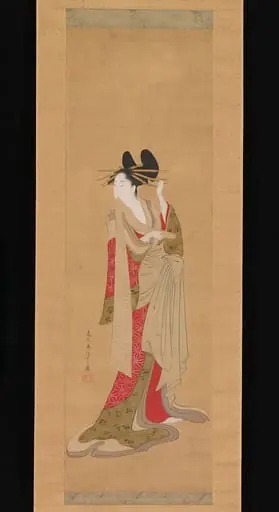 Untitled
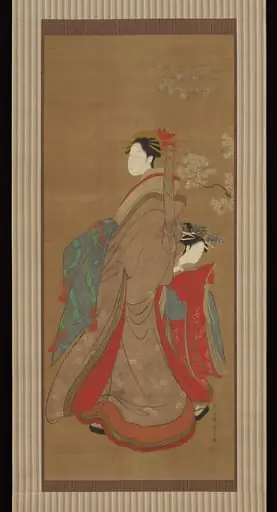 Untitled
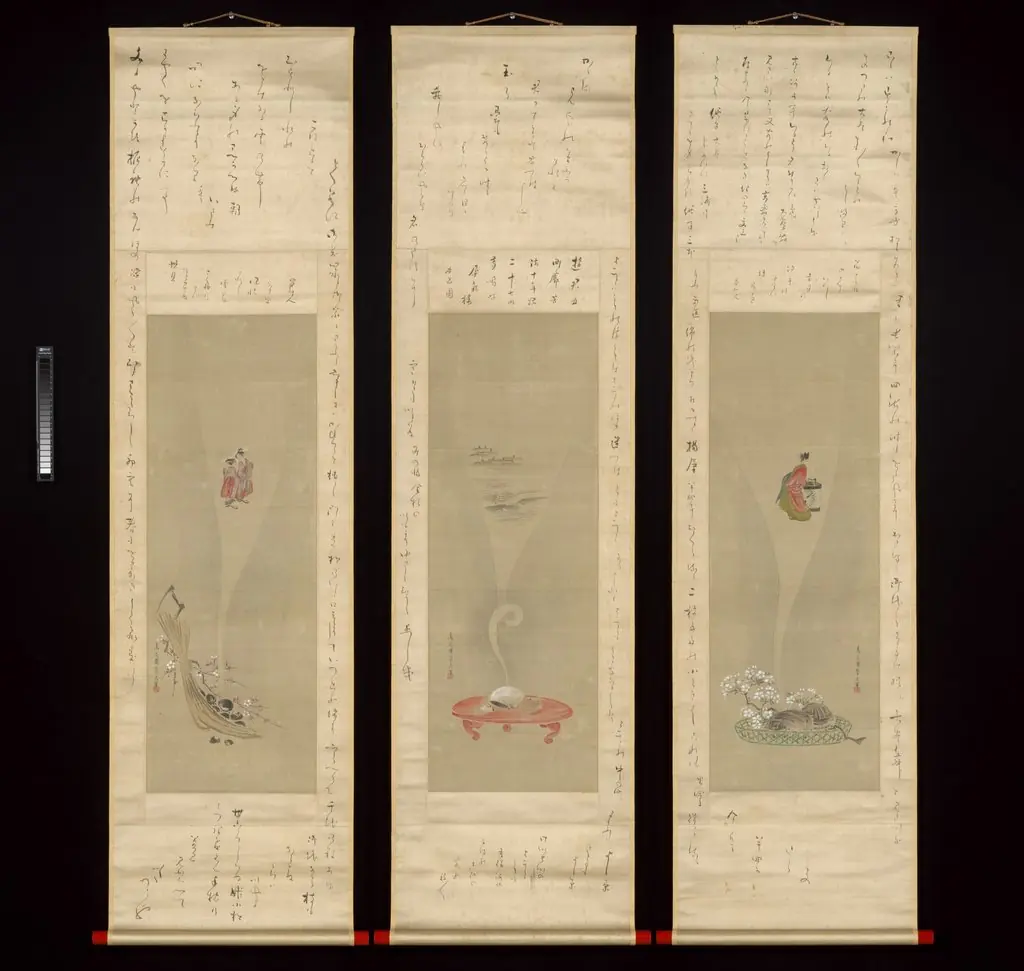 Shellfish and Apparitions of the Yoshiwara Pleasure Quarter
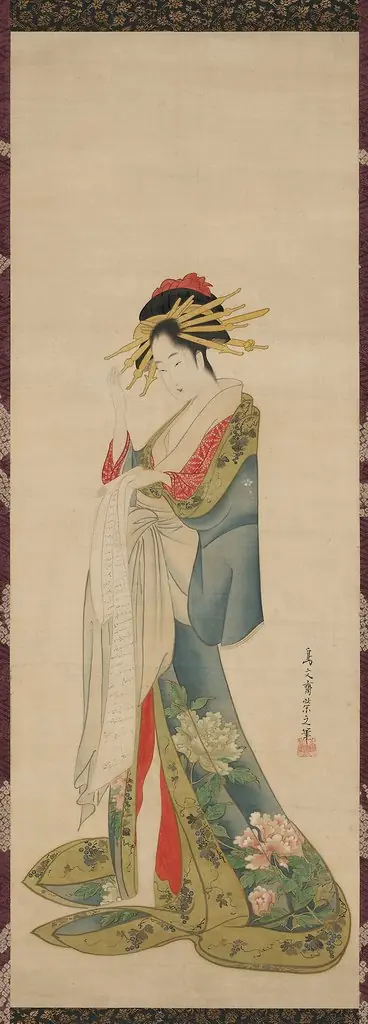 A Courtesan Reading a Letter
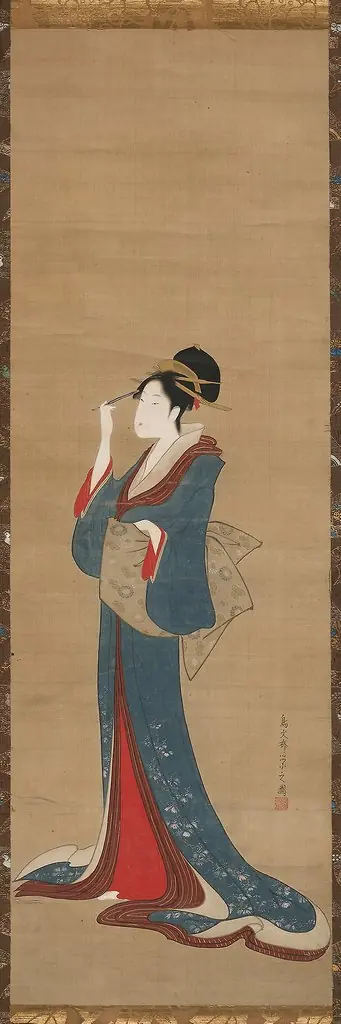 Beauty Replacing Her Hairpin
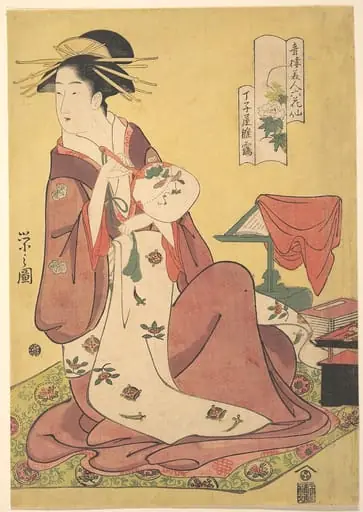 鳥文斎栄之画 「青楼美人六花仙 丁子屋雛鶴鸖」|The Courtesan Hinazuru of the Chōjiya Brothel (Chōjiya Hinazuru), from the series Beauties of the Pleasure Quarters as Six Floral Immortals (Seirō bijin rokkasen)
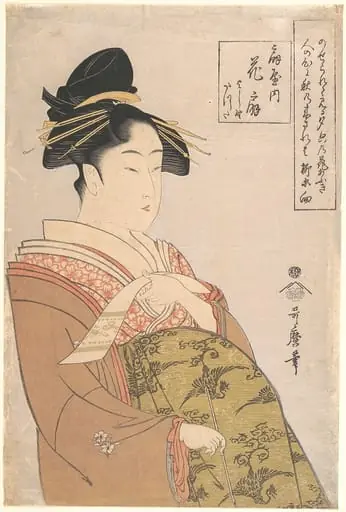 「扇屋内花扇図」|The Courtesan Hanaōgi of the Ōgiya Brothel in Yoshiwara (Ōgiya uchi Hanaōgi, Yoshino, Tatsuta)
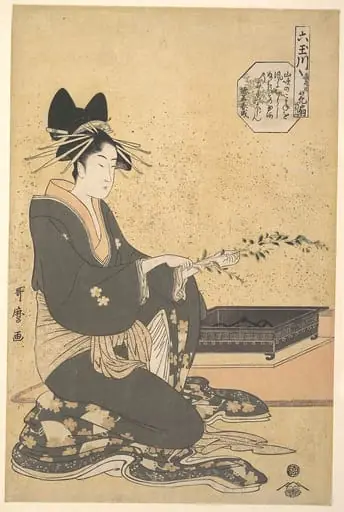 喜多川歌麿画 六玉川 扇屋内 花扇 扇屋内花扇|The Oiran Hanaogi of Ogiya, from the series “Six Jewel Rivers” (Mutamagawa)
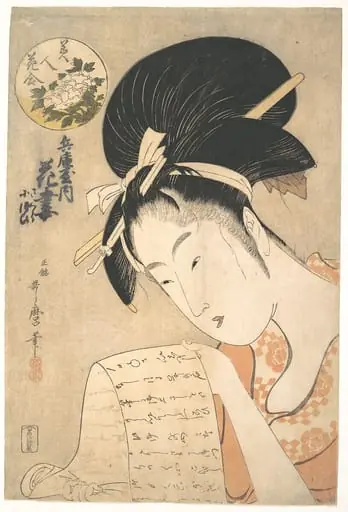 喜多川歌麿画 『美人花合』 「兵庫屋内 花妻図」|“The Courtesan Hanazuma Reading a Letter,” from the series Beauties Compared to Flowers (Bijin hana awase)
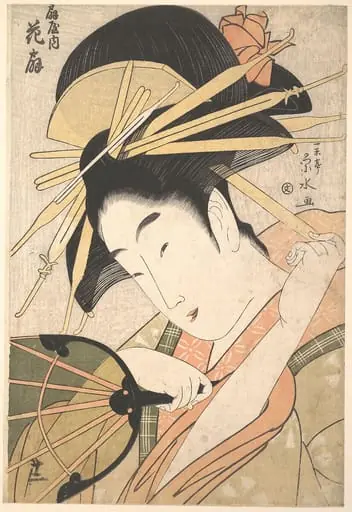 一楽亭栄水画 「扇屋内 花扇」|The Courtesan Hanaōgi of the Ōgiya Brothel (Ōgiya no uchi Hanaōgi)
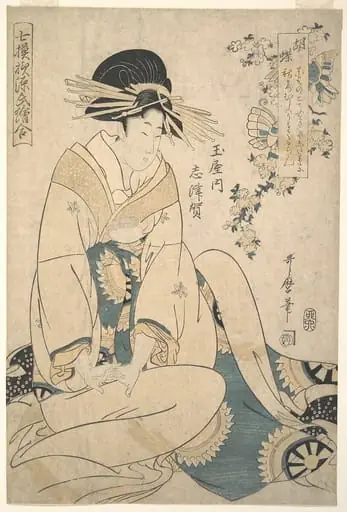 玉屋内 志津賀|A Courtesan
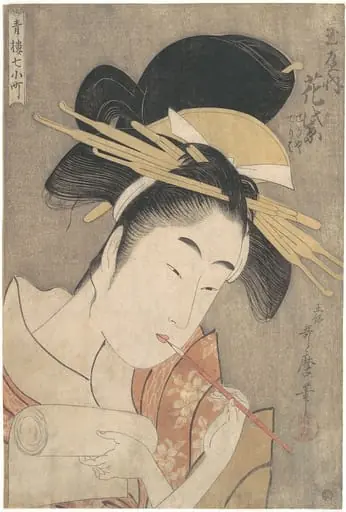 『青楼七小町』 「玉屋内花紫」|“Hanamurasaki of the Tamaya,” from the series Seven Komachi of the Pleasure Quarters (Seirō Nana Komachi)
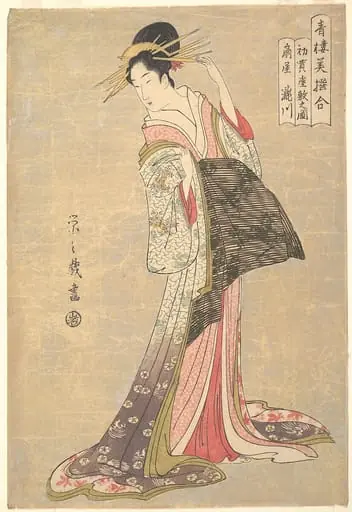 鳥文斎栄之画 「青楼美撰合 初売座敷之図 扇屋滝川」|Takigawa of the Ōgiya Brothel: The First Reception Room Appointment of the New Year (Hatsu-uri zashiki no zu: Ōgiya Takigawa), from the series A Comparison of Selected Beauties of the Pleasure Quarters (Seirō bisen awase)
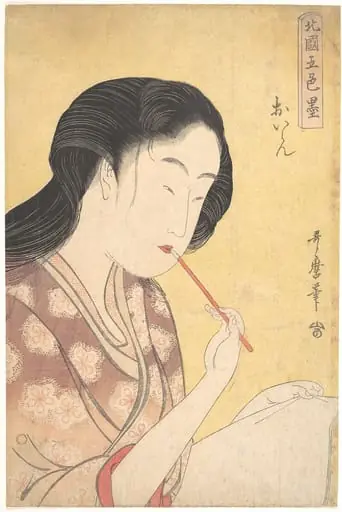 『北国五色墨』「おいらん」|“High-Ranking Courtesan” (Oiran), from the series Five Shades of Ink in the Northern Quarter (Hokkoku goshiki-zumi),
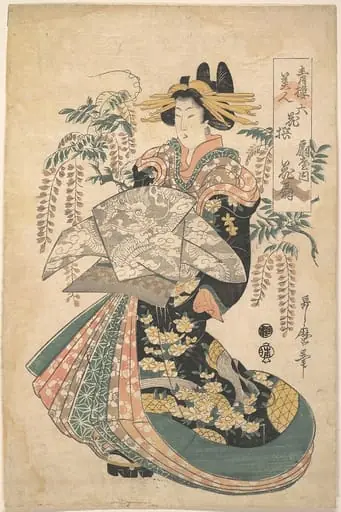 青楼美人 六花撰 扇屋内花扇|A Courtesan with Wisteria on the Background
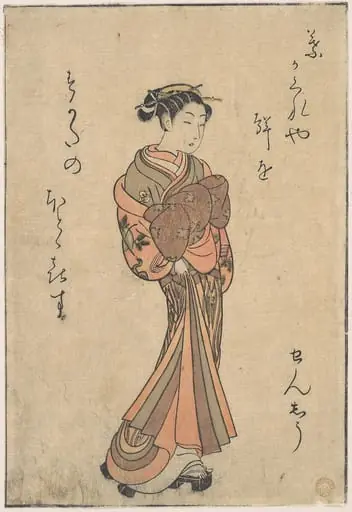 青楼美人合|The Courtesans, from the Series, "Seiro Bijin Awase Carver End Shigoro" (sic.)
 Kureha of Gakuiseya, from Selection of Beauties from the Pleasure Quarters