Artwork
The Rialto, Venice
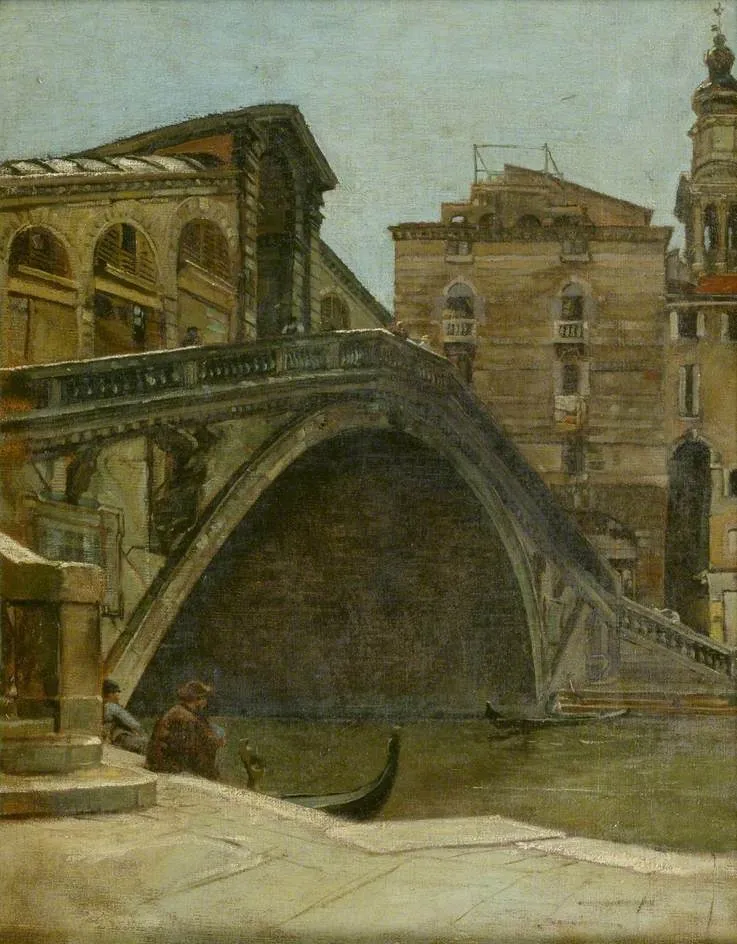
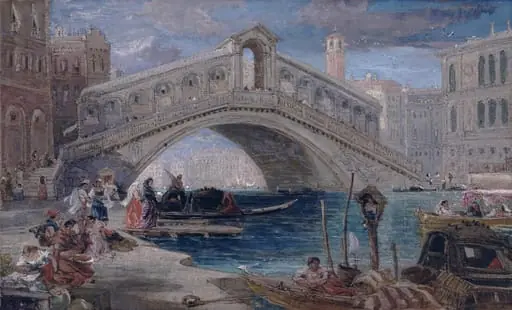
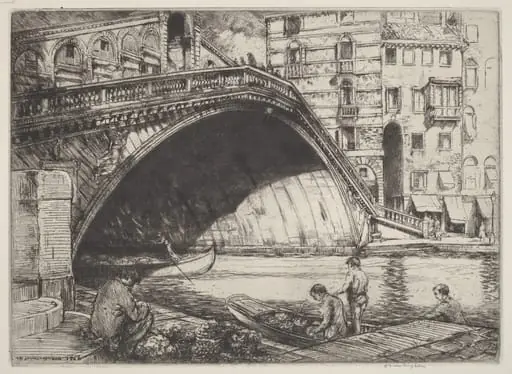
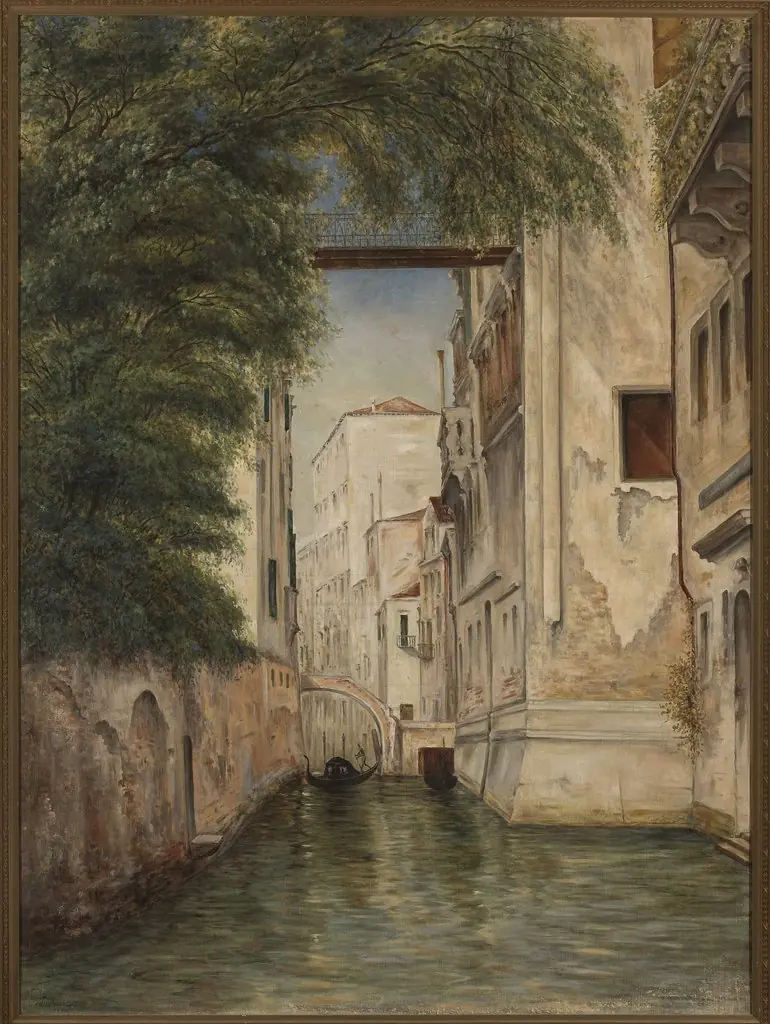
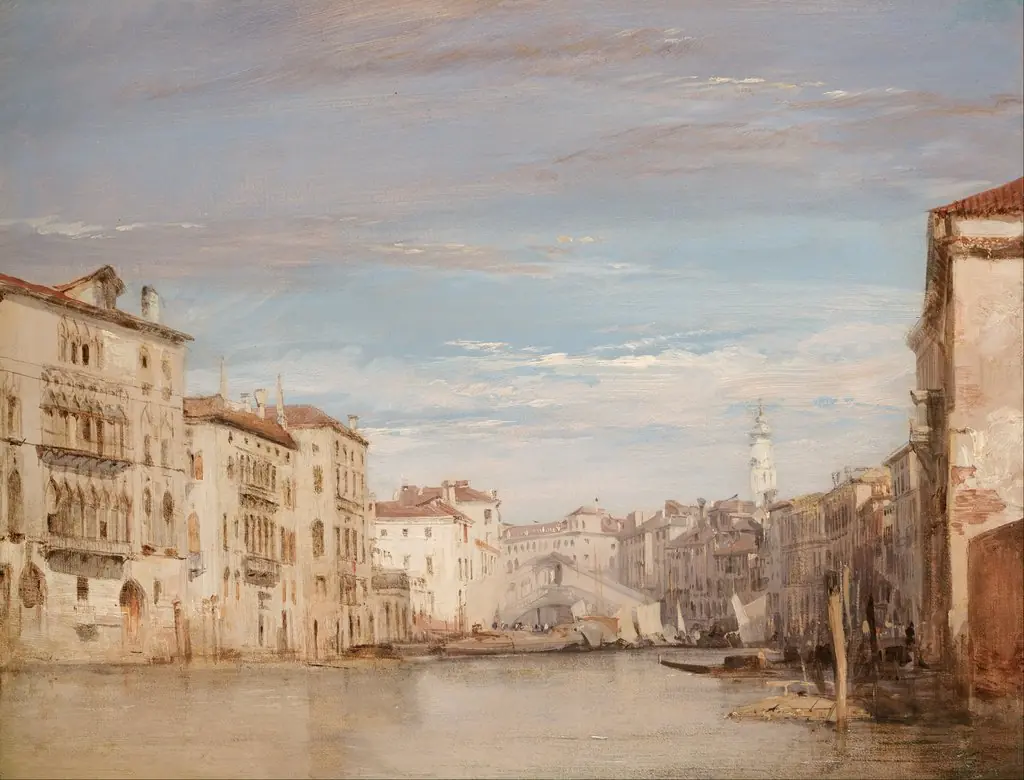
The Rialto, Venice is an oil painting by Charles Holroyd. It dates from 1899 and is held in the collection of the Ashmolean Museum.
About this work
Overview
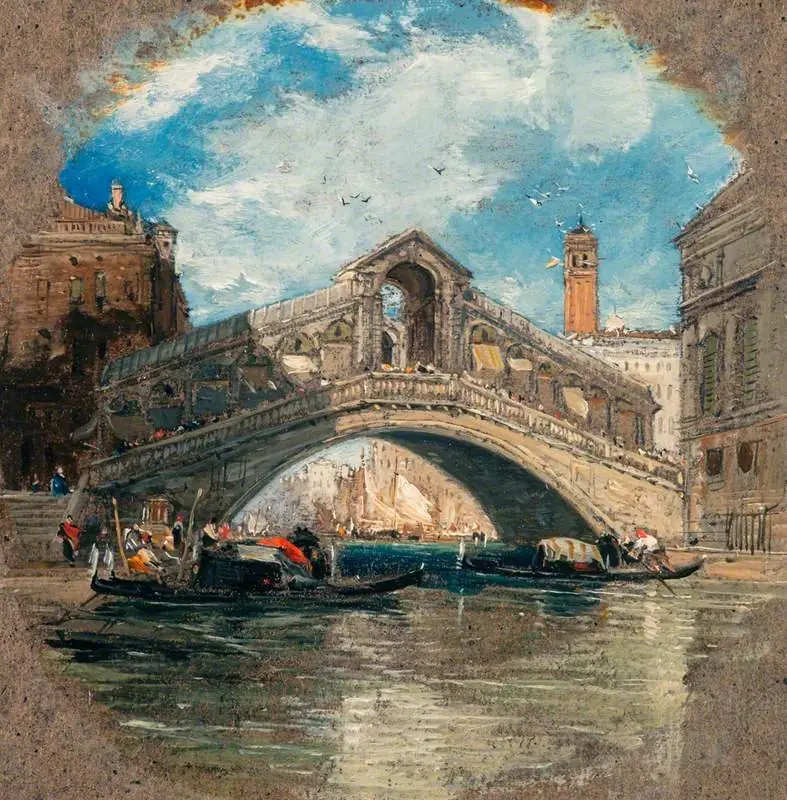
Charles Holroyd painted The Rialto, Venice around 1899 in oil on canvas. The work captures a quiet moment along the Grand Canal, focusing on the Rialto Bridge and the surrounding architecture. It is part of the Ashmolean Museum’s collection, where it remains as an example of late 19th-century British landscape painting influenced by Venetian light and form.
Subject & Meaning
The painting depicts the Rialto Bridge as a central anchor, flanked by the dense, weathered facades of Venetian buildings. No figures are present, emphasizing stillness and solitude. The absence of human activity invites contemplation of the city’s enduring structure, suggesting a meditation on time, place, and the quiet rhythm of urban life.
Technique & Style
Holroyd employed smooth, controlled brushwork to render the water’s surface and architectural details with precision. Subtle gradations of tone, rather than dramatic contrasts, model the forms and suggest atmospheric depth. The palette is restrained—soft greys, muted blues, and warm stone tones—enhancing the painting’s quiet mood without relying on vivid color or bold chiaroscuro.
History & Provenance
Created during Holroyd’s period of travel in Italy, the painting was likely made from direct observation. It entered the Ashmolean Museum’s collection in the early 20th century, possibly through donation or acquisition by the university’s art department. Its provenance remains largely unaltered since its acquisition, preserving its original context within British academic art.
Context
Holroyd painted this work amid a broader British interest in Venetian scenes, influenced by Turner and the Aesthetic Movement. Unlike romanticized views, his approach avoids spectacle, favoring understated observation. The painting reflects a shift toward intimate, topographical realism in British art, where the city’s architecture becomes a subject of quiet reverence rather than grandeur.
Legacy
The Rialto, Venice is not widely reproduced or celebrated in mainstream art history, but it stands as a thoughtful example of Holroyd’s restrained style. It contributes to the understanding of British artists’ engagement with Italian urban landscapes outside the dominant Impressionist or Pre-Raphaelite narratives, offering a subdued yet precise vision of Venice.
Artist & collection

Artist
Sir Charles Holroyd RE was an English painter, original printmaker and curator during the late Victorian and Edwardian eras up to and including the First World War.