Artwork
Le Petit Pont, Paris
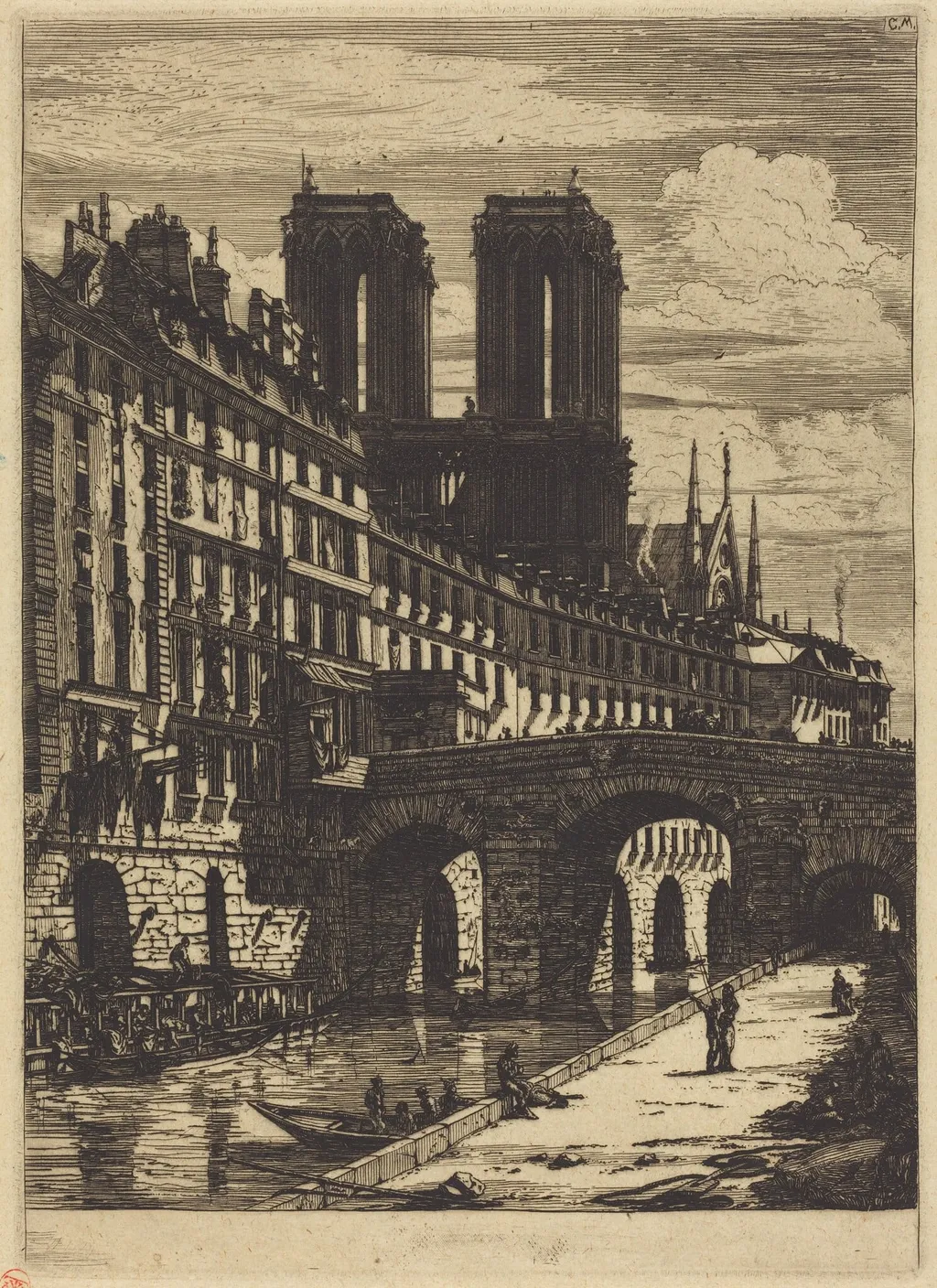
Le Petit Pont, Paris is an ink print by the Impressionist artist Charles Meryon. It dates from 1850 and is held in the collection of the National Gallery of Art.
About this work
Overview
Executed in etching and engraving on green-tinted laid paper, the work reflects his meticulous approach to urban landscapes.
Charles Meryon created *Le Petit Pont, Paris* in 1850 as part of his series documenting the city’s architecture. Executed in etching and engraving on green-tinted laid paper, the work reflects his meticulous approach to urban landscapes. Despite his colorblindness, Meryon developed a powerful graphic style defined by precise line work and atmospheric depth, distinguishing him among French printmakers of the era.
Subject & Meaning
The print depicts a narrow stone bridge crossing the Seine, flanked by closely packed medieval-style buildings with steep roofs and clustered windows. A solitary boat rests near the bank, and a few figures traverse the bridge, suggesting quiet daily life. The composition emphasizes architectural density and the interplay of light and shadow, conveying a sense of solitude within the urban fabric rather than grandeur or celebration.
Technique & Style
Meryon employed fine, controlled etched lines and engraved details to render textures of stone, water, and sky. The green paper enhances contrast, making the dark ink lines appear more pronounced and atmospheric. He used cross-hatching and delicate stippling to suggest reflections on the river and the play of light on wet surfaces, demonstrating a mastery of tonal gradation without color.
History & Provenance
Created during Meryon’s most productive period, the print belongs to his *Eaux-fortes sur Paris* series, begun in the late 1840s. It was likely issued in small editions and collected by enthusiasts of urban topography. Meryon’s personal history—including his mother’s theatrical background and his eventual institutionalization—adds biographical weight, though the work itself remains focused on architectural observation rather than personal expression.
Context
In mid-19th-century Paris, rapid modernization was transforming the city’s medieval core. Meryon’s prints captured remnants of the old city before widespread demolition. His focus on narrow alleys, crumbling facades, and quiet waterways stood in contrast to the grand boulevards promoted by Haussmann’s renovations, offering a counter-narrative rooted in historical continuity and quiet decay.
Legacy
Meryon’s etchings, including *Le Petit Pont*, influenced later generations of printmakers and urban documentarians. His ability to convey mood through line and tone elevated etching beyond mere topographical record. Though largely overlooked during his lifetime, his work gained recognition in the 20th century as a vital visual archive of pre-modern Paris and a model of expressive printmaking.
Artist & collection
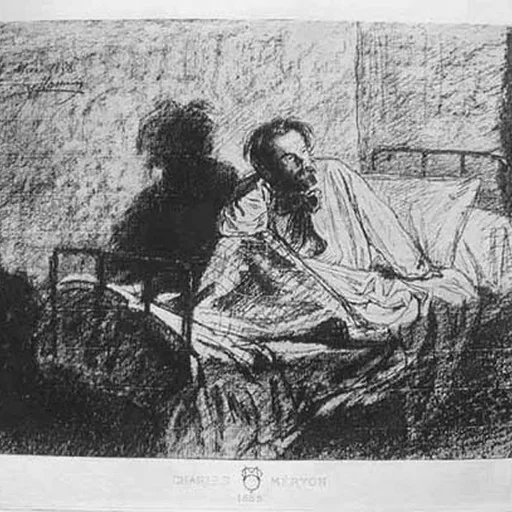
Artist
Charles Meryon (sometimes Méryon, 23 November 1821 – 14 February 1868) was a French artist who worked almost entirely in etching, as he had colour blindness.

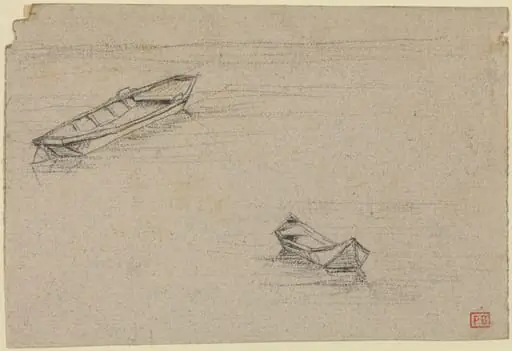
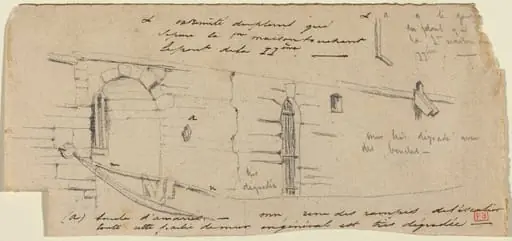
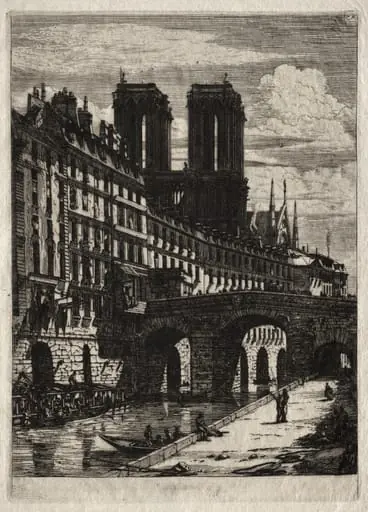 Etchings of Paris: The Little Bridge
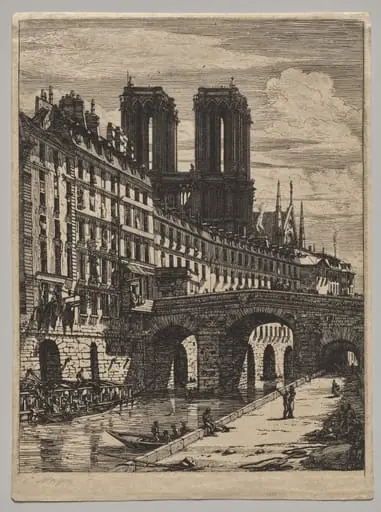 Petit Pont, Paris
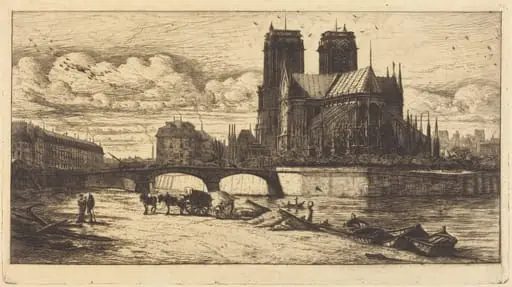 L'abside de Notre-Dame de Paris (The Apse of the Cathedral of Notre-Dame, Paris)
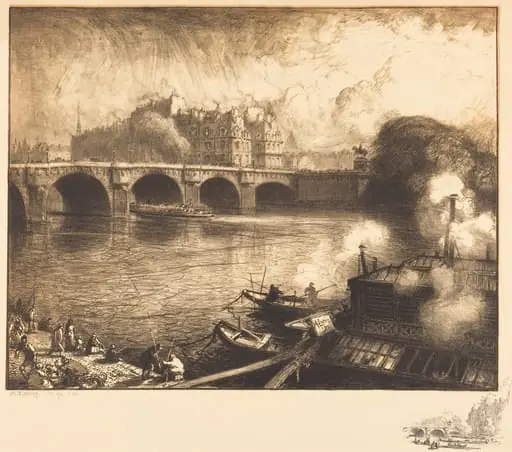 Le Pont Neuf
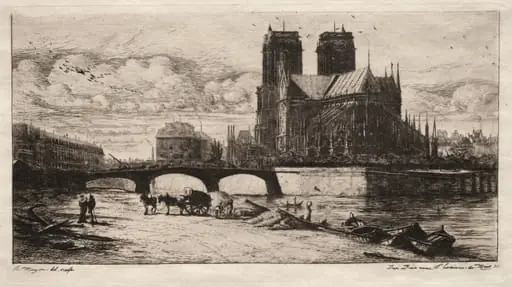 Etchings of Paris: The Apsis of the Cathedral of Notre Dame
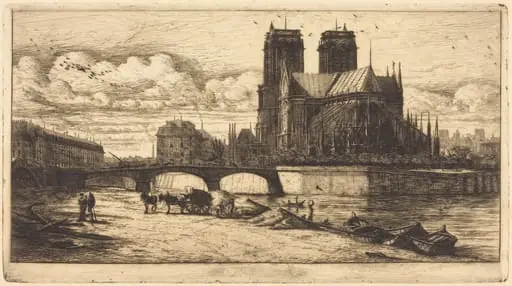 L'abside de Notre-Dame de Paris (The Apse of the Cathedral of Notre Dame, Paris)
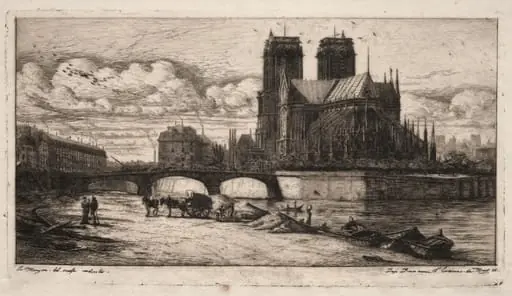 Etchings of Paris: The Apse of the Cathedral of Notre Dame
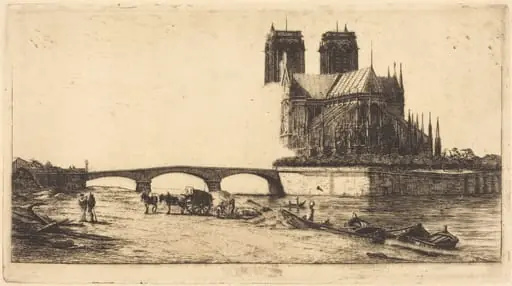 L'abside de Notre-Dame de Paris (The Apse ofthe Cathedral of Notre-Dame, Paris)