Artwork
Le Petit Pont, Paris
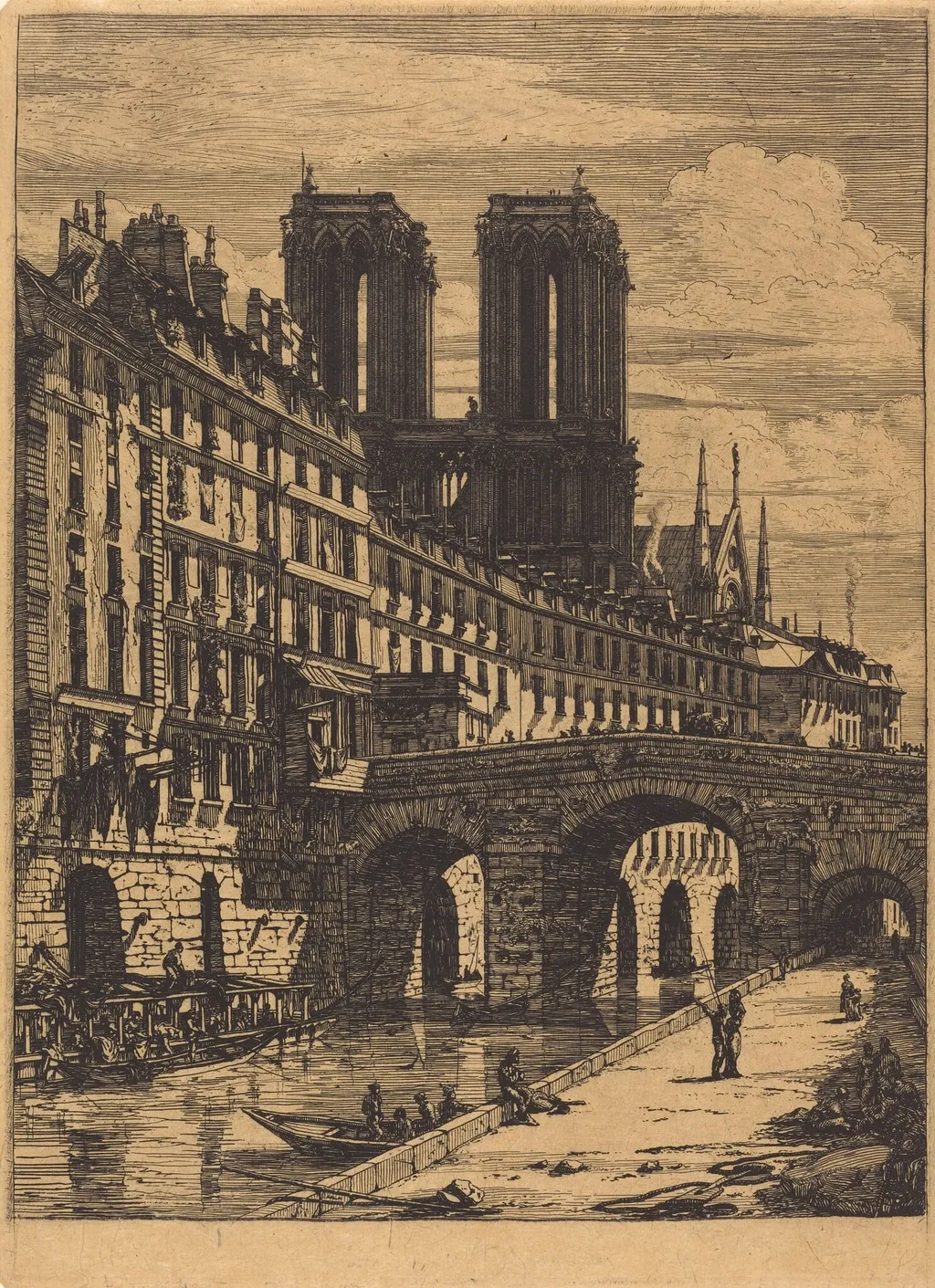
Le Petit Pont, Paris is an ink print by the Impressionist artist Charles Meryon. It dates from 1850 and is held in the collection of the National Gallery of Art.
About this work
Overview
Created in 1850, *Le Petit Pont, Paris* is an etched and engraved print on wove paper by French artist Charles Meryon. The image captures a narrow Parisian street scene centered on a modest bridge spanning a slim waterway, rendered with meticulous line work that emphasizes architectural density and everyday activity.
Subject & Meaning
The composition presents a tightly packed row of tall buildings, their dark roofs and numerous windows framing a quiet riverbank. Pedestrians traverse the bridge and its adjoining quay, while a solitary boat drifts nearby, suggesting a moment of ordinary urban life observed from a slightly removed perspective.
Technique & Style
Meryon employed fine, intersecting lines to delineate bricks, railings, and surface textures, achieving a high degree of detail without reliance on colour. The print exemplifies mid‑19th‑century French etching, where precision of line and tonal variation replace painterly effects, highlighting the artist’s focus on structural clarity.
History & Provenance
Part of Meryon’s extensive series of Paris views, the print reflects his lifelong dedication to etching, a medium he favored after becoming colour‑blind. The series was produced during his most productive period and has since been held in several public collections, underscoring his reputation as a leading French printmaker of the era.
Context
Meryon’s work emerged amid a growing interest in documenting urban transformation in the wake of Haussmann’s renovations. His somber, detailed approach contrasts with the more decorative prints of his contemporaries, offering a counter‑narrative that foregrounds the gritty, architectural reality of mid‑century Paris.
Artist & collection
Artist
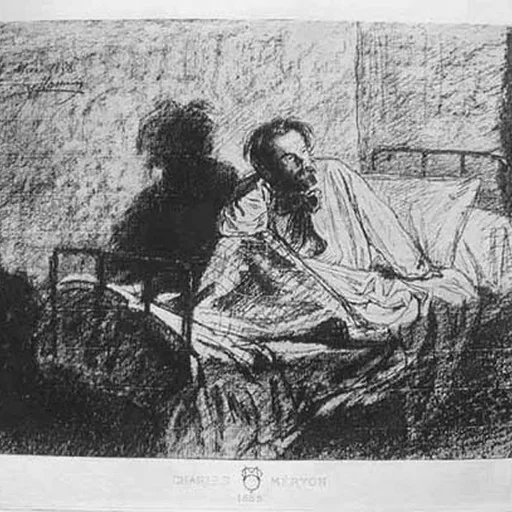
Charles Meryon (sometimes Méryon, 23 November 1821 – 14 February 1868) was a French artist who worked almost entirely in etching, as he had colour blindness.

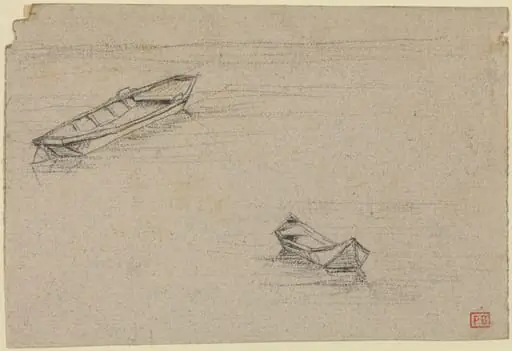
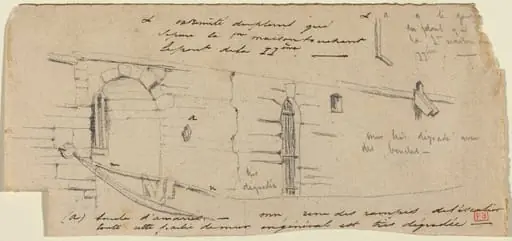
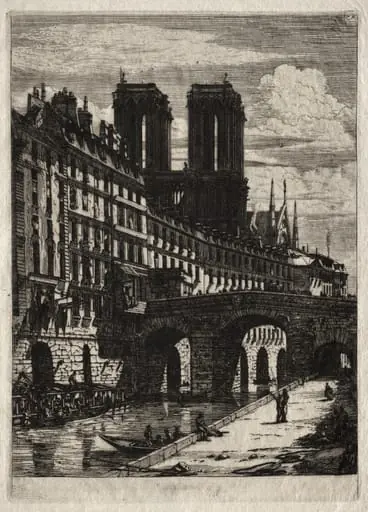 Etchings of Paris: The Little Bridge
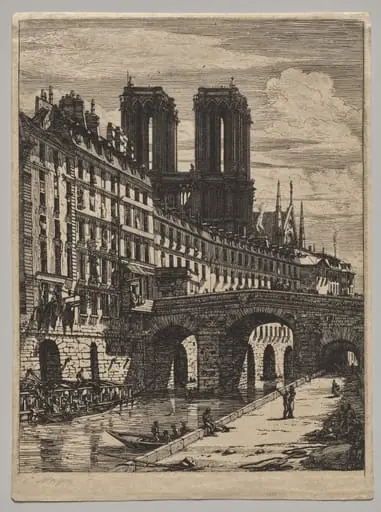 Petit Pont, Paris
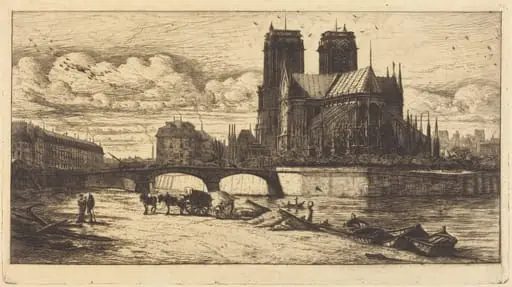 L'abside de Notre-Dame de Paris (The Apse of the Cathedral of Notre-Dame, Paris)
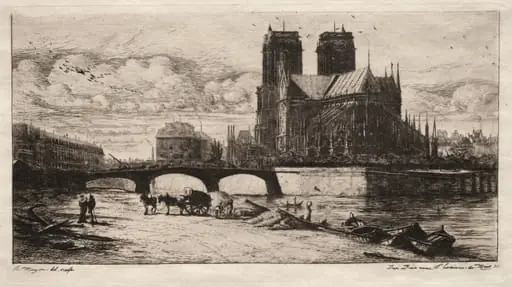 Etchings of Paris: The Apsis of the Cathedral of Notre Dame
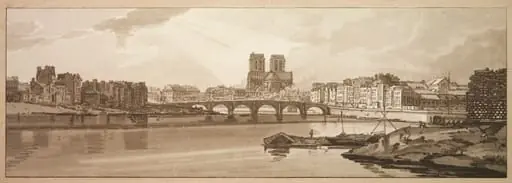 A Selection of Twenty of the Most Picturesque Views in Paris: View of Pont de la Tournelle & Notre Dame taken from the Arsenal
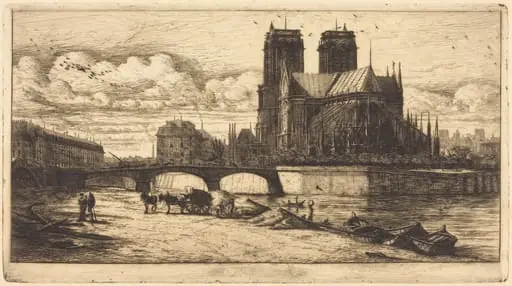 L'abside de Notre-Dame de Paris (The Apse of the Cathedral of Notre Dame, Paris)
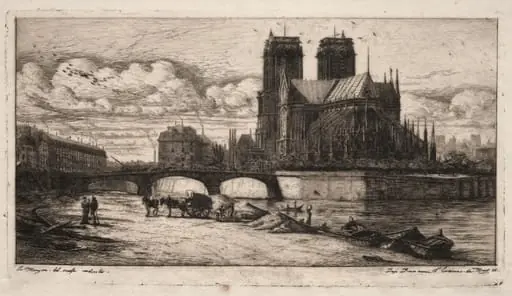 Etchings of Paris: The Apse of the Cathedral of Notre Dame
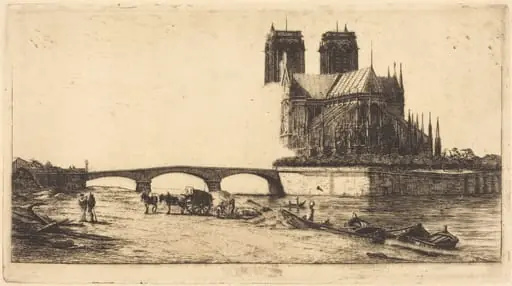 L'abside de Notre-Dame de Paris (The Apse ofthe Cathedral of Notre-Dame, Paris)