Artwork
Etchings of Paris: The Notre Dame Pump
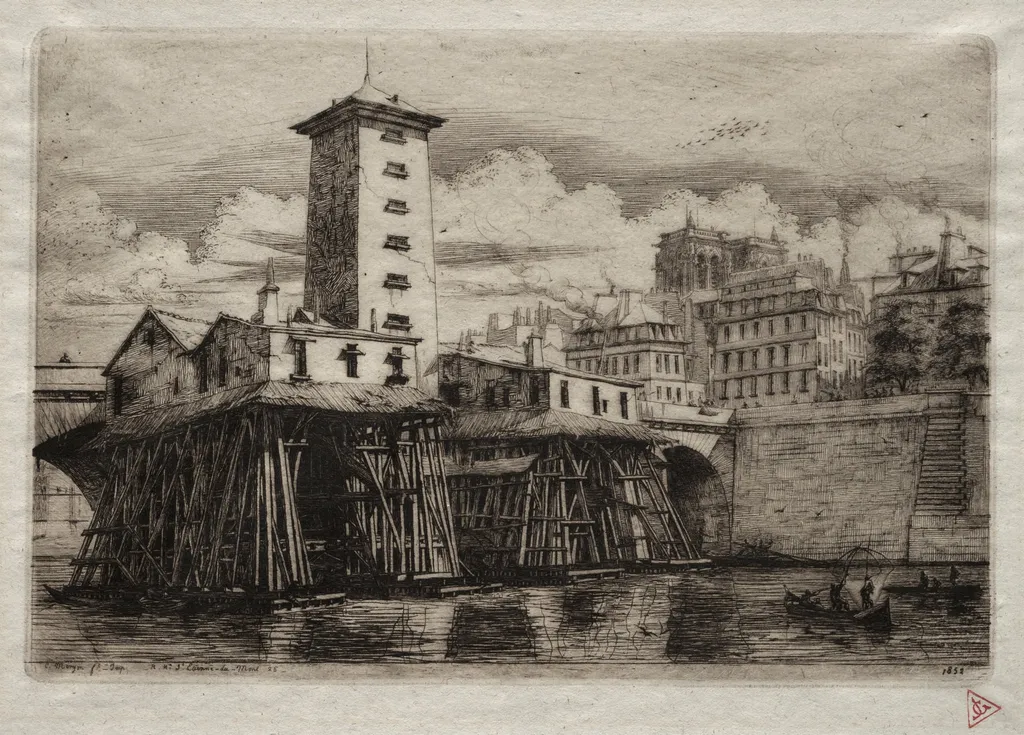
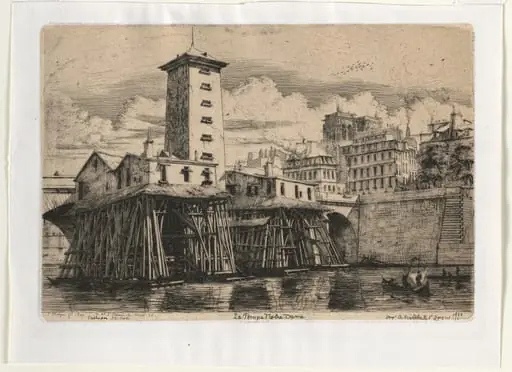
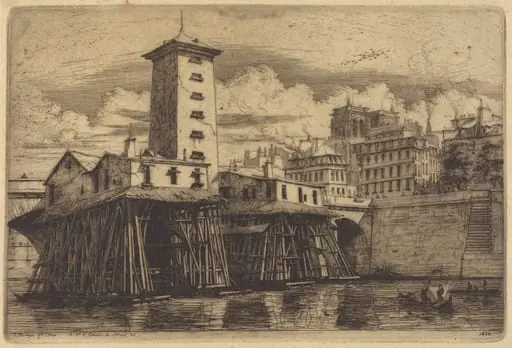
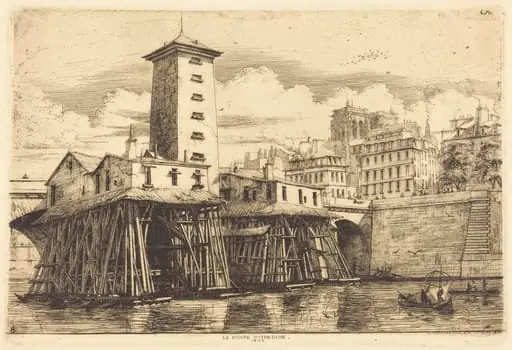
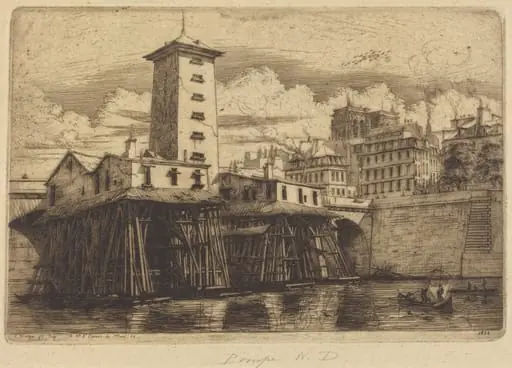
Etchings of Paris: The Notre Dame Pump is a print by the Impressionist artist Charles Meryon. It dates from 1852 and is held in the collection of the Cleveland Museum of Art.
About this work
Overview
Meryon’s technical precision and emotional tone transformed mundane civic infrastructure into quiet, enduring monuments of the city’s character.
Charles Meryon created this 1852 etching as part of a series documenting Parisian urban life through the medium of intaglio printmaking. His focus on ordinary structures—like the Notre Dame Pump—distinguished his work from grand historical or romanticized views. Meryon’s technical precision and emotional tone transformed mundane civic infrastructure into quiet, enduring monuments of the city’s character.
Subject & Meaning
The etching centers on a functional water pump attached to a modest thatched building, surrounded by modest stone structures and the distant spires of Notre-Dame. Rather than emphasizing the cathedral’s grandeur, Meryon highlights the pump’s role in daily life, suggesting a quiet intimacy between infrastructure and community. The small boat on the water implies local activity, reinforcing the scene’s authenticity over spectacle.
Technique & Style
Meryon worked exclusively in etching, a medium suited to his sensitivity to tone and texture, possibly due to his color blindness. His use of fine, controlled lines and layered cross-hatching creates deep shadows and atmospheric depth. The sky, lightly stippled with clouds, balances the heavy stone forms, while the water’s reflection adds a subtle rhythm to the composition’s stillness.
History & Provenance
Produced during Meryon’s most productive period, this print belongs to a larger body of work known as 'Les Mouches' and other Parisian views. It was likely circulated among collectors and artists in mid-19th century France. After Meryon’s institutionalization in 1858, his prints gained renewed attention for their psychological depth, though their original context as civic documentation was often overshadowed.
Context
In the 1850s, Paris underwent rapid modernization under Haussmann’s renovations. Meryon’s etchings, including this one, captured structures soon to be altered or demolished. His focus on overlooked utilities and aging buildings offered a counter-narrative to the city’s official image, preserving a vanishing layer of urban life through meticulous observation rather than idealization.
Legacy
Meryon’s work influenced later generations of printmakers and urban documentarians, particularly those drawn to the poetic potential of everyday architecture. Though largely forgotten in his lifetime, his etchings are now recognized for their emotional resonance and technical mastery. The Notre Dame Pump remains a quiet testament to his ability to find gravity in the ordinary.
Own this work as a print
Artist & collection
Artist
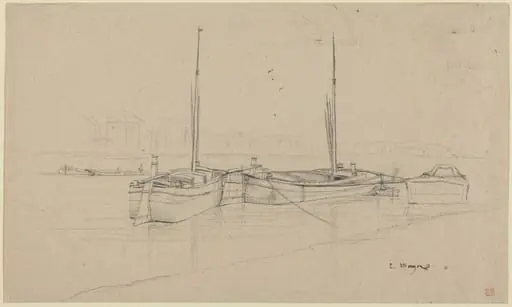
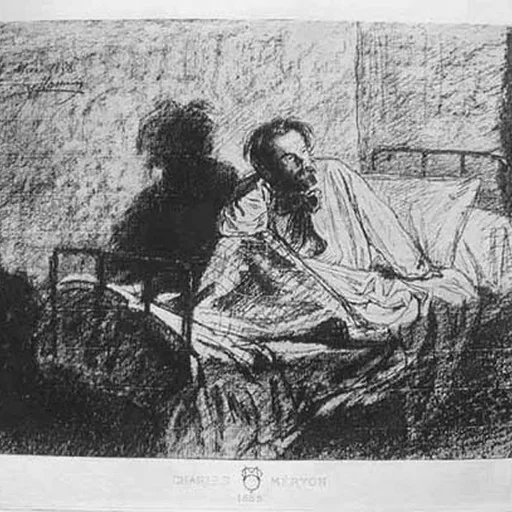
Charles Meryon (sometimes Méryon, 23 November 1821 – 14 February 1868) was a French artist who worked almost entirely in etching, as he had colour blindness.