Artwork
La Pompe Notre-Dame, Paris (The Notre-Dame Pump)
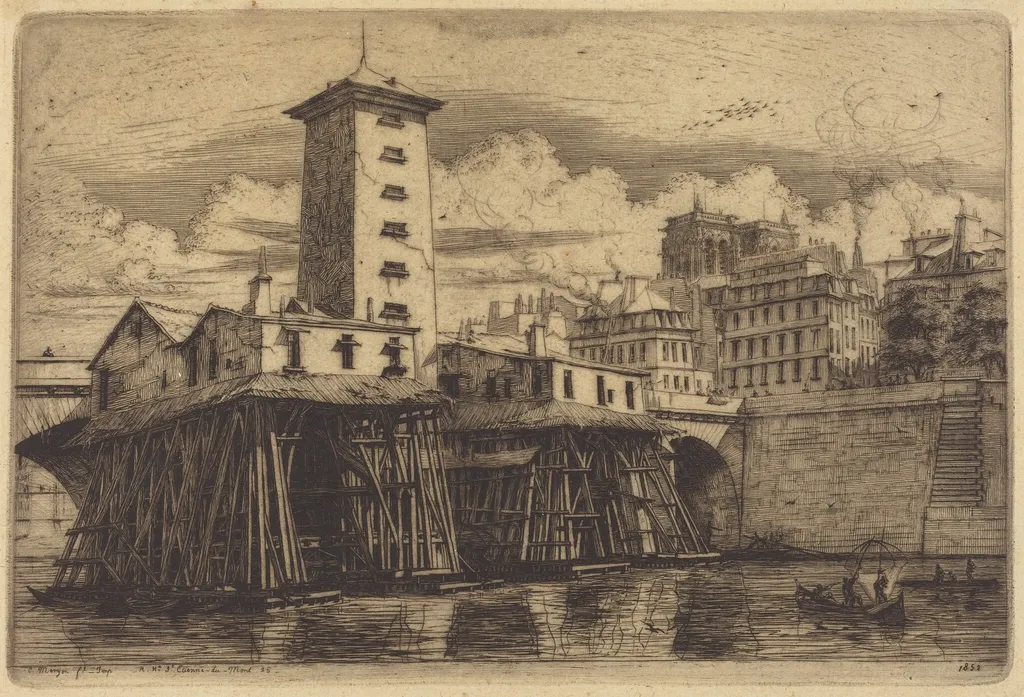
La Pompe Notre-Dame, Paris (The Notre-Dame Pump) is an ink print by the Impressionist artist Charles Meryon. It dates from 1852 and is held in the collection of the National Gallery of Art.
About this work
Overview
This work belongs to a larger series documenting Paris’s urban fabric, emphasizing quiet, everyday architecture rather than monumental landmarks.
Created in 1852 by Charles Meryon, *La Pompe Notre-Dame, Paris* is an etching and drypoint on green laid paper depicting a modest riverside scene near Notre-Dame. Meryon, who turned to printmaking partly due to color blindness, favored the precision of line over color. This work belongs to a larger series documenting Paris’s urban fabric, emphasizing quiet, everyday architecture rather than monumental landmarks.
Subject & Meaning
The scene centers on a functional wooden pump beside the Seine, surrounded by tools and scaffolding, with a slender tower rising behind it. Boats drift lazily on the water, and steep-roofed buildings frame the composition. Meryon avoids romanticism, instead presenting the city’s utilitarian infrastructure as worthy of attention — a quiet tribute to the rhythms of daily life in mid-19th-century Paris.
Technique & Style
Meryon employed etching and drypoint to achieve fine, incised lines with rich tonal variation. The green paper subtly enhances the atmospheric depth, while the dense cross-hatching renders textures of wood, stone, and water with cartographic clarity. His method prioritizes structural accuracy over emotional flourish, resulting in images that feel both meticulously observed and quietly introspective.
History & Provenance
Meryon produced this print during a period of intense creative output, shortly before his mental health deteriorated. The work was part of his *Les Eaux-Fortes sur Paris* series, circulated among collectors and artists. After his death in an asylum in 1868, his prints gained renewed recognition for their unique vision of the city, though they remained largely outside mainstream artistic circles during his lifetime.
Context
In the 1850s, Paris underwent radical transformation under Haussmann’s renovations. Meryon’s focus on overlooked corners — pumps, narrow alleys, aging towers — stood in contrast to official portrayals of modernity. His prints offer a counter-narrative, preserving the city’s pre-renewal textures and quiet corners before they vanished beneath new boulevards and stone facades.
Legacy
Though largely unrecognized in his time, Meryon’s etchings influenced later generations of printmakers and urban observers. His ability to convey the soul of a city through meticulous detail and restrained composition earned posthumous acclaim. *La Pompe Notre-Dame* remains a testament to his singular vision: a poetic attention to the ordinary, rendered with technical discipline and quiet resolve.
Artist & collection
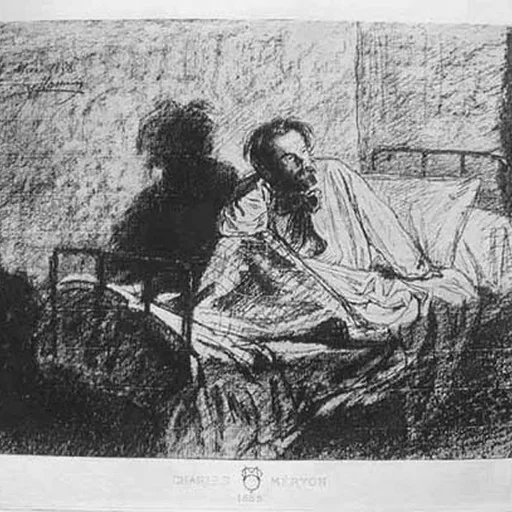
Artist
Charles Meryon (sometimes Méryon, 23 November 1821 – 14 February 1868) was a French artist who worked almost entirely in etching, as he had colour blindness.

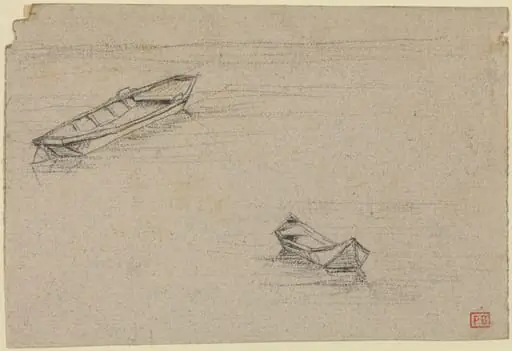
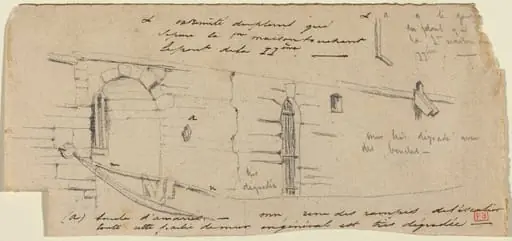
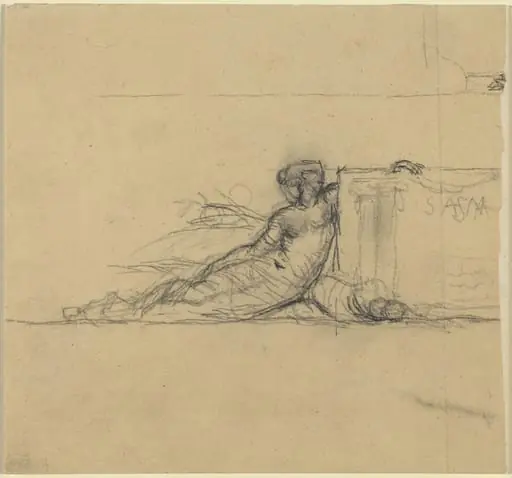
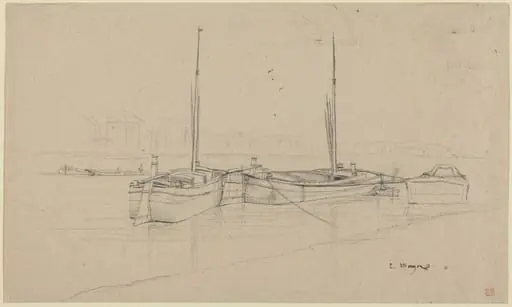
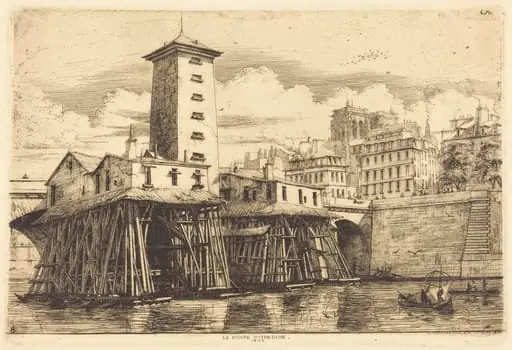 La Pompe Notre-Dame, Paris (The Notre-Dame Pump)
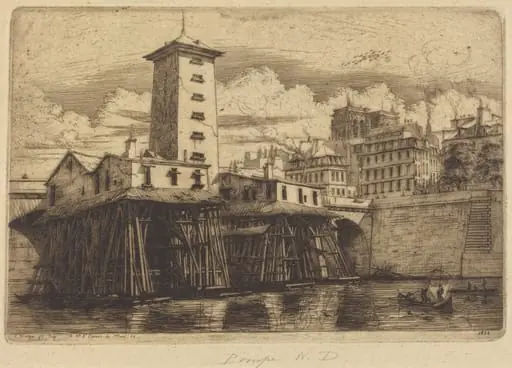 La Pompe Notre-Dame, Paris (The Notre-Dame Pump)
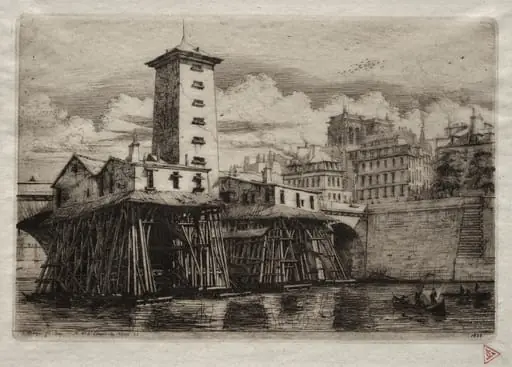 Etchings of Paris: The Notre Dame Pump
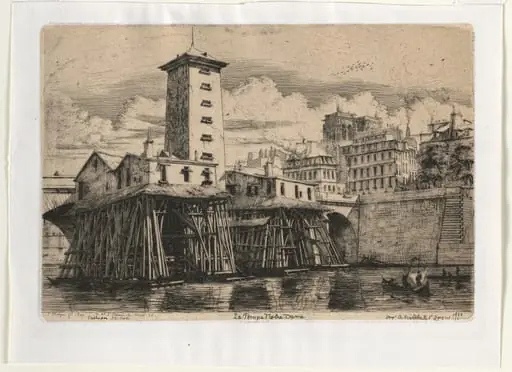 Notre Dame Pumphouse, Paris
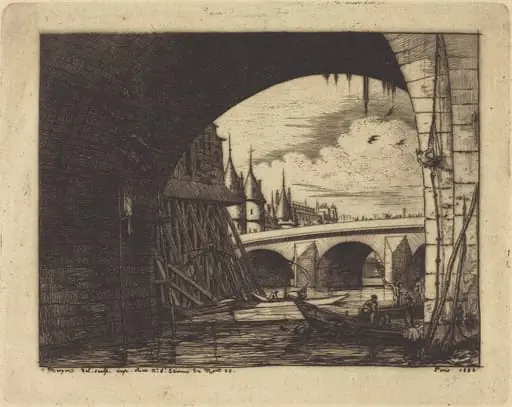 L'arche du Pont Notre-Dame, Paris (An Arch of the Notre-Dame Bridge, Paris)
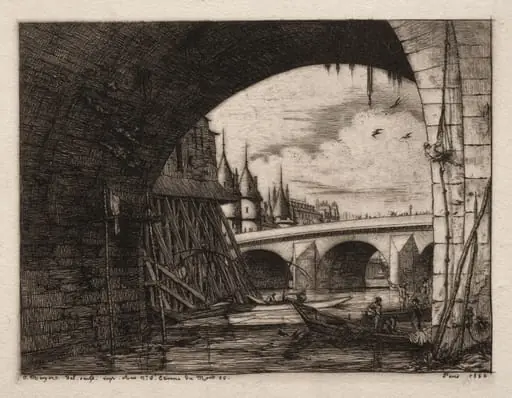 L'arch du Pont Notre Dame, Paris
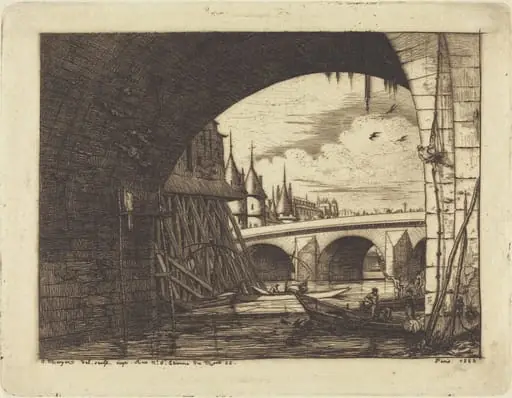 L'arche du Pont Notre-Dame, Paris (An Arch of the Notre-Dame Bridge, Paris)