Artwork
Etchings of Paris: The Street of the Bad Boys
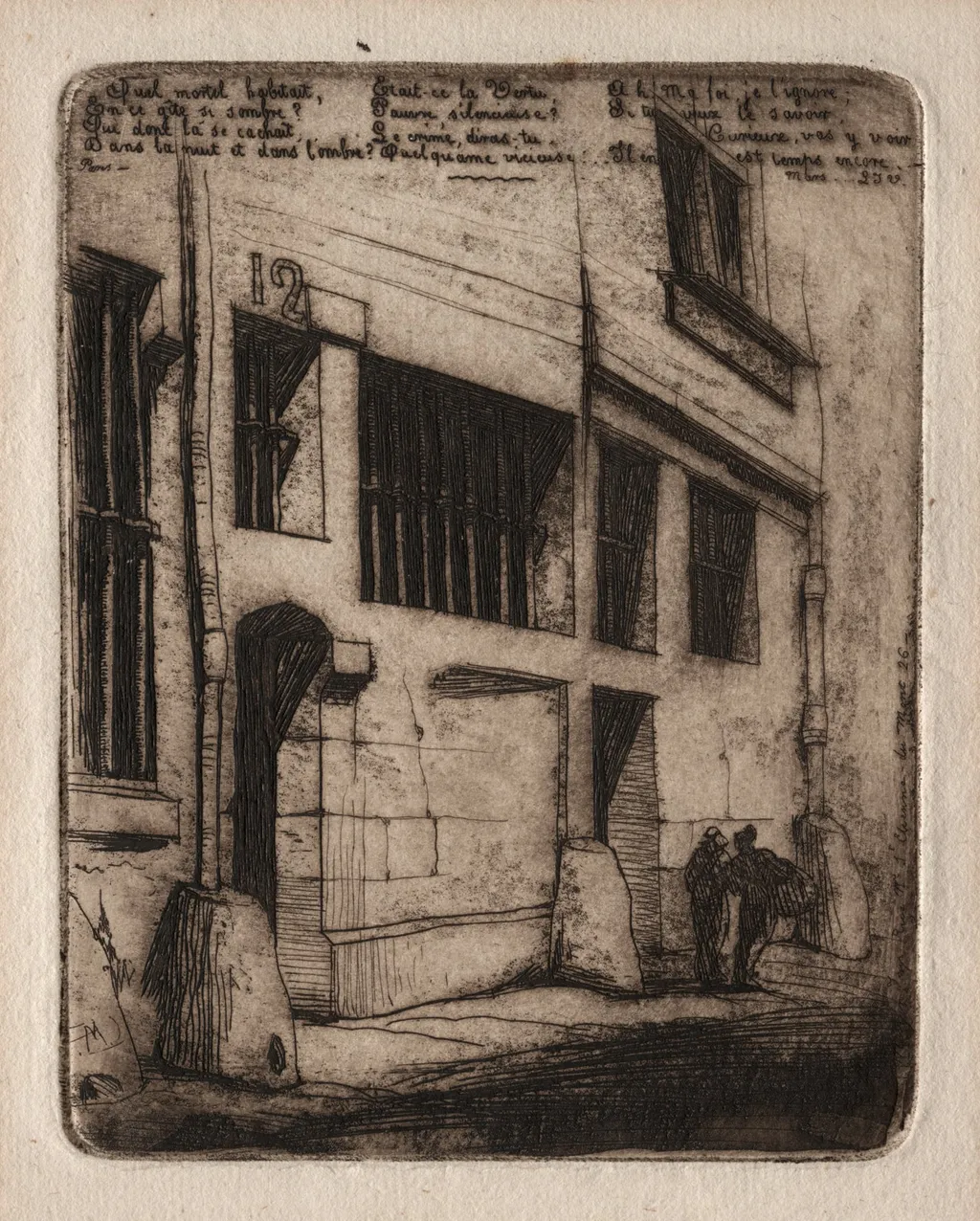
Etchings of Paris: The Street of the Bad Boys is a print by the Impressionist artist Charles Meryon. It dates from 1854 and is held in the collection of the Cleveland Museum of Art.
About this work
Overview
Charles Meryon created this 1854 etching as part of a broader series documenting Parisian streetscapes. His focus on urban decay and architectural irregularity set his work apart from contemporaries. Limited to monochrome due to color blindness, he refined etching as a medium to convey mood rather than detail, emphasizing texture and shadow over color or realism.
Subject & Meaning
The scene depicts a narrow, uneven alley in Paris, dominated by leaning buildings and a stranded wooden vessel on cobblestones.
The scene depicts a narrow, uneven alley in Paris, dominated by leaning buildings and a stranded wooden vessel on cobblestones. The presence of two figures observing the boat suggests quiet curiosity, not alarm. The title, referencing a local nickname, hints at the area’s marginal reputation. Meryon’s inclusion of handwritten poetry above the image adds a personal, introspective layer, transforming the view into a private meditation on urban isolation.
Technique & Style
Meryon employed fine, controlled etching lines to build dense shadows and textured surfaces, enhancing the sense of confinement. The crooked architecture and tilted boat are rendered with deliberate asymmetry, reinforcing instability. The handwritten French verses along the top, loosely sketched and unpolished, contrast with the precision of the etched lines, introducing a human, almost spontaneous voice into the composition.
History & Provenance
Created during Meryon’s most productive period, this print emerged from his deep engagement with Paris’s forgotten corners. He produced the series between 1852 and 1858, largely self-published. After his institutionalization in 1860, his works were preserved by collectors and later recognized by print historians for their emotional depth and technical innovation within 19th-century French graphic art.
Context
Meryon worked alongside Realist painters but chose printmaking to explore psychological atmosphere rather than social narrative. His depictions of Paris diverged from the city’s official imagery, focusing instead on its neglected alleys and decaying structures. This approach aligned with a growing interest in the urban underbelly, though his personal struggles set him apart from his peers in both life and artistic intent.
Legacy
Meryon’s etchings influenced later generations of printmakers drawn to urban melancholy and expressive line work. Though overlooked in his lifetime, his series became foundational to the study of 19th-century French printmaking. His integration of text and image, along with his unidealized vision of the city, prefigured modernist sensibilities in graphic art.
Artist & collection
Artist
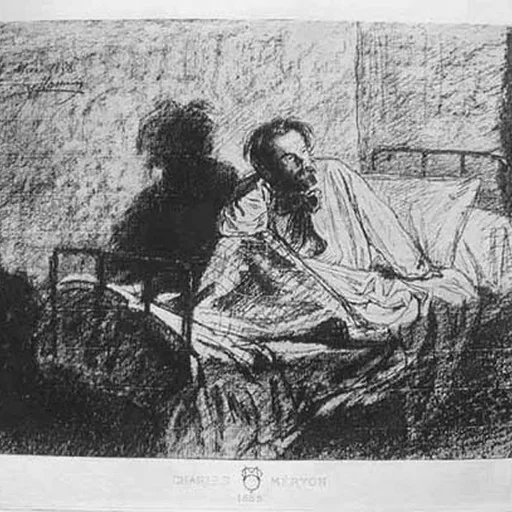
Charles Meryon (sometimes Méryon, 23 November 1821 – 14 February 1868) was a French artist who worked almost entirely in etching, as he had colour blindness.

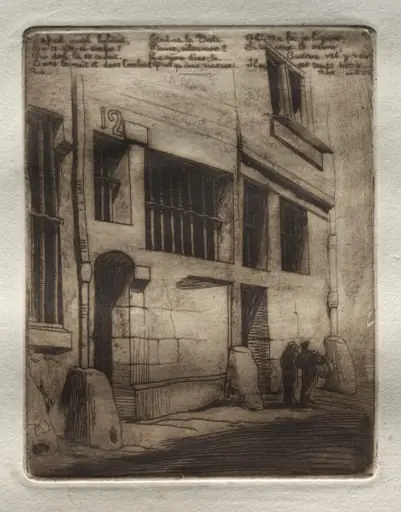 La Rue des Mauvais Garçons
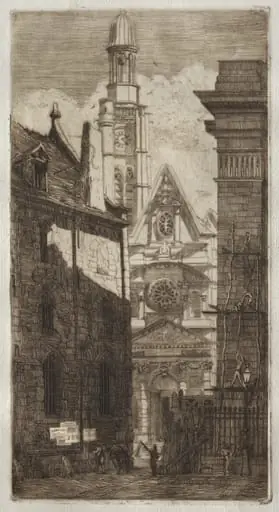 Saint-Etienne-du-Mont
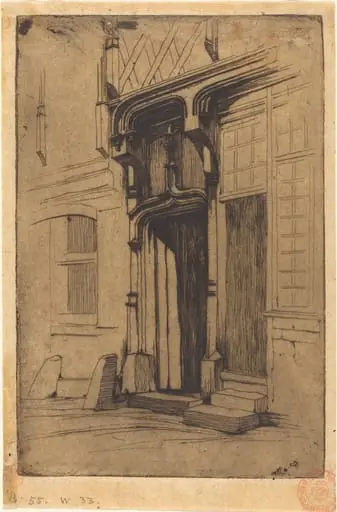 Porte d'un ancien couvent, Rue Mirabeau, à Bourges (Doorway of an Ancient Convent, in the Rue Mirabeau, Bourges)
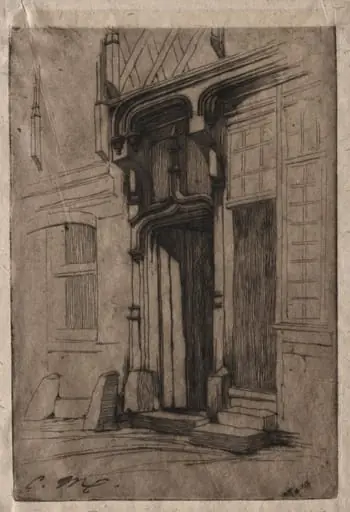 Doorway of an Ancient Convent in the Rue Mirabeau, Bourges
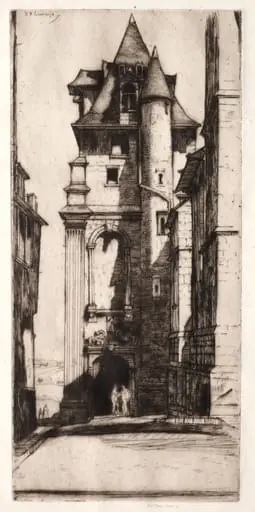 St. Aignan, Chartres
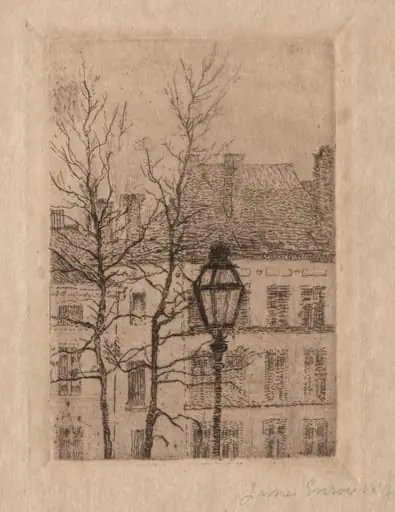 The Street Lamp
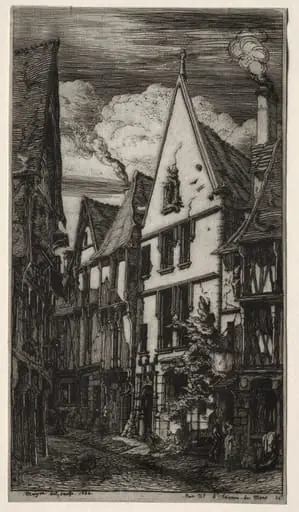 Rue des Toiles, Bourges
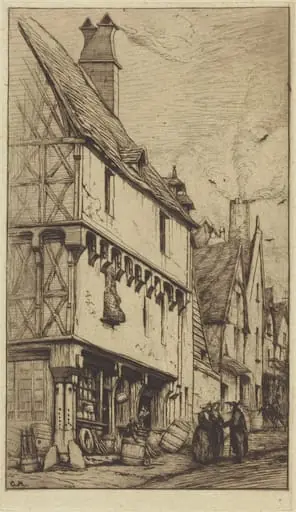 Ancienne habitation à Bourges, dite "La Maison du Musicien" (An Old House at Bourges, Sometimes Called the "Musician's House")