Artwork
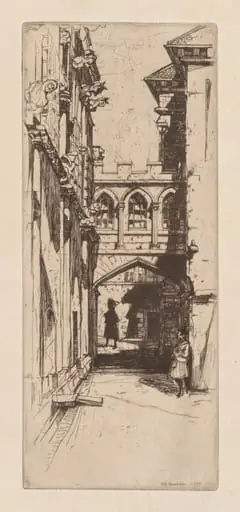
St. Aignan, Chartres
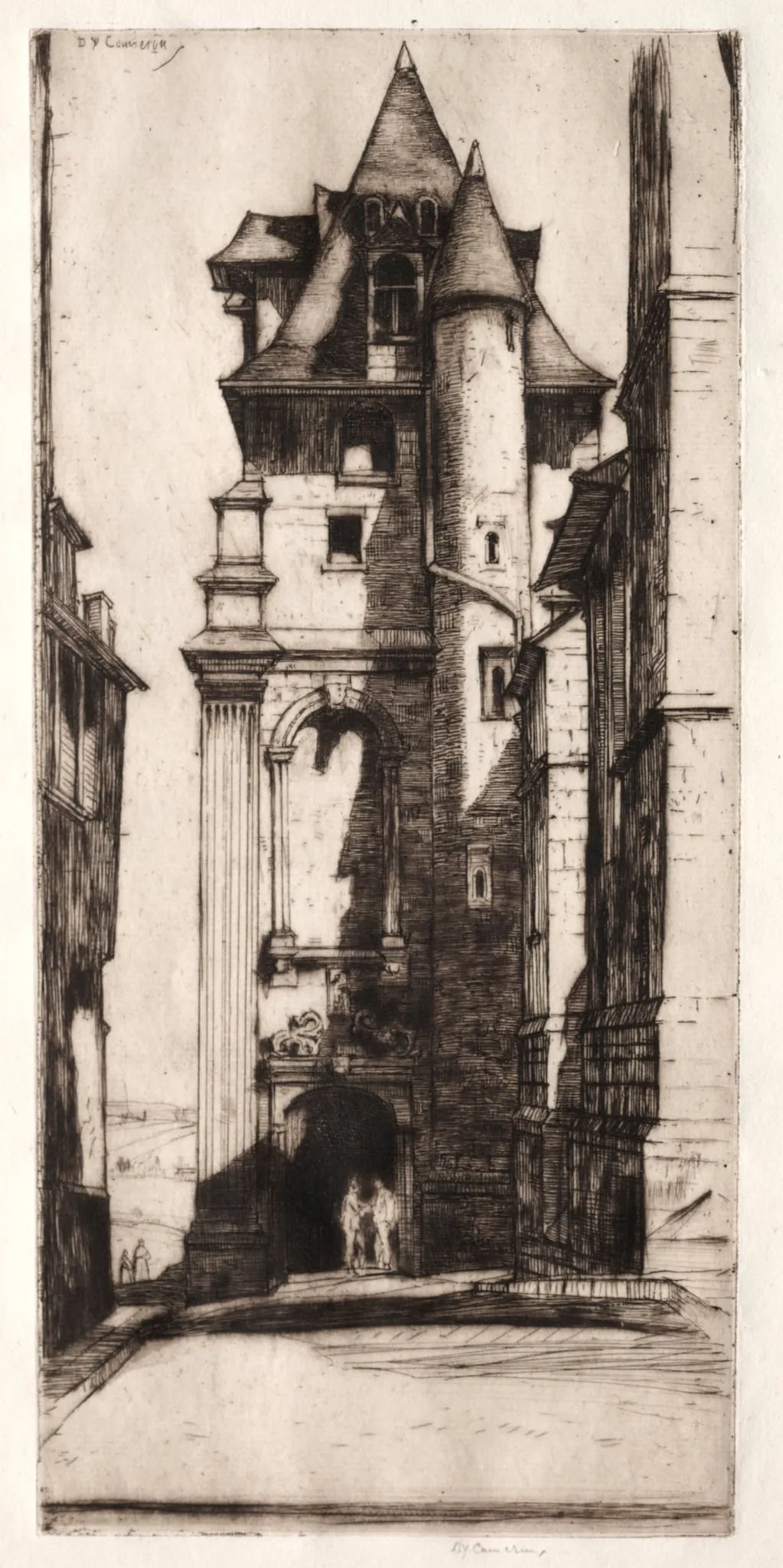
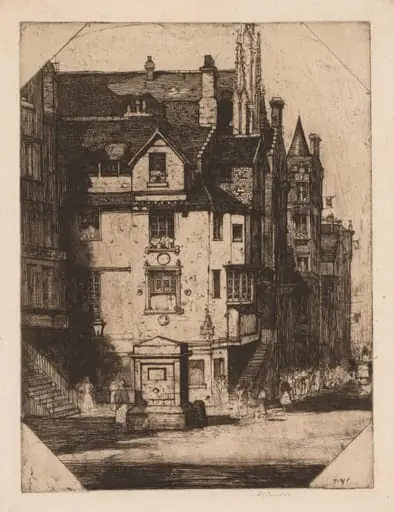
St. Aignan, Chartres is a print by David Young Cameron. It dates from 1916 and is held in the collection of the Cleveland Museum of Art.
About this work
Overview
The work reflects his interest in the interplay of light, texture, and historical fabric, rendered not as idealized monuments but as weathered, lived-in spaces.
Created in 1916 by Scottish artist David Young Cameron, *St. Aignan, Chartres* is an etching that captures a medieval structure in Chartres, France. Cameron, recognized for his contributions to the Etching Revival, used the medium to explore architectural forms with quiet precision. The work reflects his interest in the interplay of light, texture, and historical fabric, rendered not as idealized monuments but as weathered, lived-in spaces.
Subject & Meaning
The subject is a narrow, vertically oriented building with steeply pitched roofs and slender towers, likely a surviving fragment of medieval ecclesiastical architecture. Two small figures near the arched entrance suggest human presence without narrative detail. The emphasis lies in the building’s endurance—its rough stonework and deep shadows convey age and resilience, inviting contemplation rather than storytelling.
Technique & Style
Cameron employed fine, controlled etching lines to mimic the irregular surface of aged stone, enhancing tactile realism. Deep shadows, achieved through dense inked lines and careful wiping of the plate, create a strong sense of volume and mass. The contrast between the dark recesses and the faintly lit upper surfaces follows a chiaroscuro approach, grounding the structure in tangible space without romanticizing it.
History & Provenance
The print entered the collection of The Cleveland Museum of Art, where it remains part of their holdings of early 20th-century graphic works. Cameron produced this piece during a period when he was deeply engaged with French architectural subjects, following earlier travels through northern France. Its preservation reflects the museum’s interest in the Etching Revival and its transnational influences.
Context
Made during the First World War, *St. Aignan, Chartres* stands apart from the era’s violent imagery, offering instead a quiet meditation on permanence. Cameron’s focus on French medieval architecture aligned with broader European interests in cultural heritage amid wartime upheaval. His work contributed to a renewed appreciation for printmaking as a medium for thoughtful observation rather than spectacle.
Legacy
Cameron’s etchings, including this one, helped sustain the Etching Revival into the 20th century by emphasizing technical discipline and atmospheric nuance. His approach influenced later generations of printmakers who valued subtle tonal variation and architectural integrity over dramatic effect. *St. Aignan, Chartres* endures as a quiet example of how printmaking could convey historical presence with restraint and depth.
Artist & collection
Artist
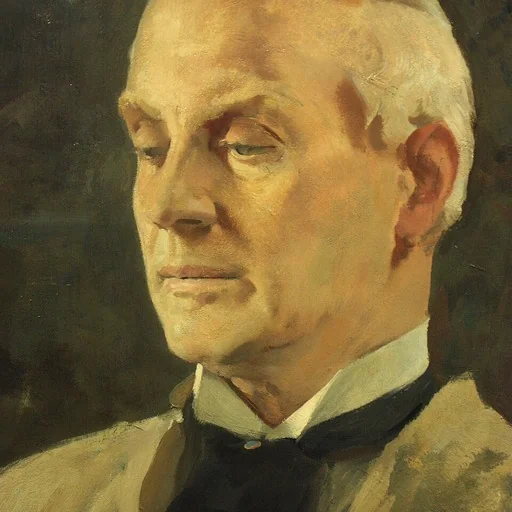
Sir David Young Cameron (28 June 1865 – 16 September 1945) was a Scottish painter and, with greater success, etcher, mostly of townscapes and landscapes in both cases. He was a leading figure in the final decades of the Etching Revival.

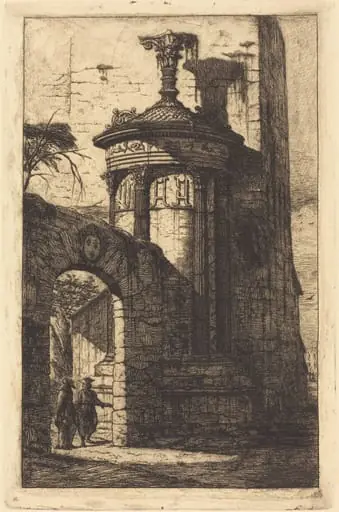 Entrée du Couvent des Capucins français à Athenes (Entrance to the French Capuchin Convent at Athens)
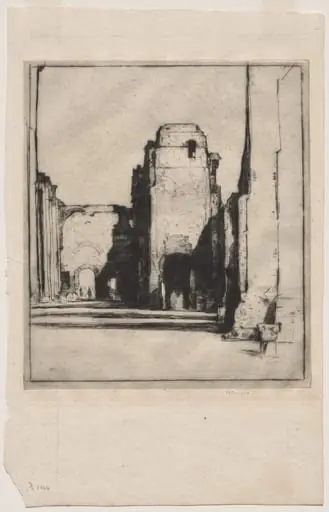 Tepidarium, Baths of Caracella
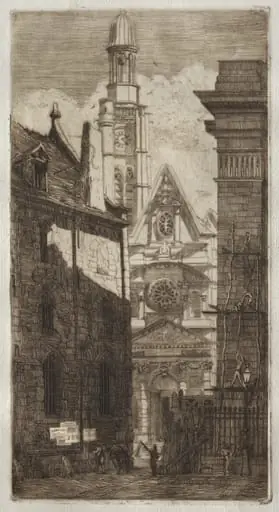 Saint-Etienne-du-Mont
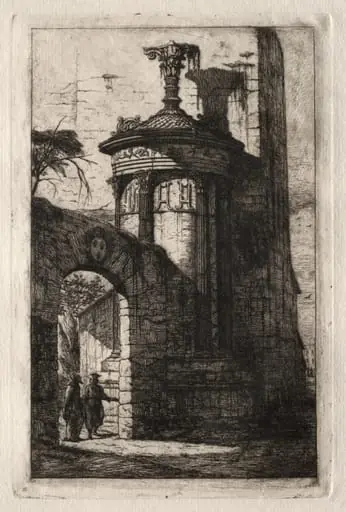 Entrance to the French Capuchin Convent at Athens
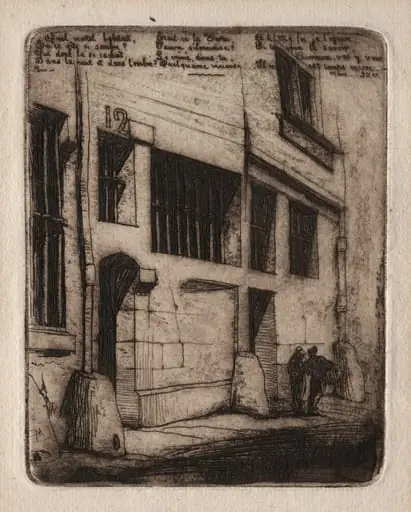 Etchings of Paris: The Street of the Bad Boys
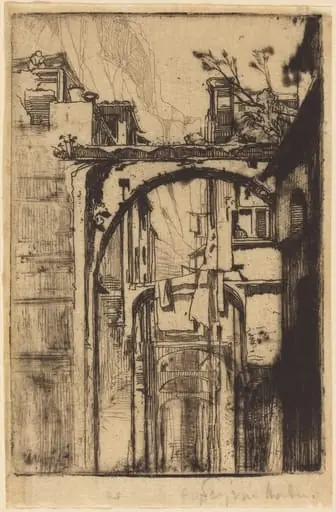 Amalfi
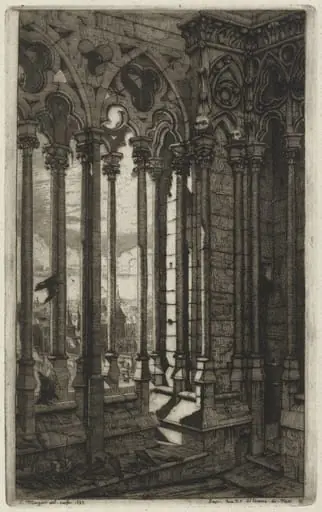
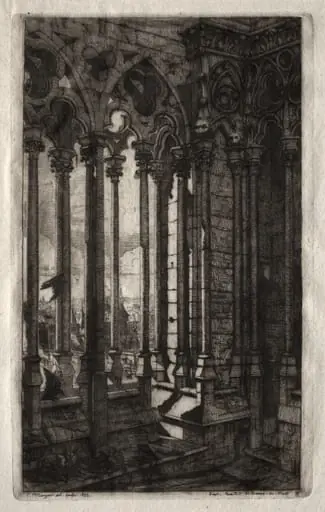 Etchings of Paris: The Gallery of Notre Dame
![A Pistoia [In Pistoia], by Telemaco Signorini](https://artifactworldgallery.com/img/telemaco-signorini--a-pistoia-in-pistoia--f1623cf6251bb70b-w320.webp) A Pistoia [In Pistoia]
A Pistoia [In Pistoia]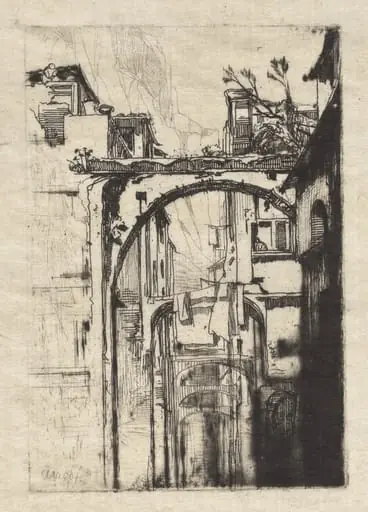 Amalfi
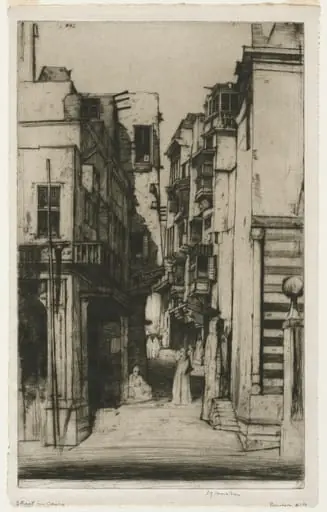 Street in Cairo
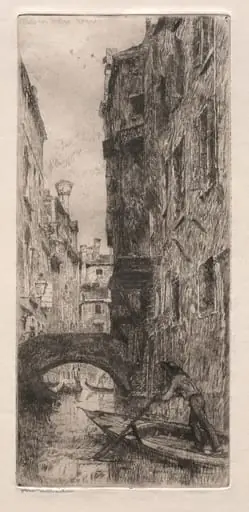 Etchings of Venice: Ponte del Pistor, Venice
 La galerie Notre-Dame, Paris (The Gallery of Notre Dame, Paris)