Artwork
Pierre Nivelle, Bishop of Luçon
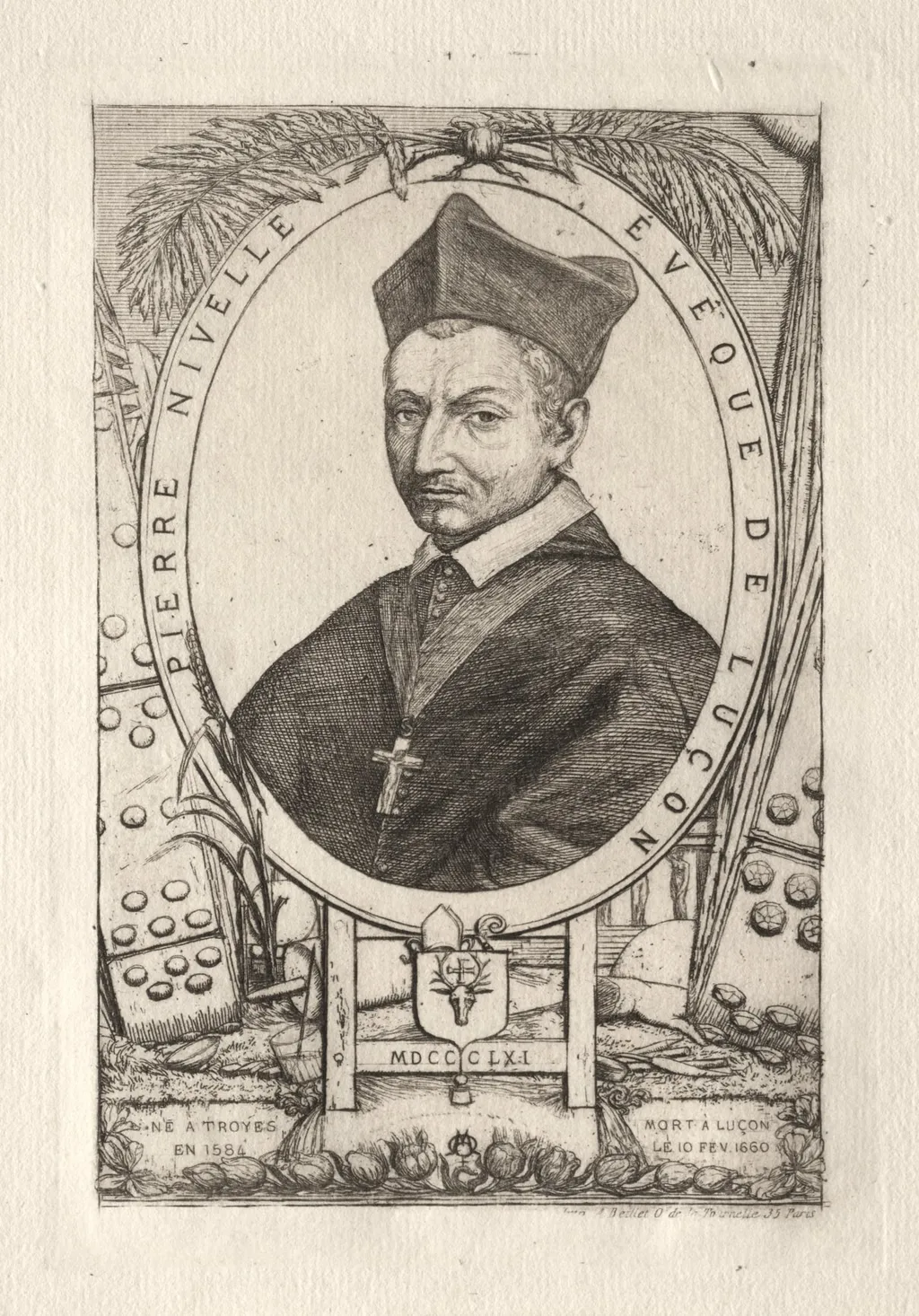
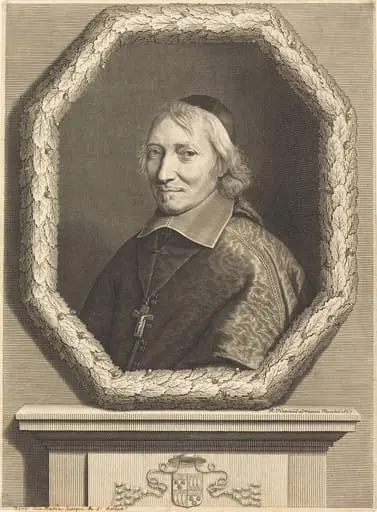
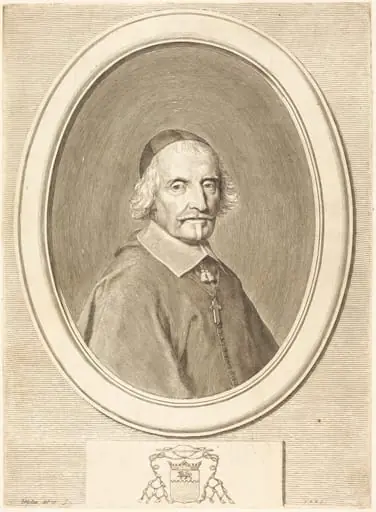
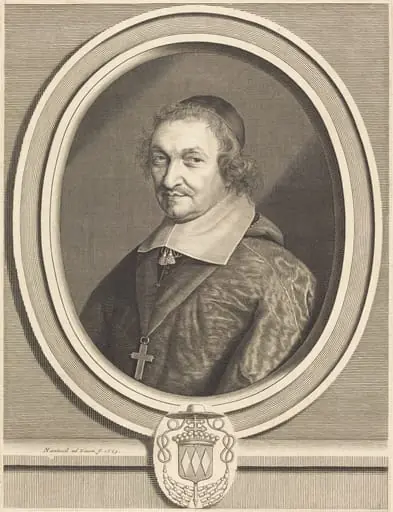
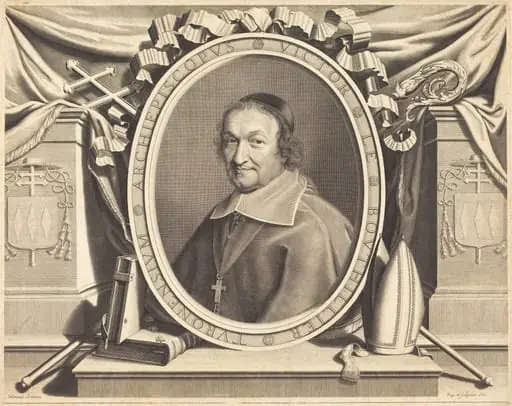
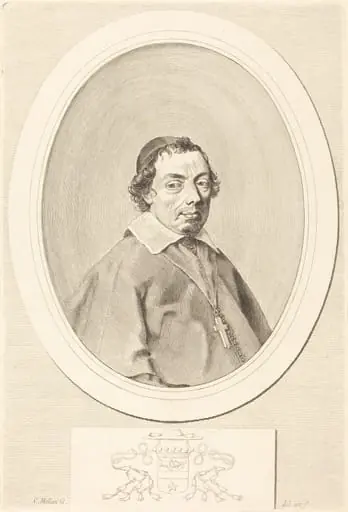
Pierre Nivelle, Bishop of Luçon is a print by the Impressionist artist Charles Meryon. It dates from 1861 and is held in the collection of the Cleveland Museum of Art.
About this work
Overview
Charles Meryon produced this etching in 1861 as a portrait of Pierre Nivelle, Bishop of Luçon. Known primarily for his architectural views of Paris, Meryon turned occasionally to portraiture, applying his precise etching technique to religious figures. This work reflects his disciplined approach to line and tone, developed over years of working in monochrome due to his color blindness.
Subject & Meaning
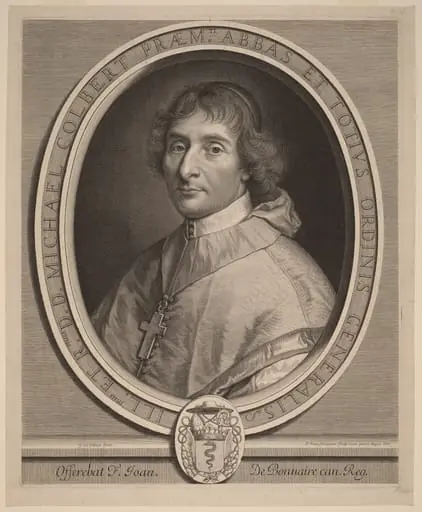
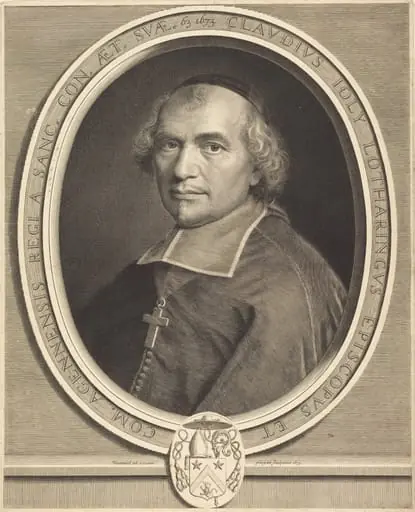
The circular frame, inscribed with his name and title, reinforces the ceremonial nature of the image, aligning it with traditional ecclesiastical portraiture.
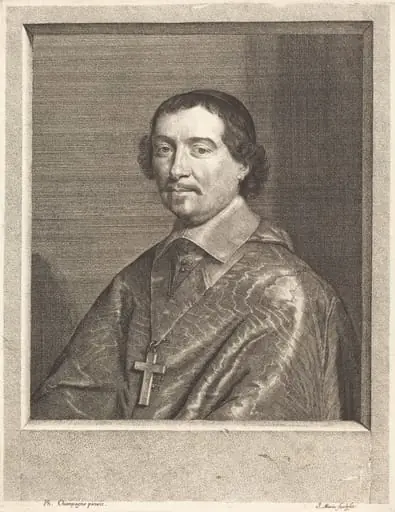
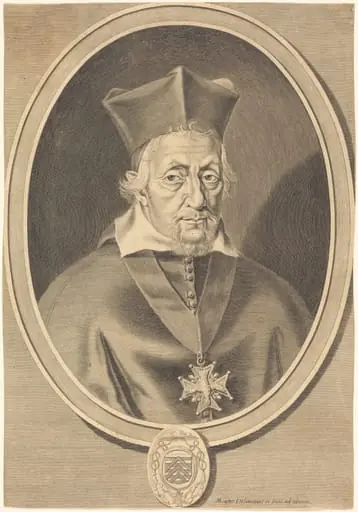
The portrait captures Pierre Nivelle, a 17th-century bishop of Luçon, in formal ecclesiastical dress: a dark cope, a pectoral cross, and a mitre. The composition isolates him against a neutral background, emphasizing his role as a spiritual authority. The circular frame, inscribed with his name and title, reinforces the ceremonial nature of the image, aligning it with traditional ecclesiastical portraiture.
Technique & Style
Meryon rendered the portrait using fine, controlled etching lines to model form and texture. He employed chiaroscuro to define the folds of fabric and the contours of the face, creating a sense of volume without color. The circular border, a deliberate compositional device, focuses attention on the subject’s expression, which is rendered with quiet intensity and psychological restraint.
History & Provenance
The etching was made during a period when Meryon was producing a series of portraits of French clergy and nobility. It likely originated as a commission or a study for a larger project, though no record of its original patron survives. The work entered public collections in the late 19th century and is now held in institutions specializing in graphic arts.
Context
In mid-19th-century France, etching experienced a revival among artists seeking alternatives to painting. Meryon stood apart by rejecting romanticism in favor of precise, introspective imagery. His portraits of religious figures, though fewer in number than his urban scenes, reflect a broader cultural interest in historical and ecclesiastical identity during a time of secularizing change.
Legacy
Though Meryon’s portraits are less widely known than his Parisian views, they demonstrate his mastery of tonal nuance and psychological depth. This etching contributes to a small but significant body of work that bridges religious iconography and modern printmaking. It remains a reference for studies of 19th-century French graphic art and the role of print in preserving ecclesiastical imagery.
Artist & collection
Artist
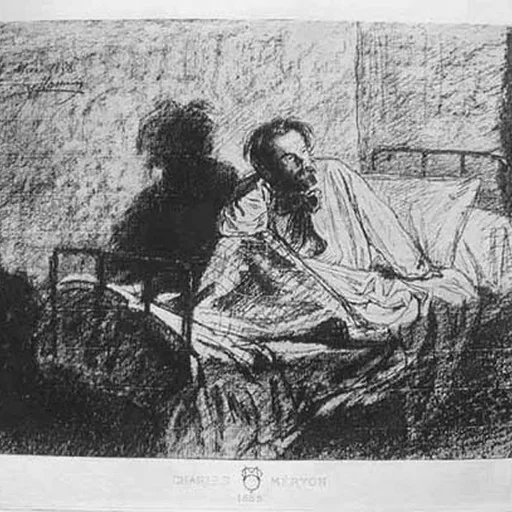
Charles Meryon (sometimes Méryon, 23 November 1821 – 14 February 1868) was a French artist who worked almost entirely in etching, as he had colour blindness.