Artwork
Rest
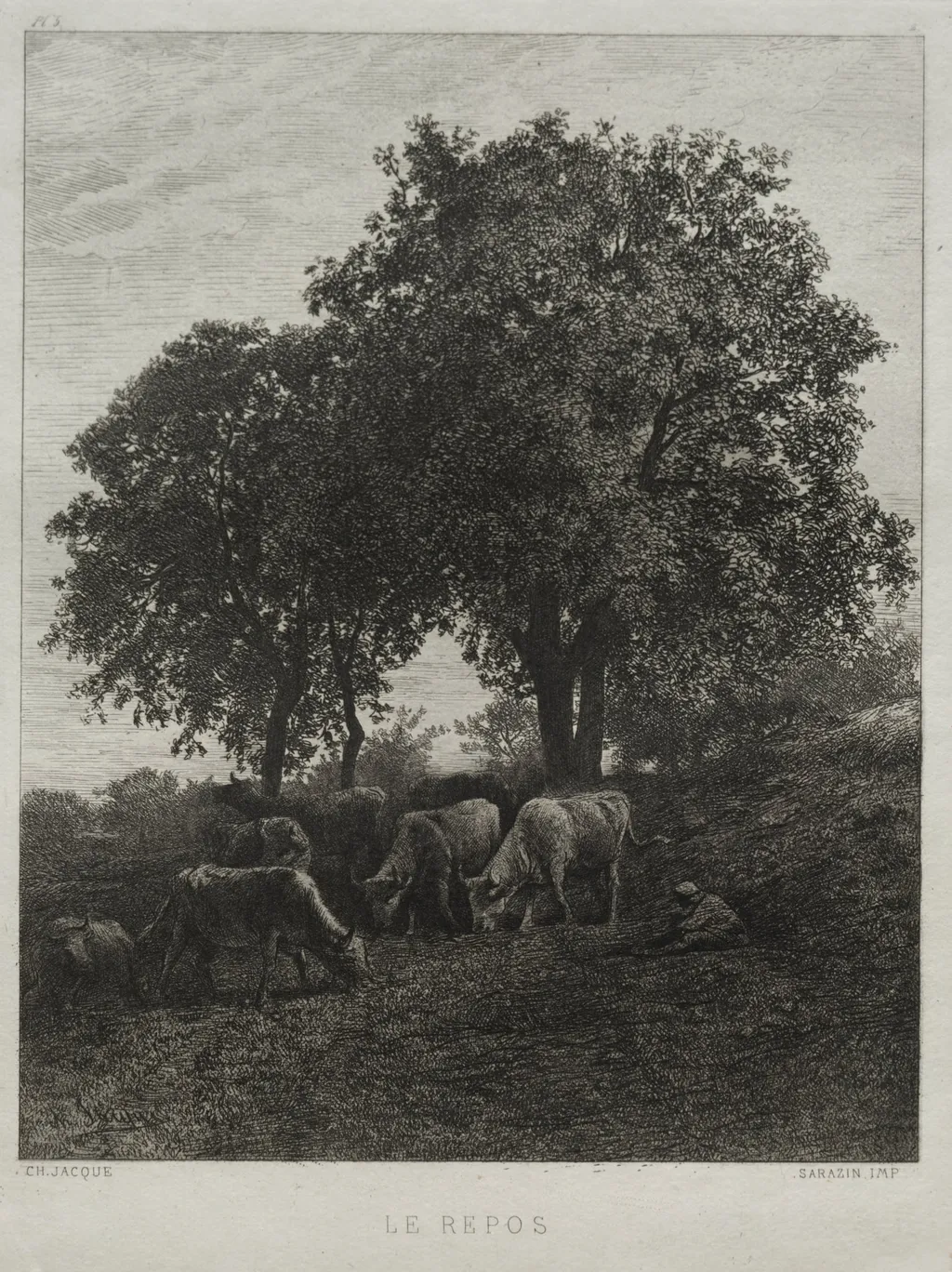
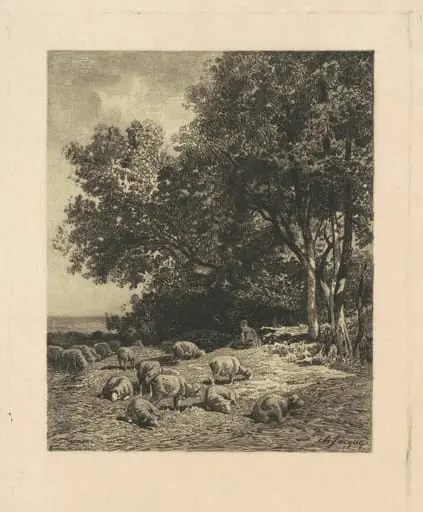
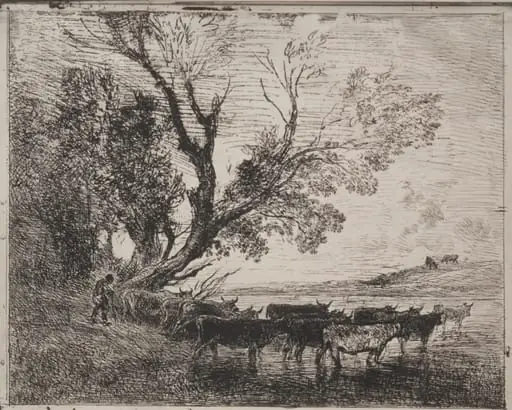
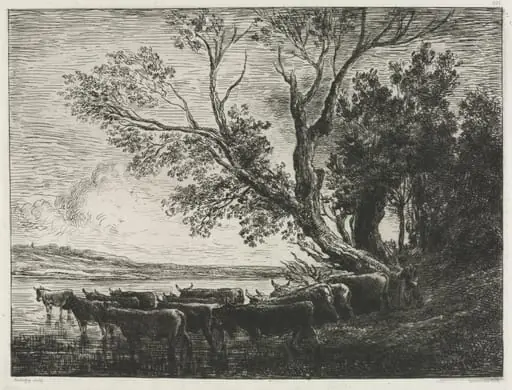
Rest is a print by the Impressionist artist Charles Jacque. It dates from 1864 and is held in the collection of the Cleveland Museum of Art.
About this work
Overview
Created in 1864 by Charles-Émile Jacque, *Rest* is a print that captures a quiet moment in the French countryside. Jacque, closely linked to the Barbizon School, turned to rural subjects with a focus on authenticity rather than idealization. This work exemplifies the movement’s commitment to observing nature directly, portraying animals and landscape without theatrical embellishment.
Subject & Meaning
The scene depicts a herd of cows resting beneath a broad tree, some reclining, others standing quietly. The absence of human figures emphasizes the autonomy of animal life within the natural world. The stillness of the moment, framed by the tree’s canopy and hazy sky, suggests a rhythm of daily existence untouched by labor or disturbance, evoking a quiet reverence for ordinary rural rhythms.
Technique & Style
Jacque employed subtle tonal contrasts to model form and space, using chiaroscuro to define the volume of the animals and the texture of the tree’s bark.
Jacque employed subtle tonal contrasts to model form and space, using chiaroscuro to define the volume of the animals and the texture of the tree’s bark. The print’s delicate line work and varied hatching convey the softness of grass, the weight of the tree’s shadow, and the diffused quality of light filtering through leaves. The composition avoids dramatic angles, favoring a calm, horizontal balance that reinforces the scene’s tranquility.
History & Provenance
Produced during Jacque’s active years in the Barbizon region, *Rest* was made as a print, likely intended for wider distribution than a painted work. It aligns with the period’s growing interest in reproductive prints that brought rural imagery to urban audiences. While specific early ownership records are sparse, the work is recognized within scholarly circles as representative of Jacque’s printmaking output in the 1860s.
Context
In mid-19th century France, artists increasingly turned away from historical and mythological subjects to depict everyday rural life. The Barbizon School, centered near the Forest of Fontainebleau, championed this shift. Jacque’s focus on livestock and pastoral stillness mirrored broader cultural reflections on industrialization, offering a visual counterpoint to the accelerating pace of modern life.
Legacy
Jacque’s *Rest* contributes to a broader tradition of naturalistic animal depiction in 19th-century European art. While less widely known than Millet’s figures, Jacque’s prints helped sustain interest in the dignity of rural existence. His careful rendering of animals in their environment influenced later generations of landscape and animal painters who valued observation over sentimentality.
Own this work as a print
Artist & collection
Artist
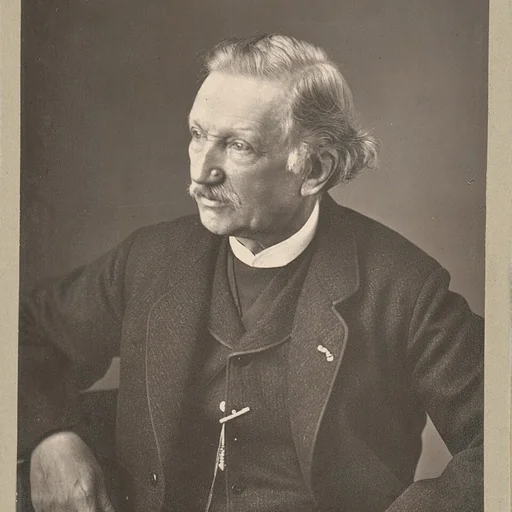
Charles-Émile Jacque (23 May 1813 – 7 May 1894) was a French painter of Pastoralism and engraver who was, with Jean-François Millet, part of the Barbizon School. He first learned to engrave maps when he spent seven years in the French Army.