Artwork
Sheep
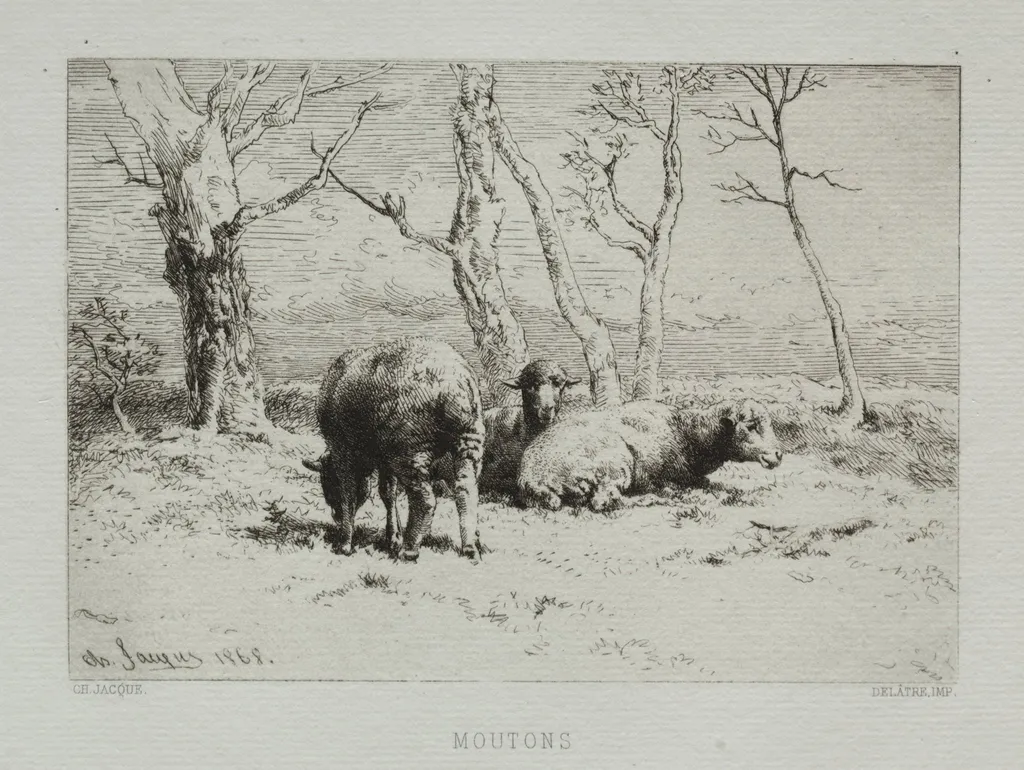
Sheep is a print by the Impressionist artist Charles Jacque. It dates from 1868 and is held in the collection of the Cleveland Museum of Art.
About this work
Overview
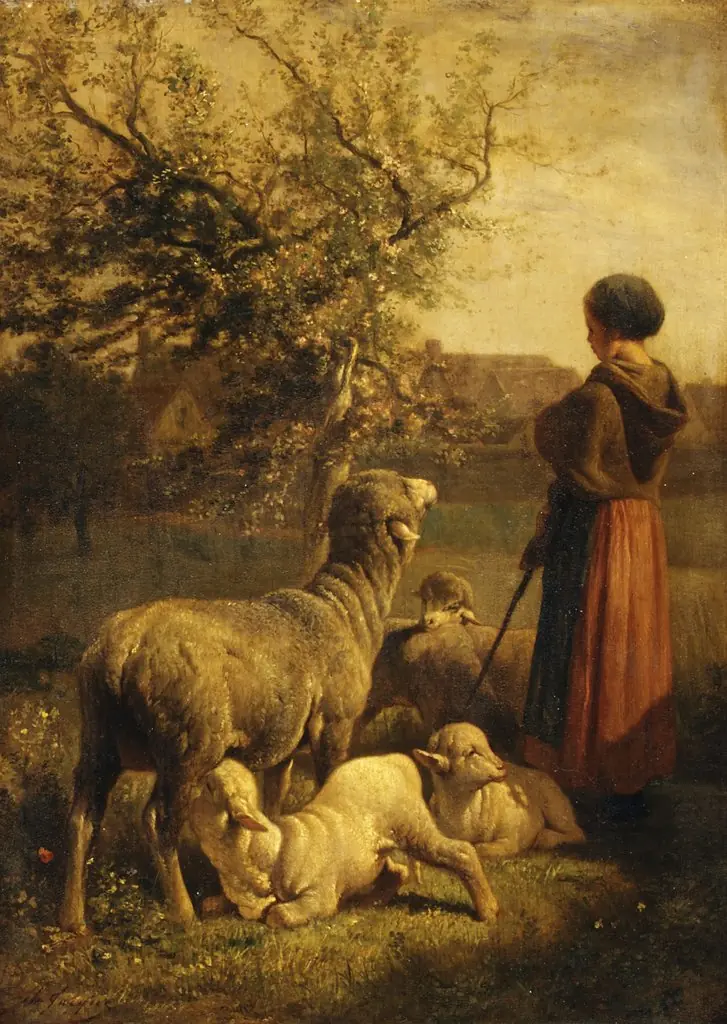
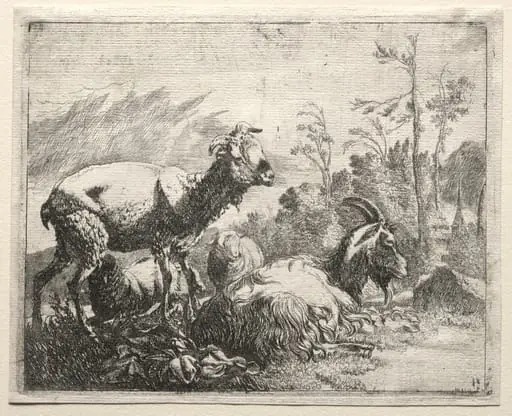
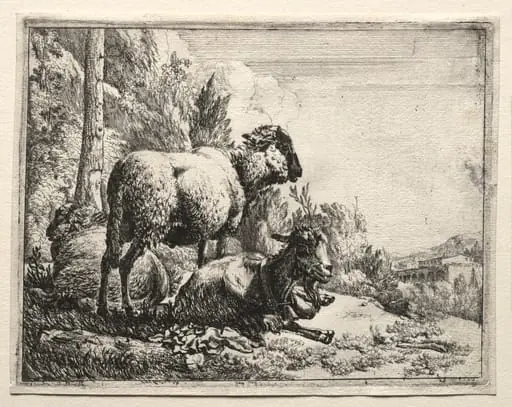
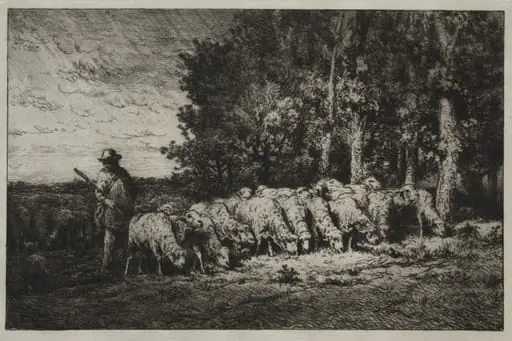
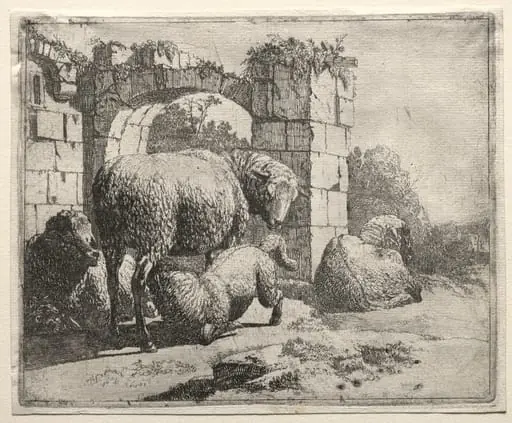
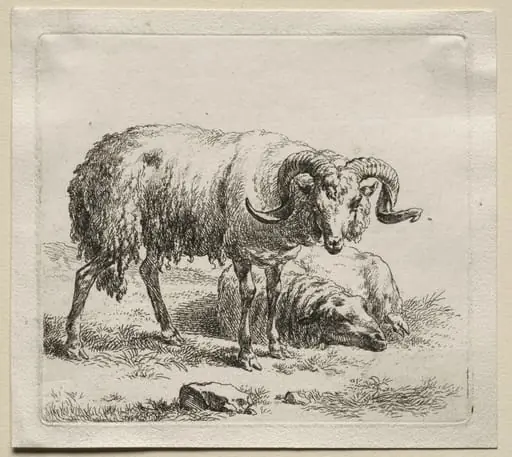
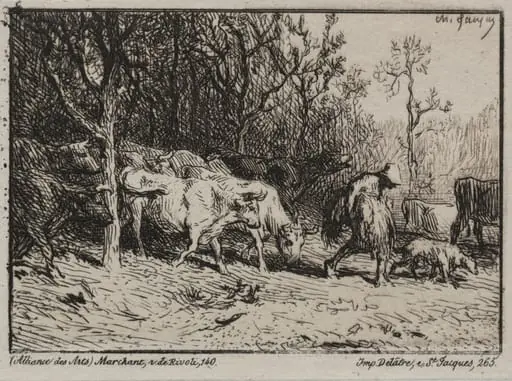
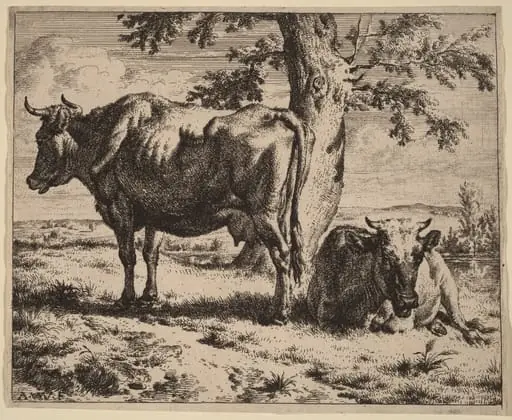
Created in 1868 by Charles-Émile Jacque, *Sheep* is a drypoint print that captures a quiet rural scene. Jacque, trained as a map engraver during his military service, turned to pastoral subjects after joining the Barbizon School. This work exemplifies the group’s dedication to depicting ordinary country life with quiet dignity, avoiding idealization in favor of observed detail.
Subject & Meaning
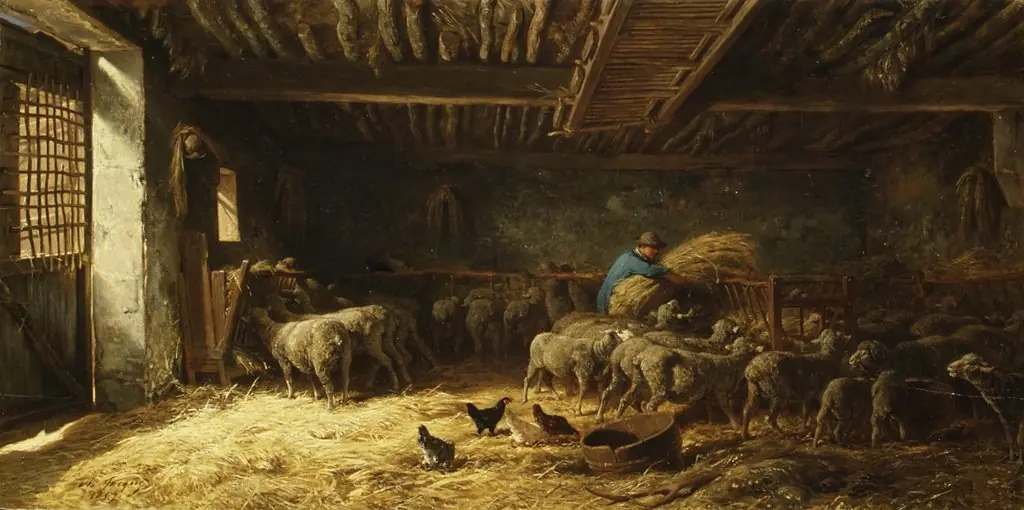
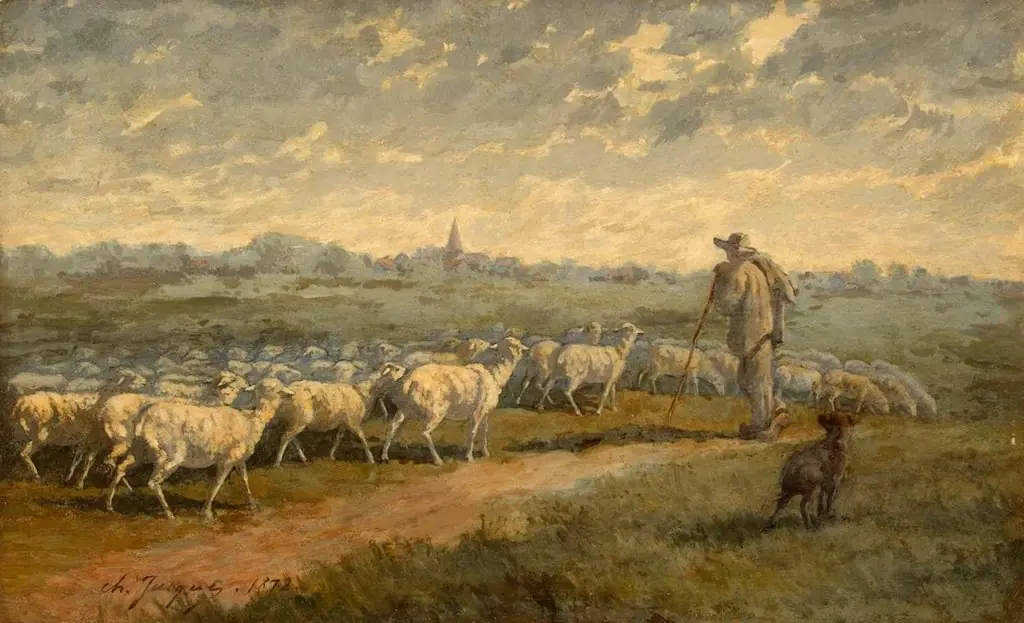
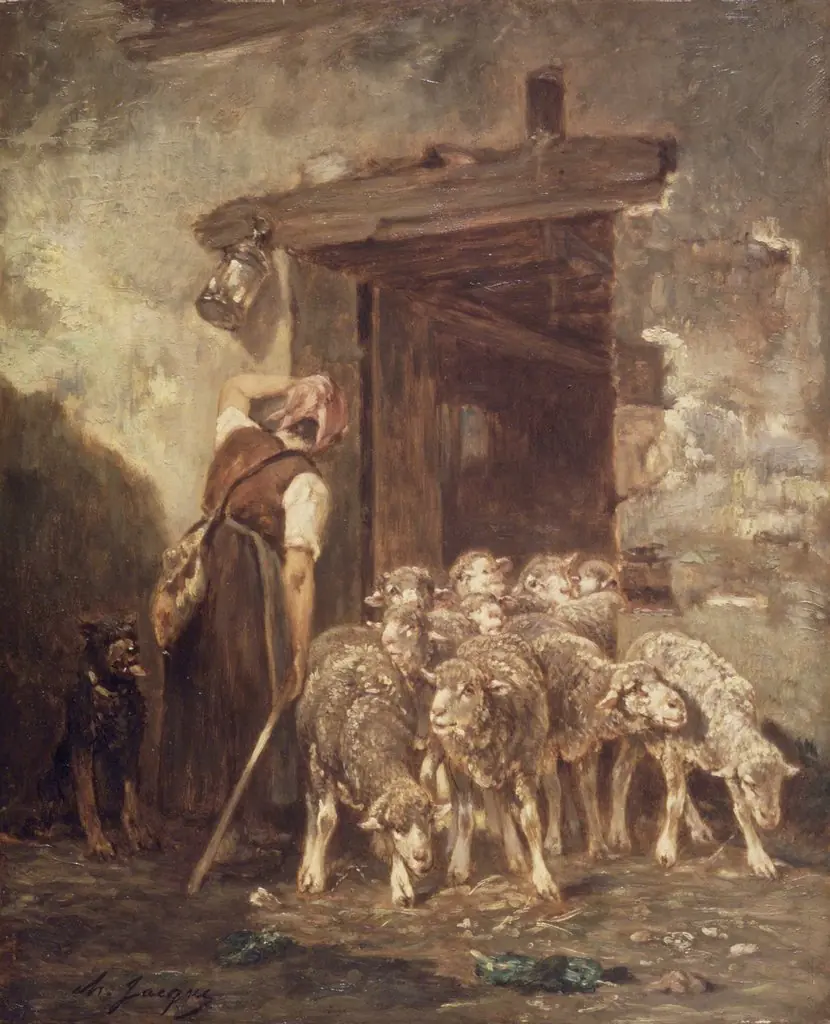
The print portrays three sheep grazing beneath bare, twisted trees, their forms softened by careful shading. The patchy ground and shifting light suggest a late afternoon in a quiet pasture. Rather than dramatizing the scene, Jacque emphasizes stillness and the animals’ quiet presence, aligning with the Barbizon ethos of honoring rural existence without sentimentality.
Technique & Style
Jacque employed drypoint engraving to achieve delicate tonal variations, using loose yet controlled lines to suggest the wool’s texture through subtle shadow.
Jacque employed drypoint engraving to achieve delicate tonal variations, using loose yet controlled lines to suggest the wool’s texture through subtle shadow. The contrast between the soft, rounded forms of the sheep and the angular, spindly branches enhances the naturalism. His technique reflects a mastery of printmaking inherited from his cartographic training, applied here to evoke tactile realism.
History & Provenance
The print entered the collection of the Cleveland Museum of Art, where it remains part of its holdings of 19th-century European prints. Jacque’s work was widely recognized in his time for elevating animal subjects within the Realist movement. Though less known today than his contemporaries, his prints were collected by institutions and private patrons across Europe.
Context
Jacque worked alongside Jean-François Millet and other Barbizon artists who rejected academic grandeur in favor of direct observation of the countryside. In mid-19th-century France, industrialization reshaped rural life, making such depictions of pastoral calm both nostalgic and politically resonant. His focus on sheep and shepherds reflected a broader cultural interest in the vanishing agrarian world.
Legacy
Jacque’s prints influenced later generations of printmakers who sought to capture everyday nature with technical precision and emotional restraint. While not widely celebrated today, his work contributed to the legitimacy of animal subjects in fine art and demonstrated how printmaking could convey the quiet poetry of rural life without embellishment.
Own this work as a print
Artist & collection
Artist
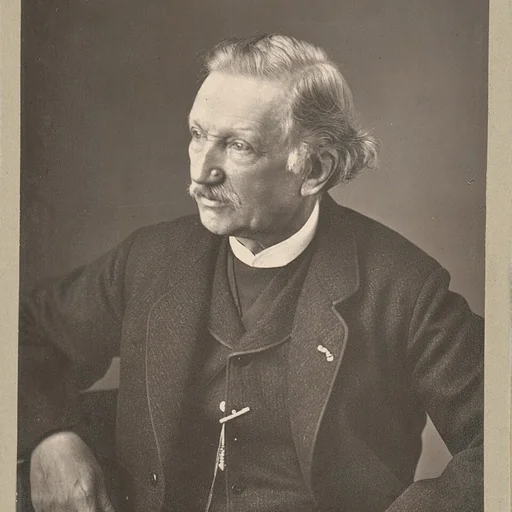
Charles-Émile Jacque (23 May 1813 – 7 May 1894) was a French painter of Pastoralism and engraver who was, with Jean-François Millet, part of the Barbizon School. He first learned to engrave maps when he spent seven years in the French Army.