Artwork
The Mill
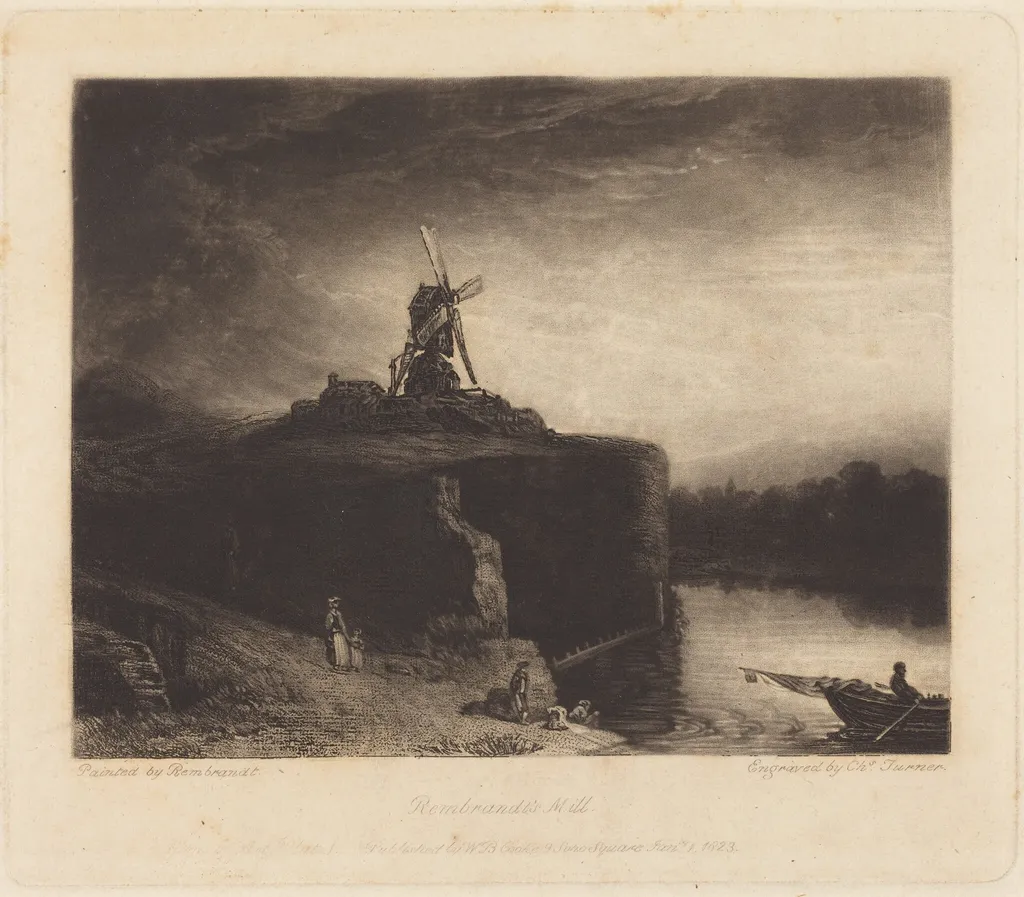
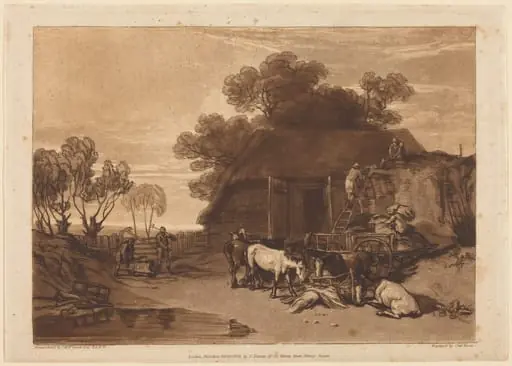
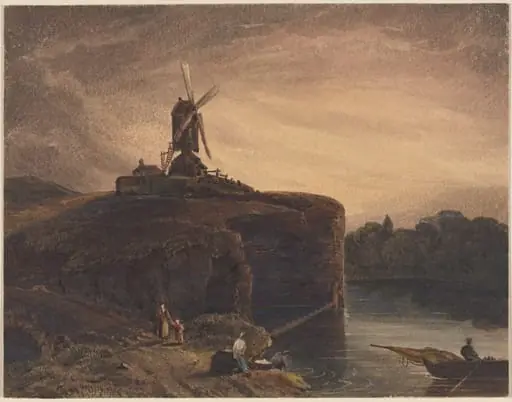
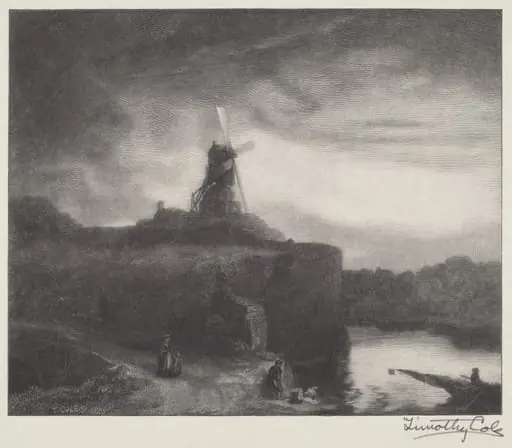
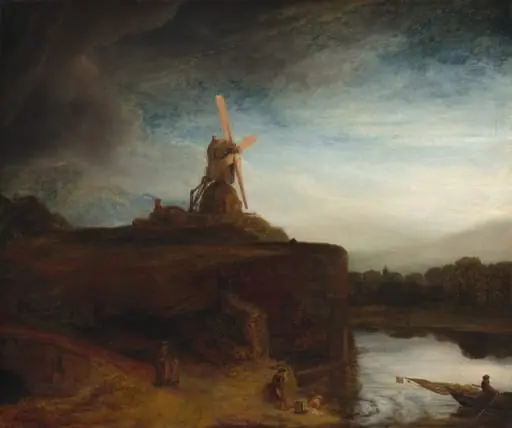
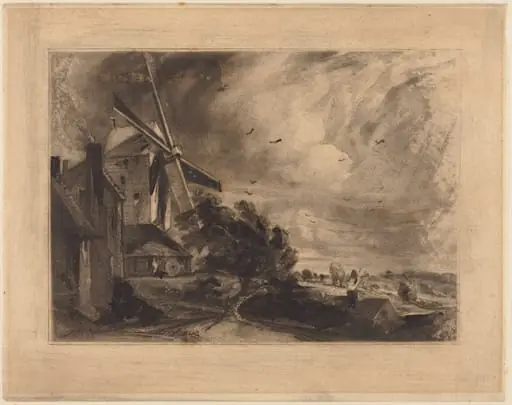
The Mill is an ink print by the Romanticist artist Charles Turner. It dates from 1823 and is held in the collection of the National Gallery of Art.
About this work
Overview
Created in 1823, *The Mill* is a print that merges etching with mezzotint, allowing the artist to render both fine line work and rich tonal depth. The image presents a countryside watermill, its wheel turning beside a modest building, captured with a level of detail that emphasizes the texture of stone and water.
Subject & Meaning
The composition focuses on a functional rural mill, a common feature of early‑19th‑century English landscapes. By isolating the structure and its machinery, the work reflects an interest in everyday industry and the quiet dignity of agrarian life, inviting viewers to consider the relationship between human labor and the natural environment.
Technique & Style
Turner employed a dual process: the initial etching defined outlines and intricate elements, while mezzotint provided smooth gradations of light and shadow. This combination yields a subtle atmospheric quality, with the darkened wheel and surrounding foliage emerging from a softly rendered background, characteristic of mezzotint’s capacity for tonal richness.
History & Provenance
Charles Turner, an English engraver active from the late 1700s through the mid‑1800s, is noted for his reproductive prints and collaborations with J. M. W. Turner, especially on the *Liber Studiorum* series. *The Mill* exemplifies his skill in translating landscape subjects into print form, though its subsequent ownership record remains limited to private collections.
Artist & collection
Artist
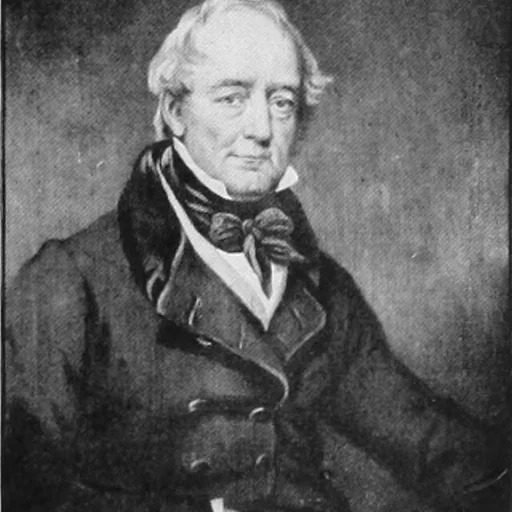
Charles Turner (31 August 1774 – 1 August 1857) was an English engraver and draughtsman who specialised in portraiture. He collaborated with J. M. W. Turner (to whom he was not related) on the early plates of the same's Liber Studiorum.