Artwork
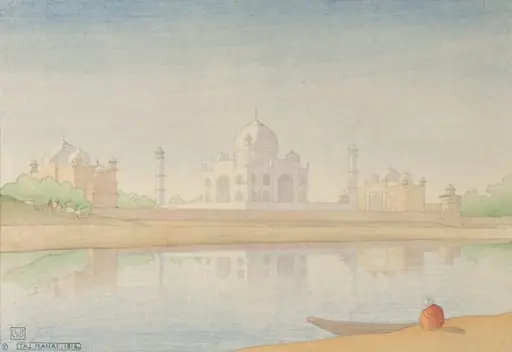
Taj Mahal, Agra
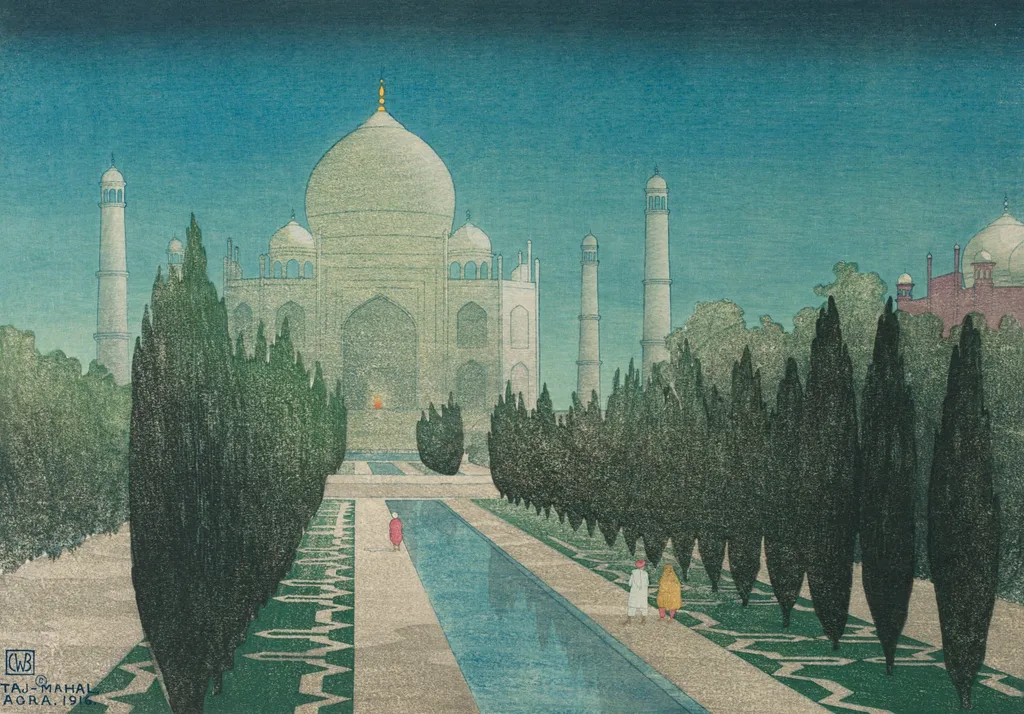
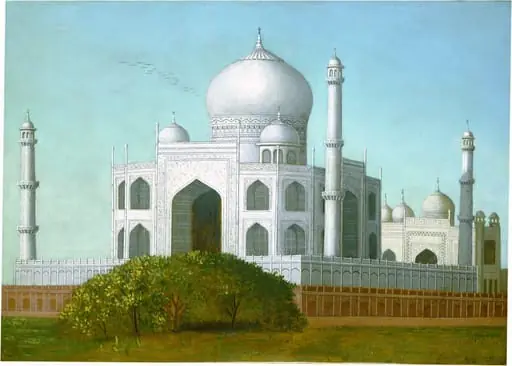
Taj Mahal, Agra is a print by Charles William Bartlett. It dates from 1916 and is held in the collection of the Cleveland Museum of Art.
About this work
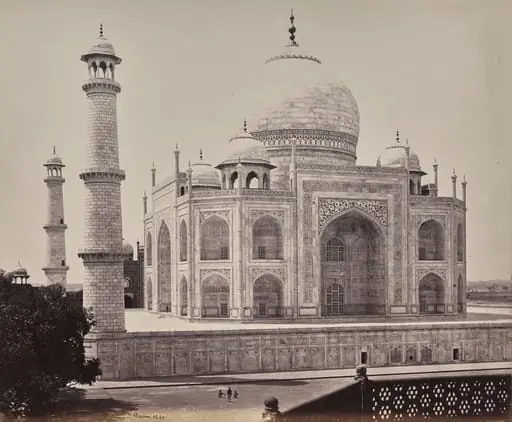
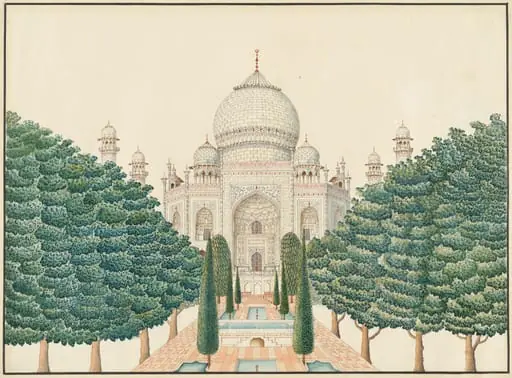
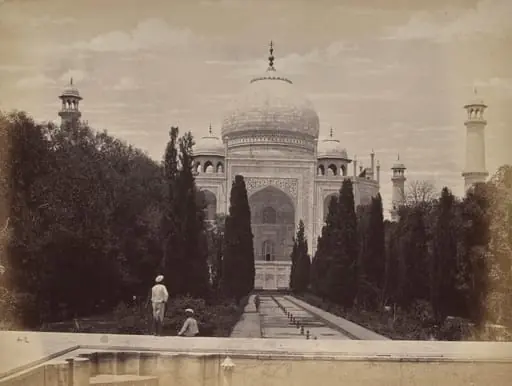
This painting shows the Taj Mahal in Agra.
It was created during a time when the Taj Mahal was not easily accessible to the rest of the world. The artist had to rely on stories and images from travelers to depict its beauty, which helped create a romantic vision of the landmark.
You can learn more about this style by looking at the work of artist: Charles William Bartlett (British, 1860–1940)
Overview
This print depicts the Taj Mahal in Agra, created during the early 20th century when the monument was inaccessible to most of the world outside of India, then under British rule.
Subject & Meaning
The artwork captures the Taj Mahal, a renowned Indian landmark, conveying a romanticized vision of its beauty through the artist's interpretation of second-hand accounts and traveler's images.
Technique & Style
The print's style is reminiscent of Charles William Bartlett's work, suggesting the use of techniques common in early 20th-century printmaking, though specific methods used here are not detailed.
History & Provenance
Created during the British Raj, the print's provenance and exact creation date are not specified, reflecting the artist's reliance on indirect sources for its depiction.
Context
Reflecting the era's limited global accessibility, the work bridges the gap between the Taj Mahal's physical inaccessibility and the world's curiosity, fueled by travelers' tales.
Legacy
While not attributed to a specific renowned artist in the provided context, the print contributes to the broader romanticized Western perception of the Taj Mahal during the early 20th century.
Artist & collection

Artist
Charles William Bartlett was an English painter and printmaker who settled in Hawaii.