Artwork
Dal Lake, Kashmir
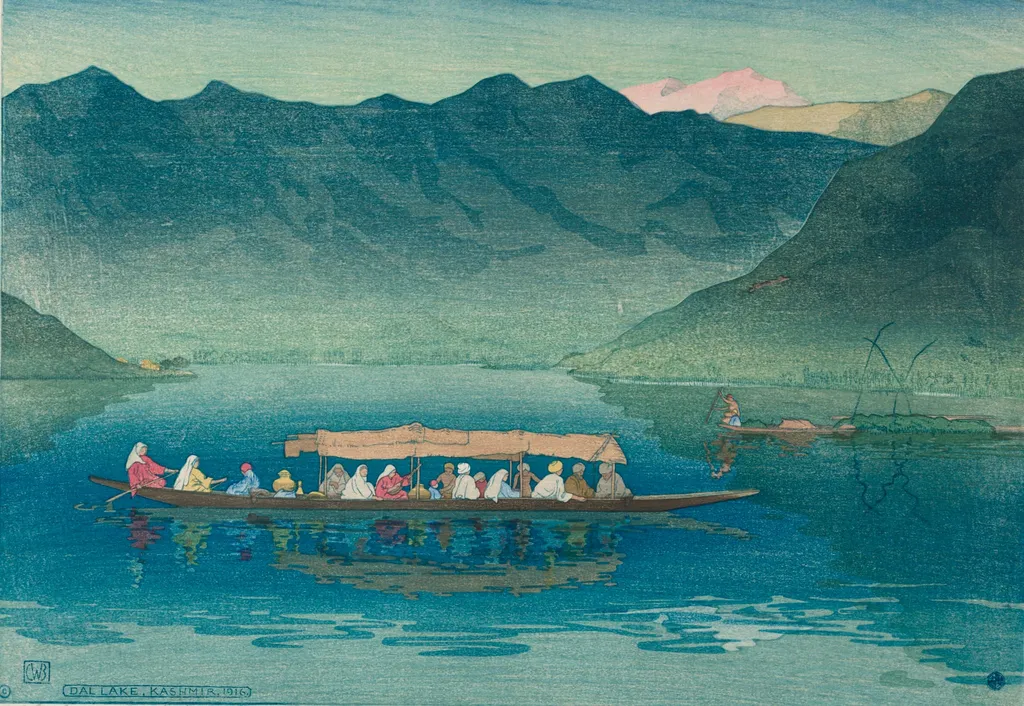
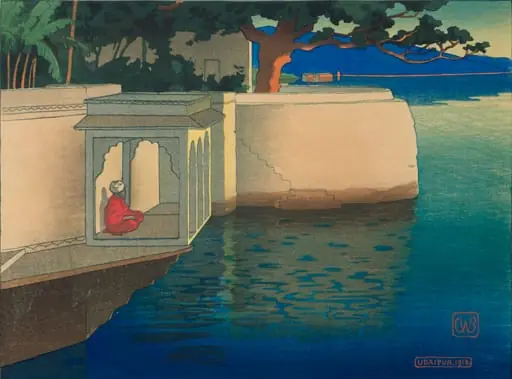
Dal Lake, Kashmir is a print by Charles William Bartlett. It dates from 1916 and is held in the collection of the Cleveland Museum of Art.
About this work
Overview
The work is part of the collection at The Cleveland Museum of Art, where it reflects the artist’s interest in Asian landscapes during his travels.
Charles William Bartlett created this print in 1916, capturing a quiet moment on Dal Lake in Kashmir. The work is part of the collection at The Cleveland Museum of Art, where it reflects the artist’s interest in Asian landscapes during his travels. Rendered with restrained tones and clear contours, the image conveys serenity through its composition and muted palette, avoiding dramatic detail in favor of atmospheric harmony.
Subject & Meaning
The scene depicts a wooden boat, its canopy woven from reeds, carrying several figures across the still waters of Dal Lake. Passengers, dressed in pale garments, appear engaged in quiet activity, while one rows with a long pole. The surrounding peaks, softly rendered in blush and sage, frame the vessel without intrusion. The image suggests a daily rhythm of life on the lake, emphasizing stillness over narrative.
Technique & Style
Bartlett employed a simplified linear style with minimal shading, favoring flat planes of color to evoke calm. The water is rendered in deep, even blues, contrasting gently with the pale clothing and the muted greens and pinks of distant mountains. The absence of fine detail and the deliberate balance of forms reflect influences from Japanese woodblock prints, aligning the work with early 20th-century Orientalist aesthetics in Western printmaking.
History & Provenance
Created during Bartlett’s travels in South Asia, the print emerged from his broader engagement with regional landscapes and cultures. It entered The Cleveland Museum of Art’s collection in the 20th century, likely through acquisition or donation. While little is documented about its early ownership, its inclusion in the museum’s holdings reflects institutional interest in cross-cultural artistic exchange during the interwar period.
Context
In 1916, Western artists increasingly looked to Asia for compositional and aesthetic inspiration, drawn to its emphasis on harmony, space, and restraint. Bartlett’s work aligns with this trend, though it avoids exoticism by focusing on ordinary life. The depiction of Kashmir, then under British colonial influence, reflects both personal observation and the broader fascination with the region’s perceived tranquility among European and American travelers.
Legacy
The print remains a quiet example of early 20th-century Orientalist printmaking, valued for its understated beauty rather than its historical prominence. It contributes to the museum’s collection of works that document Western artists’ responses to Asian environments. While not widely reproduced, it continues to serve as a reference for studies on cross-cultural visual representation and the aesthetics of stillness in modern print art.
Artist & collection

Artist
Charles William Bartlett was an English painter and printmaker who settled in Hawaii.

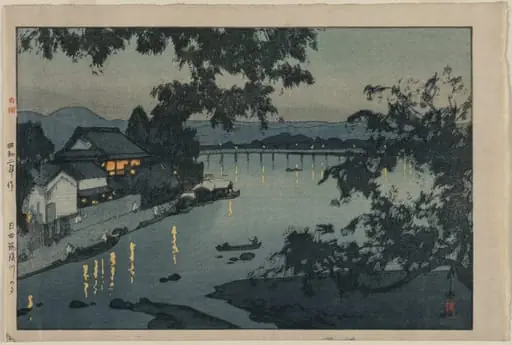 Evening on the Chikugo River
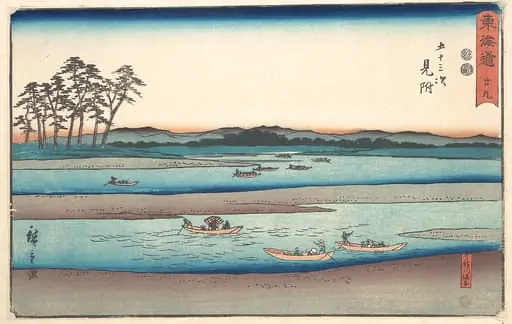 東海道五十三次 見附 天竜川渡舟|Mitsuke
![Cherry Blossoms in Full Bloom Along the Sumida River [Sumida-gawa hana-zakari], by Andō Hiroshige](https://artifactworldgallery.com/img/ando-hiroshige--cherry-blossoms-in-full-bloom-along-the-sumida-river-sumida--c06e3457a18e2f1e-w320.webp) Cherry Blossoms in Full Bloom Along the Sumida River [Sumida-gawa hana-zakari]
Cherry Blossoms in Full Bloom Along the Sumida River [Sumida-gawa hana-zakari]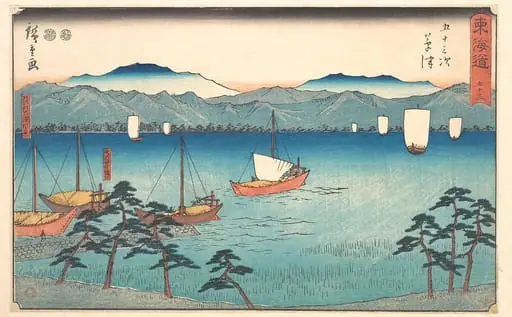 東海道五十三次 草津 矢ばせの渡口 琵琶湖風景|Kusatsu
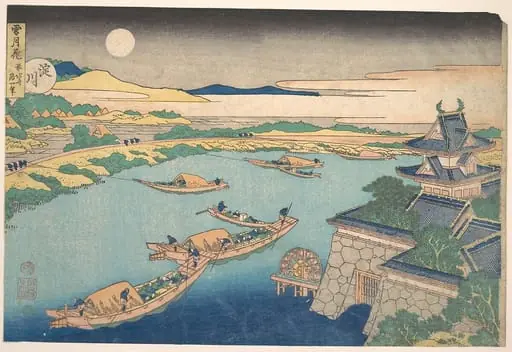 雪月花 淀川|Moonlight on the Yodo River (Yodogawa), from the series Snow, Moon, and Flowers (Setsugekka)
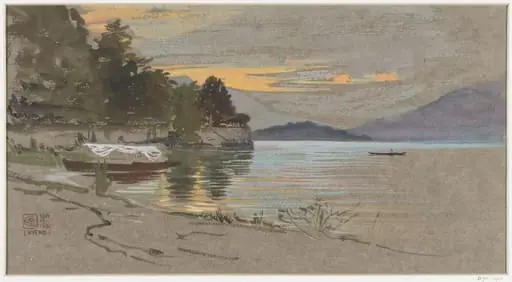 Laveno
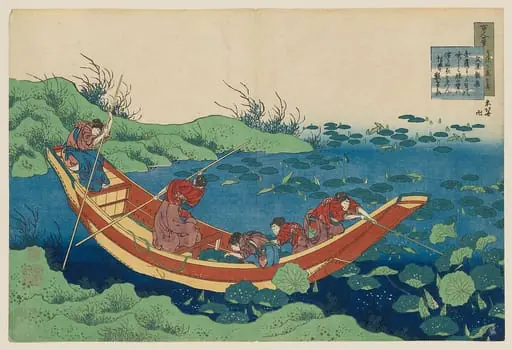 百人一首 うはかゑとき 文屋朝康|Poem by Funya no Asayasu, from the series One Hundred Poems Explained by a Nurse (Hyakunin isshu ubaga etoki)
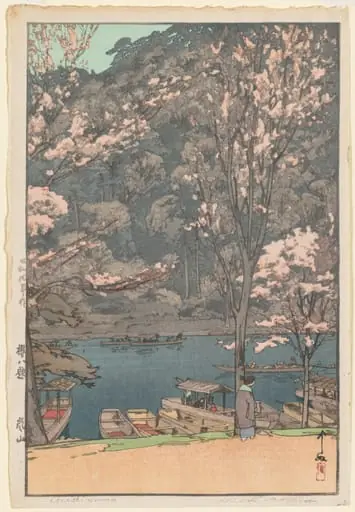 Eight Scenes of Cherry Blossom: Arashiyama
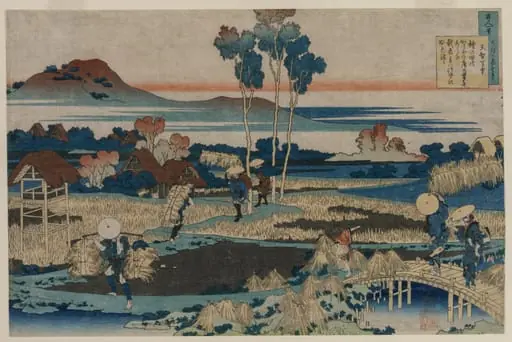 Poem by Emperor Tenchi, from the series One Hundred Poems by One Hundred Poets Explained by the Nurse
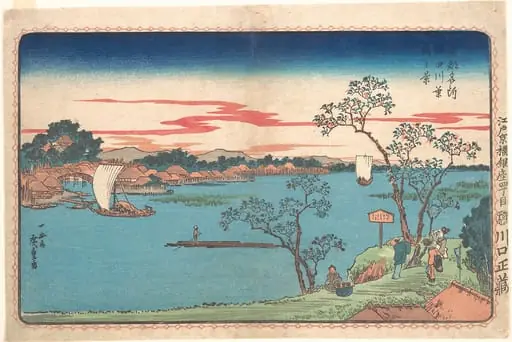 Sumidagawa, hazakura no kei|東都名所 隅田川葉桜之景|A View of Cherry Trees in Leaf along the Sumida River
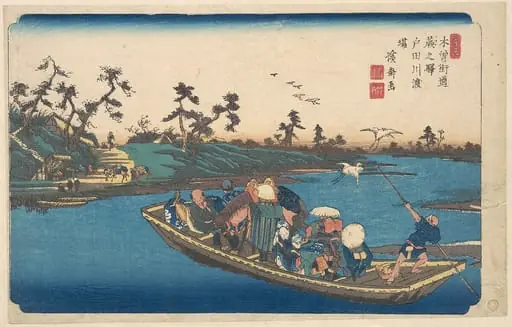 Untitled
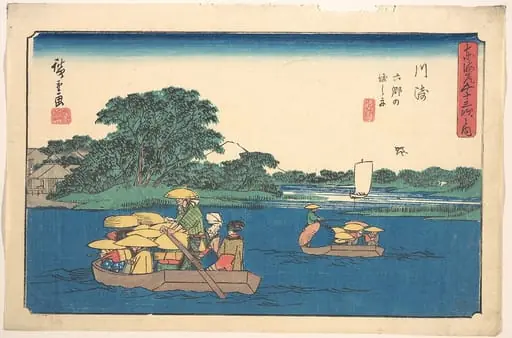 東海道五十三次之内 川崎 六郷の渡し舟|Kawasaki