Artwork
Victor-Auguste de Saint-Rémy
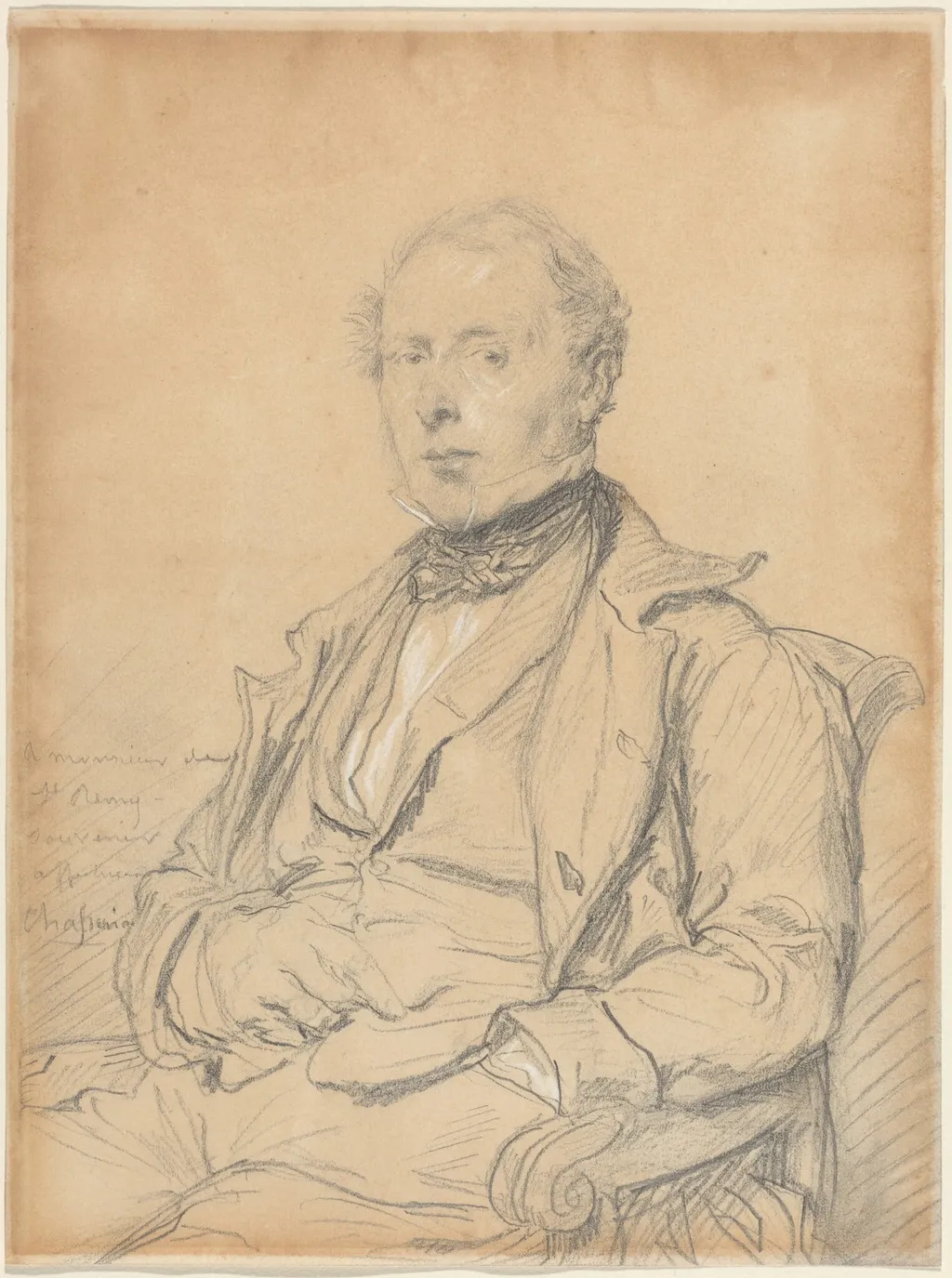
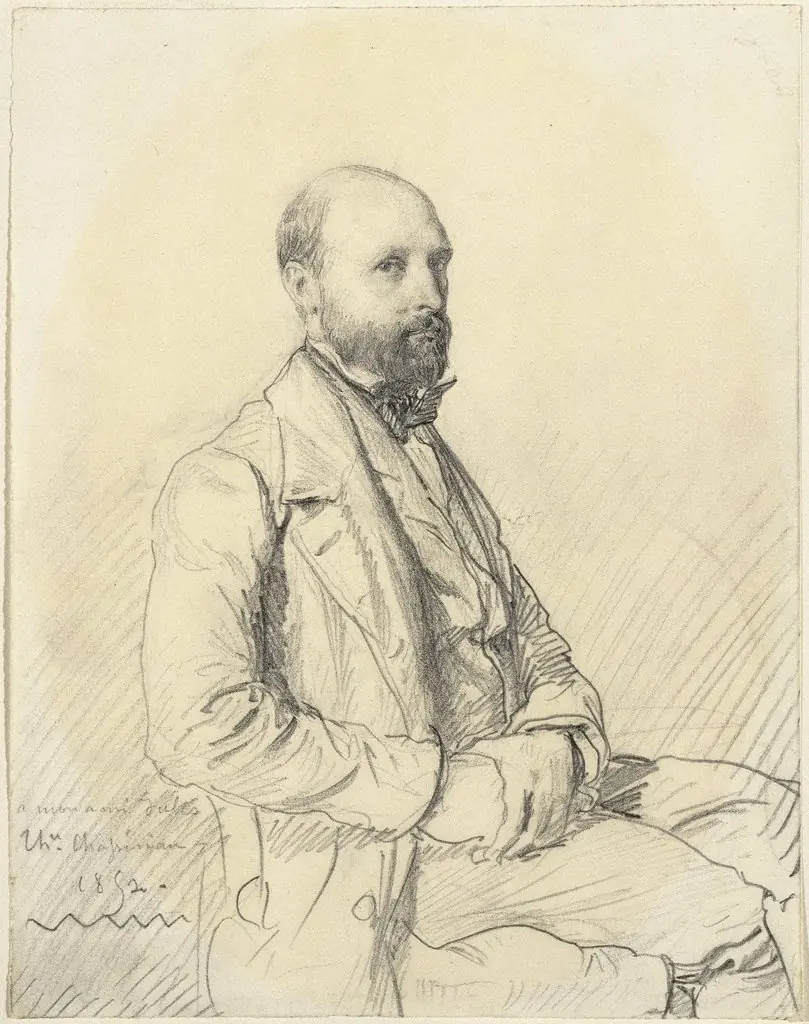
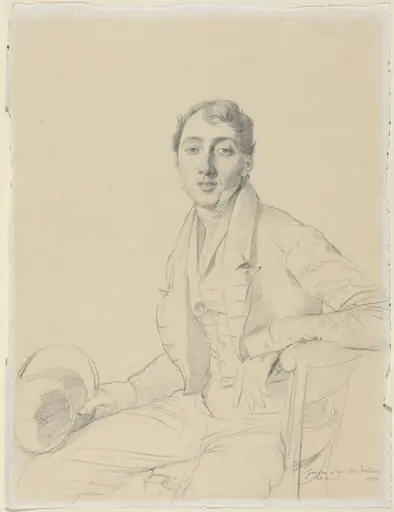
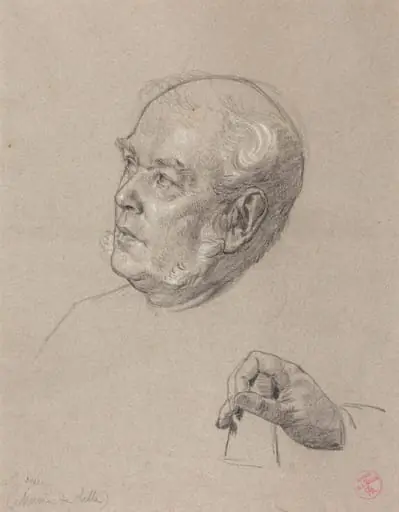
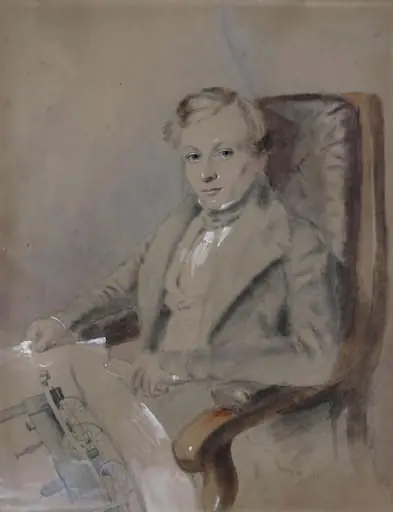
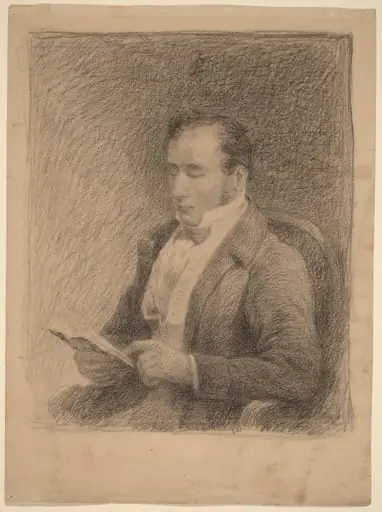
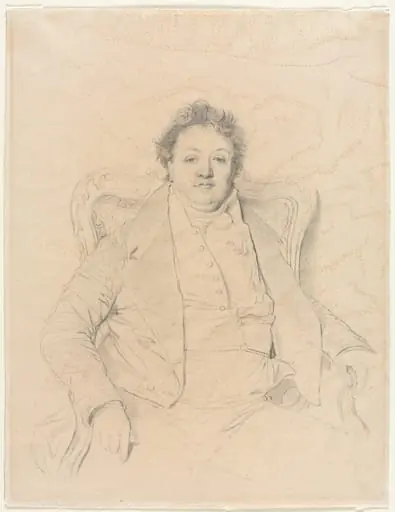
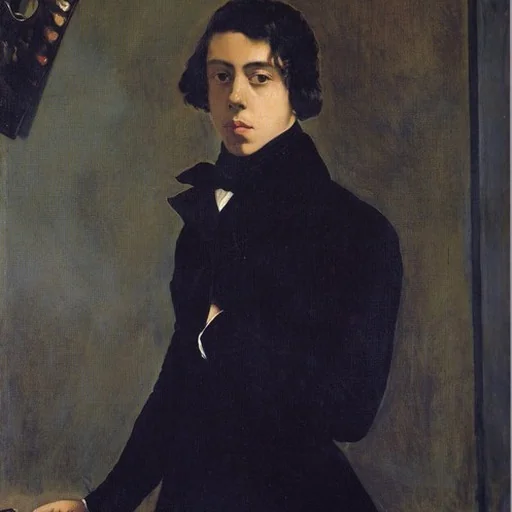
Victor-Auguste de Saint-Rémy is a graphite drawing by the Romanticist artist Théodore Chassériau. It dates from 1850 and is held in the collection of the National Gallery of Art.
About this work
Overview
The work exemplifies Chassériau’s skill in capturing character through restrained draftsmanship rather than dramatic flourish.
This graphite and white chalk drawing, dated circa 1850, depicts Victor-Auguste de Saint-Rémy, a French subject rendered with subtle tonal precision on wove paper. Executed by Théodore Chassériau, it belongs to a series of intimate portraits produced during his mature period, reflecting his dual artistic lineage—trained under Ingres yet drawn to Delacroix’s expressive energy. The work exemplifies Chassériau’s skill in capturing character through restrained draftsmanship rather than dramatic flourish.
Subject & Meaning
The sitter, Victor-Auguste de Saint-Rémy, is portrayed in quiet repose, seated with hands clasped and gaze turned leftward. His formal attire—a jacket and cravat—suggests social standing, yet the absence of overt symbolism or setting directs focus to his introspective demeanor. The portrait conveys stillness and inner reflection, aligning with Romantic ideals of individual subjectivity. There is no narrative context, allowing the viewer to engage with the man’s presence as an end in itself.
Technique & Style
Chassériau employed graphite for fine linear definition and white chalk to lift highlights, creating luminous contrasts against the paper’s neutral tone. Soft gradations model the face and fabric, suggesting volume without heavy modeling. The hatching is deliberate but unobtrusive, preserving the delicacy of the medium. His handling balances Ingres’s precision with a tactile sensitivity to texture, particularly in the cravat’s folds and the shadowed contours of the face.
History & Provenance
The drawing was made during Chassériau’s active years in Paris, when he frequently turned to portraiture alongside larger commissions. While its early ownership is undocumented, it entered institutional collections in the 20th century, likely through acquisition from a private French estate. Its survival in good condition reflects careful preservation, though no record of its original commission or recipient has been established.
Context
In the mid-19th century, French artists like Chassériau navigated tensions between Neoclassical discipline and Romantic expressiveness. Portraiture served as a private counterpoint to public murals and Orientalist scenes. This drawing reflects a broader trend among Romantic draftsmen who valued the immediacy of the sketch to convey psychological depth, distinct from the grandiosity of oil painting or historical themes that dominated official salons.
Legacy
Chassériau’s drawings, including this one, are recognized for their emotional restraint and technical finesse, influencing later generations of draftsmen who valued subtlety over spectacle. Though less celebrated than his murals or Shakespearean prints, this portrait exemplifies his ability to distill presence through minimal means. It remains a quiet testament to his mastery of the drawn line in capturing the unseen dimensions of character.
Artist & collection
Artist
Théodore Chassériau (French pronunciation: ; Spanish: Teodoro Chasseriau; September 20, 1819 – October 8, 1856) was a Dominican-born French Romantic painter noted for his portraits, historical and religious paintings,…