Artwork
Death
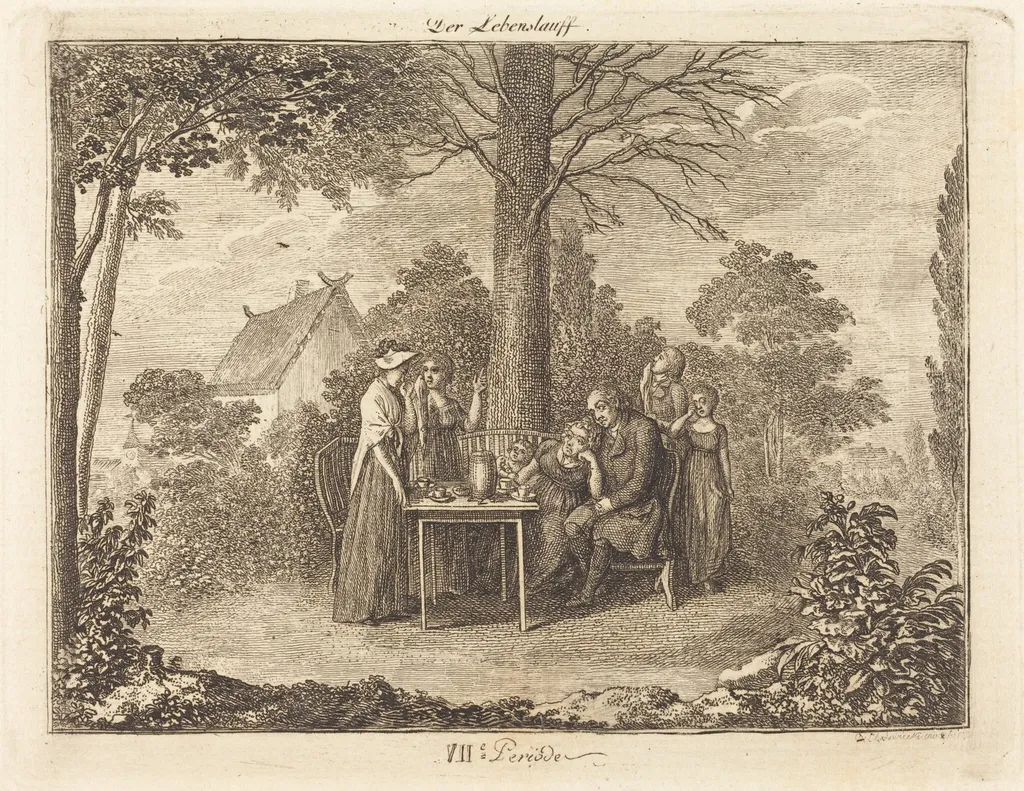
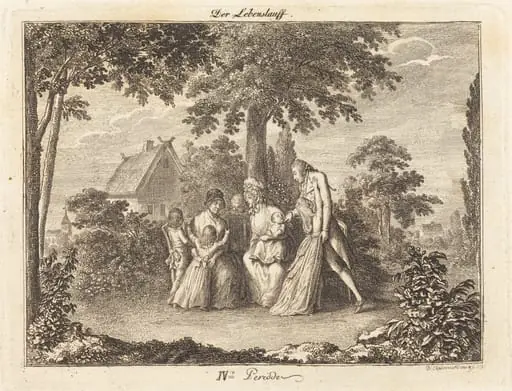
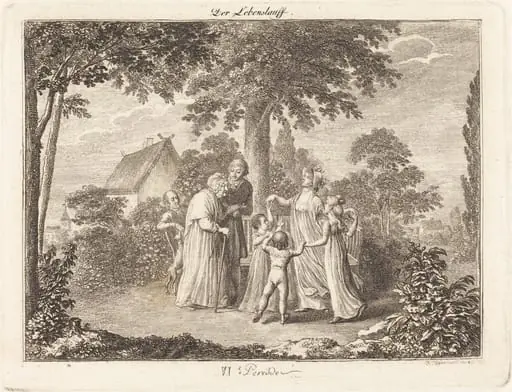
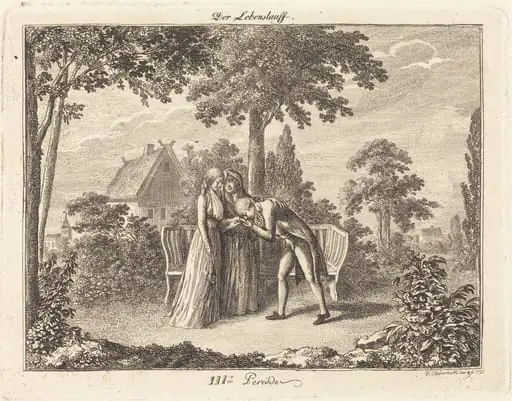
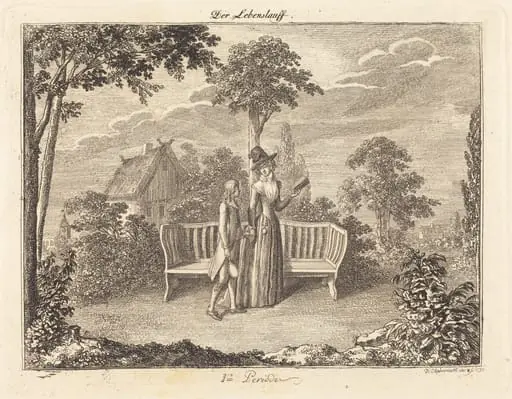
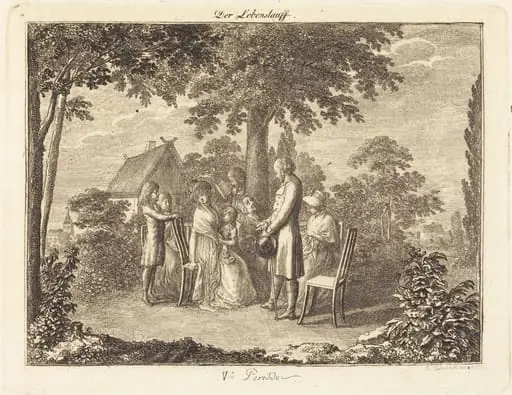
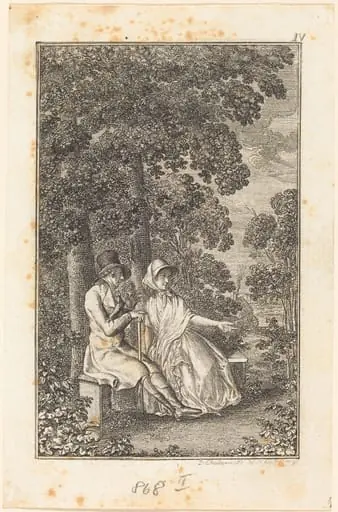
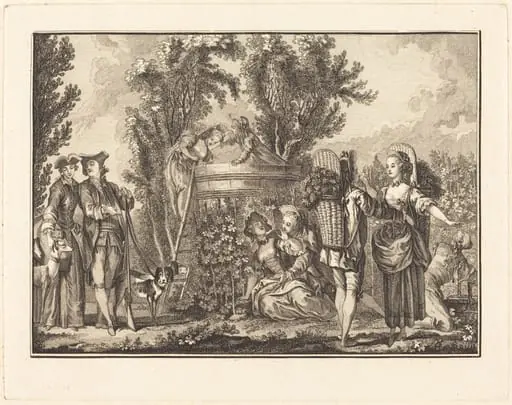
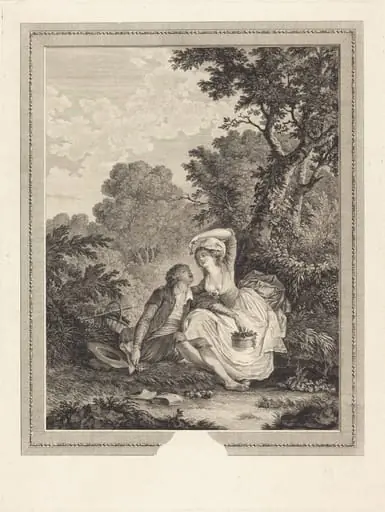
Death is an ink print by the Romanticist artist Daniel Nikolaus Chodowiecki. It dates from 1793 and is held in the collection of the National Gallery of Art.
About this work
Overview
Daniel Nikolaus Chodowiecki, a German printmaker of Huguenot and Polish heritage, produced the etching *Death* in 1793 while based in Berlin.
Daniel Nikolaus Chodowiecki, a German printmaker of Huguenot and Polish heritage, produced the etching *Death* in 1793 while based in Berlin. He was a prominent figure in the city’s artistic community and later directed the Berlin Academy of Art. This work belongs to a body of prints that engaged with everyday human experiences, using the medium of etching to capture intimate, somber moments with quiet precision.
Subject & Meaning
The image portrays Death as a skeletal figure holding a scythe, looming over a dying woman in bed. Her family kneels in silent grief—a child grips her mother’s hand, eyes open in shock, while others bow their heads. There is no grandeur or divine intervention; the scene emphasizes vulnerability and helplessness. It reflects a late 18th-century preoccupation with mortality, rendered without theatricality, as a private, domestic reality.
Technique & Style
Chodowiecki employed fine, controlled lines typical of etching to render texture and emotion with restraint. The composition avoids dramatic contrasts, favoring muted tones and naturalistic detail. Figures are dressed in plain, contemporary clothing, grounding the scene in everyday life. The absence of ornamental elements or symbolic flourishes heightens the sense of realism, distinguishing it from allegorical traditions of the time.
History & Provenance
Created in 1793, the etching emerged during a period when public health crises and high mortality rates made death a familiar presence in urban life. Chodowiecki, active in Berlin’s intellectual circles, often depicted social and emotional themes in his prints. While the specific early ownership of this work is undocumented, it aligns with his broader practice of producing accessible imagery for a broad audience through print circulation.
Context
In late 18th-century Europe, Enlightenment thought and religious skepticism coexisted with persistent fears of death. Chodowiecki’s image diverges from religious or mythological depictions, instead focusing on the quiet domesticity of dying. This shift mirrored broader cultural trends toward secular, human-centered narratives, where personal grief replaced divine judgment as the central theme of mortality.
Legacy
Chodowiecki’s *Death* contributed to a growing tradition of printmaking that treated mortality with psychological nuance rather than spectacle. His approach influenced later artists who sought to portray private sorrow with dignity and restraint. Though not widely exhibited today, the work remains a quiet testament to how ordinary people confronted death in an era before modern medicine reshaped its experience.
Artist & collection
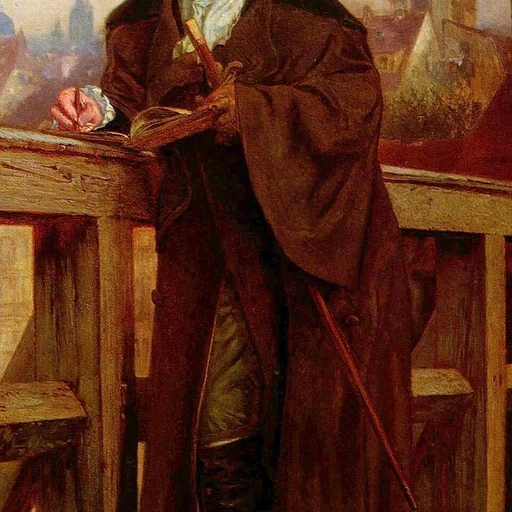
Artist
Daniel Niklaus Chodowiecki (16 October 1726 – 7 February 1801) was a German painter and printmaker of Huguenot and Polish ancestry, who is most famous as an etcher.