Artwork
Kitchen Still Life
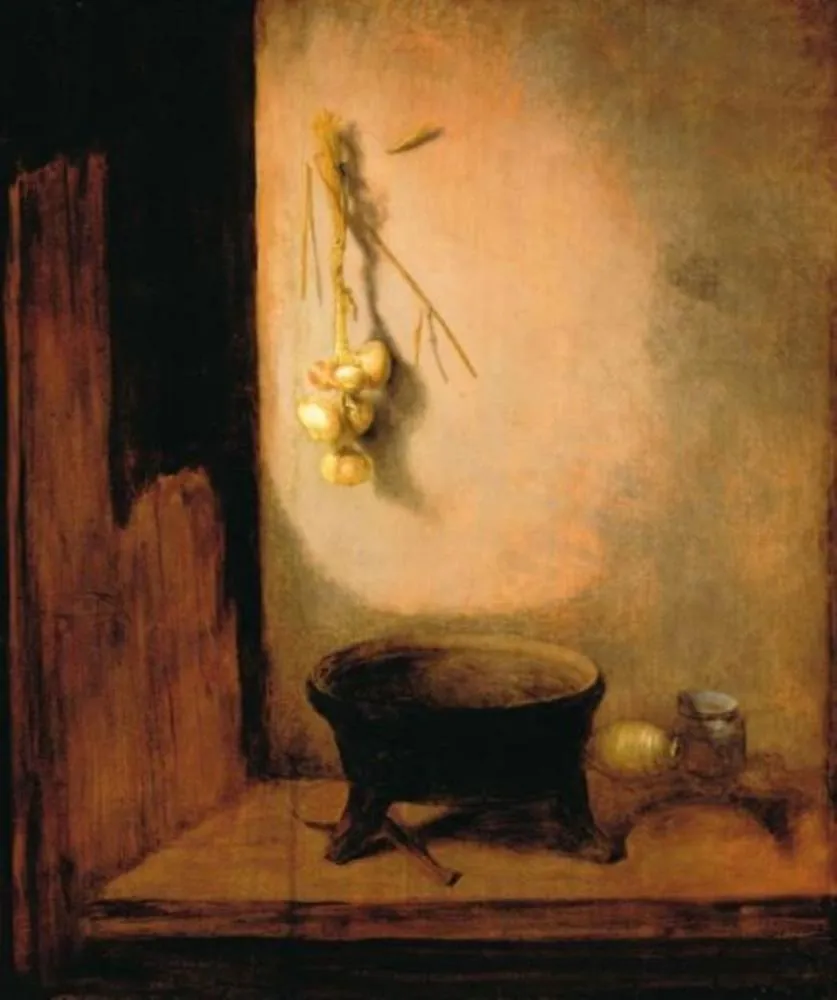
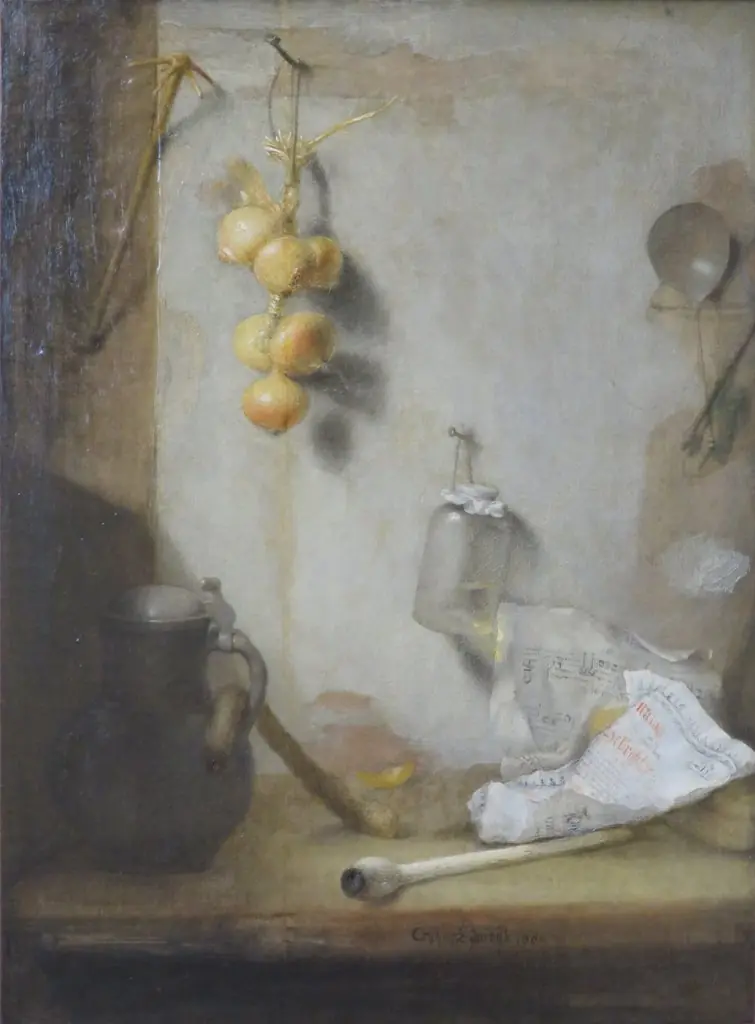
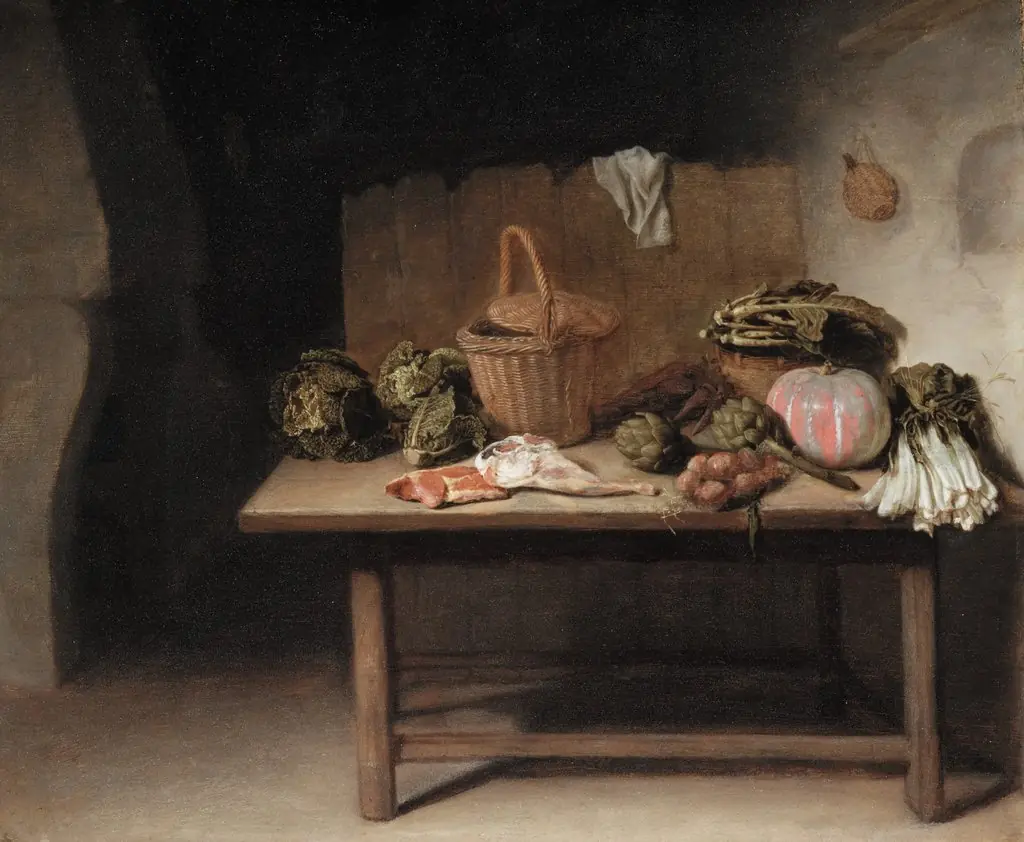
Kitchen Still Life is an oil painting by the Dutch Golden Age artist Christopher Paudiß. It dates from 1661 and is held in the collection of the Museum of Fine Arts, Budapest.
About this work
Overview
Created in 1661, *Kitchen Still Life* is an oil painting by the Bavarian artist Christoph Paudiß. Executed during the Dutch Golden Age, the work presents a modest domestic tableau that has been part of the Museum of Fine Arts in Budapest’s collection since its acquisition.
Subject & Meaning
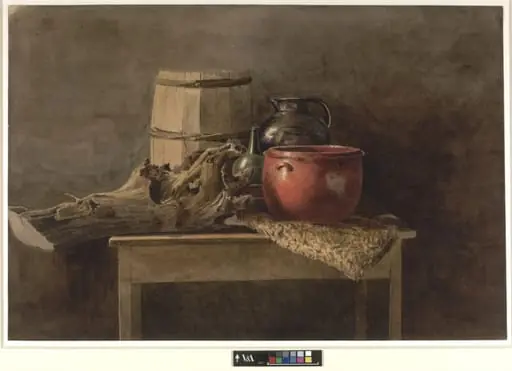
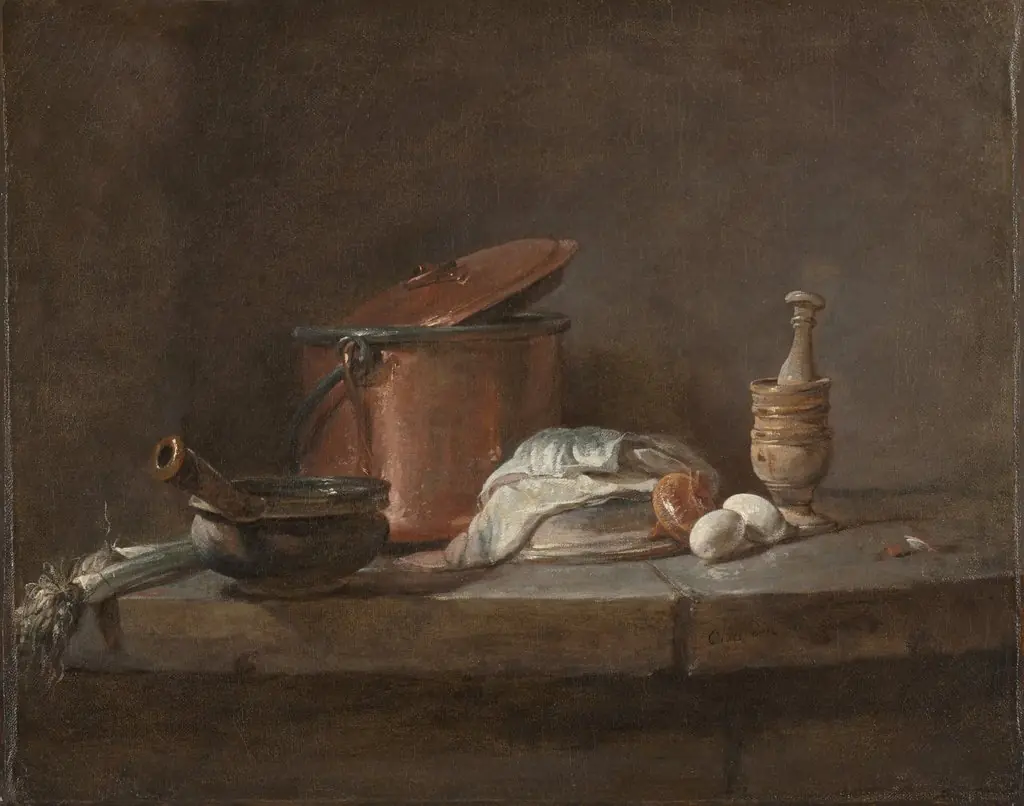
The composition centers on a kitchen table bearing a large black pot, a small glass jar, and a single onion, while a string of additional onions hangs from the wall behind. The ordinary objects invite contemplation of everyday material culture and the quiet rhythms of 17th‑century domestic life.
Technique & Style
Paudiß employs a restrained palette of earthy hues, allowing subtle tonal variations to define form. Light falls gently across the surfaces, avoiding stark contrasts and creating a calm atmosphere. The handling of oil paint reflects a measured brushwork that emphasizes texture without resorting to dramatic chiaroscuro.
History & Provenance
A pupil of Rembrandt, Paudiß brought elements of his master’s approach to his own work while maintaining a distinct regional sensibility. After remaining in private hands for centuries, the painting entered the Museum of Fine Arts, Budapest, where it is displayed as part of the institution’s Baroque holdings.
Context
The piece belongs to the broader tradition of Dutch still‑life painting, a genre that celebrated the visual richness of commonplace items. Within the Baroque period, such works often balanced realism with symbolic undertones, reflecting contemporary interests in abundance, transience, and the moral dimensions of daily objects.
Artist & collection
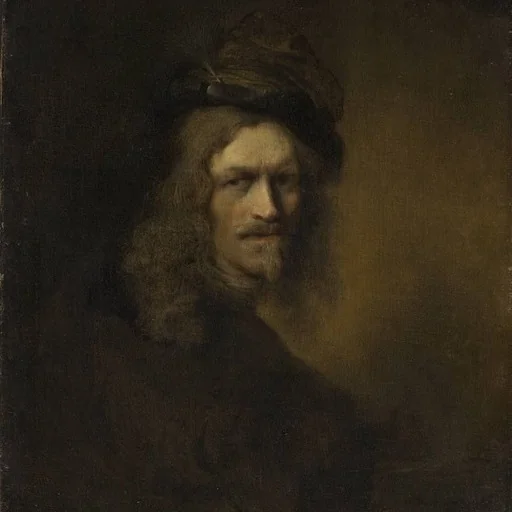
Artist
Christoph(er) Paudiß (1630 in Lower Saxony – 1666 in Freising, Upper Bavaria) was a Bavarian Baroque painter and a student of Rembrandt van Rijn.