Artwork
David and Bathsheba
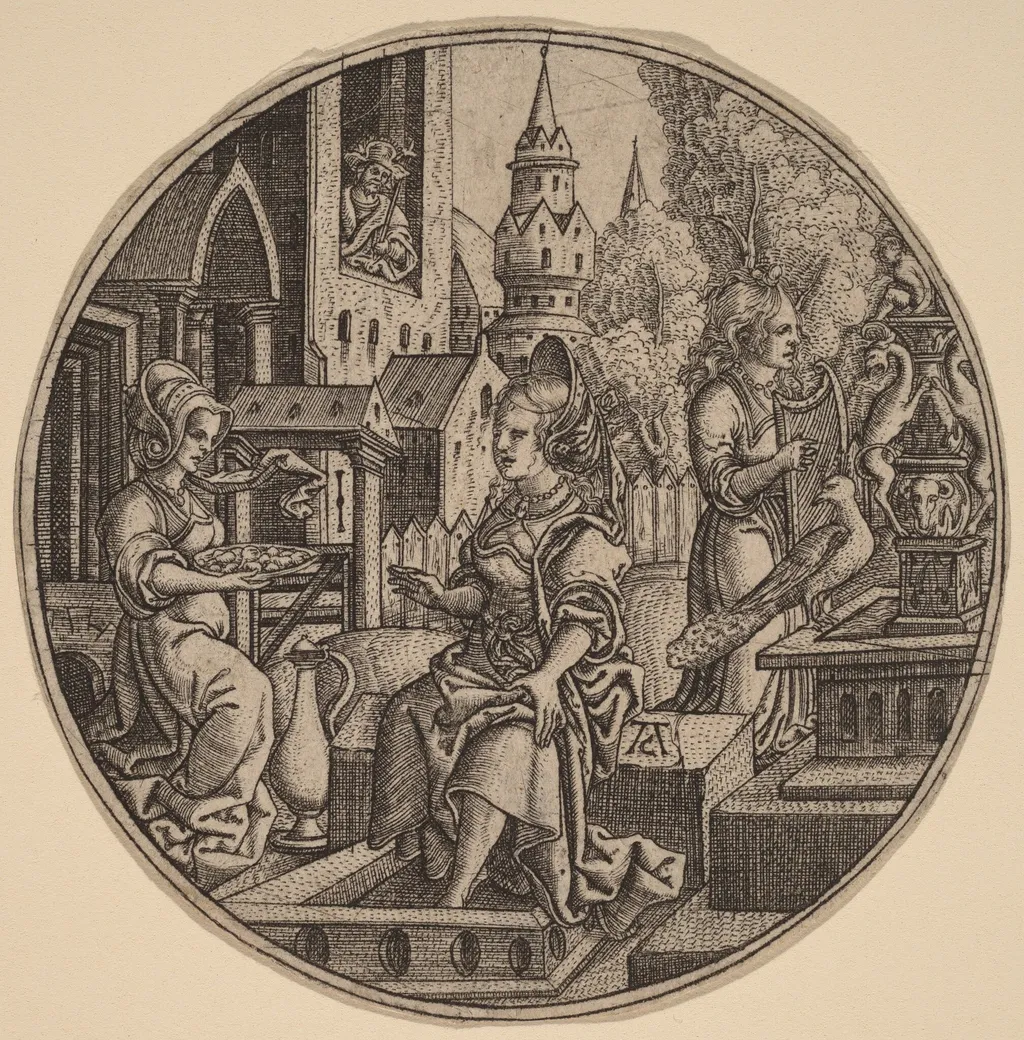
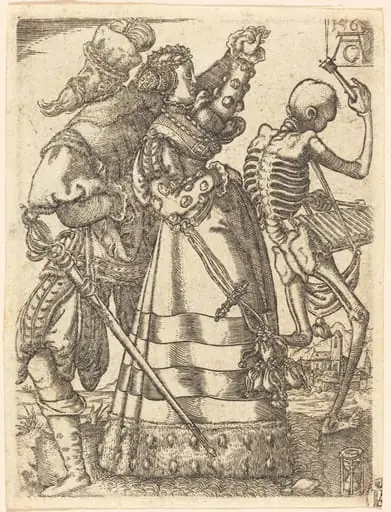
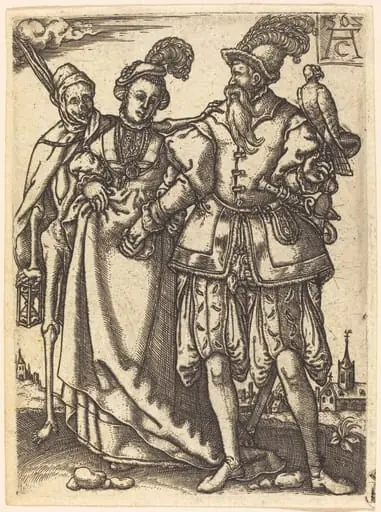
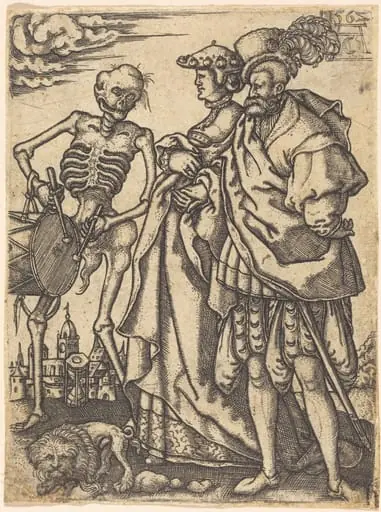
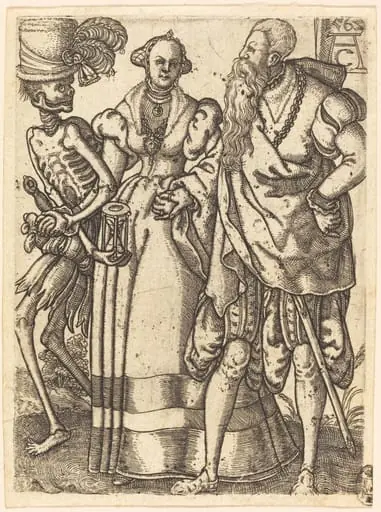
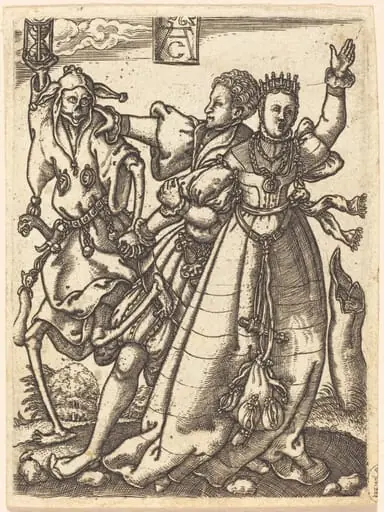
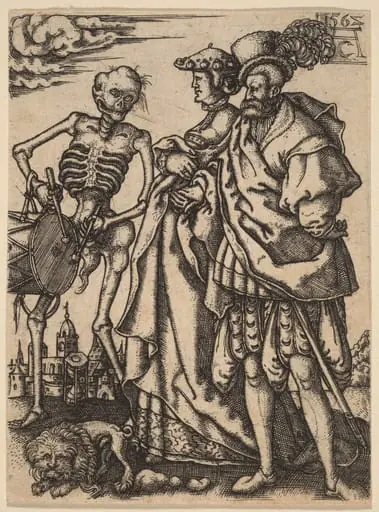
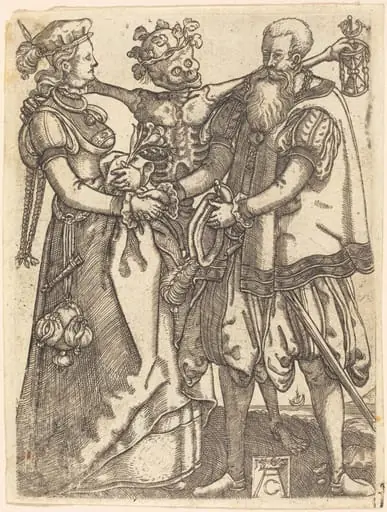
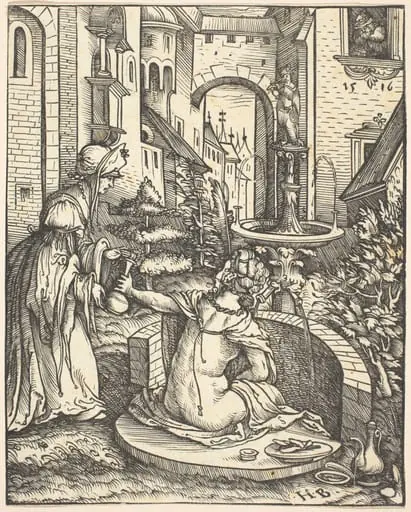
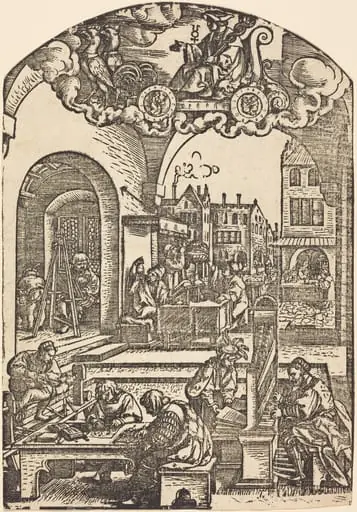
David and Bathsheba is an ink print by the Renaissance artist Allaert Claesz. It dates from 1528 and is held in the collection of the National Gallery of Art.
About this work
Overview
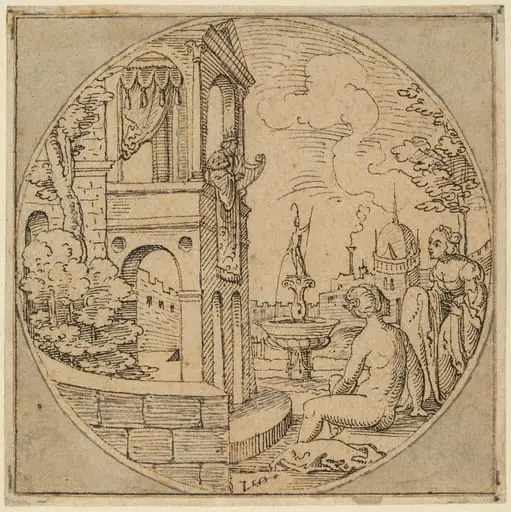
Allaert Claesz's 1528 engraving, David and Bathsheba, depicts a bustling interior scene with five figures, set against a backdrop of a town visible through a window. The composition balances activity with meticulous arrangement.
Subject & Meaning
While the title references the biblical narrative of David and Bathsheba, the engraving's focus on a kneeling, finely dressed woman with a scroll, surrounded by engaged figures, suggests a reinterpretation or a specific moment from the story, potentially emphasizing themes of luxury, daily life, or religious contemplation.
Technique & Style
Executed in black and white, the engraving showcases Claesz's use of fine lines to achieve detailed textures, from the folds of clothing to the architectural elements of the exterior townscape, demonstrating the artist's mastery of the engraving medium.
History & Provenance
Created in 1528, the engraving's provenance and historical ownership trail are not detailed in available information, though its creation date situates it within the early 16th-century European printmaking tradition.
Context
Part of the broader Renaissance interest in biblical themes and daily life depictions, this work reflects the era's attention to detail and narrative complexity in art, potentially influenced by or influencing contemporary printmaking trends.
Legacy
The engraving's impact on subsequent artistic productions or its reception over time is not prominently documented, though it remains a piece illustrating the technical and thematic preoccupations of its era.
Artist & collection