Artwork
Dance of Death II
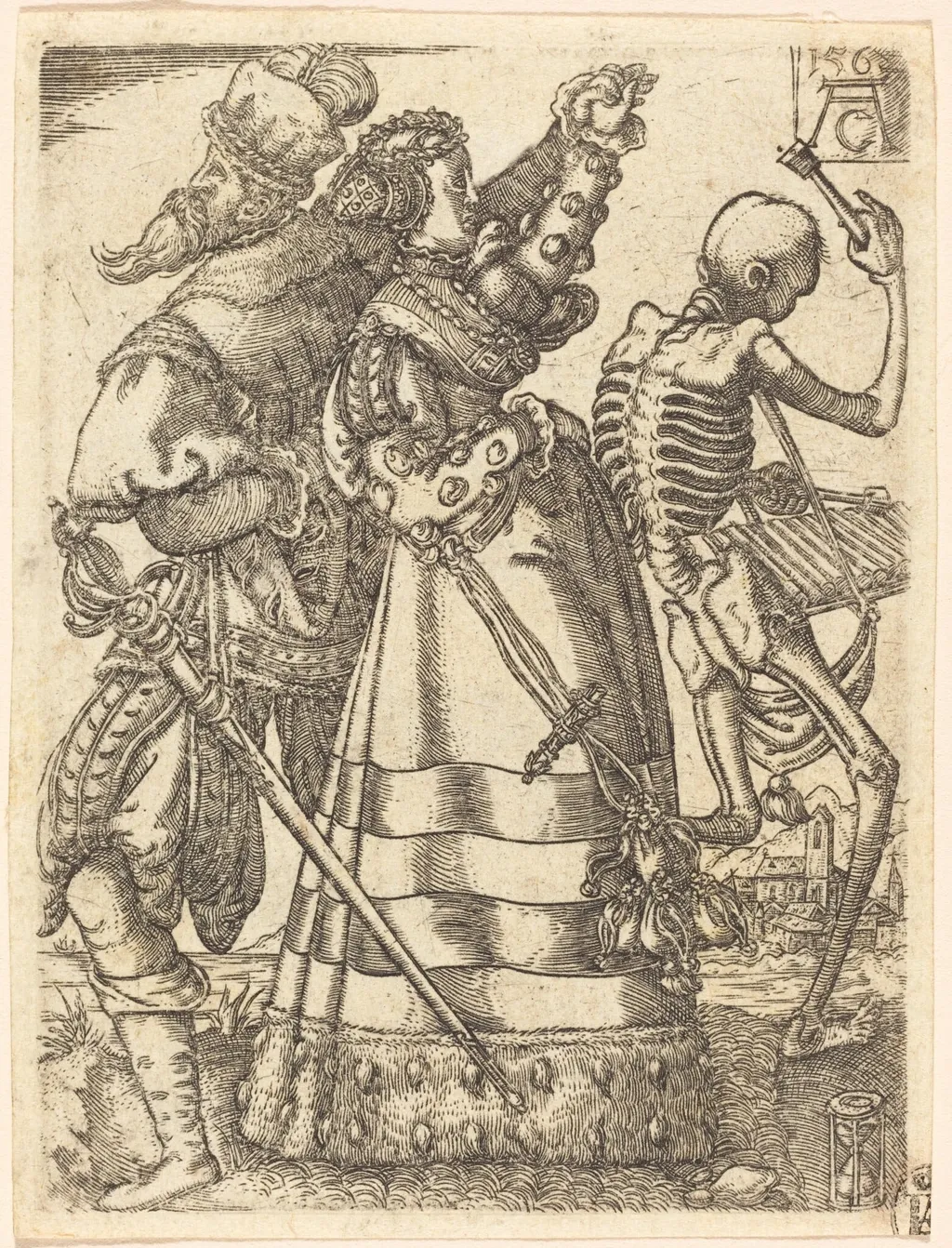
Dance of Death II is an ink print by the Renaissance artist Allaert Claesz. It is held in the collection of the National Gallery of Art.
About this work
Overview
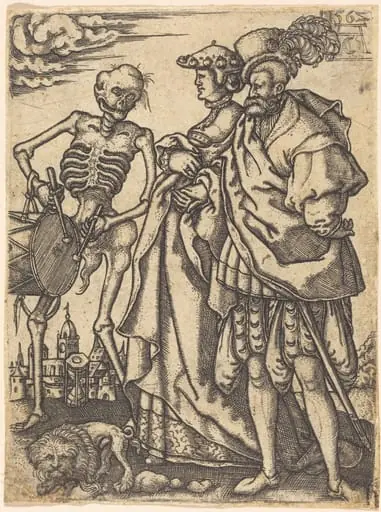
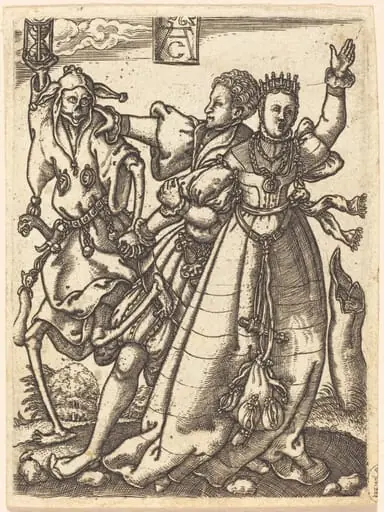
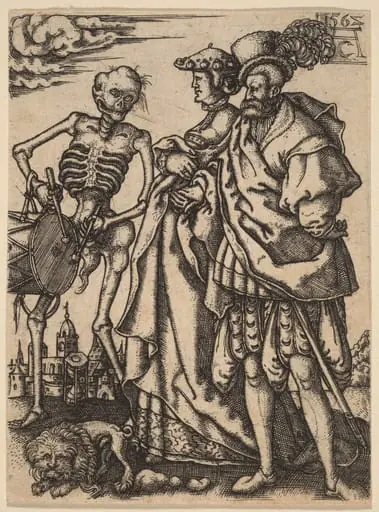
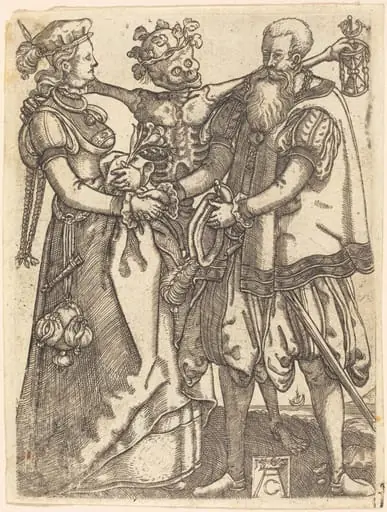
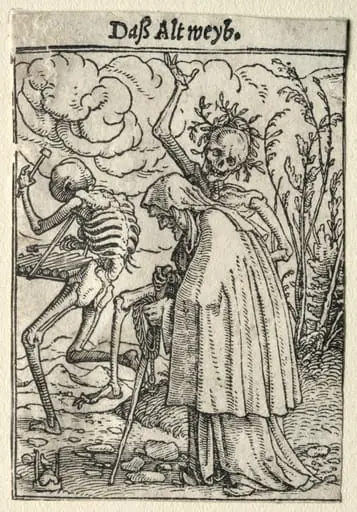
Dance of Death II is a 1562 engraving by Allaert Claesz, part of a broader Northern European tradition exploring mortality. It portrays a skeletal figure leading a man and woman through a quiet landscape, each responding differently to their fate. The work belongs to the print culture of the Renaissance, where engravings circulated widely as moral reflections on human impermanence.
Subject & Meaning
The skeleton, armed with a scythe, acts as an impartial guide, embodying death’s inevitability. The woman glances backward, perhaps clinging to life, while the man looks ahead, accepting his path. Their attire suggests ordinary social standing, reinforcing the theme that death spares no rank or status. The scene functions as a memento mori, urging contemplation of life’s fragility.
Technique & Style
Claesz employs fine cross-hatching to model form and depth, creating subtle gradations of light and shadow. The figures are rendered with precise linework, contrasting against the softer, receding landscape of trees and distant structures. The technique enhances the engraving’s quiet solemnity, avoiding dramatic flair in favor of restrained, contemplative realism.
History & Provenance
Created in 1562, the engraving emerged during a period when the Dance of Death motif was widely reproduced in print form across the Low Countries. Though specific early ownership records are sparse, its survival in institutional collections suggests it was valued for its moral clarity and technical skill within contemporary artistic circles.
Context
The image reflects a late Renaissance preoccupation with death’s universality, influenced by plague, religious upheaval, and humanist thought. Similar scenes appeared in woodcuts and frescoes, but Claesz’s version stands out for its intimate scale and psychological nuance. It aligns with Northern European traditions that favored quiet allegory over theatricality.
Legacy
Though not widely known today, Dance of Death II contributes to a significant visual language of mortality that persisted into the early modern era. Its restrained composition and technical precision influenced later printmakers who sought to convey existential themes without overt sentimentality, preserving its role as a quiet testament to Renaissance moral art.
Artist & collection