Artwork
Dance of Death V
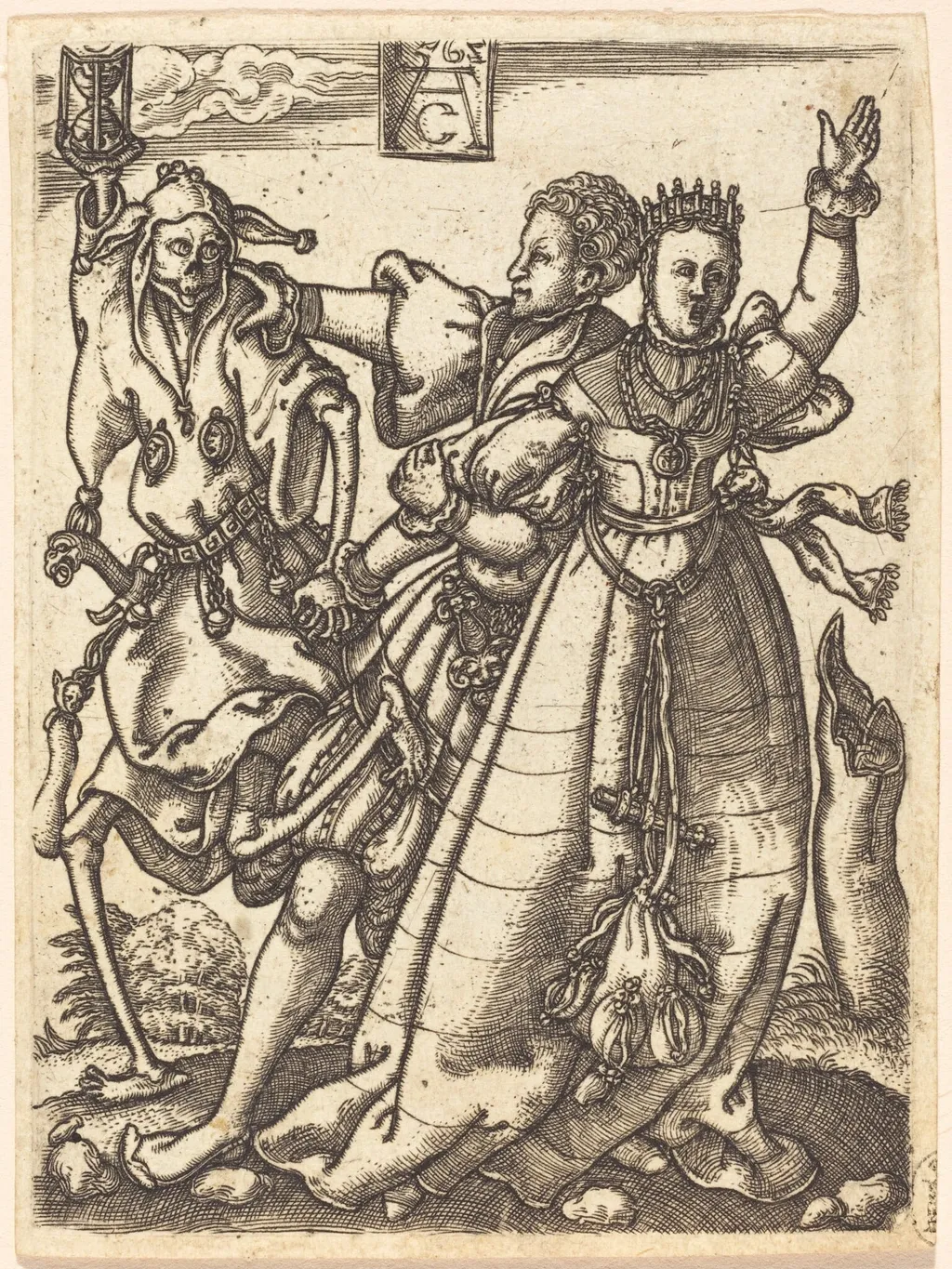
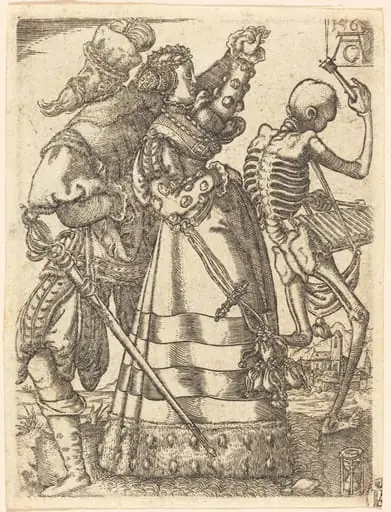
Dance of Death V is an ink print by the Renaissance artist Allaert Claesz. It is held in the collection of the National Gallery of Art.
About this work
Overview
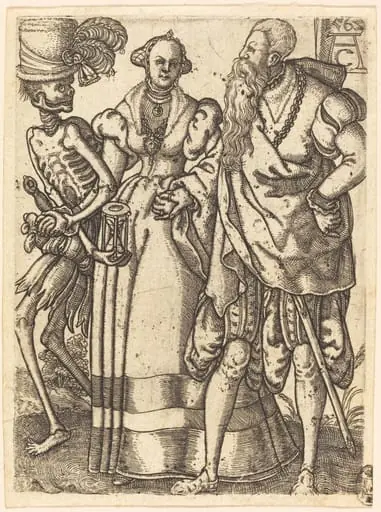
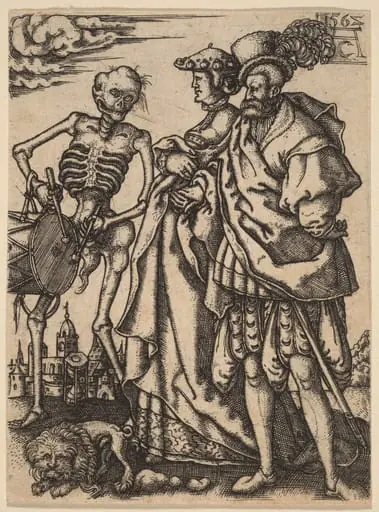
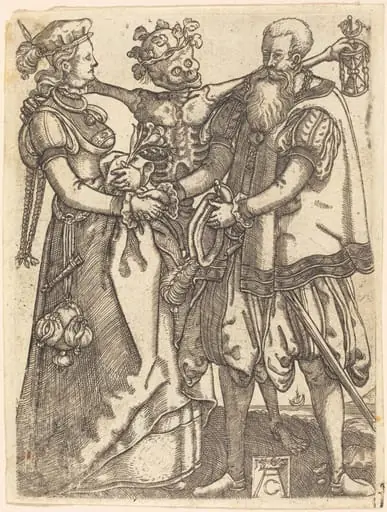
Allaert Claesz’s 1562 engraving titled Dance of Death V presents a stark black‑and‑white composition in which a regal, richly dressed figure engages in a dance with a skeletal counterpart. The crowned participant, adorned with a belt and necklace, raises both arms in a dynamic pose, while the grinning skeleton, also crowned, clasps the dancer’s hands with elongated fingers, creating a striking juxtaposition of life and mortality.
Subject & Meaning
The print visualises the medieval motif of the Danse Macabre, a reminder that death unites all social ranks. By pairing a noble, opulently clothed individual with a crowned skeleton, Claesz underscores the inevitability of death’s reach, while the lively movement and almost playful interaction hint at a moralizing yet slightly satirical tone common in 16th‑century moralizing art.
Technique & Style
Executed entirely with fine line engraving, the work relies on dense cross‑hatching to model shadows, texture, and the intricate folds of the garments. The precise, controlled strokes give the flesh and fabric a tangible quality, while the skeletal figure’s bone structure is rendered with stark clarity, enhancing the contrast between the living and the dead.
History & Provenance
Created in 1562, the engraving is part of a series of Dance of Death images attributed to Claesz, a Dutch printmaker known for his detailed intaglio work. Original impressions survive in several European print collections, reflecting the print’s circulation among collectors of moralizing imagery during the late Renaissance.
Artist & collection