Artwork
Dance of Death VI
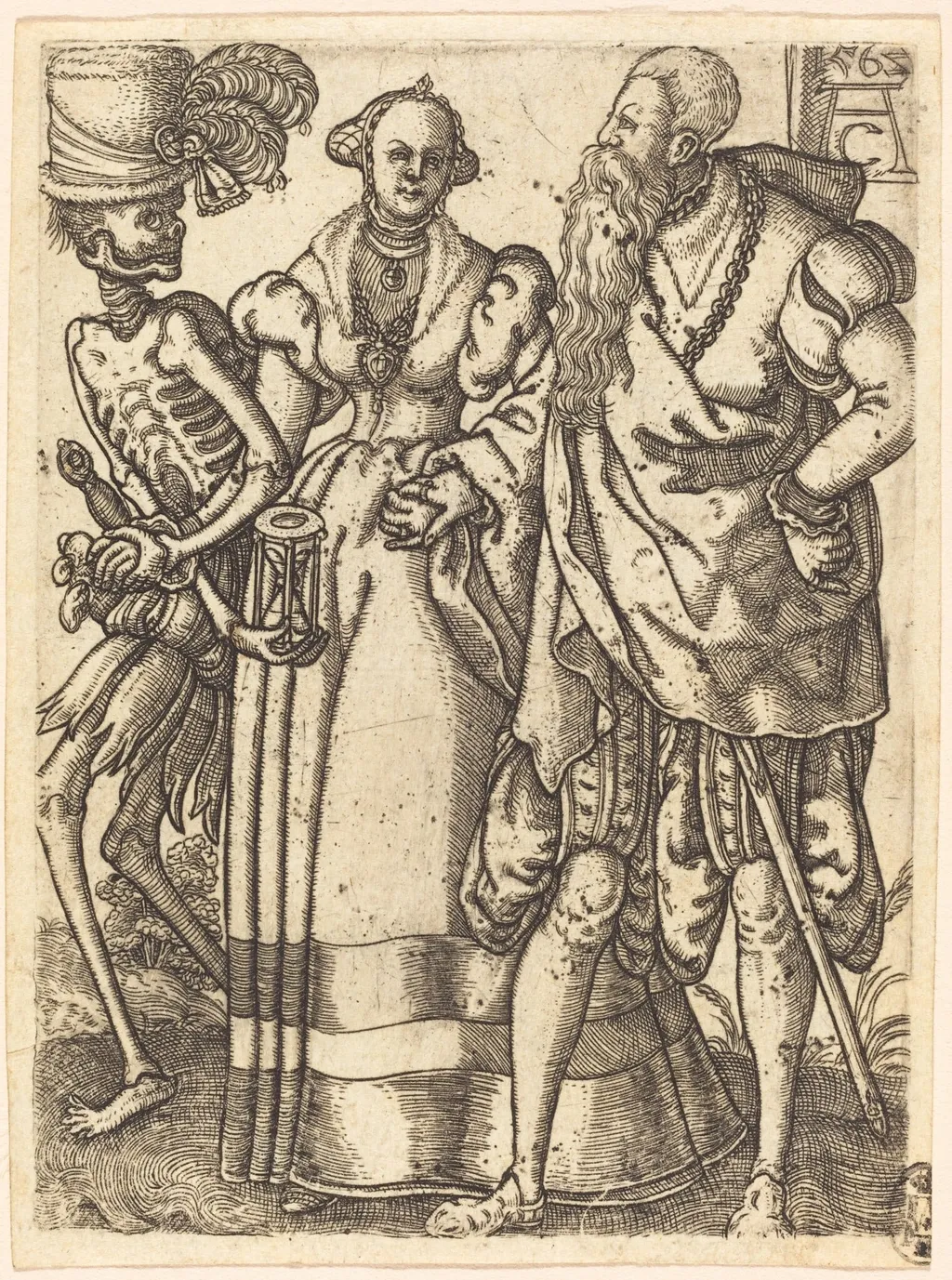
Dance of Death VI is an ink print by the Renaissance artist Allaert Claesz. It is held in the collection of the National Gallery of Art.
About this work
Overview
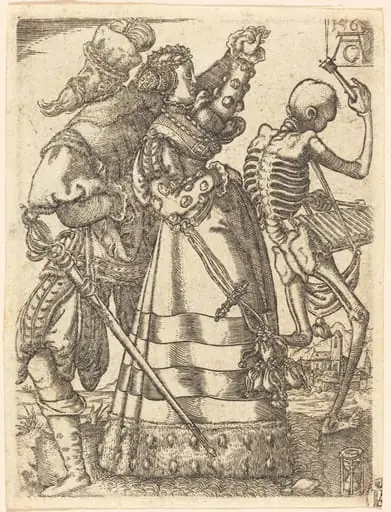
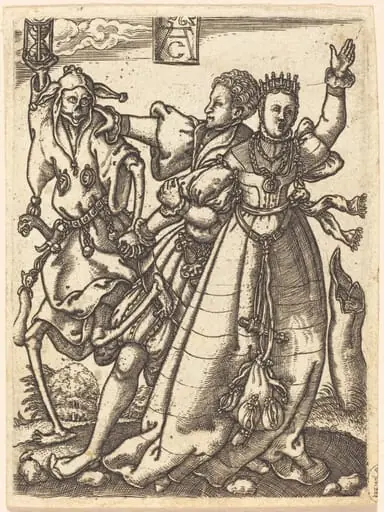
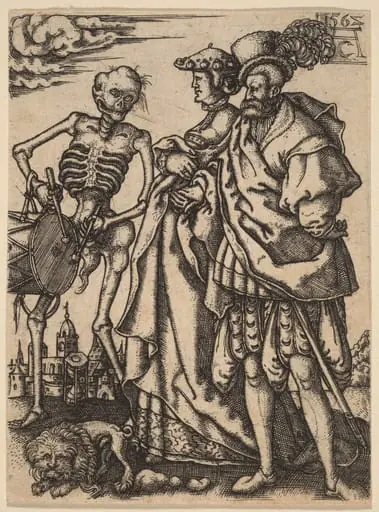
Dance of Death VI is a 1562 engraving by Allaert Claesz, depicting a somber allegory through contrasting figures in a dance scene.
Subject & Meaning
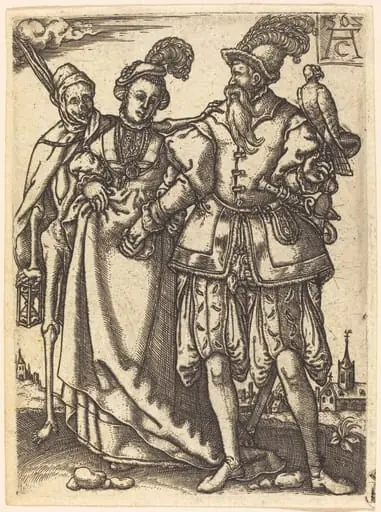
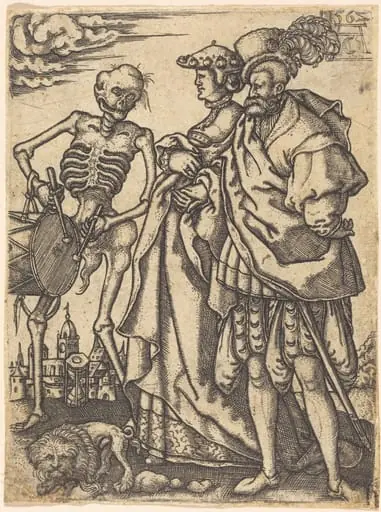
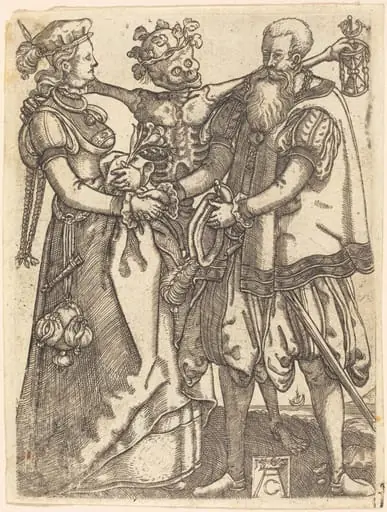
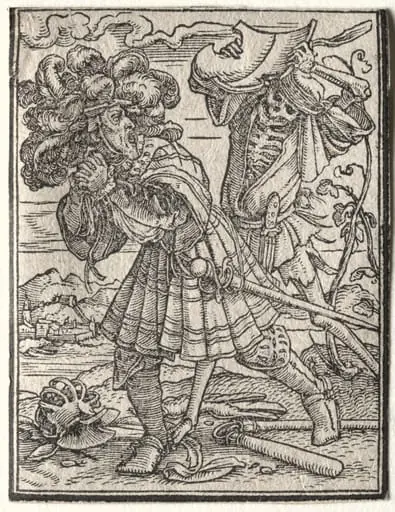
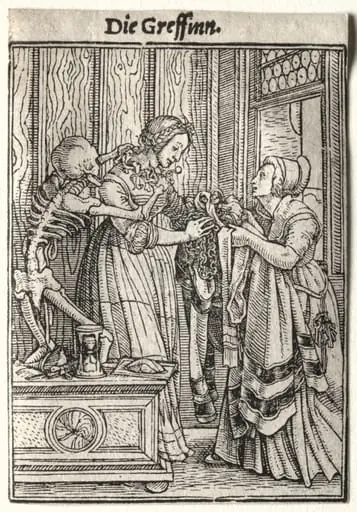
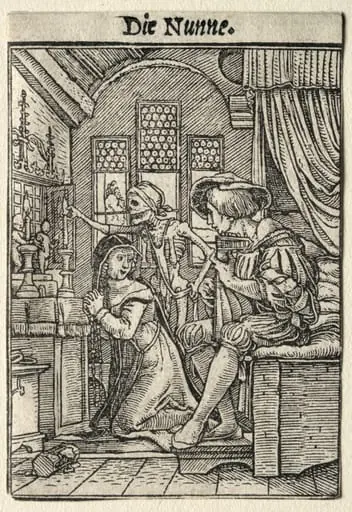
The print shows a finely dressed woman and man accompanied by skeletons, who actively participate in the dance, holding hands and playing instruments. This juxtaposition conveys a universal reminder of mortality, transcending social status and wealth.
Technique & Style
Executed in black-and-white, the engraving showcases intricate details, such as the woman's tall feathered hat and fan, and the man's long beard and neck chain, achieved through precise metal carving techniques characteristic of 16th-century engraving.
History & Provenance
Created in 1562 by Allaert Claesz, specific provenance details are not provided, highlighting the work's existence as part of a broader thematic series, 'Dance of Death'.
Context
Part of the 'Dance of Death' thematic series, this engraving reflects a common medieval to early modern European motif warning against the inevitability of death, regardless of social standing.
Legacy
As an example of 16th-century engraving, it influences later artistic explorations of mortality themes and technical advancements in printmaking.
Artist & collection