Artwork
Alexander the Great in the Temple of Jerusalem
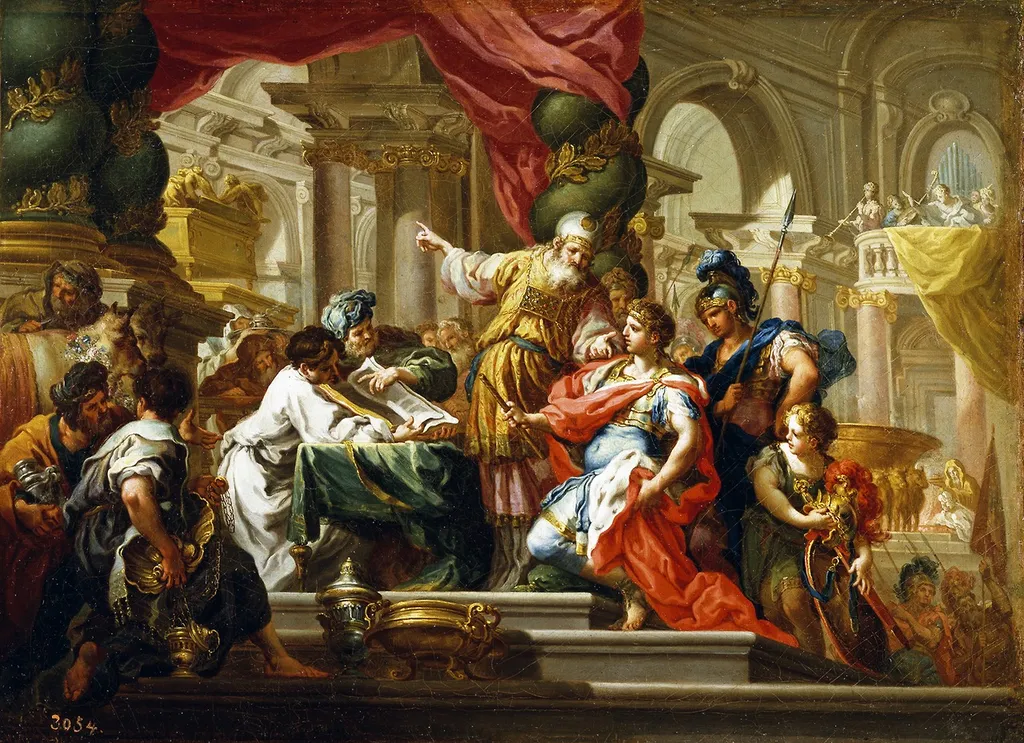
Alexander the Great in the Temple of Jerusalem is an oil painting by the Rococo painting artist Sebastiano Conca. It dates from 1736 and is held in the collection of the Museo del Prado.
About this work
Overview
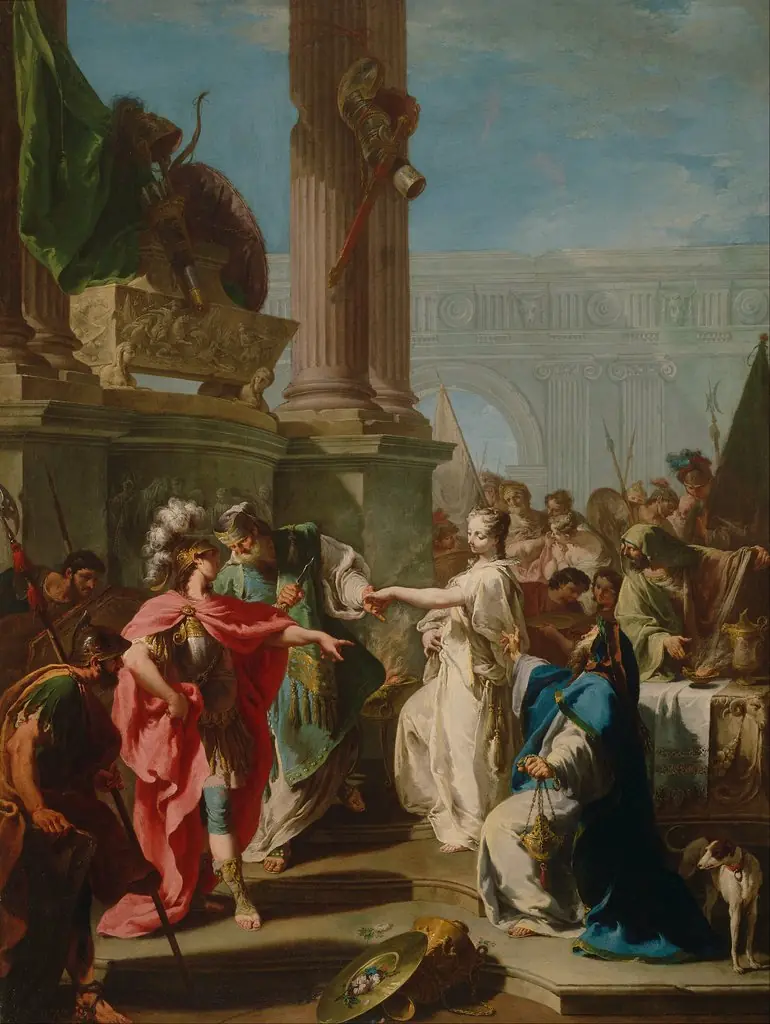
Sebastiano Conca’s oil on canvas, dated 1736, portrays a bustling interior scene titled “Alexander the Great in the Temple of Jerusalem.” The composition fills a spacious hall adorned with classical columns, arches, and a dominant red drapery. Central to the tableau is a figure in white and red garments, surrounded by a crowd of attendants rendered in varied postures.
Subject & Meaning
The work imagines the legendary Macedonian ruler’s entry into the sacred precinct of Jerusalem, a moment that intertwines political power with religious setting. By placing Alexander amid the temple’s ornate architecture, the painting reflects eighteenth‑century fascination with historic encounters between empire and faith, suggesting both reverence for the ancient site and the awe inspired by the conqueror’s presence.
Technique & Style
Conca employs a pronounced chiaroscuro, contrasting illuminated figures against deeper shadows to model forms and convey spatial depth. The handling of light accentuates the central character’s attire, while the surrounding crowd recedes into softer tones. Brushwork remains refined, with careful delineation of architectural details that enhance the scene’s theatricality.
History & Provenance
Completed in 1736, the canvas entered the collection of the Museo del Prado, where it remains on display. Its acquisition reflects the museum’s broader 18th‑century interest in Baroque and Rococo works, situating Conca among other Italian painters represented in the Spanish royal holdings.
Context
Conca, an Italian artist active in the late Baroque period, often depicted grand historical or religious narratives. This painting aligns with contemporary European interest in Alexander the Great as a symbol of conquest and cultural exchange, a theme that resonated in courtly circles and academic art circles of the time.
Artist & collection

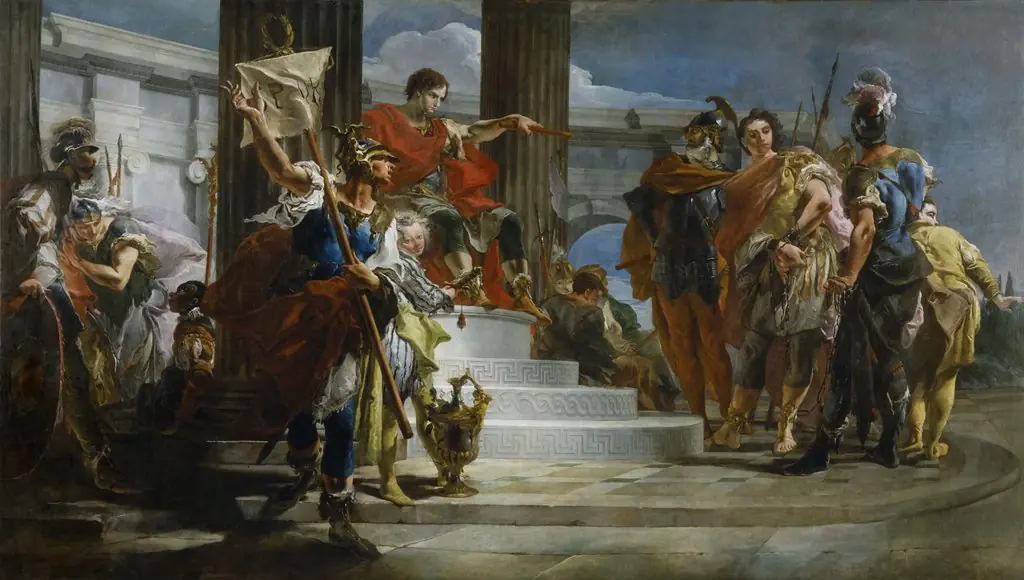 Scipio Africanus Freeing Massiva
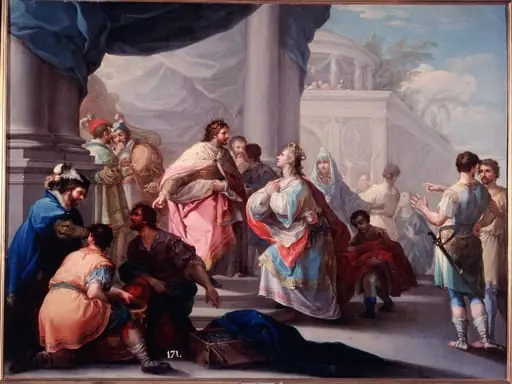 The Empress Marta de Constantinople before Alfonso X. Ramón Bayeu and Subías
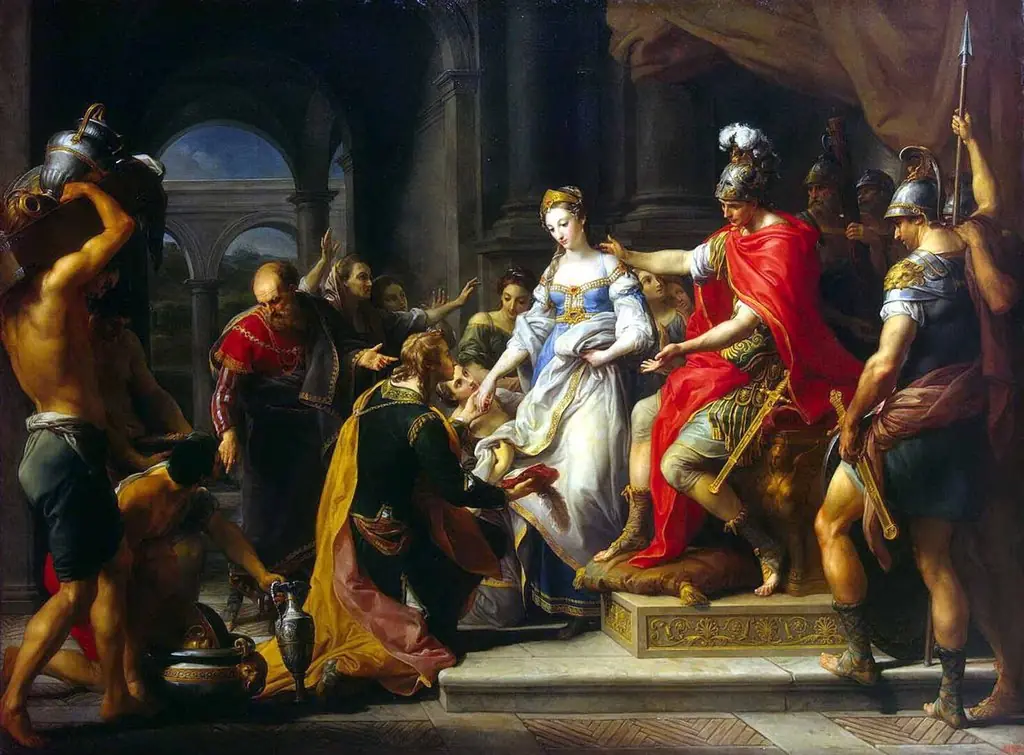 Continence of Scipio
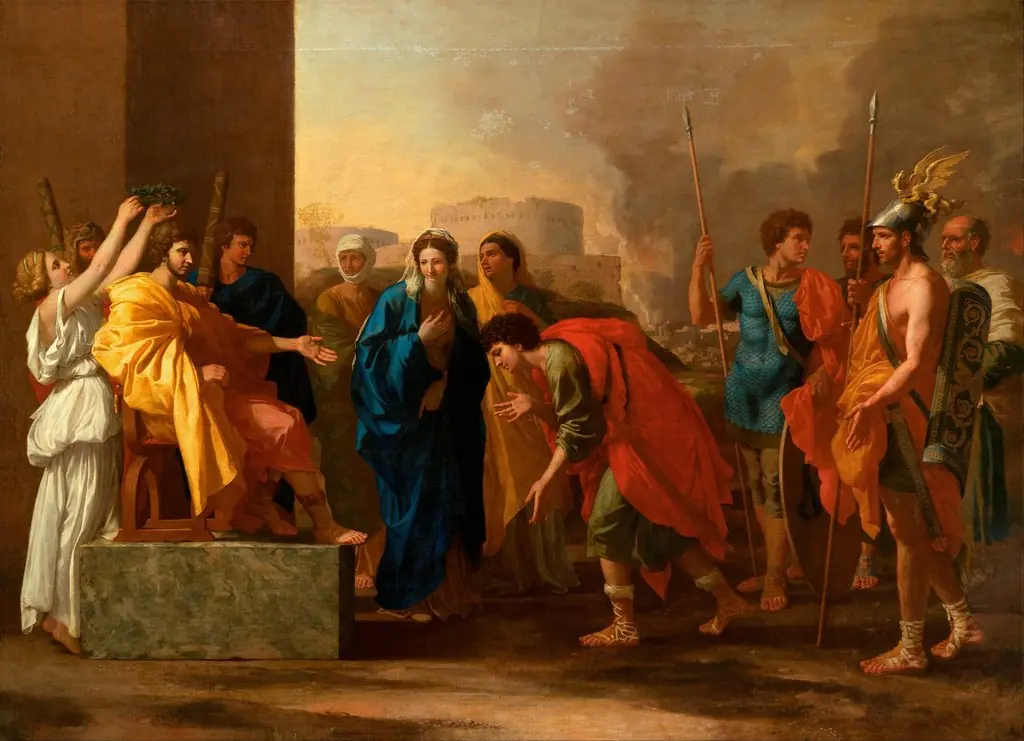 The Continence of Scipio
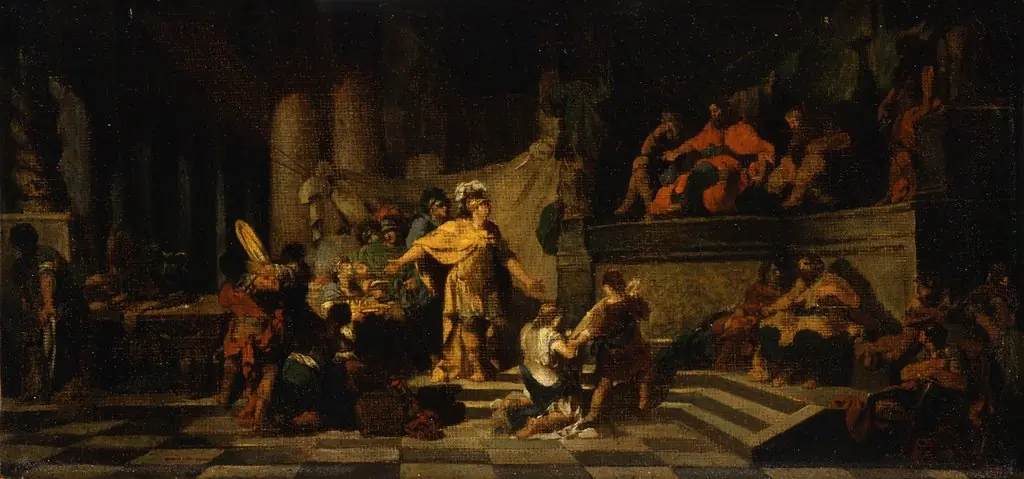 Aeneas Offering Presents to King Latinus and Asking Him for the Hand of His Daughter
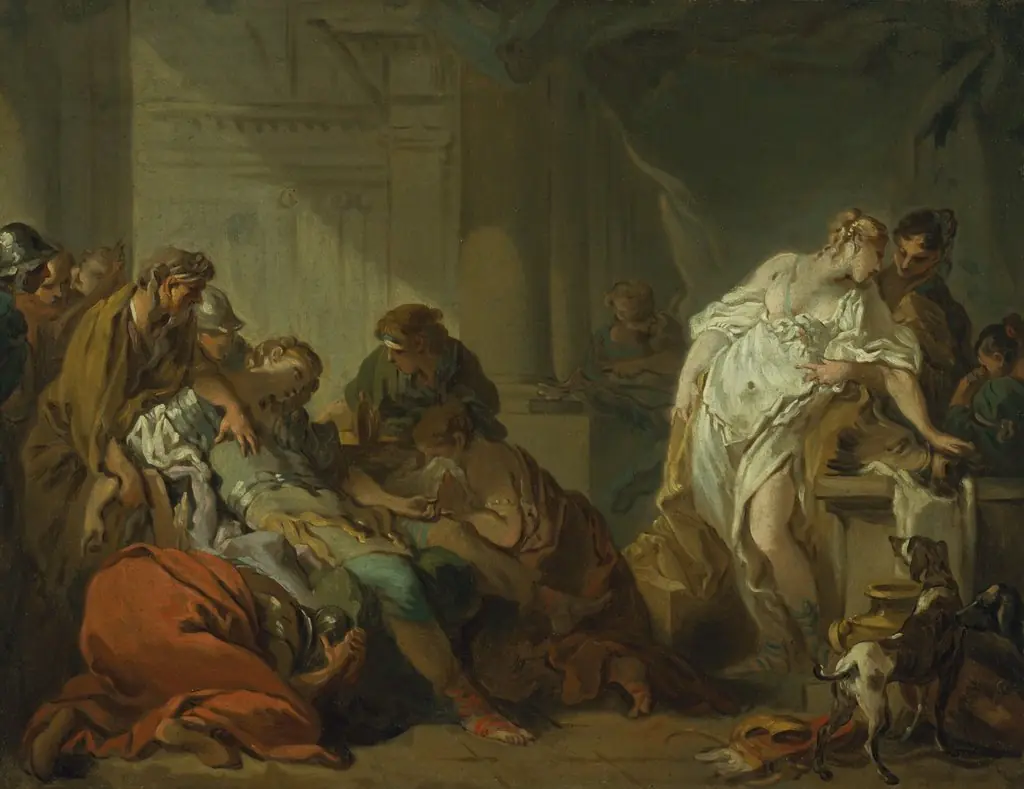 Death of Meleager
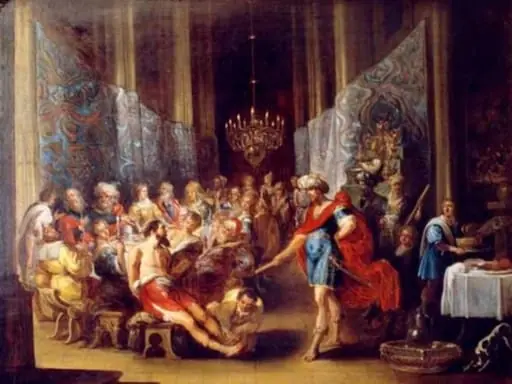 Musafirul fără haine de nuntă
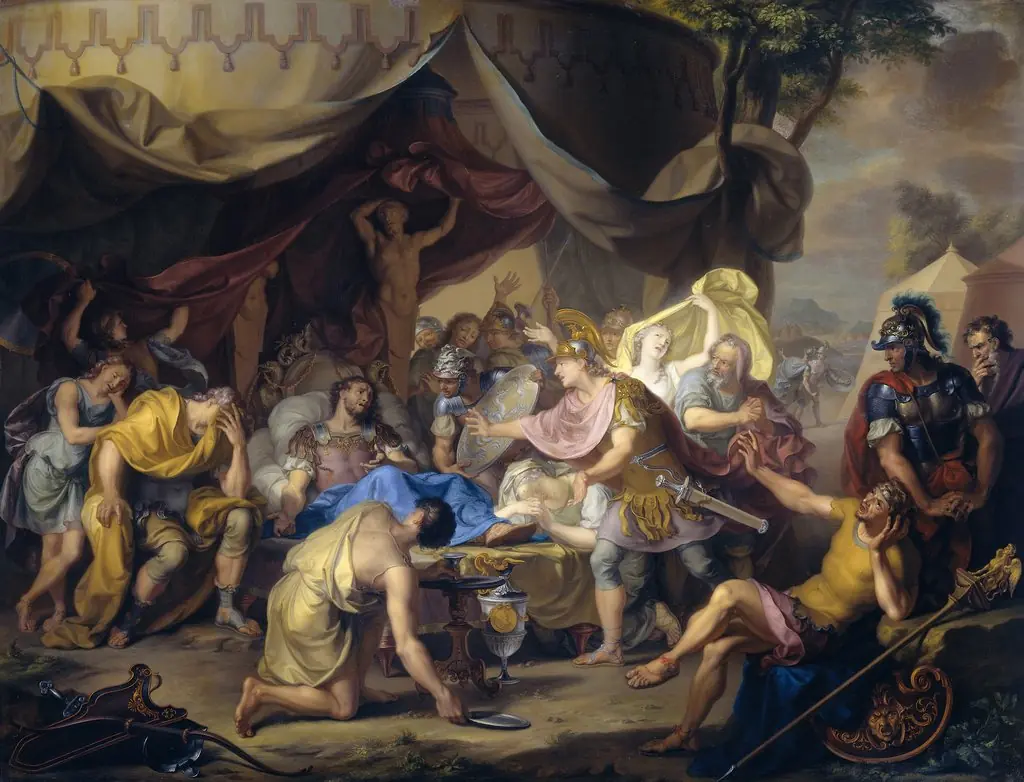 The Death of Epaminondas
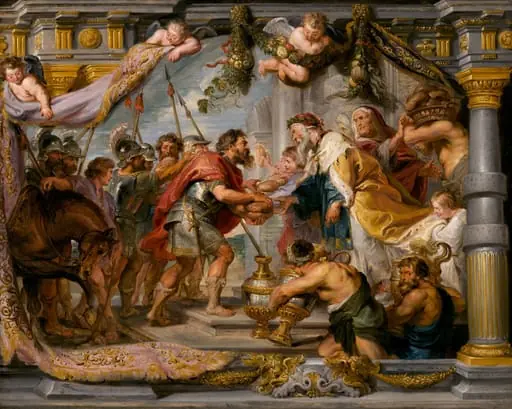 The Meeting of Abraham and Melchizedek
 Het sterfbed van Epaminondas
 The Sacrifice of Polyxena in Malibu
 Alexander the Great Founding Alexandria