Artwork
Epitaph of Rubens
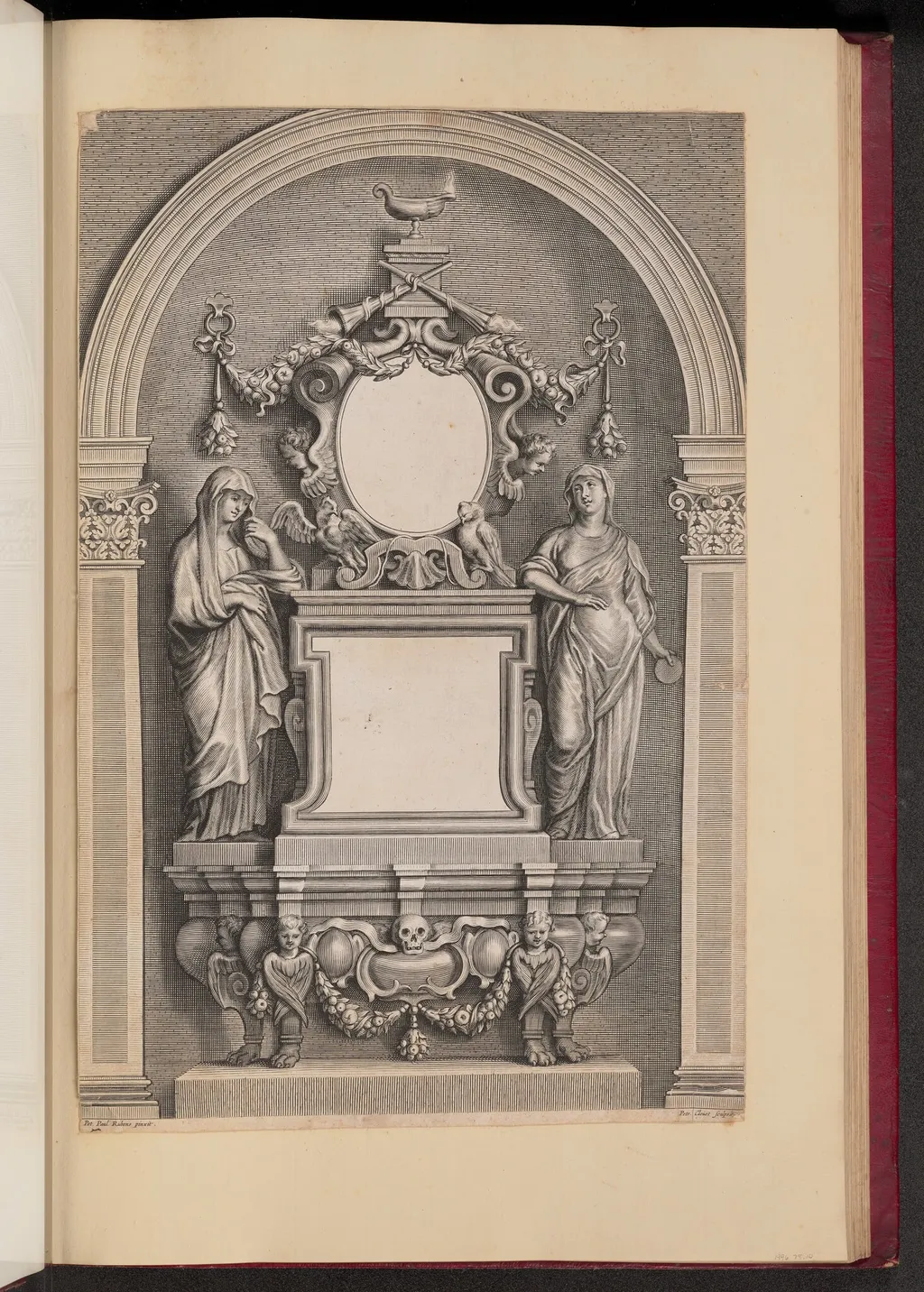
Epitaph of Rubens is an ink print by the Baroque artist Petrus Clouet. It dates from 1613 and is held in the collection of the National Gallery of Art.
About this work
Overview
Executed on laid paper, the composition frames a vacant central arch intended for a portrait, flanked by two draped figures and a trio of cherubic attendants.
Petrus Clouet’s 1613 engraving, titled Epitaph of Rubens, serves as a commemorative print for the painter Peter Paul Rubens. Executed on laid paper, the composition frames a vacant central arch intended for a portrait, flanked by two draped figures and a trio of cherubic attendants. The work combines solemn funerary motifs with allegorical elements, reflecting early‑17th‑century approaches to memorial imagery.
Subject & Meaning
The two robed women on either side of the empty arch embody mourning and reverence; the left figure clasps her hands, while the right rests a hand on her hip, both gazing toward the absent likeness. Beneath them, three cherubs hold a skull, a shield and other objects, juxtaposing symbols of mortality with protective, almost hopeful, gestures, suggesting a balance between death and enduring legacy.
Technique & Style
Clouet employed the traditional copper‑plate engraving method, incising fine lines to render the intricate drapery, facial expressions, and the delicate forms of the cherubs. The use of laid paper provides a subtle texture that enhances the tonal contrasts, while the clear, linear modeling reflects the Northern European printmaking aesthetic prevalent in the early Baroque period.
History & Provenance
Created shortly after Rubens’s death, the print functioned as a printed memorial likely distributed among his patrons and colleagues. Though the original portrait intended for the central arch never materialized, the engraving survived in several copies, entering museum collections and private holdings as a testament to both Rubens’s influence and Clouet’s skill as an engraver.
Context
In the early 1600s, commemorative prints were a common means of honoring prominent artists, offering a visual tribute that could be widely disseminated. Clouet’s work aligns with contemporary practices of integrating allegorical figures and memento mori symbols, situating Rubens within a tradition that linked artistic achievement to moral and spiritual reflection.
Artist & collection

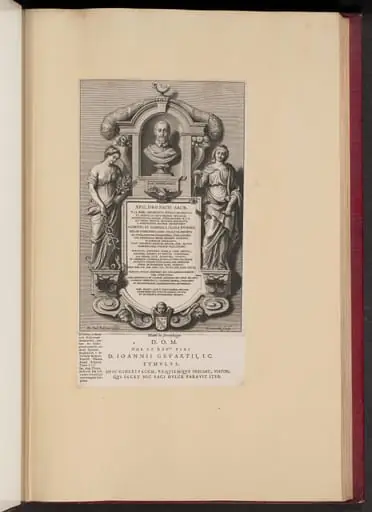 Epitaph of Claude Jean Gevaert
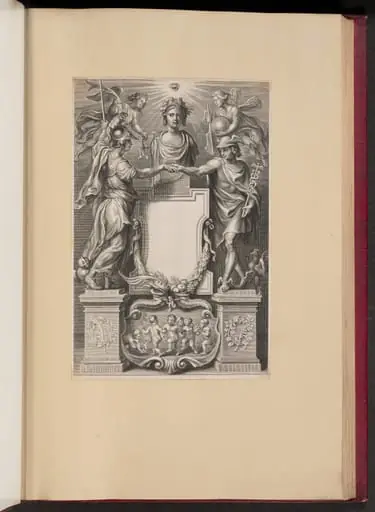 Title Page for Frederik de Marselaer, Legatvs
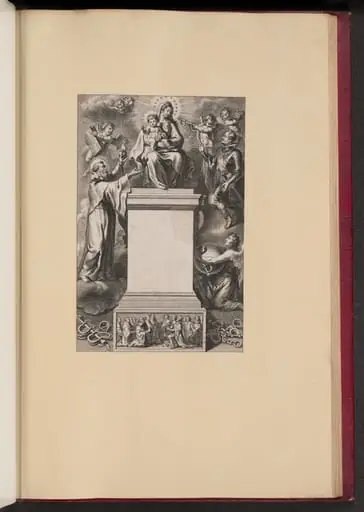 Title Page for B. De Los Rios, De Hierarchia Mariana Libri Sex
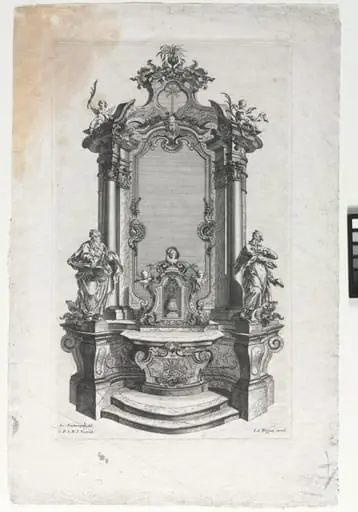 Model for Altar for Woodcarvers
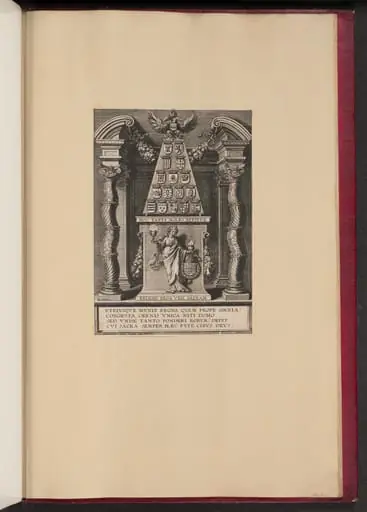 Hoc Tanta Moles Nititvr...
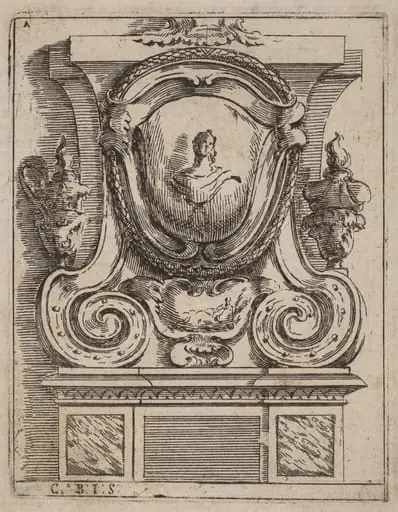 Architectural Motif with Bust and Two Lamps
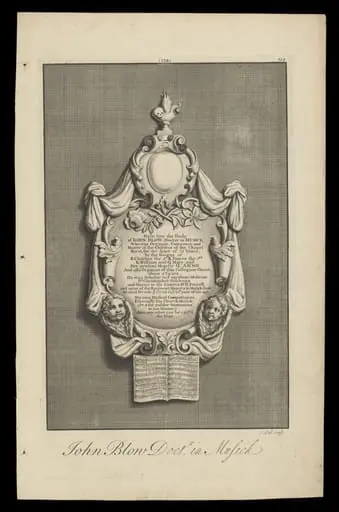 H Beard Print Collection
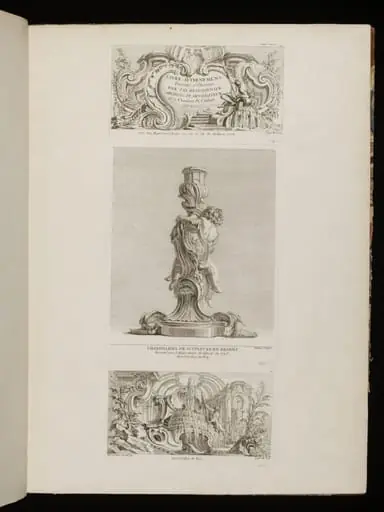 Chandeliers de Sculpture en Argent
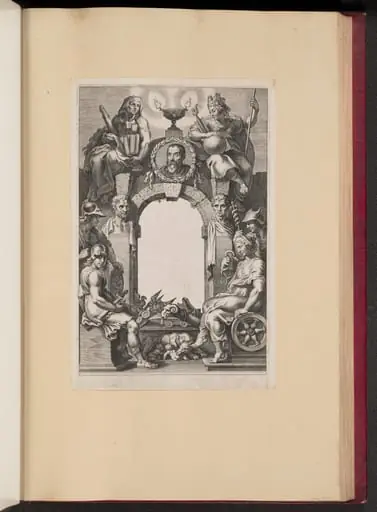 Title Page for Justus Lipsius, Opera Omnia, I
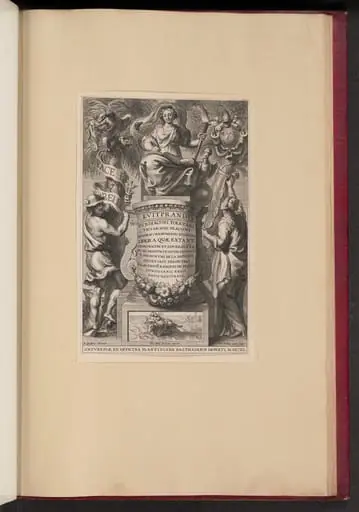 Title Page for Liutprand, Opera
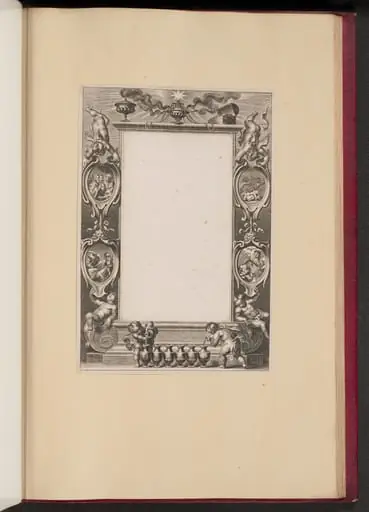 Border Illustration with Scenes from the Life of Christ and Putti Pouring Wine
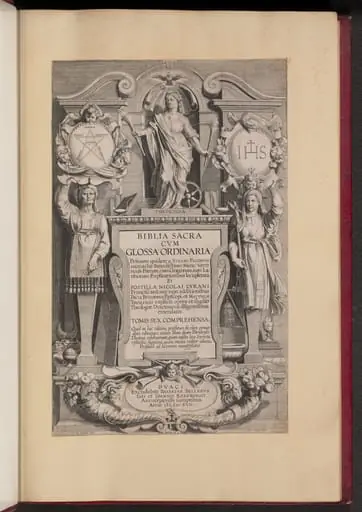 Title Page for Biblia Sacra Cvm Glossa Ordinaria