Artwork
Title Page for Justus Lipsius, Opera Omnia, I
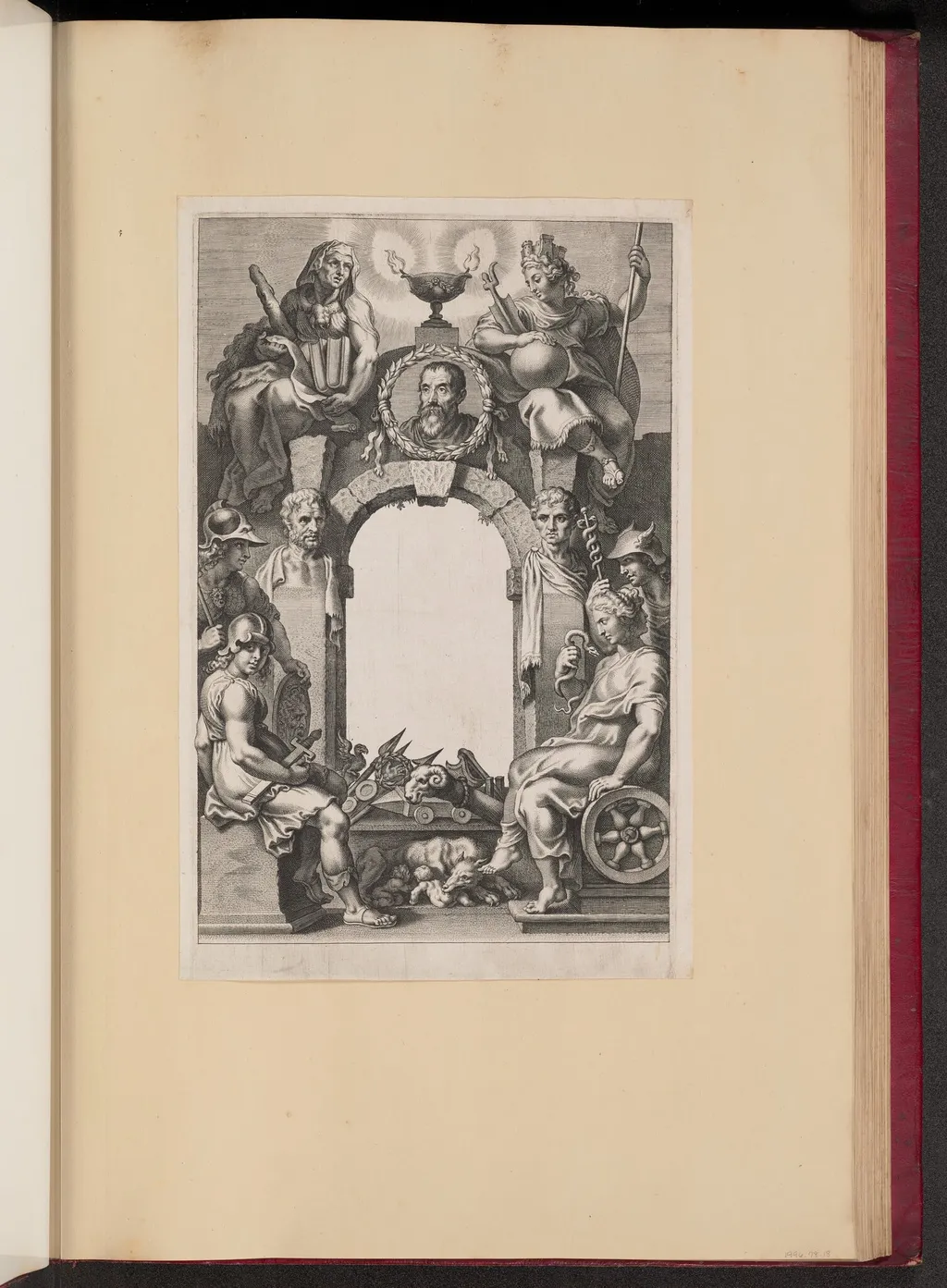
Title Page for Justus Lipsius, Opera Omnia, I is an ink print by the Baroque artist Cornelis Galle I. It dates from 1637 and is held in the collection of the National Gallery of Art. This 1637 engraving by Cornelis Galle the Elder serves as the title page for the first volume of Justus Lipsius’s collected works.
About this work
Overview
This 1637 engraving by Cornelis Galle the Elder serves as the title page for the first volume of Justus Lipsius’s collected works.
This 1637 engraving by Cornelis Galle the Elder serves as the title page for the first volume of Justus Lipsius’s collected works. Executed as a proof before the addition of lettering, it demonstrates Galle’s precision in fine-line engraving on laid paper. Trained in Antwerp and Rome, Galle was known for his technical discipline and ability to translate complex iconography into detailed prints, making this work a representative example of early 17th-century Northern European print culture.
Subject & Meaning
The central figure, bearded and crowned, is likely Justus Lipsius, the humanist scholar whose writings the volume compiles. Above him, two winged entities hold symbolic objects: a burning bowl suggesting intellectual fire, and a staff possibly denoting authority or guidance. Below, figures with tools, a wheel, and a broken column evoke the rise and fall of learning. The composition balances reverence with decay, implying the fragility of scholarly legacy even in its commemoration.
Technique & Style
Galle employed fine, controlled lines typical of Flemish engraving, rendering texture and depth through meticulous hatching and cross-hatching. The dense, layered imagery fills the frame without overcrowding, guided by architectural framing that directs the viewer’s gaze toward the central figure. The proof state reveals the image before textual elements were added, preserving the purity of the visual narrative and highlighting Galle’s skill in balancing complexity with clarity.
History & Provenance
Created in Antwerp in 1637, this proof predates the printed edition of Lipsius’s collected works. As both engraver and printseller, Galle operated within a network of scholarly publishers who relied on visual imagery to elevate academic texts. The survival of this proof—unlettered and likely used for approval—suggests its role in the production process, offering insight into the collaborative nature of early modern book publishing in the Southern Netherlands.
Context
In the early 1600s, Northern European publishers increasingly used elaborate title pages to signal the intellectual weight of scholarly volumes. Galle’s design aligns with this trend, drawing on classical and allegorical motifs familiar to humanist audiences. The imagery reflects the era’s preoccupation with the preservation and transmission of knowledge, particularly in the wake of religious conflict and intellectual upheaval across Europe.
Legacy
Galle’s work contributed to the standardization of scholarly iconography in printed books. His ability to condense complex ideas into visual form influenced later engravers and publishers. Though the specific volume may be obscure today, the visual language he employed endured in academic publishing well into the 18th century, embedding symbolic representation into the very structure of scholarly communication.
Artist & collection

Artist
Cornelis Galle the Elder (1576 – 29 March 1650), a younger son of Philip Galle, was born at Antwerp in 1576, and was taught engraving by his father.

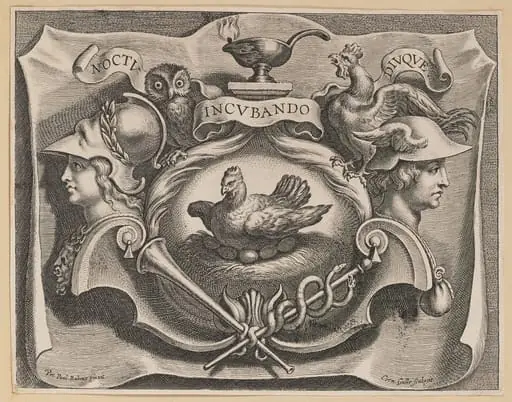 Vignette for the Title Page of Martinus Bonacina, Opera Omnia
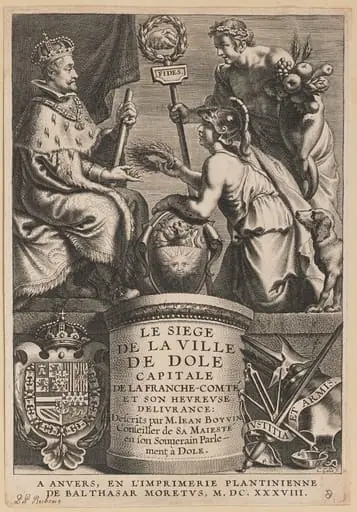 Title Page for Jean Boyvin, Le Siege de la Ville de Dole
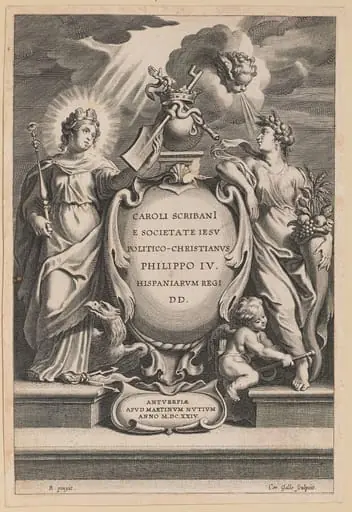 Title Page for Carolus Scribani, Politico-Christianus
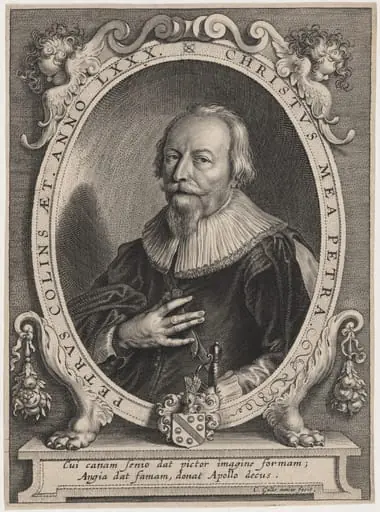 Petrus Collins
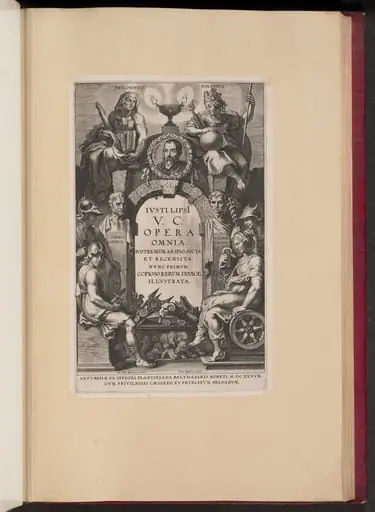 Title Page for Justus Lipsius, Opera Omnia, I
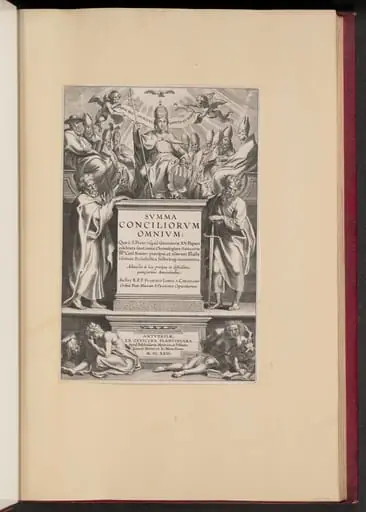 Title Page for F. Longo a Coriolano's "Svmma Conciliorvm Omnivm"
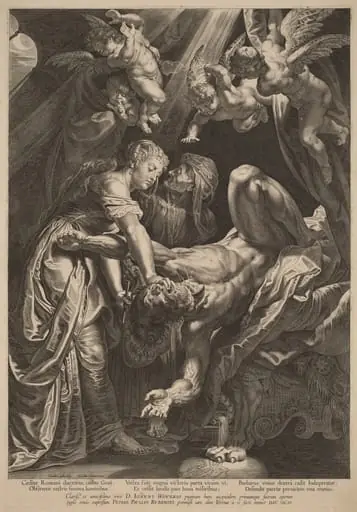 Judith Beheading Holofernes
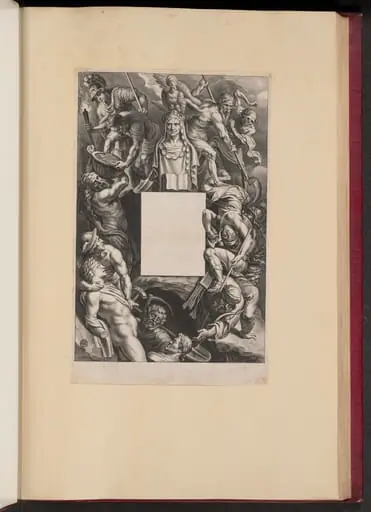 Title Page for Hubert Goltzius, Romanae et Graecae Antiqvitatis Monvmenta (Opera Omnia, I)
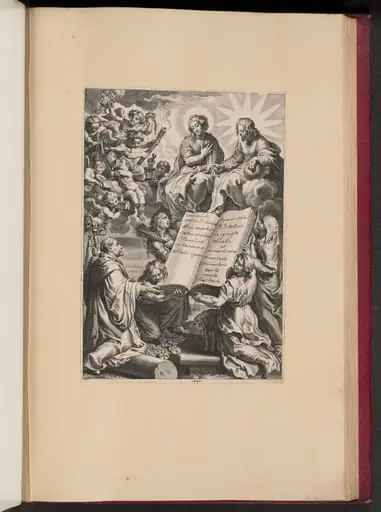 Title Page for Ludovicus Blosius, Opera
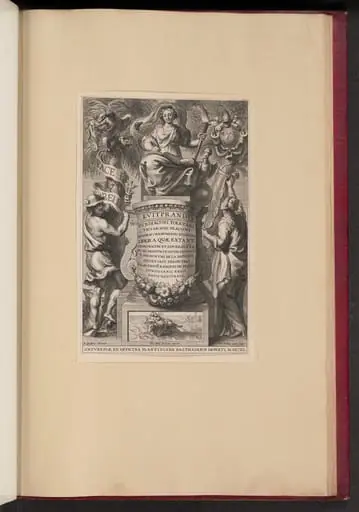 Title Page for Liutprand, Opera
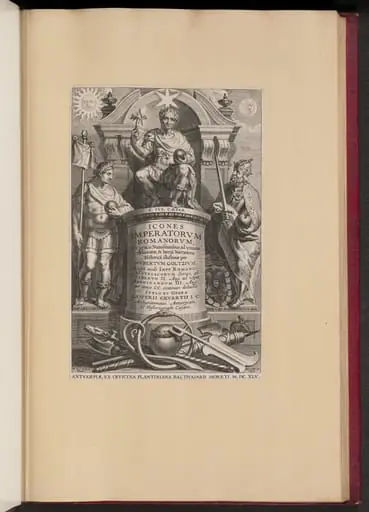 Title Page for Hubert Goltzius's Icones Imperatorvm Romanorvm (Opera Omnia, V)
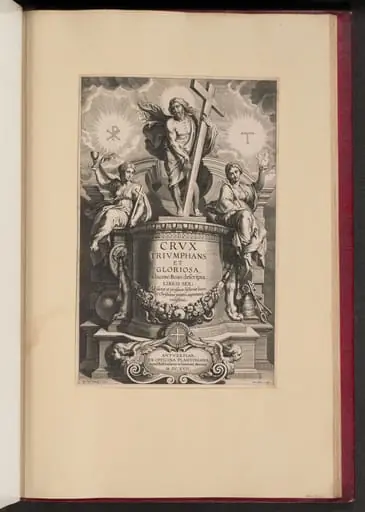 Title Page for Giacomo Bosio, Crux Triumphans et Gloriosa
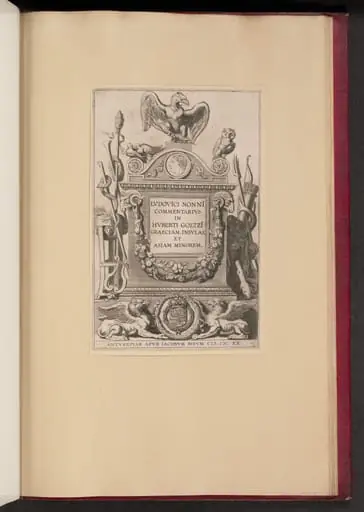 Title Page for Ludovicus Nonnius, Commentarius in Huberti Goltzi Graeciam, Insulas, et Asiam Minorem