Artwork
Title Page for Frederik de Marselaer, Legatvs
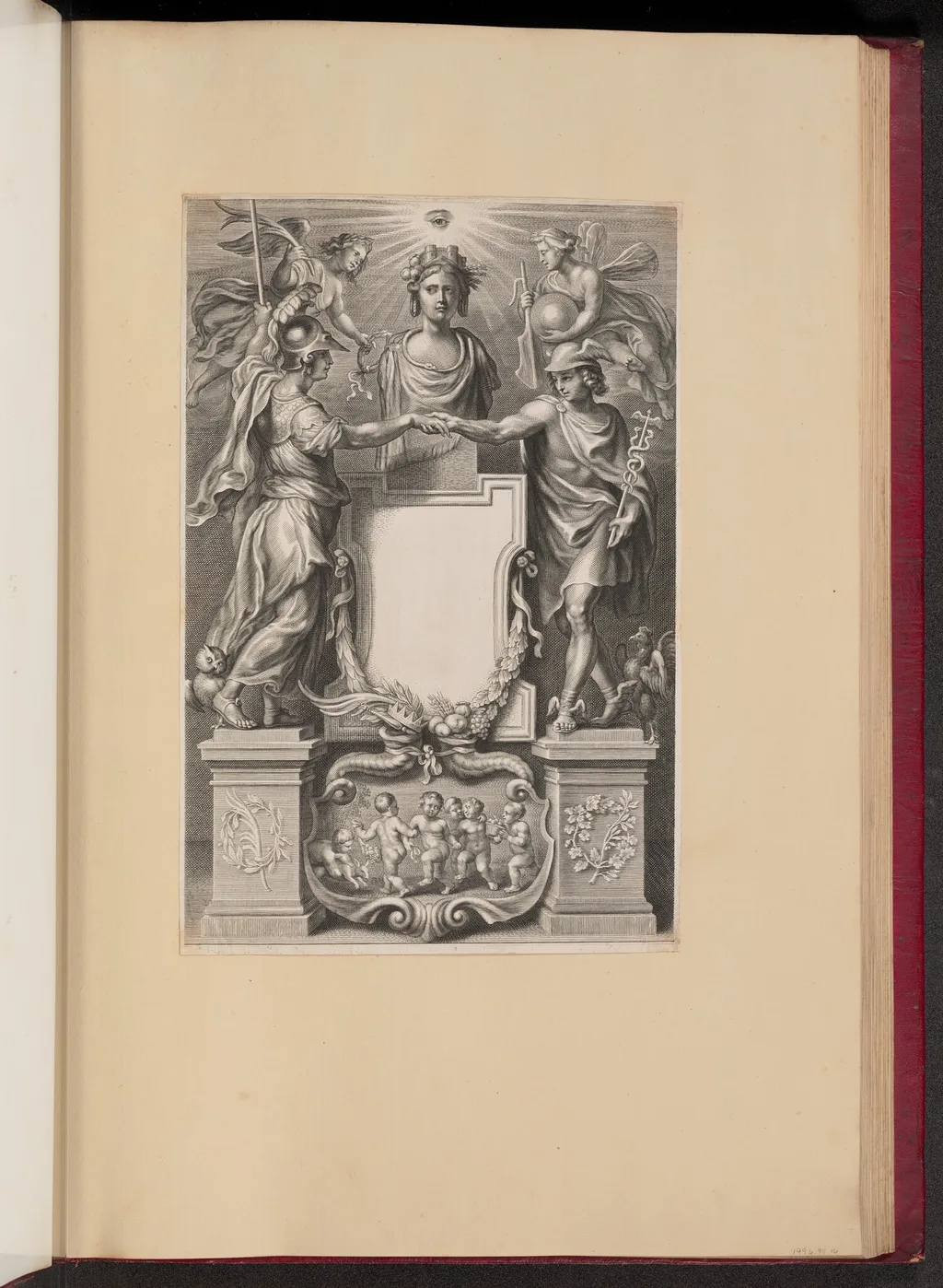
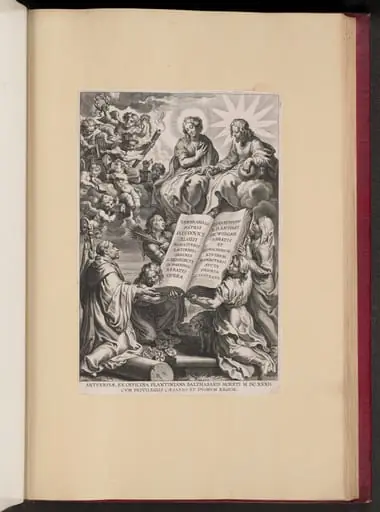
Title Page for Frederik de Marselaer, Legatvs is an ink print by the Baroque artist Cornelis Galle II. It dates from 1666 and is held in the collection of the National Gallery of Art.
About this work
Overview
Cornelis Galle II produced a copper‑plate engraving in 1666 as the title page for Frederik de Marselaer’s work Legatvs. Executed on laid paper as a proof before the accompanying text was set, the print functions as a decorative frontispiece that introduces the publication.
Subject & Meaning
The composition presents three robed figures clasping hands before an empty doorway, suggesting a pact or agreement. Above them, an eye within a cloud watches, while winged cherubs flank the scene, adding a celestial dimension. Beneath, a wreath encloses nude children playing with a snake and a dog, motifs often associated with innocence, temptation and loyalty.
Technique & Style
Galle’s engraving demonstrates the fine line work characteristic of mid‑seventeenth‑century Flemish printmaking. The artist achieved delicate shading through cross‑hatching and varied line density, while the laid‑paper texture contributes subtle tonal variation. The proof’s lack of lettering reveals the full compositional plan before typographic elements were added.
History & Provenance
Created as a preliminary impression for the Legatvs publication, the print likely circulated among the book’s patrons and the artist’s workshop. Cornelis Galle II, a prominent member of the Galle family of engravers, was active in Antwerp, and his involvement links the work to the city’s thriving print market of the 1660s.
Context
Frontispieces of this type served both decorative and informative purposes, framing the text’s themes through allegorical imagery. The inclusion of judicial or contractual symbolism aligns with the legal or diplomatic content implied by the term “legatvs,” while the celestial and pastoral elements reflect contemporary Baroque aesthetics.
Legacy
While not widely reproduced, the title page exemplifies Galle’s skill in integrating complex allegory within a compact print format. It remains a reference point for scholars studying the interplay of text and image in early modern Flemish publishing.
Artist & collection

 Title Page for G. de St. Vincent, Opus Geometricum Quadraturae Circuli
 Title Page for Balthasar Cordier, Iob Elvcidatvs
 Title Page for Balthasar Cordier, Iob Elvcidatvs
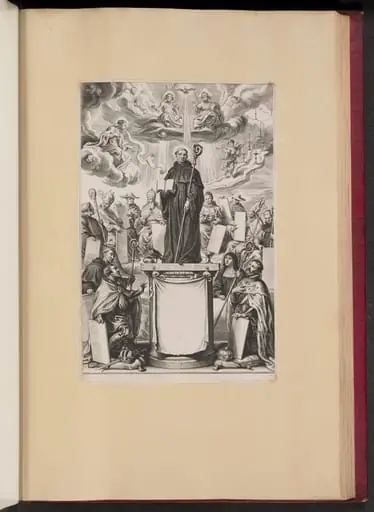 Title Page for Dommo Benedicto Haeftano's S. Benedictvs Illvstratvs
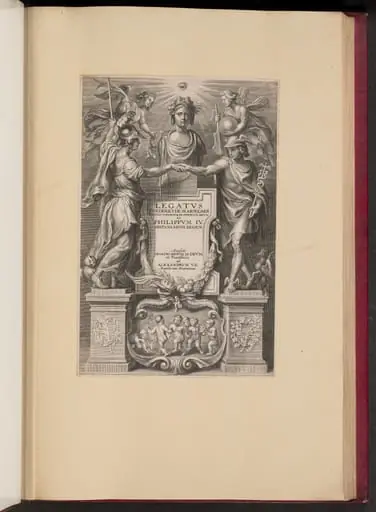 Title Page for Frederik de Marselaer, Legatvs
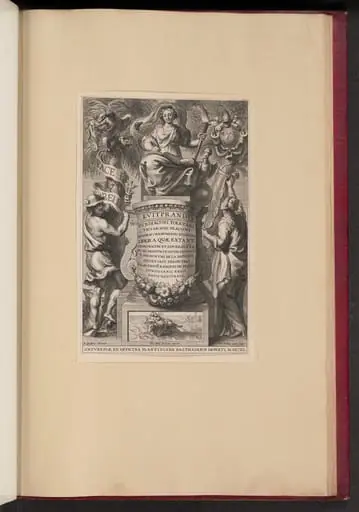 Title Page for Liutprand, Opera
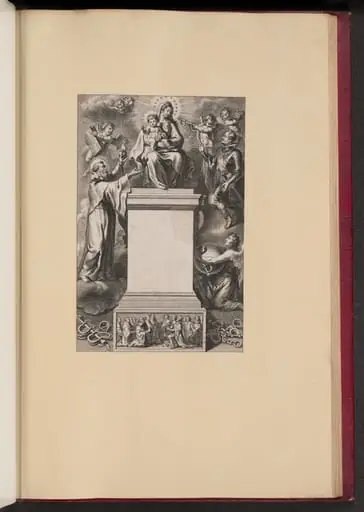 Title Page for B. De Los Rios, De Hierarchia Mariana Libri Sex
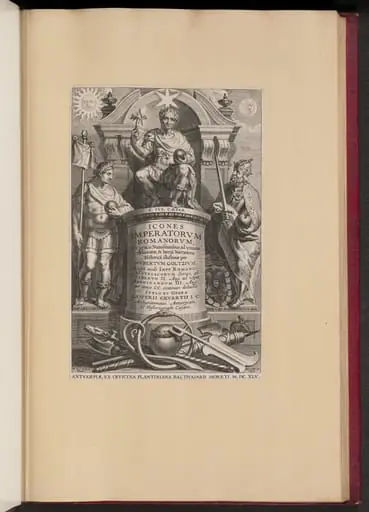 Title Page for Hubert Goltzius's Icones Imperatorvm Romanorvm (Opera Omnia, V)
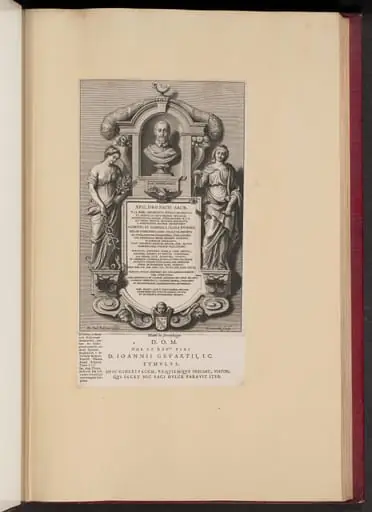 Epitaph of Claude Jean Gevaert
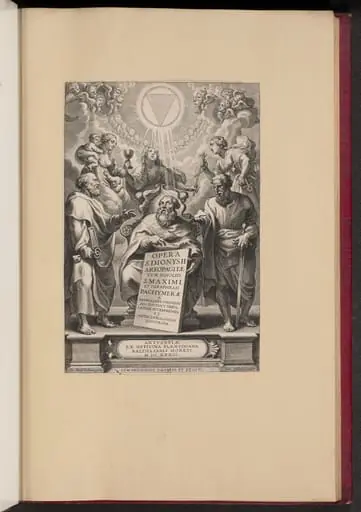 Title Page for Balthasar Cordier's "Opera S. Dionysii Areopagitae, I"
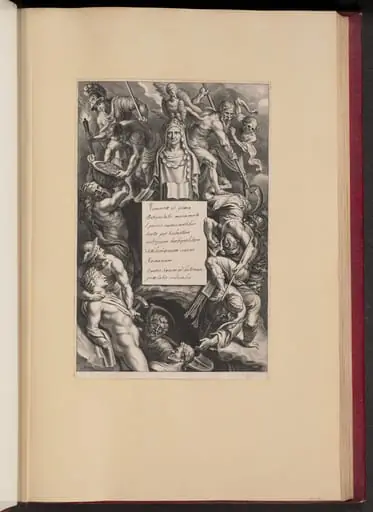 Title Page for Hubert Goltzius, Romanae et Graecae Antiqvitatis Monvmenta (Opera Omnia, I)
 Title Page for Justus Lipsius, Opera Omnia, I
 Hoc Tanta Moles Nititvr...
 Title Page for Hubert Goltzius, Graeciae Vniversae Asiaeq. Minoris et Insularum Nomismata
 Title Page for Giacomo Bosio, Crux Triumphans et Gloriosa
 Title Page for Ludovicus Blosius, Opera