Artwork
'Jar', Raqqa, Syria, 11th-12th century, 'Head and Bust (fragment) of a man', Egypt, ca. 1980-1630 BCE, face later recarved, from the Charles Lang Freer Collection
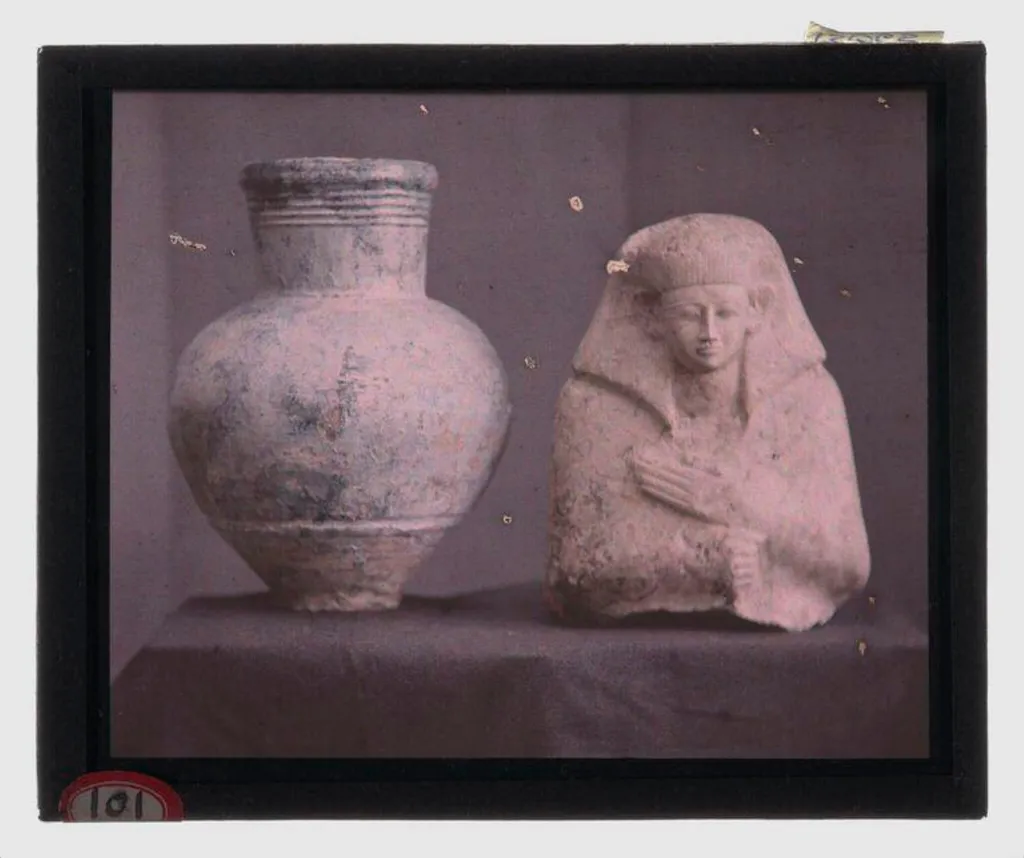
'Jar', Raqqa, Syria, 11th-12th century, 'Head and Bust (fragment) of a man', Egypt, ca. 1980-1630 BCE, face later recarved, from the Charles Lang Freer Collection is a photographic photography by Alvin Langdon Coburn. It dates from 1909 and is held in the collection of the Victoria and Albert Museum.
About this work
To the right is a worn stone head and upper body, wrapped in cloth and missing its lower half.
This photo shows two objects side by side. On the left is a clay jar with faded colors and a thick neck. To the right is a worn stone head and upper body, wrapped in cloth and missing its lower half.
The stone piece looks ancient, while the jar seems older but not as broken down. The photo itself was taken in 1909 by Alvin Langdon Coburn.
Next, check out Victoria and Albert Museum for more objects like these.
Overview
The image presents two distinct artifacts from the Charles Lang Freer Collection, photographed in 1909 by Alvin Langdon Coburn. To the left is a ceramic jar originating from Raqqa, Syria, dated to the 11th–12th centuries CE. To the right is a limestone head and bust fragment from Egypt, assigned to the period circa 1980–1630 BCE and later altered by recarving.
Subject & Meaning
The Syrian jar, with its thickened neck and muted glaze, exemplifies everyday storage vessels used in medieval Islamic contexts. The Egyptian fragment, depicting a male bust partially covered in cloth, reflects funerary or commemorative sculpture practices of the Middle Kingdom, though its later modification obscures original iconography.
Technique & Style
The jar is hand‑formed clay, fired and glazed with a subdued palette that has faded over centuries. The limestone bust was originally carved in relief, employing a smooth finish typical of Egyptian stone sculpture, but later recarved, indicating a secondary intervention that altered its surface details.
History & Provenance
Both objects entered the Freer Gallery through the collection of American diplomat and collector Charles Lang Freer, whose acquisitions spanned the late 19th and early 20th centuries. The photograph documenting them was taken during the early years of the museum’s formation, providing a visual record of the pieces as they were displayed.
Context
The jar represents the material culture of medieval Raqqa, a city that thrived as a commercial hub along trade routes linking the Islamic world. The Egyptian bust belongs to a period marked by extensive stone carving for tombs and statues, reflecting the social importance of preserving elite identities in the afterlife.
Legacy
These two objects illustrate the breadth of the Freer collection, juxtaposing Islamic medieval pottery with ancient Egyptian sculpture. Their preservation and documentation continue to support comparative studies of cross‑cultural material practices and the evolving curatorial approaches of early American museums.
Artist & collection
Artist
Alvin Langdon Coburn kept a tiny camera in every coat pocket, snapping odd angles of London’s streets while pretending to window-shop.

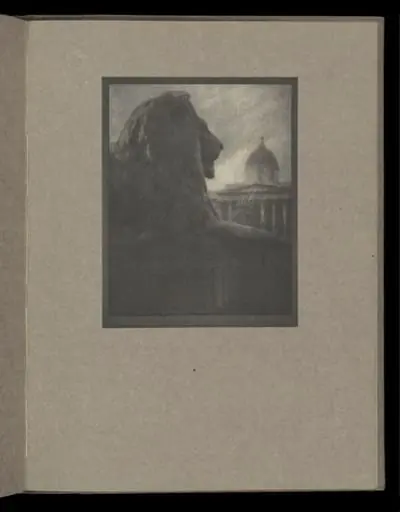 The British Lion
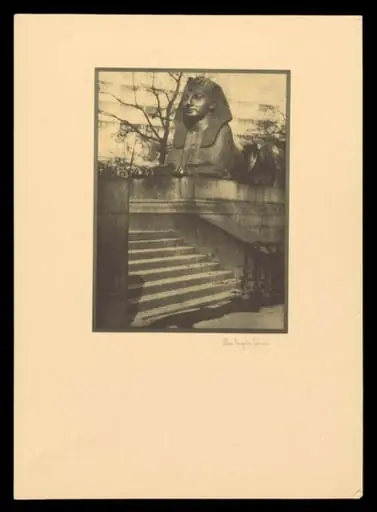 London: A Sphinx
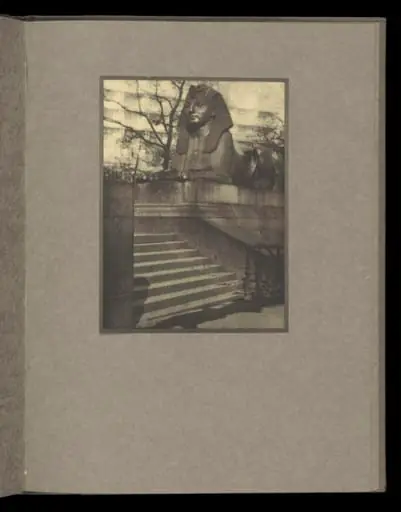 On the Embankment
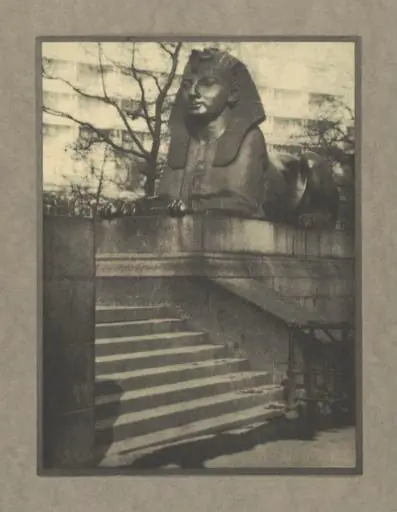 A Sphinx, The Embankment, London
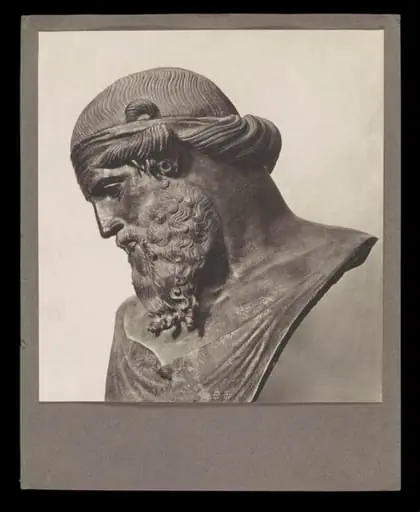 Bust of Dionysus, Platon
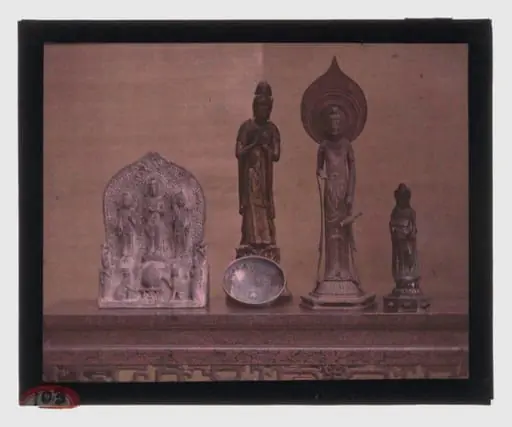 'Stele with Buddhist triad', China, 581-618 or later, 'Bodhisattva', Japan, 'Bowl', (origins unknown), 'Figure of Avalokiteshvara', Japanese, after statue in Horyuji Temple, early 20th century, 'Bodhisattva Avalokiteshvara (Kannon)', Japan, late 8th century, from the Charles Lang Freer Collection
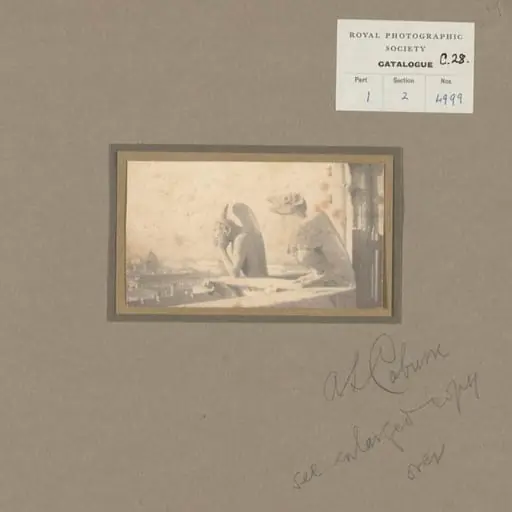 After Meryon - Le Stryge
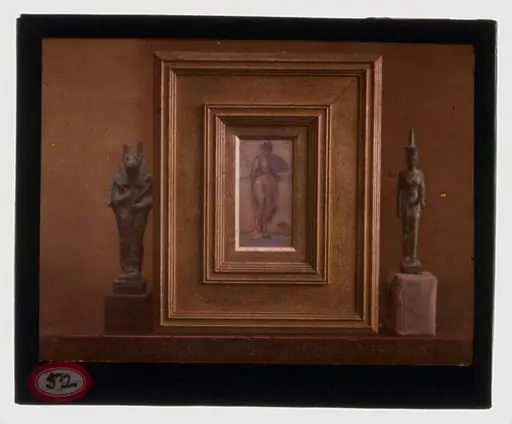 'Figure of Anubis', Egypt, 664-525 BCE, 'Resting', ca 1870-1873 by James McNeil Whistler and 'Figurine of the Goddess Neith', 664-525 BCE or later, from the Charles Lang Freer Collection
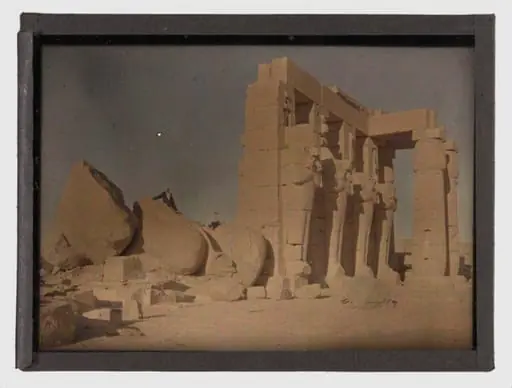 Else Paneth and guide with Egyptian monuments
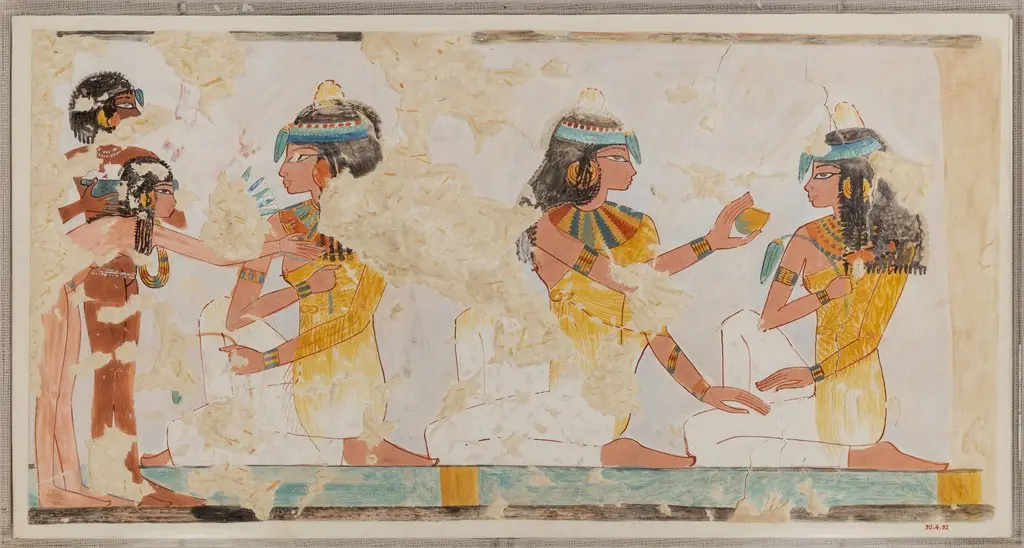 Women at a Banquet
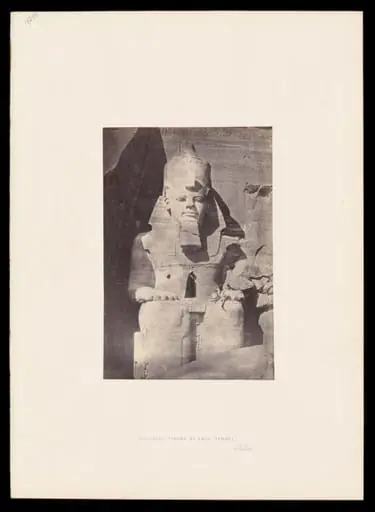 Colossal Figure at Abou Simbel, Nubia
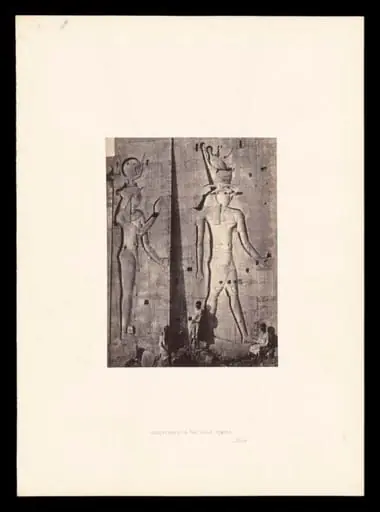 Sculptures in the Great Temple
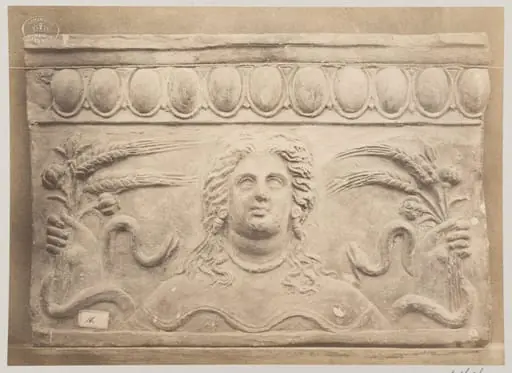 Bas-relief portion of frieze, Bust of Ceres and ears of corn, terra cotta
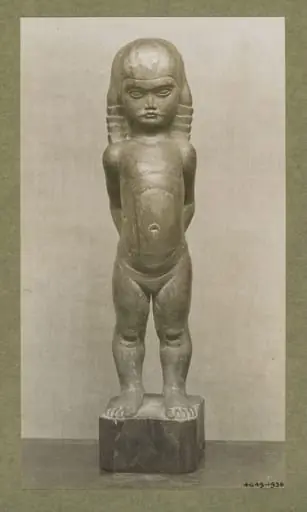 Untitled
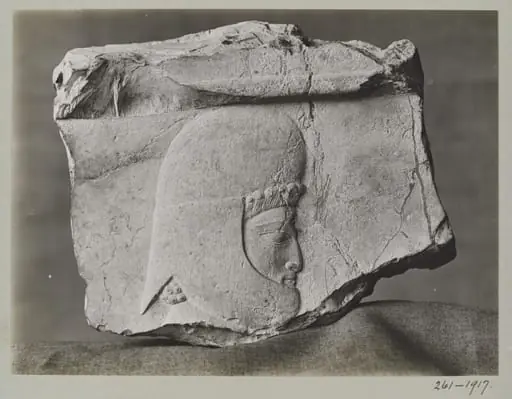 Stone sculpture of a head of a warrior, probably from Palace of Xerxes
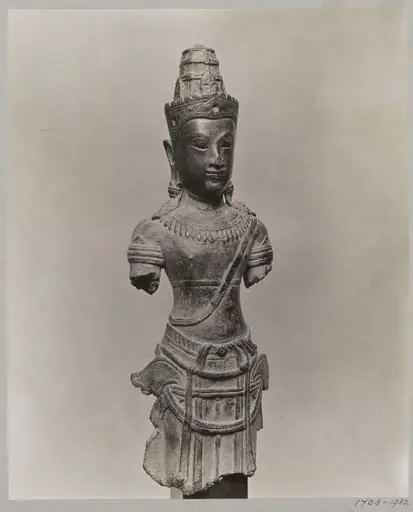 Bronze Cambodian sculpture of Bodhisattva, ca. 13th century, A.D., V&A Museum, London