Artwork
The Basilica of Constantine
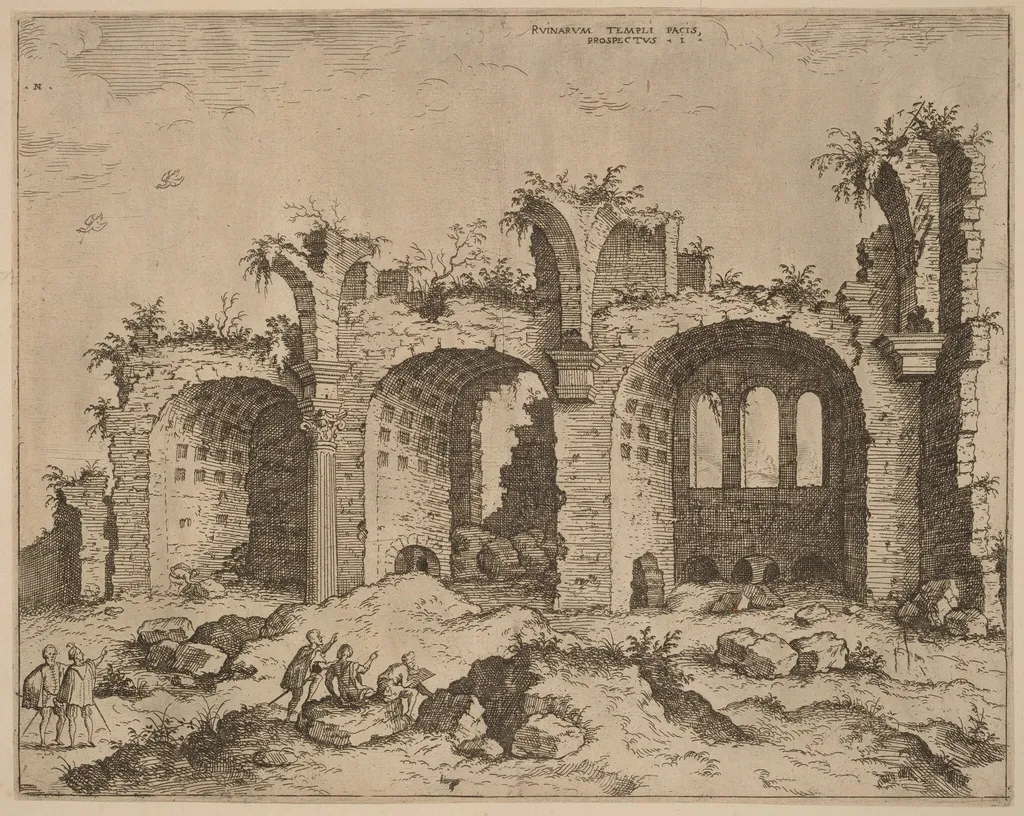
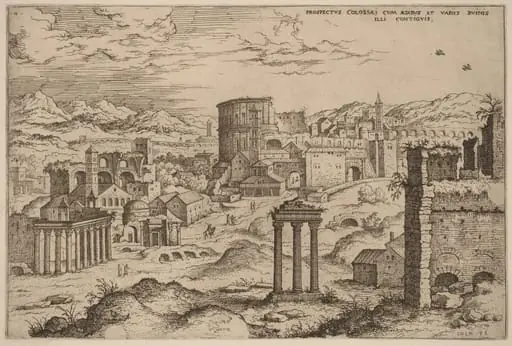
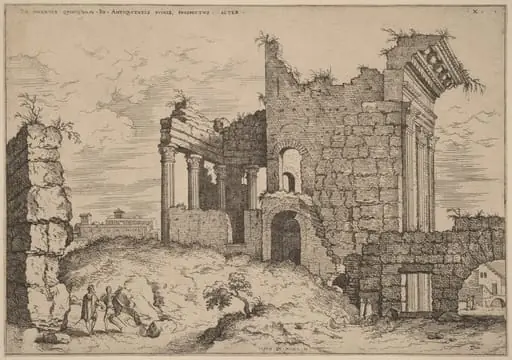
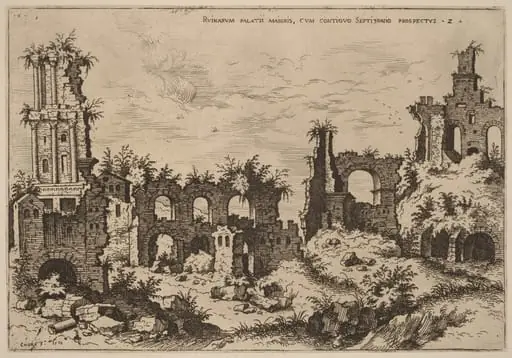
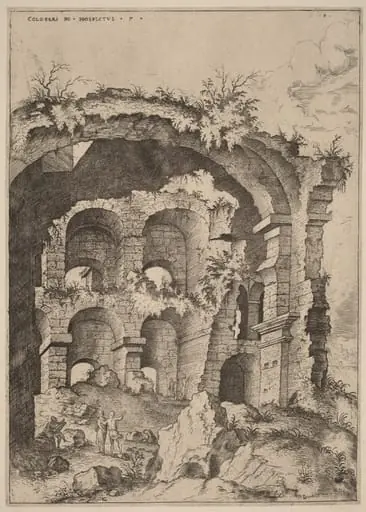
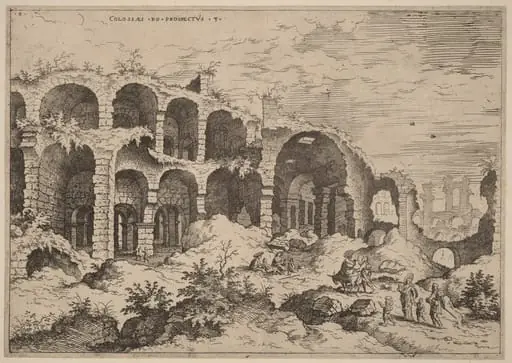
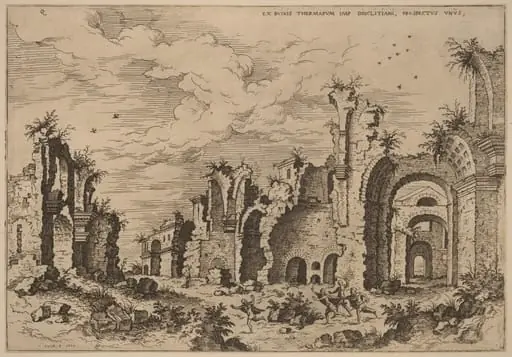
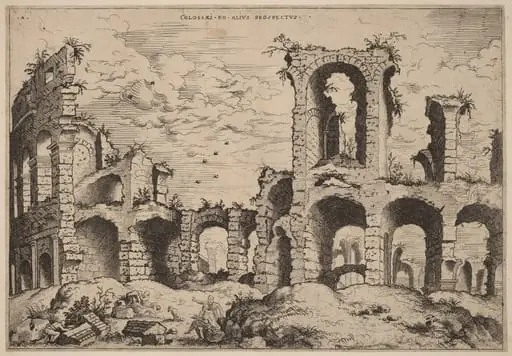
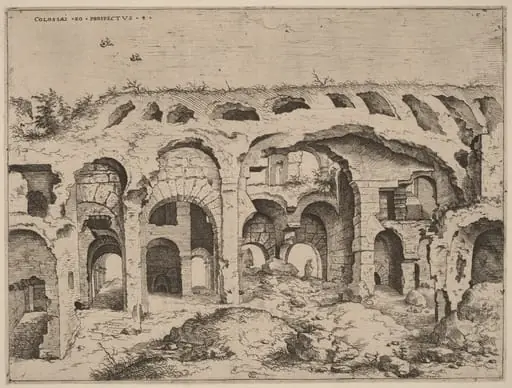
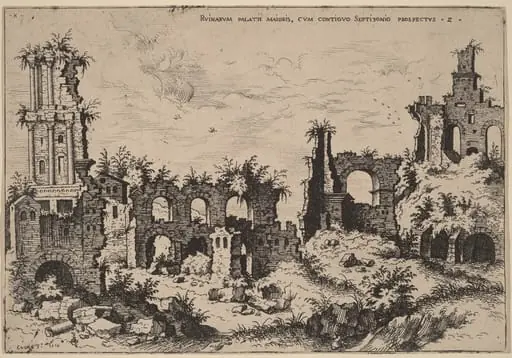
The Basilica of Constantine is an ink print by the Renaissance artist Hieronymus Cock. It dates from 1550 and is held in the collection of the National Gallery of Art.
About this work
Overview
The Basilica of Constantine is an etching on laid paper created by Hieronymus Cock around 1550. It is one of over 1,100 prints produced by Cock's publishing house during his lifetime.
Subject & Meaning
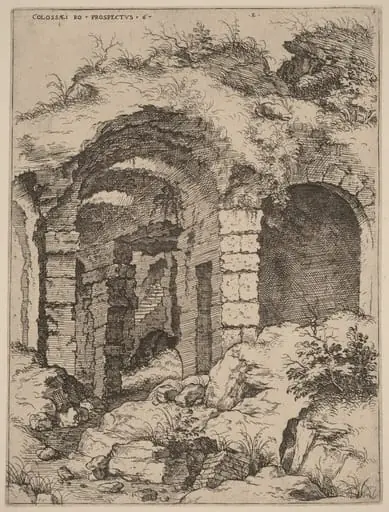
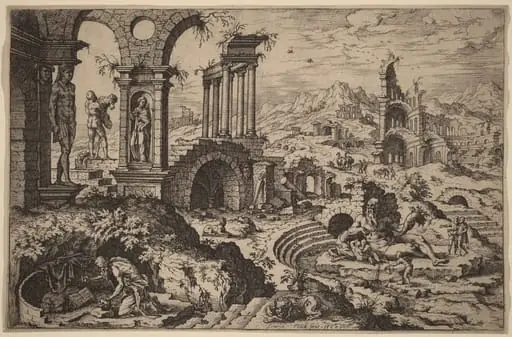
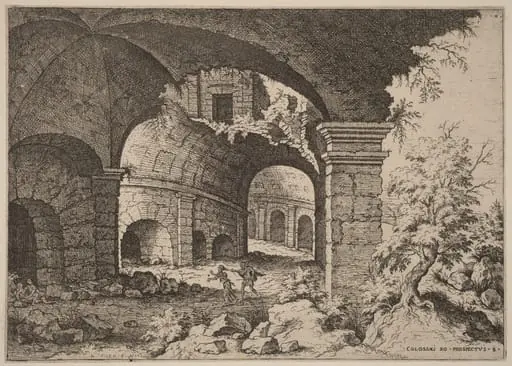
The etching depicts the ruins of the ancient Roman Basilica of Constantine, a structure that reflects the period's fascination with classical antiquity. The scene includes people walking among the ruins, capturing a moment of daily life amidst the ancient architecture.
Technique & Style
The work is an example of etching, a printmaking technique used to achieve detailed renderings. Cock's use of etching allowed for a high level of precision in capturing the design of the Basilica and the activities of the people within it.
History & Provenance
Hieronymus Cock was a Flemish painter, etcher, and influential print publisher active in Antwerp. His publishing house played a significant role in industrializing the printmaking process.
Artist & collection
Artist
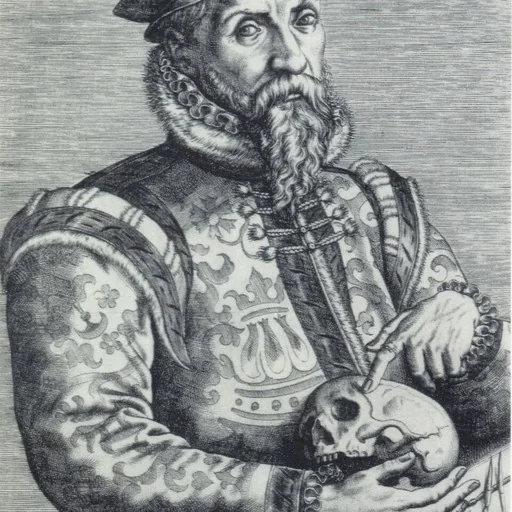
Hieronymus Cock, or Hieronymus Wellens de Cock, (1518 – 3 October 1570) was a Flemish painter and etcher as well as a publisher and distributor of prints.