Artwork
A Practical Treatise on the Five Orders of Ancient Architecture
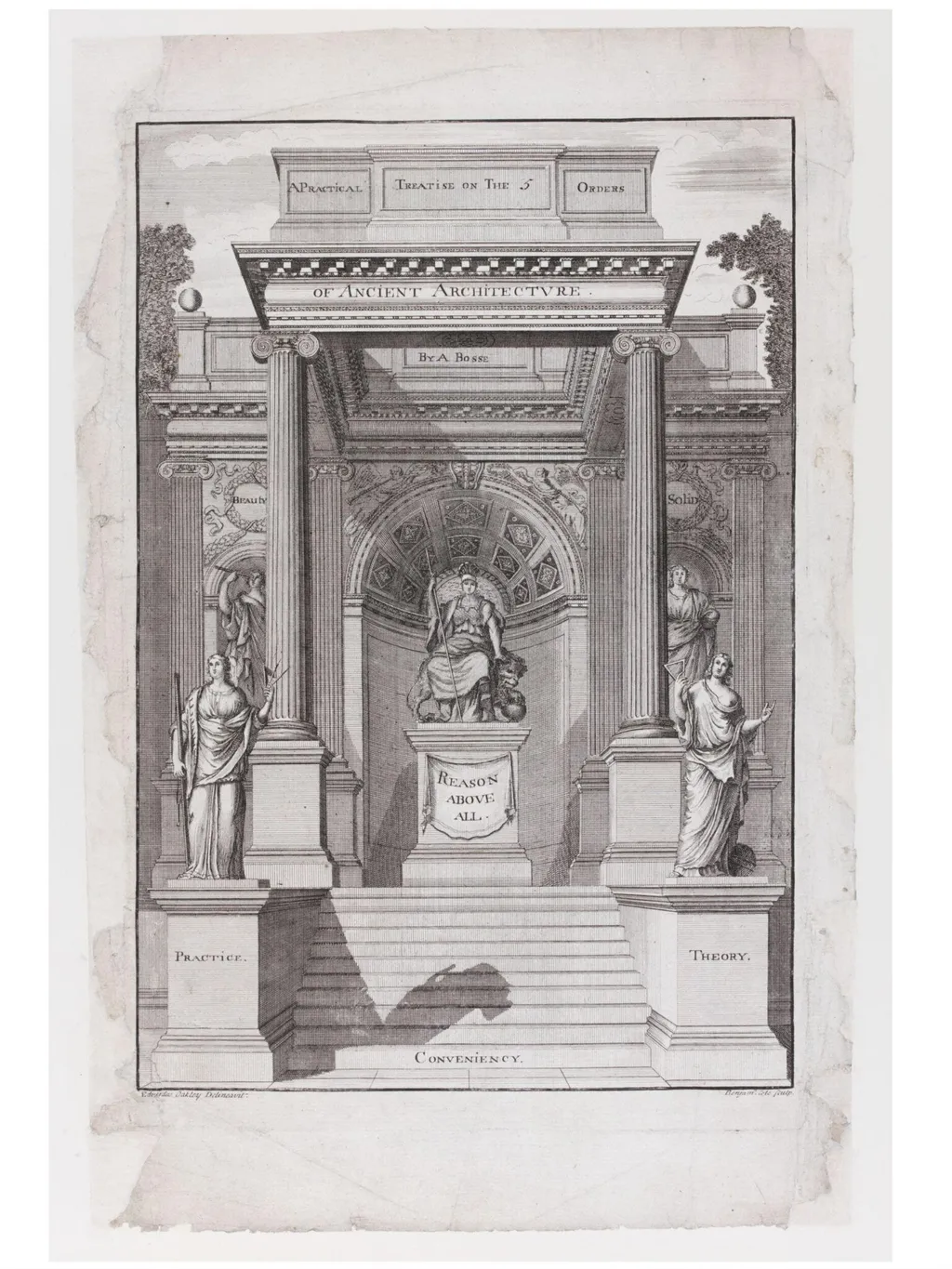
A Practical Treatise on the Five Orders of Ancient Architecture is a print by the Baroque artist Benjamin Cole. It dates from 1730 and is held in the collection of the Victoria and Albert Museum. This 1730 print serves as the title page of Abraham Bosse’s treatise on classical architecture.
About this work
This is a print from 1730. It’s the title page of a book about classical architecture. The artist, Benjamin Cole, made it by engraving after Edward Oakley.
The figures on the page show three ideas: beauty, practice and theory. They’re guided by “Reason above all.” That line comes from the book’s designer, Abraham Bosse, back in 1664.
Look up the Victoria and Albert Museum next.
Overview
The composition reflects Bosse’s earlier 1664 vision, integrating allegorical figures to convey core principles of architectural thought.
This 1730 print serves as the title page of Abraham Bosse’s treatise on classical architecture. Though published decades after its original design, it reproduces an engraving by Benjamin Cole, based on drawings by Edward Oakley. The composition reflects Bosse’s earlier 1664 vision, integrating allegorical figures to convey core principles of architectural thought. The print was produced for a scholarly audience seeking structured understanding of classical orders.
Subject & Meaning
Three allegorical figures represent Beauty, Practice, and Theory, arranged to illustrate their interdependence in architectural discipline. Above them, the phrase 'Reason above all' anchors the composition, signaling rational order as the guiding principle. The imagery does not depict actual buildings but abstract ideals, reinforcing the treatise’s philosophical foundation. This symbolic hierarchy reflects 17th-century humanist values applied to architectural education.
Technique & Style
Executed in intaglio engraving, the print features fine, precise lines typical of 18th-century British reproductive printmaking. Benjamin Cole’s technique renders the figures with clarity and formal restraint, preserving the compositional balance of Oakley’s original design. The style is academic and unembellished, prioritizing legibility and symbolic clarity over decorative flourish, aligning with the treatise’s didactic purpose.
History & Provenance
The design originated in 1664 with Abraham Bosse, a French artist and engraver known for his architectural writings. Decades later, Edward Oakley adapted the imagery for an English edition, and Benjamin Cole engraved it for the 1730 publication. The print’s journey from Paris to London reflects the transnational circulation of architectural knowledge in early modern Europe, particularly among professional circles.
Context
Published during the height of Palladian influence in Britain, the treatise responded to growing interest in systematic architectural education. The emphasis on Reason and the Five Orders aligned with contemporary efforts to codify classical principles for builders and designers. This print functioned as both a frontispiece and a manifesto, positioning architecture as a discipline grounded in intellectual rigor rather than mere craftsmanship.
Legacy
Though not widely reproduced today, the print exemplifies how architectural theory was visually communicated in the 18th century. Its symbolic framework influenced later pedagogical materials, reinforcing the link between classical ideals and professional training. The enduring presence of Bosse’s original concept in a later edition underscores the lasting authority of his structural and philosophical approach to architectural education.
Artist & collection
Artist
English engraver Benjamin Cole turned architectural theory into elegant prints in the early 1700s.

 Tomb of Nero
![Roma Victrix [The Roma of Cardinal Cesi], by Nicolas Beatrizet](https://artifactworldgallery.com/img/nicolas-beatrizet--roma-victrix-the-roma-of-cardinal-cesi--d7ac2e26f0fc874b-w320.webp) Roma Victrix [The Roma of Cardinal Cesi]
Roma Victrix [The Roma of Cardinal Cesi] The Statue in Front of Ruins
 A Triumphal arch on the Louvre
 Facade for a Church with a Sculpture Representing Faith
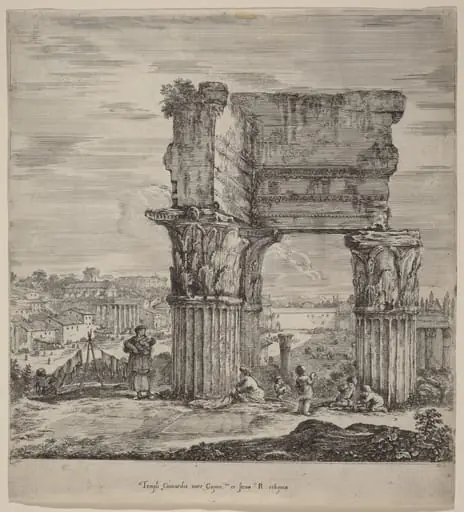 Temple of Concord and Roman Forum
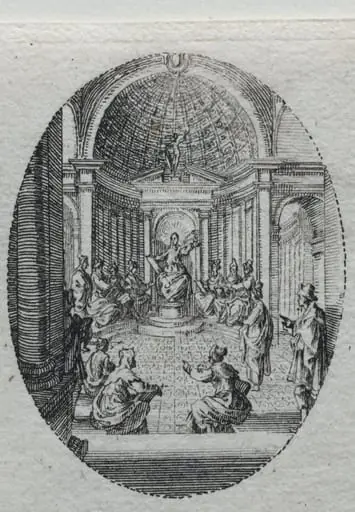 The Mysteries of the Passion: Christ Disputing with the Doctors
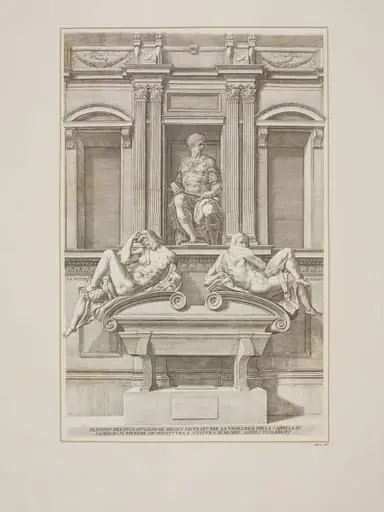 Tomb of Giuliano De' Medici
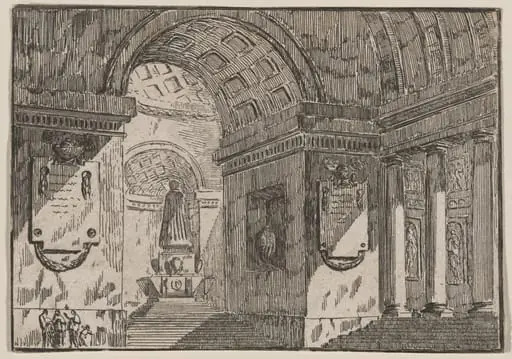 Porch before a Circular Temple
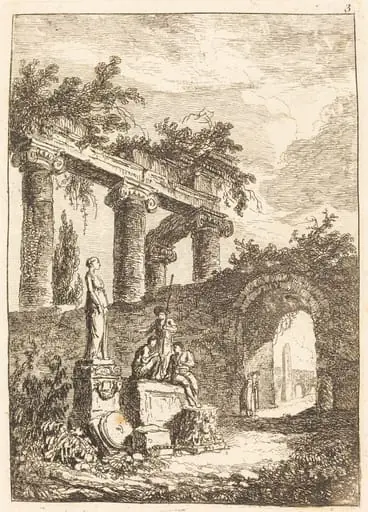 The Statue before the Ruins
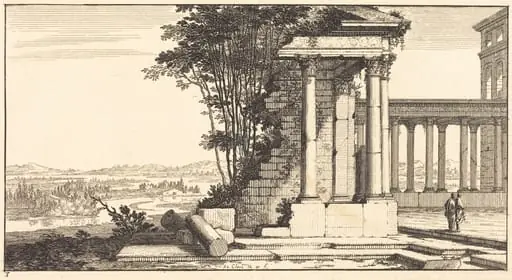 Landscape with Classical Ruins
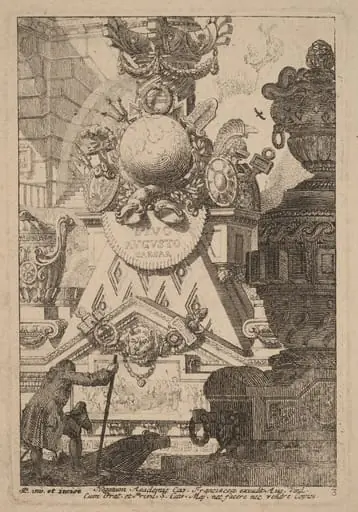 Fantasy of an Antique Trophy to Augustus