Artwork
Title Page
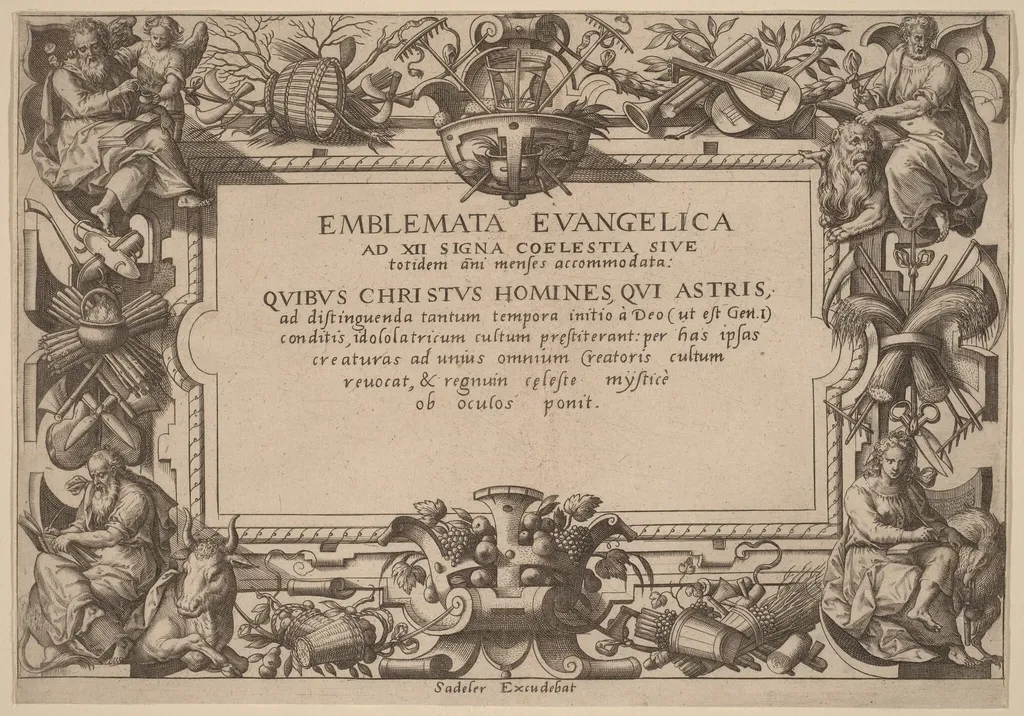
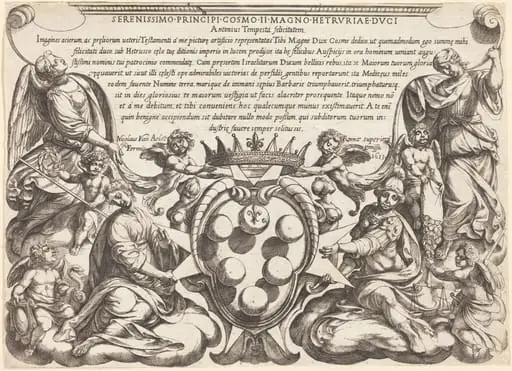
Title Page is an ink print by the Renaissance artist Adriaen Collaert. It dates from 1585 and is held in the collection of the National Gallery of Art.
About this work
Overview
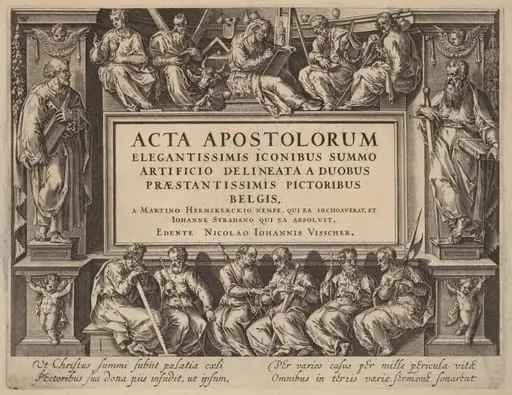
Adriaen Collaert’s 1585 engraving serves as a title page for a work on religious symbolism. Executed on laid paper, the print features an elaborate ornamental border that encloses a central block of Latin text. The composition is densely populated with miniature vignettes, each rendered in fine incised lines that give the impression of carved depth.
Subject & Meaning
Additional figures engage in reading, tool‑handling, and other quotidian activities, reinforcing themes of learning and labor within a sacred framework.
The surrounding border presents a series of allegorical motifs: a winged clock crowns the upper edge, suggesting the passage of time; musical ensembles and solitary players occupy the space below, evoking praise and devotion. A central cross is entwined with grapes and a perched bird, symbols traditionally linked to the Eucharist and the Holy Spirit, respectively. Additional figures engage in reading, tool‑handling, and other quotidian activities, reinforcing themes of learning and labor within a sacred framework.
Technique & Style
Collaert employed the intaglio engraving process, incising intricate lines into a copper plate before transferring the image onto laid paper. The work is distinguished by its meticulous hatching and cross‑hatching, which create subtle tonal variations and a three‑dimensional quality despite the monochrome medium. The tight, repetitive patterns of the border demonstrate the artist’s command of line work and his capacity to render complex scenes within a confined space.
History & Provenance
Created in the late sixteenth century, the print reflects the Flemish tradition of book illustration that flourished under the influence of the Counter‑Reformation. While the original volume for which this title page was intended is not documented, similar engravings were commonly used to introduce theological treatises. The piece has survived in several museum collections, attesting to Collaert’s reputation as a leading printmaker of his era.
Context
The engraving belongs to a period when printed media were increasingly employed to disseminate religious doctrine. Collaert’s work aligns with contemporary efforts to visually encode theological concepts, using symbolic imagery that would be readily recognized by educated readers. The inclusion of musical and labor motifs reflects the broader Renaissance interest in harmonizing spiritual and worldly pursuits.
Artist & collection


 Title Page
 Title Page
 Title Page to the Bible
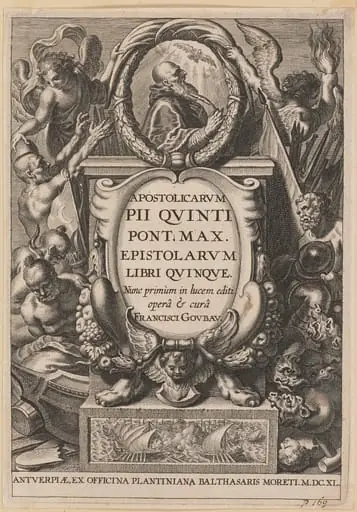 Title Page for Apostolicarvm PII Qvinti Pont. Max...
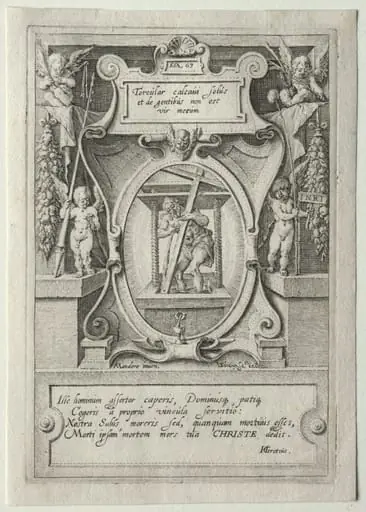 Passion Set: Title Page
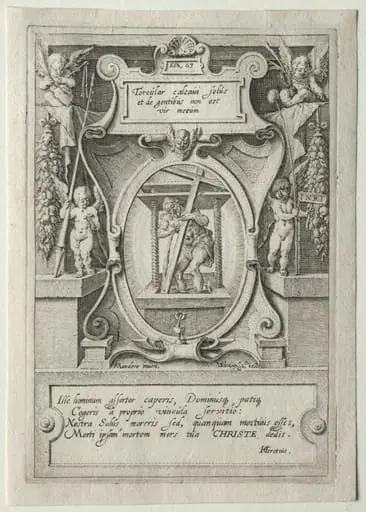 Passion Set
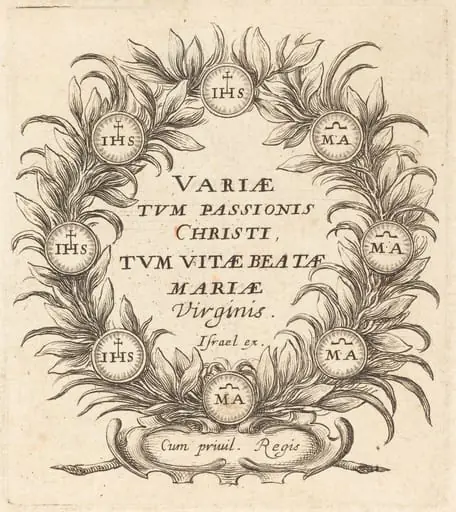 Frontispiece for Callot's "The Mysteries of the Passion"
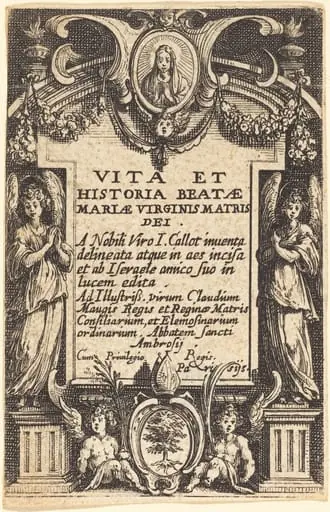 Frontispiece for "The Life of the Virgin"
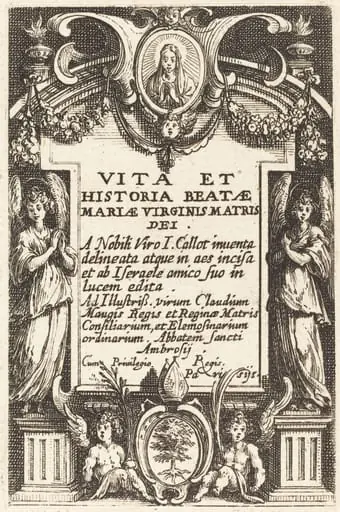 Frontispiece for "The Life of the Virgin"
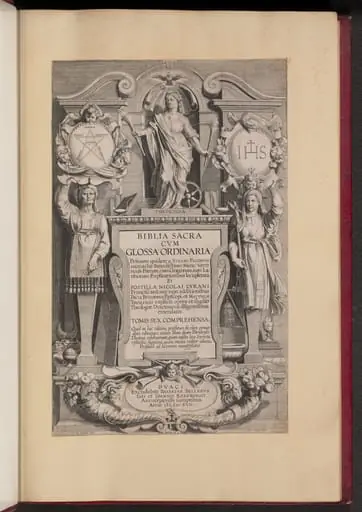 Title Page for Biblia Sacra Cvm Glossa Ordinaria
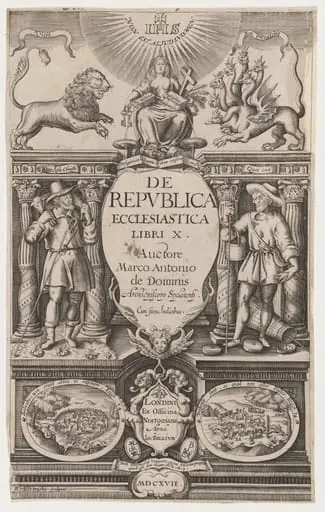 Title Page, De Republica Ecclesiatica by MarcAntonio de Dominis
 Frontispiece