Artwork
Il calar della notte (Nightfall)
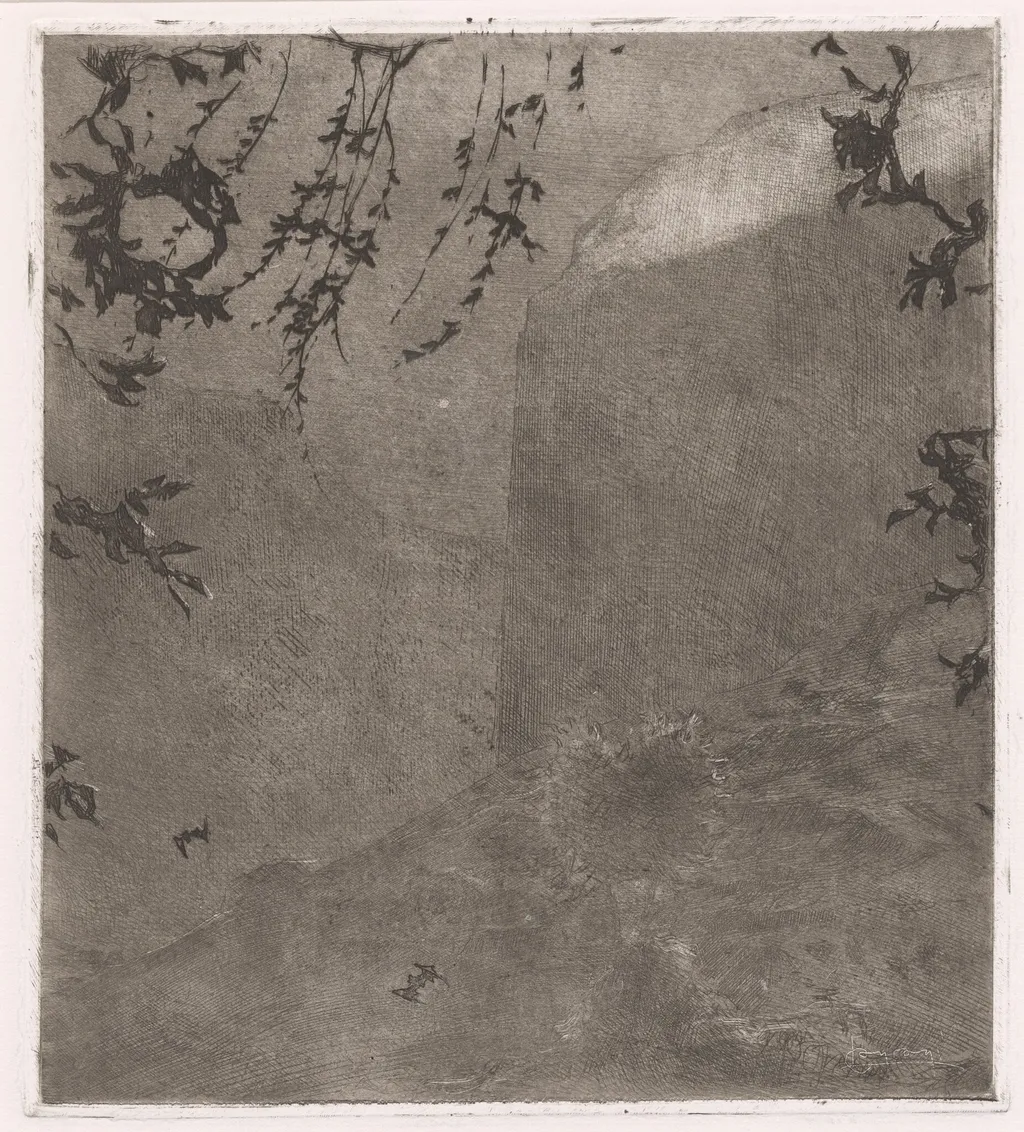
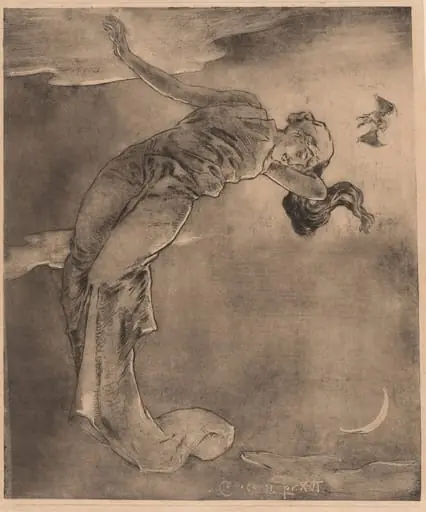
Il calar della notte (Nightfall) is an ink print by the Impressionist artist Luigi Conconi. It dates from 1902 and is held in the collection of the National Gallery of Art.
About this work
Overview
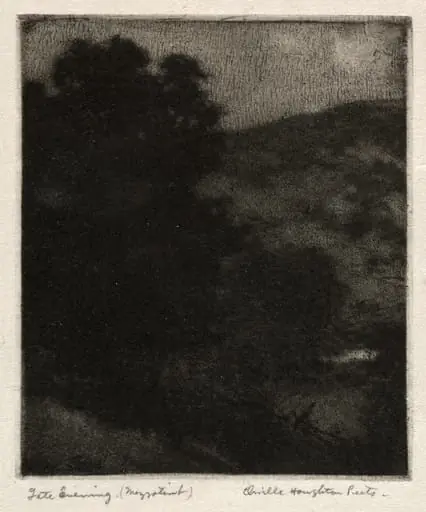
The work captures a quiet, dimly lit path bordered by trees, where the transition from day to night is rendered through subtle tonal shifts.
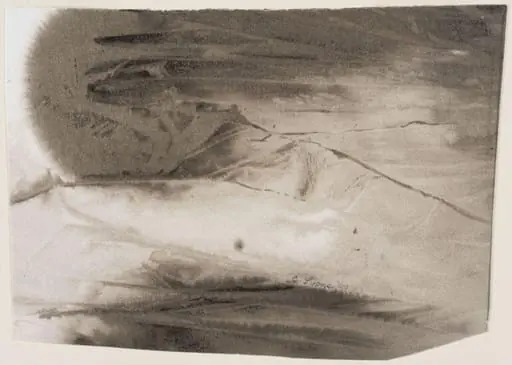
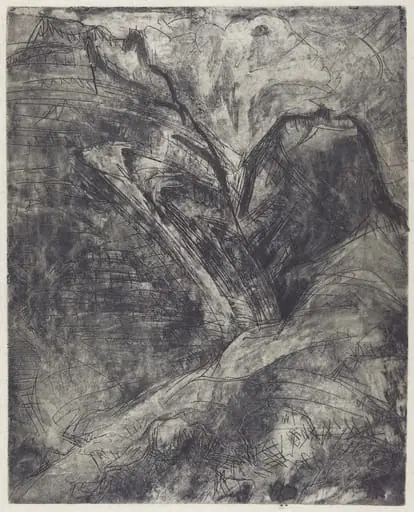
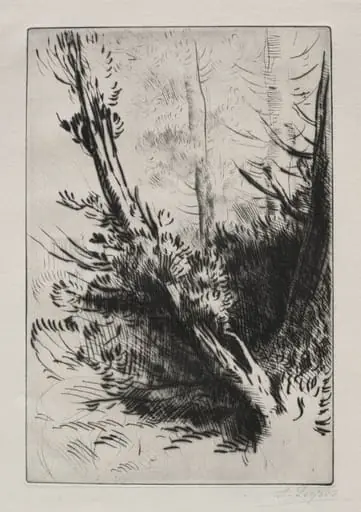
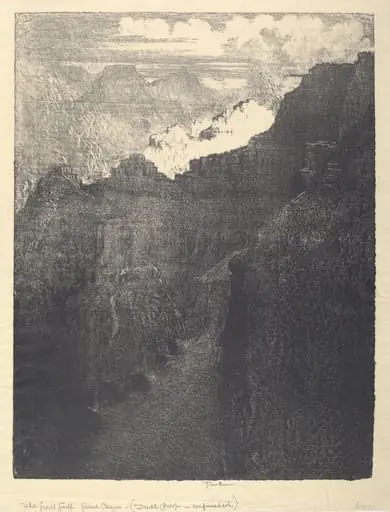
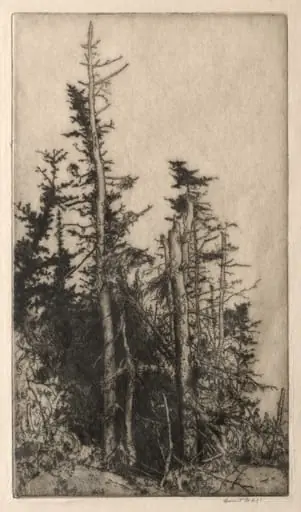
Il calar della notte (Nightfall), created around 1902, is an etching by Luigi Conconi, enhanced with monotype wiping on wove paper. The work captures a quiet, dimly lit path bordered by trees, where the transition from day to night is rendered through subtle tonal shifts. The technique combines precise engraved lines with soft, blurred areas achieved by selectively wiping ink, producing a sense of fading light and encroaching darkness.
Subject & Meaning
The scene depicts a solitary, winding path disappearing into shadow, flanked by gnarled tree branches that reach upward against a muted sky. There is no human presence, emphasizing solitude and the quiet inevitability of dusk. The composition suggests a contemplative mood, evoking the passage of time and the withdrawal of daylight without overt symbolism or narrative.
Technique & Style
Conconi employed traditional etching to define the sharp contours of branches and terrain, then used monotype wiping to soften edges and create atmospheric depth. The contrast between crisp lines and smudged ink mimics the gradual loss of light, blending the precision of printmaking with the fluidity of painting. This hybrid approach aligns with late 19th-century experiments in print media that sought to capture transient effects of light and mood.
History & Provenance
Created circa 1902, the print emerged during a period when Italian artists were engaging with Northern European print traditions and the tonal experiments of Impressionism. While Conconi is less widely documented than his contemporaries, this work reflects his interest in nocturnal landscapes and the emotional potential of printmaking. Its survival suggests it was held in private or institutional collections focused on Italian graphic arts of the era.
Context
In early 20th-century Italy, artists like Conconi were moving beyond academic realism toward more personal, mood-driven subjects. Nightfall aligns with broader European trends that explored twilight, solitude, and nature’s quiet power—echoing the work of French and Dutch printmakers who used etching to convey atmosphere rather than detail. The piece reflects a shift from narrative to emotional resonance in visual art.
Legacy
Though not widely exhibited today, Il calar della notte remains a representative example of Italian graphic art’s quiet innovation at the turn of the century. It demonstrates how etching, often seen as a reproductive medium, could be adapted for expressive, subjective ends. The work contributes to understanding how printmakers expanded the boundaries of their medium beyond illustration into poetic observation.
Artist & collection


![Solitudine [Solitude], by Luigi Conconi](https://artifactworldgallery.com/img/luigi-conconi--solitudine-solitude--77a3a7f30704bafe-w320.webp)