Artwork
Tablou, ulei pe pânză, ”Nicolae Ceaușescu, președinte”, nesemnat, atribuit I.C. Popescu - Stolojan. Nicolae Ceaușescu este prezentat în momentul învestirii în funcția de președinte al Republicii Socialiste România. Poartă însemnele funcției eșarfa tricoloră, sceptrul prezidențial. Sala Marii Adunări Naționale a fost înlocută cu un fundal agricol - un lan de grâu treierat de o combină. Pupitrul este decorat cu trandafiri și iriși. Oferit de autor, 1976.
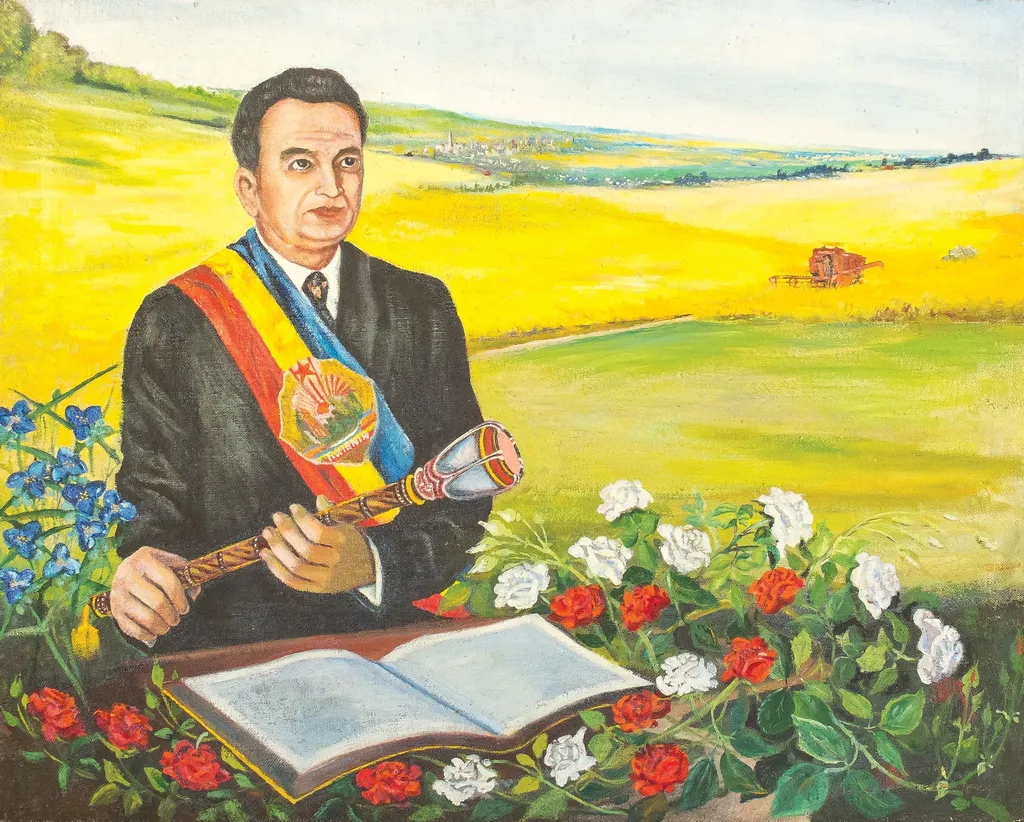
Tablou, ulei pe pânză, ”Nicolae Ceaușescu, președinte”, nesemnat, atribuit I.C. Popescu - Stolojan. Nicolae Ceaușescu este prezentat în momentul învestirii în funcția de președinte al Republicii Socialiste România. Poartă însemnele funcției eșarfa tricoloră, sceptrul prezidențial. Sala Marii Adunări Naționale a fost înlocută cu un fundal agricol - un lan de grâu treierat de o combină. Pupitrul este decorat cu trandafiri și iriși. Oferit de autor, 1976. is a print by I.C. Popescu - Stolojan. It is held in the collection of the National Museum of Romanian History. The oil on canvas portrays Nicolae Ceaușescu at the moment of his inauguration as President of the Socialist Republic of Romania.
About this work
Overview
The oil on canvas portrays Nicolae Ceaușescu at the moment of his inauguration as President of the Socialist Republic of Romania. He is seated at a table, dressed in a dark suit, with a tricolour sash draped over his shoulder and a presidential scepter in his hand. The composition was offered by the artist in 1976 and is attributed to I.C. Popescu‑Stolojan.
Subject & Meaning
Ceaușescu is shown holding a book and a ceremonial baton, symbols of authority, while a medal bearing a sun motif rests on his chest.
Ceaușescu is shown holding a book and a ceremonial baton, symbols of authority, while a medal bearing a sun motif rests on his chest. The table is lavishly arranged with red roses and white irises, suggesting a blend of political power and cultivated beauty. The background replaces the actual hall of the Great National Assembly with an agrarian scene, perhaps alluding to the regime’s emphasis on agricultural progress.
Technique & Style
Rendered in oil, the painting combines realistic portraiture with a staged, almost theatrical backdrop. The figures are detailed and sharply defined, whereas the surrounding wheat field and distant combine harvester are depicted with broader, softer brushwork, creating a contrast between the formal figure and the idealised countryside.
History & Provenance
Created in 1976, the work was presented by the artist as a gift, likely intended for official display. Though unsigned, it has been consistently attributed to I.C. Popescu‑Stolojan. The canvas now resides in the Museum of Ethnography, where it is part of the collection documenting Romania’s political visual culture.
Context
The painting reflects the cult of personality surrounding Ceaușescu during the 1970s, a period when state propaganda frequently merged political iconography with motifs of national productivity, such as wheat fields and mechanised agriculture, to convey the leader’s role as both ruler and steward of the nation’s prosperity.
Artist & collection
Artist

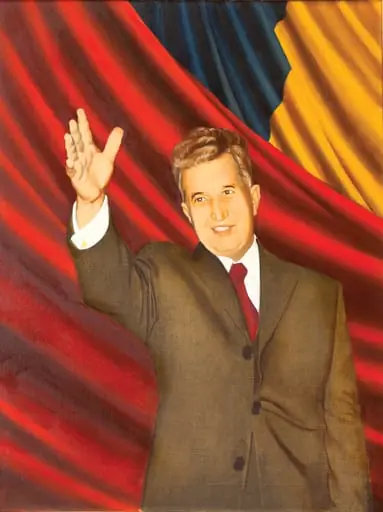 Tablou, ulei pe pânză, „Salutul președintelui”, atribuit lui Viorel Toma, nedatat. Nicolae Ceaușescu este reprezentat în centrul tabloului salutând, pe fundal steagul PCR și cel al RSR. Comandat și oferit de Comitetul Județean de Partid Timiș (1985).
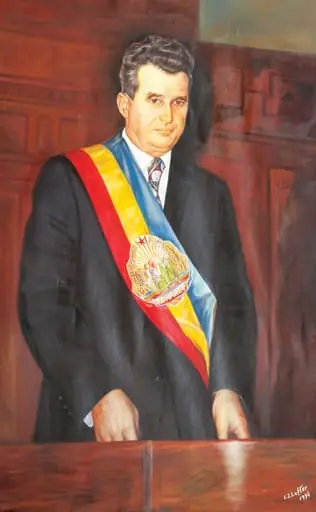 Tablou, ulei pe pânză, ”Portret Nicolae Ceaușescu”, semnat C.I. Lefter și datat 1974 în partea dreaptă jos. Reprezentat într-un cadru oficial în spatele unui pupitru, Nicolae Ceaușescu purtând eșarfa cu stema RSR. Oferit lu Nicolae Ceaușescu de Comitetul de Partid Sănătatea, cu ocazia zilei de naștere, ianuarie 1978.
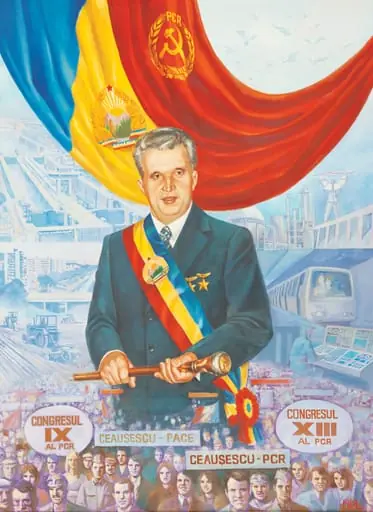 Tablou, ulei pe pânză, ”Ctitorul României Socialiste”, nesemnat, atribuit lui V.Tănase. Tabloul îl prezintă pe Nicolae Ceaușescu în prim plan purtând toate însemnele funcției: eșarfa tricoloră, sceptrul prezidențial, două însemne de ”Erou al Republicii Socialiste România”. În partea de sus a tabloului este redat steagul RSR unit cu steagul PCR. În partea de jos, poporul, oamenii muncii purtând pancarte cu ”Ceaușescu Pace”, ”Ceaușescu PCR”, ”Congresul IX al PCR” (alegerea lui Nicolae Ceaușescu în fruntea partidului), ”Congresul XII al PCR” (realegerea în fruntea partidului). Pe fundal sunt redate realizările socialismului: Canalul Dunăre Marea Neagră, Barajul Vidraru, metroul etc. Tablou comandat de Ministerul Apărării Nașionale (1985).
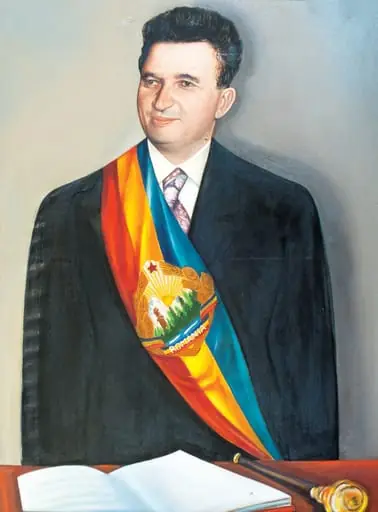 Tablou, ulei pe pânză, ”Portret Nicolae Ceaușescu”, nesemnat, atribui lui Nicolae Toma. Oferit de autor, cu ocazia zilei de naștere a lui Nicolae Ceaușescu, Ploiești, ianuarie 1978.
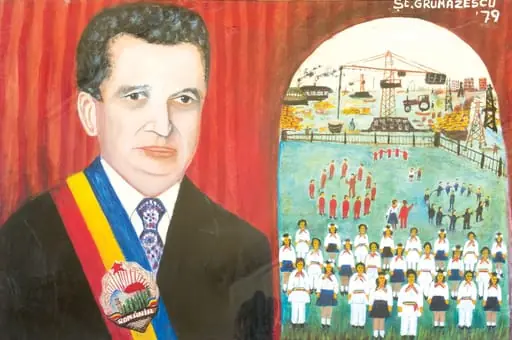 Tablou, ulei pe pânză, Nicolae Ceaușescu și copii, semnat și datat în partea dreaptă sus Șt. Grumăzescu, 1979. Nicolae Ceaușescu este prezentat în partea stângă urmărind o festivitate - pionieri, copii dansând în horă. Maniera de realizare a tabloului este una naivă. Oferit de Ștefan Grumăzescu din București.
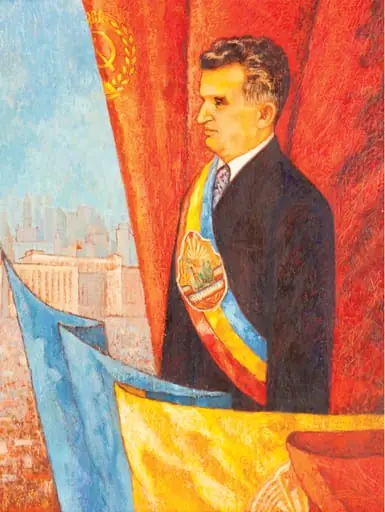 Tablou, ulei pe pânză, „Nicolae Ceaușescu, întâiul președinte al României”, semnat C.Aurel și datat 1974 în partea dreaptă jos. Nicolae Ceaușescu purtând banderolă tricoloră cu stema R.S.R., stând la balcon primind ovații din partea oamenilor muncii adunați într-o piață. În spatele său, steagul cu sigla PCR. Tablou oferit de către autor originar din Câmpina (Prahova), 19 august 1974.
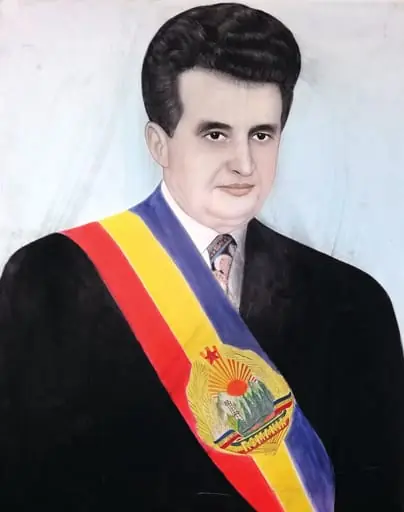 Tablou, acuarelă pe carton, ”Nicolae Ceaușescu la alegerea ca președinte”, nesemnat, atribuit lui Constantin Z. Bolovan. Portretul este realizat într-o manieră naivă, proporțiile personajului sunt puțin supradimensionate, Nicolae Ceaușescu este reprezentat cu eșarfa tricoloră cu stema RSR. Oferit de Constantin Z. Bolovan, Iași, 1978.
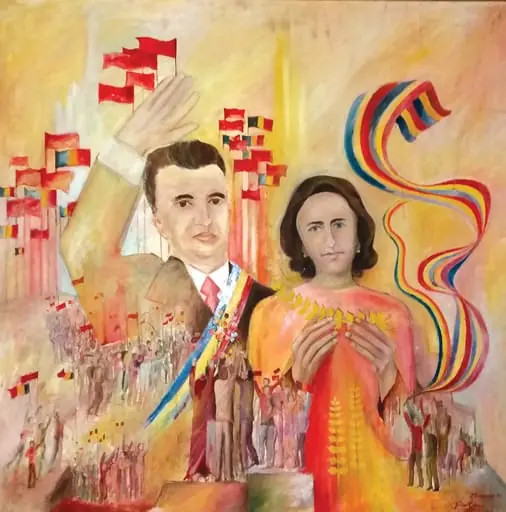 Tablou, ulei pe pânză, ”23 August”, nesemnat, atribuit Teodor Cioată. Nicolae și Elena Ceaușescu sunt prezentați în mijlocul mulțimii. Proporțiile reprezentării personajelor principale, soții Ceaușescu, nu sunt respectate de către artist - capetele sunt prea mari, la fel și mâinile care sunt ținute în poziții nefirești. În partea de jos a tabloului oameni ai muncii cu steaguri ovaționând. Tablou oferit de autor, Iași, august 1974.
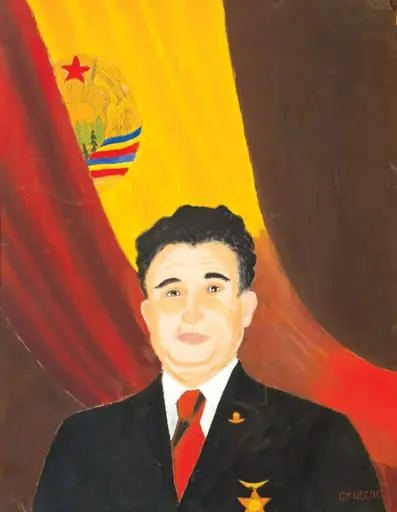 Tablou, ulei pe carton, ”Nicolae Ceaușescu”, semnat Gh. Nechita în partea dreaptă jos. Nicolae Ceaușescu este prezentată cu o figură veselă, în piept are însemnul de ”Erou al Republicii Socialiste România. În spatele său s-a vrut a fii reprezentat steagul cu stema RSR, numai ca, nu există culoarea albastru ea fiind înlocuită de culoarea maro. Oferit lui Nicolae Ceaușescu de către autor Gheorghe Nechita din Baia Mare, 26 ianuarie 1976.
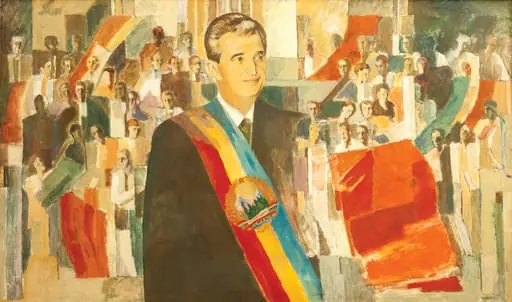 Tablou, tempera pe pânză, „Ceaușescu și Poporul” semnat Grigorian Rusu datat 1982 în partea dreaptă jos. Nicolae Ceaușescu este prezentat în prim plan, cu bandă tricoloră, în fundal sunt reprezentați oamenii muncii. Comandat și oferit de Comitetul Județean de Partid Dolj (1982).
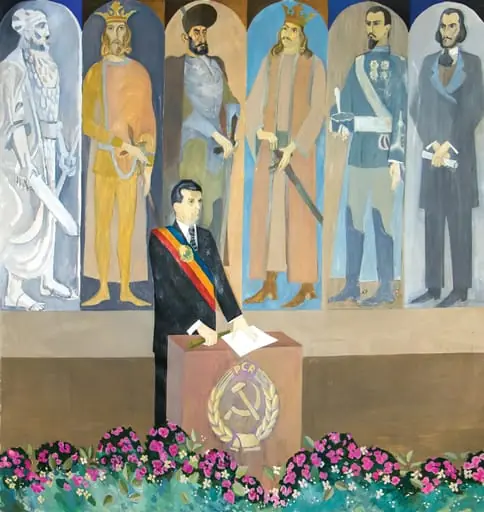 Tablou, ulei pe pânză, ”Omagiu”, semnat Constantin Piliuță. Nicolae Ceaușescu la un pupitru cu însemnele PCR depunând jurământul de învestire; poarte însemnele prezidențiale eșarfa tricoloră cu stema RSR, sceptrul, însemnul de ”Erou al Republicii Socialiste România”. Pe fundal sunt reprezentați Burebista, Mircea cel Bătrân, Mihai Viteazul, Ștefan cel Mare, Alexandru Ioan Cuza, Nicolae Bălcescu, personajele au o mimică solemnă, dau impresia că sunt garanții jurământului pe care-l face Nicolae Ceaușescu. Comandat și oferit lui Nicolae Ceaușescu de Consiliul Culturii și Educației Socialiste, ianuarie 1978.
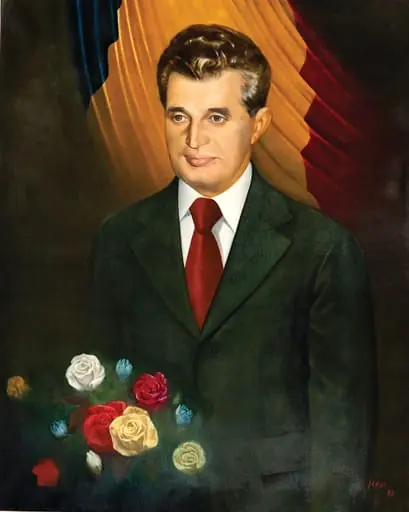 Tablou ulei pe pânză, portret Nicolae Ceaușescu semnat Ispas și datat în partea dreaptă jos. Este prezentat într-o postură solemnă cu un buchet de trandafiri, în spatele său tricolorul. Culorile drapelului se regăsesc și în coloritul trandafirilor. Comandat de Comitetul Județean de Partid Alba (1983).
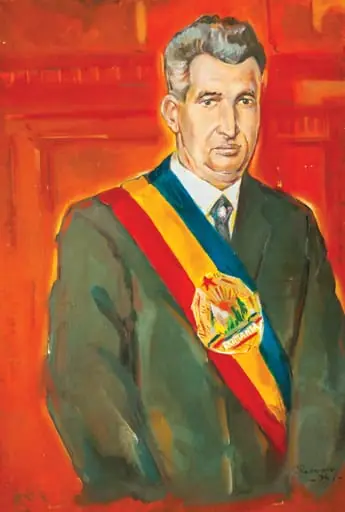 Tablou, ulei pe pânză, Nicolae Ceaușescu, semnat C.Radovan și datat 1974 în partea dreaptă jos. Nicolae Ceaușescu este prezentat într-o atitudine mirat deranjată. Tablou oferit cadou lui Nicolae Ceaușescu de către autor, Ciprian Radovan, București.
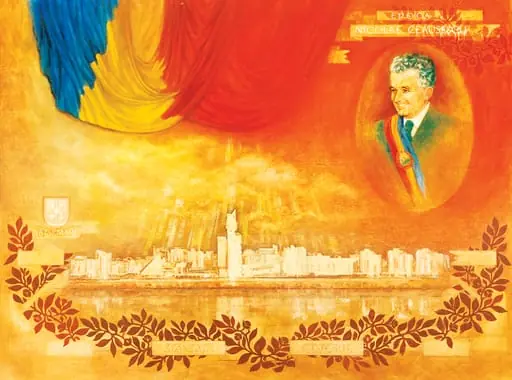 Tablou, ulei pe pânză, „Epoca Ceaușescu – Omagiu” semnat A. Cordea și datat 1986 în partea dreaptă jos. Tabloul îl prezintă pe Nicolae Ceaușescu în medalion dreapta sus privind zâmbitor la orașul Satu Mare scăldat de lumina soarelui, soarele reprezentat de tricolor și steagul PCR. Deasupra medalionului este notat cu majuscule ”EPOCA NICOLAE CEAUȘESCU”. În partea stângă stema județului Satu Mare. În partea de jos o ghirlandă, printre ramurile ei mesajul ”MĂREAȚĂ CTITORIE”. Comandat de Comitetul Județean de Partid Satu Mare (1986)
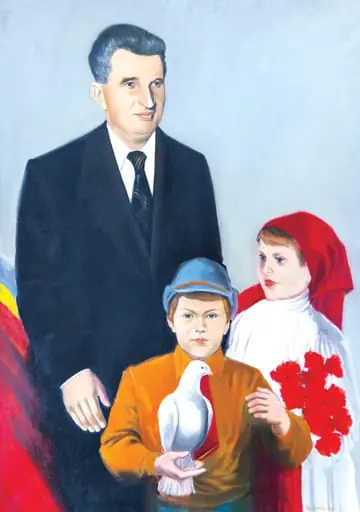 Tablou, ulei pe pânză, „Mesajul României”, semnat Nicolae Costachi în partea dreaptă jos și datat 1984. Nicolae Ceaușescu alături de doi copii, o fată îmbrăcată în costum popular ținând în mâini un buchet de garoafe roșii și un băiat în uniformă de șoim al patriei cu un porumbel alb în palma dreaptă. Comandat și oferit de Comitetul Județean de Partid Bistrița Năsăud (1985).