Artwork
The Annunciation
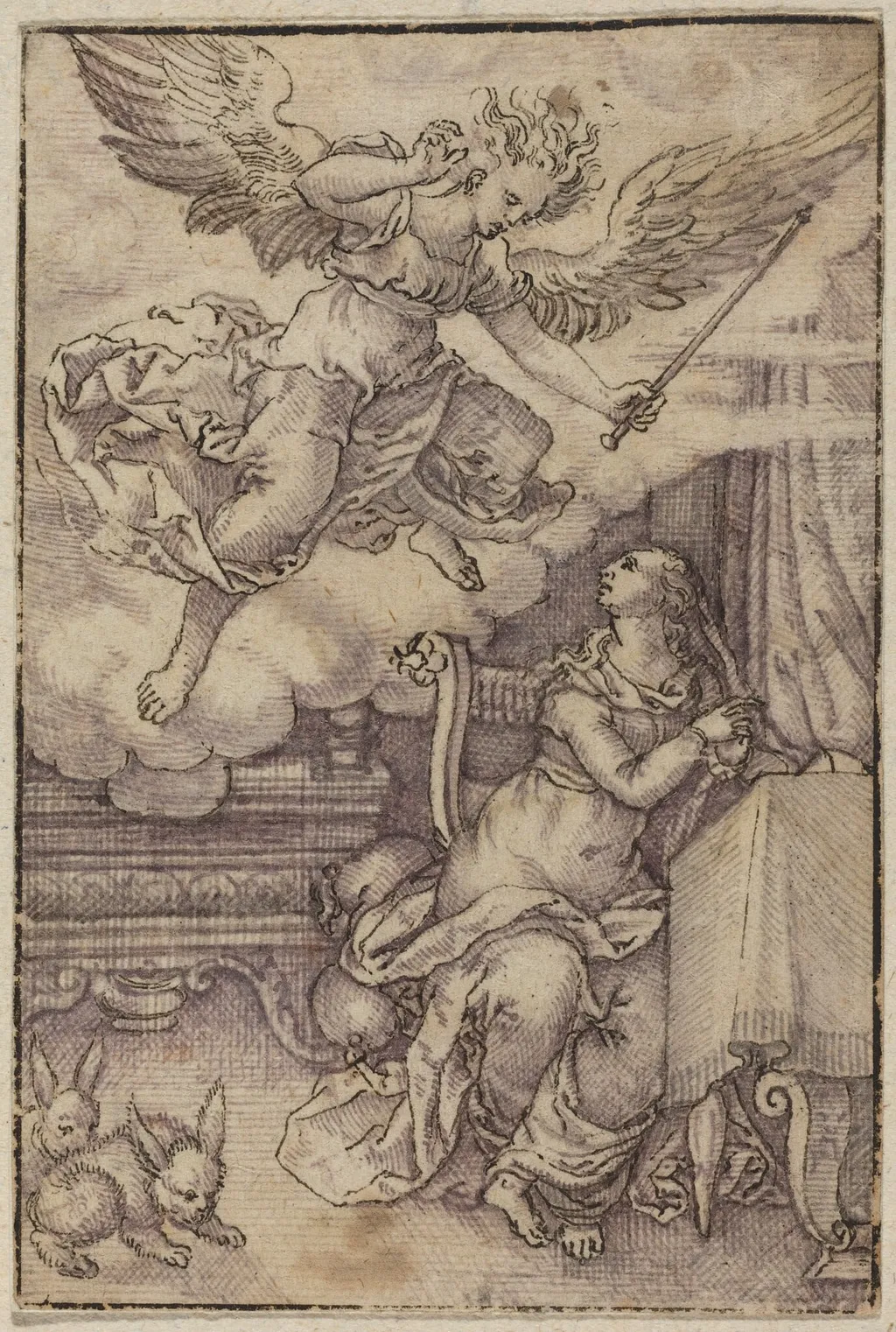
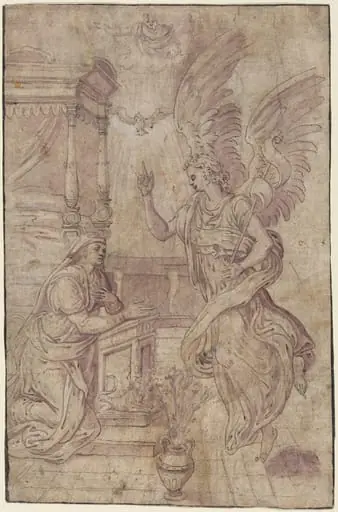
The Annunciation is an ink drawing by the Renaissance artist Virgil Solis. It dates from 1538 and is held in the collection of the National Gallery of Art.
About this work
Overview
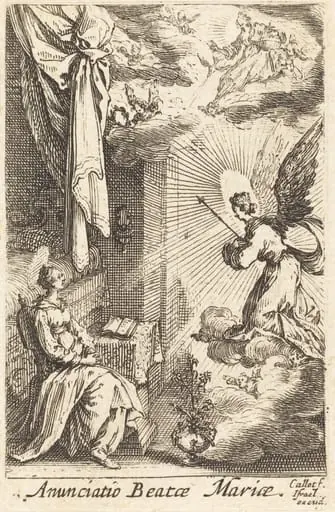
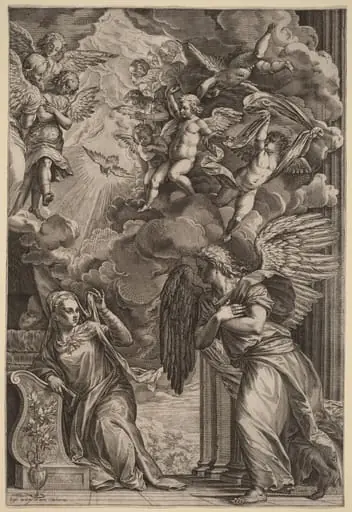
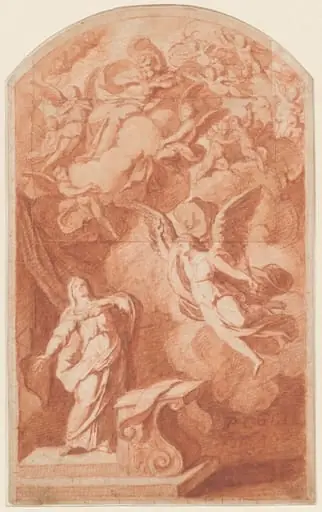
Created in 1538, this drawing by German artist Virgil Solis records the biblical moment when the angel Gabriel informs the Virgin Mary of her forthcoming role as mother of Jesus. Executed with pen and both black and violet inks on laid paper, the work belongs to the religious genre of the Renaissance period and reflects Solis’s activity in Nuremberg.
Subject & Meaning
The composition presents a kneeling Mary, hands clasped in reverence, as Gabriel hovers above her, winged and holding a staff. The angel’s gesture suggests speech, emphasizing the divine message being delivered. The simple backdrop, including a curtain, vase, and candle, grounds the scene in a modest interior while underscoring the spiritual encounter.
Technique & Style
Solis employs fine, precise lines and layered cross‑hatching to model form and generate depth. The angel’s wings and Mary’s drapery are rendered with swift, controlled strokes, while subtle shading in violet ink adds tonal variation. The drawing’s economy of detail focuses attention on the figures’ expressions and the narrative moment.
History & Provenance
Virgil Solis, primarily known for his engravings, etchings, and woodcuts, produced this work during his productive years in Nuremberg. The drawing has remained documented as part of his oeuvre, illustrating his versatility across media beyond printmaking.
Artist & collection

Artist
Virgil Solis or Virgilius Solis (1514 – 1 August 1562), a member of a prolific family of artists, was a German draughtsman and printmaker in engraving, etching and woodcut who worked in his native city of Nuremberg.