Artwork
Auditus (Hearing)
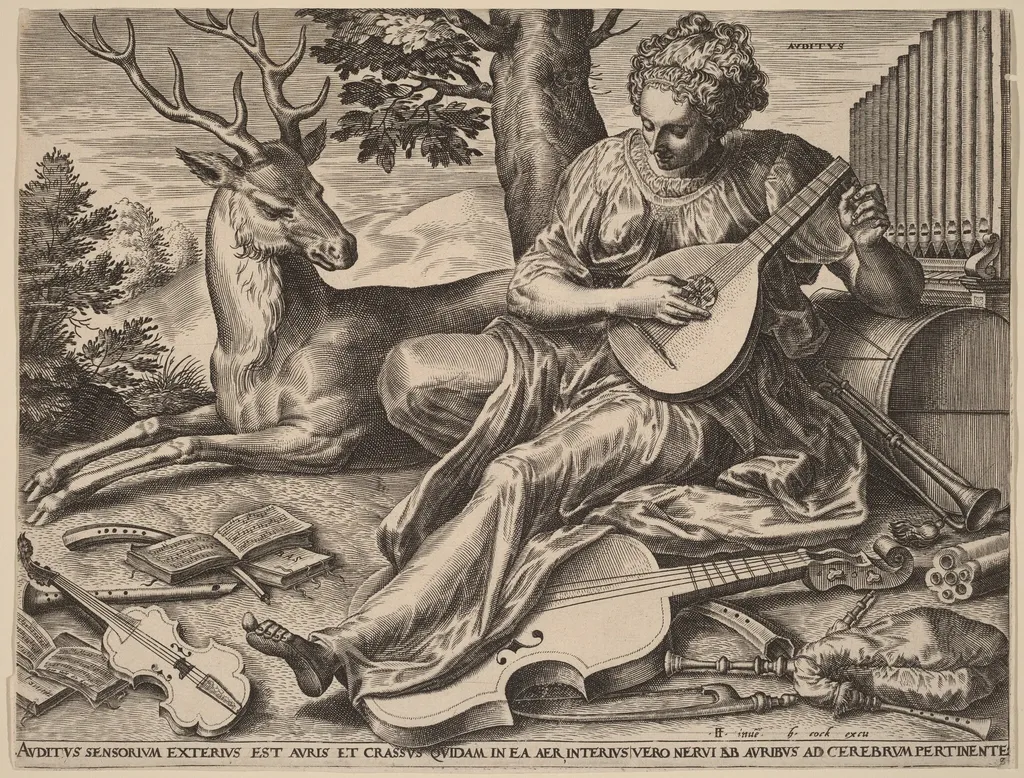
Auditus (Hearing) is an ink print by the Renaissance artist Cornelis Cort. It dates from 1561 and is held in the collection of the National Gallery of Art.
About this work
Overview
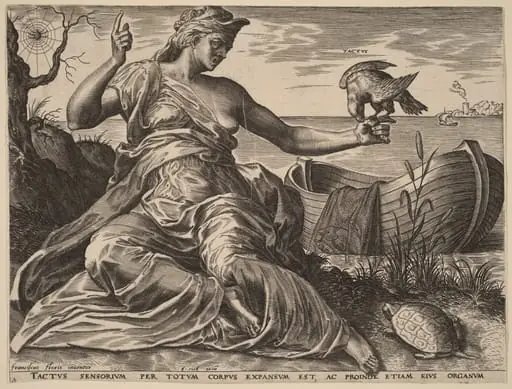
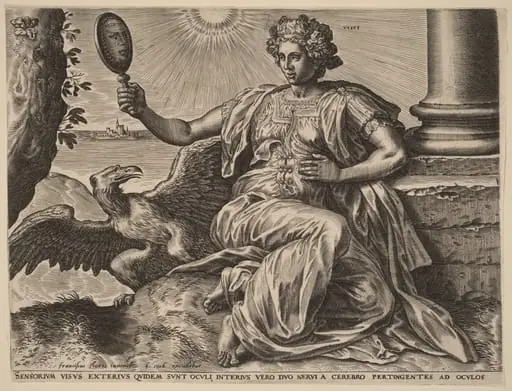
Cornelis Cort, a Dutch engraver who spent his later career in Italy under the name Cornelio Fiammingo, produced the print *Auditus (Hearing)* in 1561. Executed as an engraving on laid paper, the work forms part of a series that visualizes the five human senses, with this plate representing the sense of hearing.
Subject & Meaning
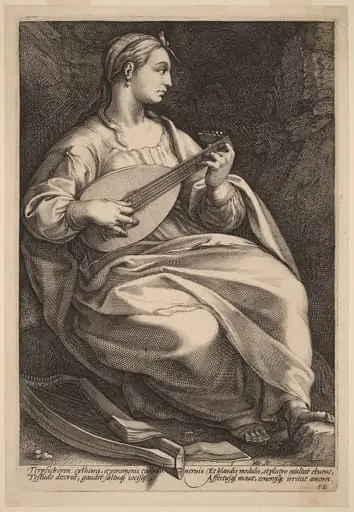
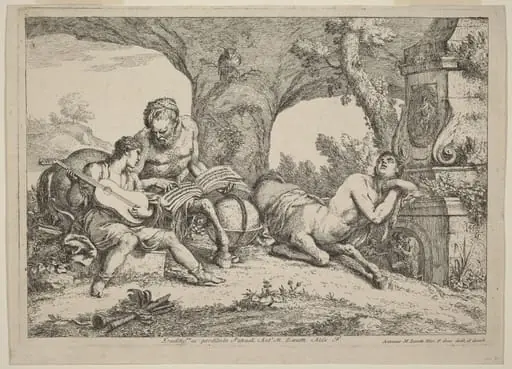
The composition presents a seated figure beneath a tree, accompanied by a deer with conspicuously large ears. The man holds a lute and gazes downward, while a variety of musical instruments lie scattered at his feet. Together with a Latin caption describing the passage of sound from ear to brain, the scene allegorically illustrates the act of listening.
Technique & Style
Cort employed fine, cross‑hatching and delicate line work characteristic of mid‑sixteenth‑century engraving. The use of laid paper provides a subtle texture that enhances the tonal gradations. Architectural elements such as a columned building and a winding path are rendered with precise linear perspective, reflecting the artist’s mastery of draftsmanship.
History & Provenance
Created during the final twelve years of Cort’s life, the print was produced while he was active in Italy, a period when he collaborated with leading painters and disseminated their designs through prints. *Auditus* circulated among collectors of the time as part of a set of sensory allegories, though specific early owners are not documented.
Context
The series of the five senses aligns with a broader Renaissance interest in humanist symbolism and the didactic use of art. By pairing a musical scene with a deer—an animal traditionally associated with keen hearing—Cort links natural observation with cultural practice, echoing contemporary scholarly treatises on perception.
Artist & collection

Artist
Cornelis Cort (c. 1533 – c. 17 March 1578) was a Dutch engraver and draughtsman. He spent the last 12 years of his life in Italy, where he was known as Cornelio Fiammingo.