Artwork
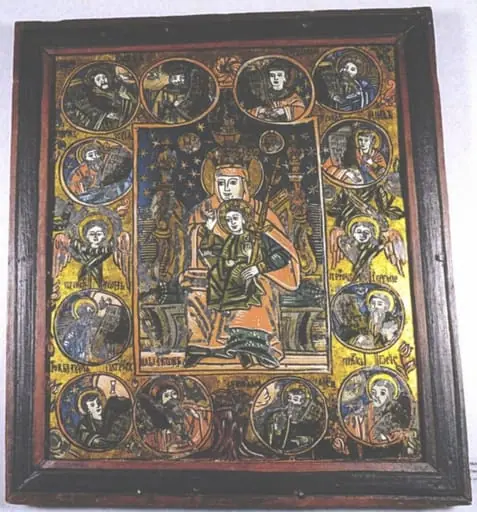
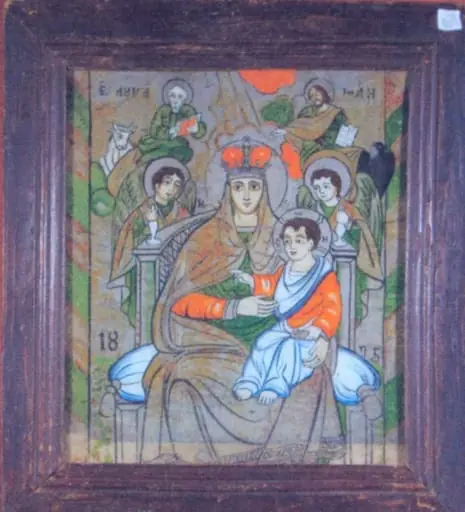
Maica Domnului cu Pruncul, tronând, înconjurată de prooroci
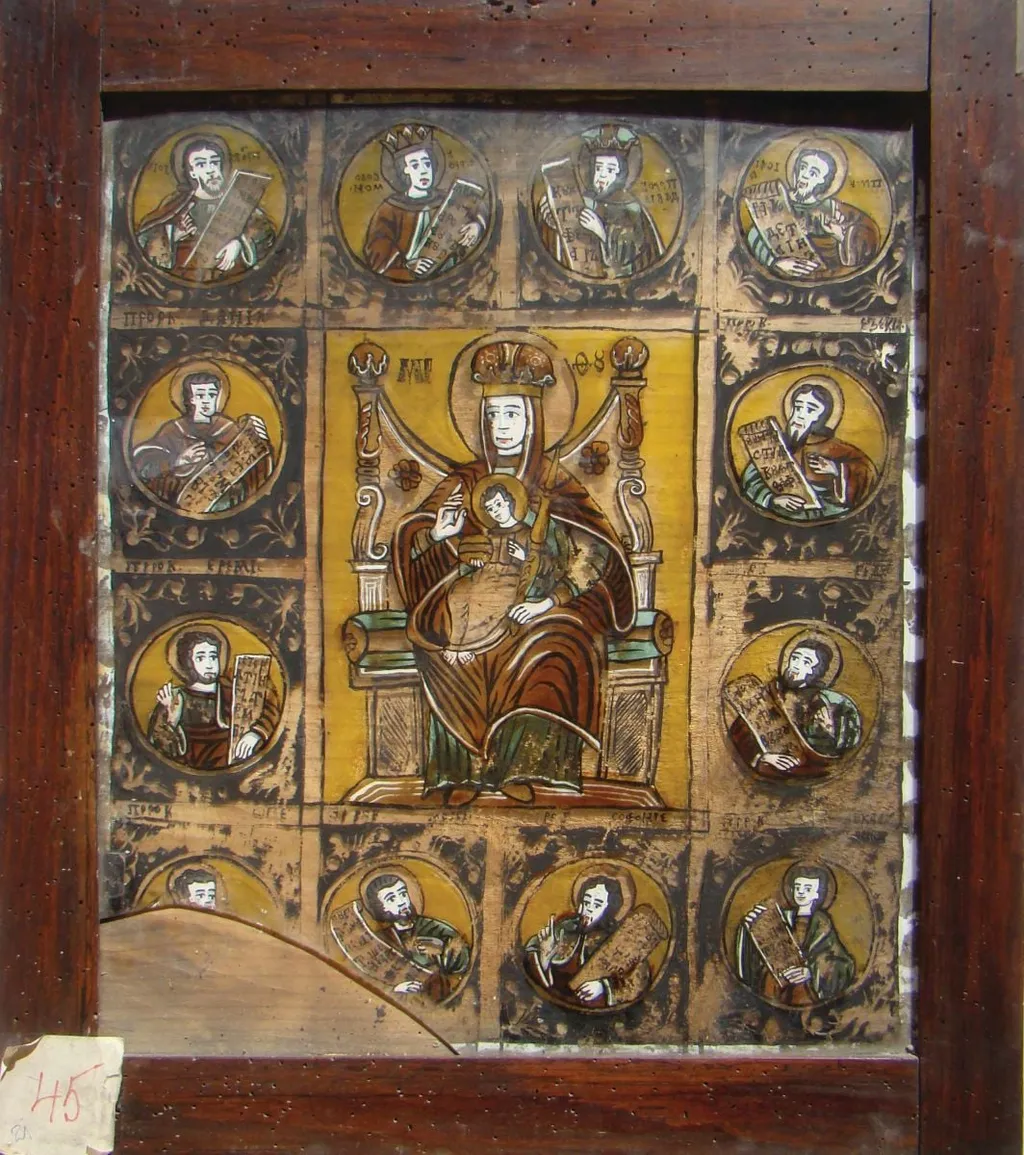
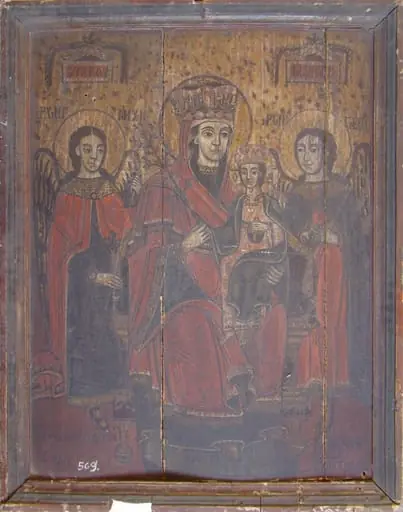
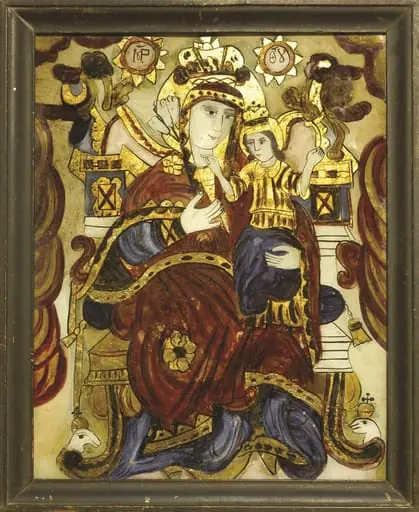
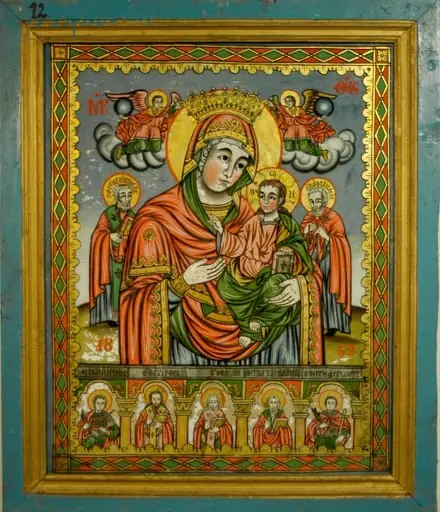
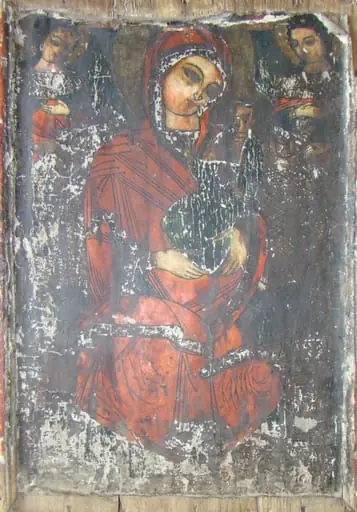
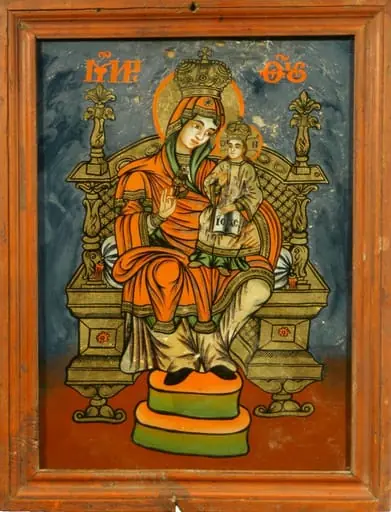
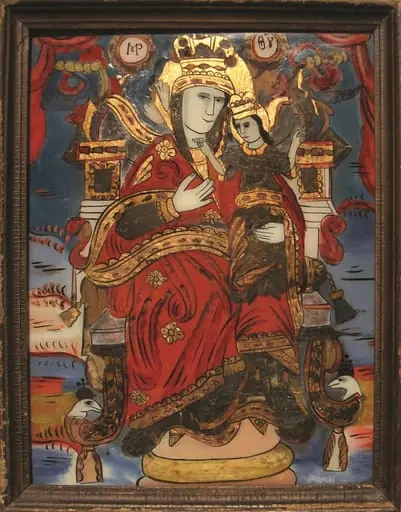
Maica Domnului cu Pruncul, tronând, înconjurată de prooroci is an unspecified painting by Ioan Costea. It is held in the collection of the Alba Iulia Orthodox Archdiocese. The work presents a seated figure on a throne, holding a child and a globe, set against a gold background.
About this work
Overview
The work presents a seated figure on a throne, holding a child and a globe, set against a gold background. Flanking the central pair are eight circular portrait heads, each depicted with a book or scroll. The palette is dominated by gold, brown and muted earth tones, with clear outlines and flat color planes that give the composition a formal, hierarchical feel.
Subject & Meaning
The central woman, crowned and holding a globe, is traditionally identified as the Virgin Mary with the infant Jesus, emphasizing her role as queen of heaven and earth. The surrounding eight heads are commonly interpreted as prophets or saints, their books and scrolls symbolising divine revelation and the transmission of sacred knowledge.
Technique & Style
The painting employs a flat, iconographic style characteristic of medieval and early Renaissance devotional images. Gold leaf or pigment forms the background, while sharp contour lines separate figures from one another. The limited tonal range and lack of perspective create a timeless, symbolic space rather than a naturalistic setting.
History & Provenance
No specific documentation accompanies the image, and the artist remains unidentified. The work’s material and stylistic traits suggest it originates from a tradition of Eastern Orthodox or Byzantine‑influenced religious art, likely produced for liturgical or private devotional use.
Context
Such throne‑type depictions of the Theotokos with the Christ Child were common in churches and monasteries, serving as focal points for veneration. The inclusion of prophetic figures reflects theological concepts linking Old Testament prophecy with the incarnation, a motif frequently employed in medieval iconography.
Artist & collection
Artist
Ioan Costea painted saints with the same matter-of-fact touch he’d use for a neighbor’s portrait.