Artwork
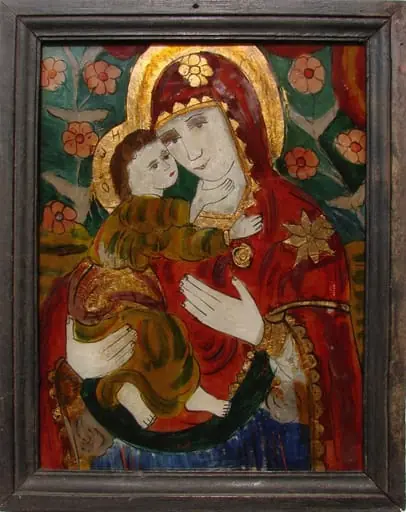
Maica Domnului cu Pruncul împărăteasă, tronând
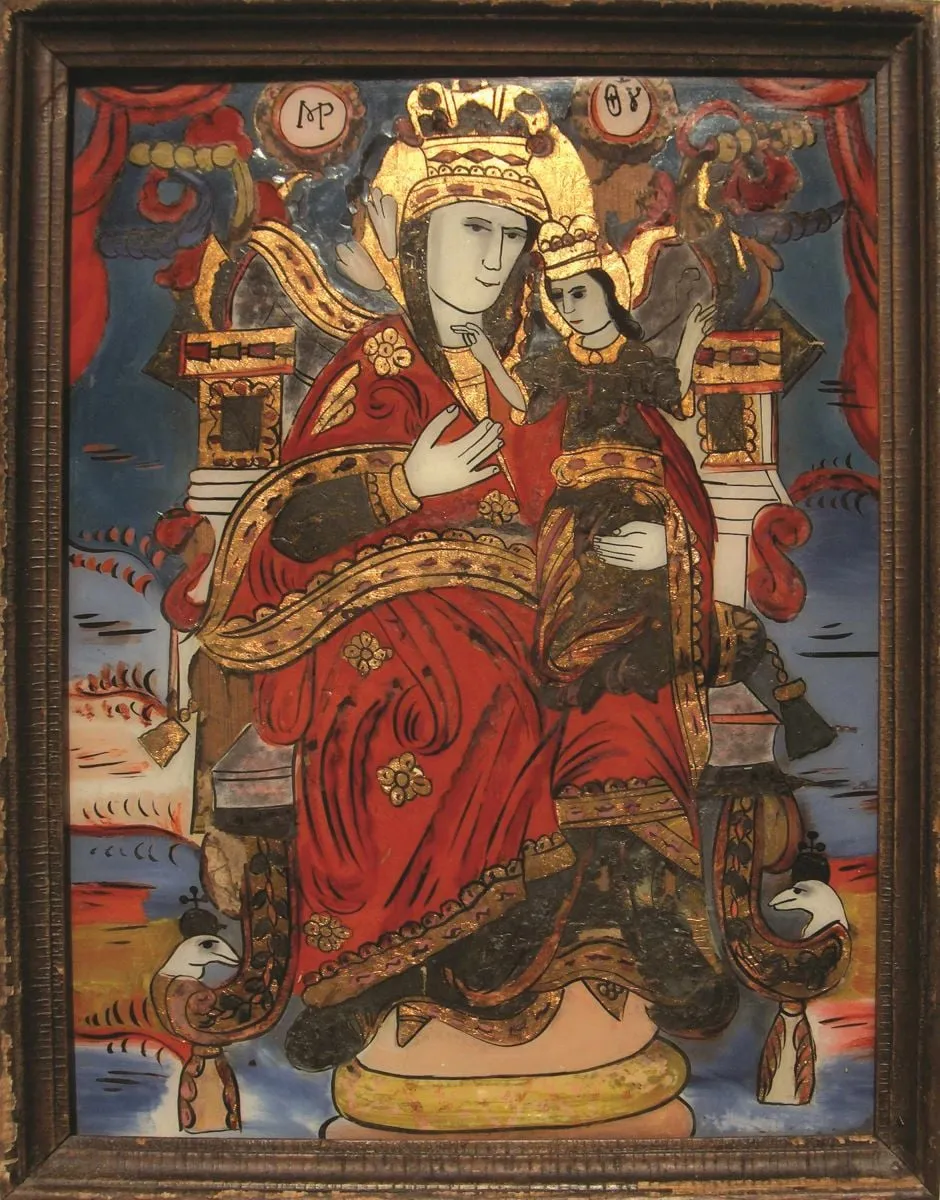
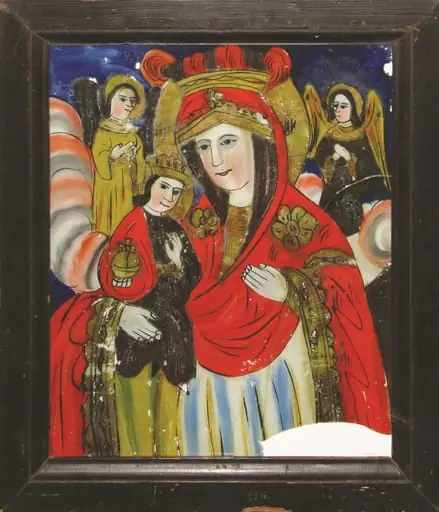
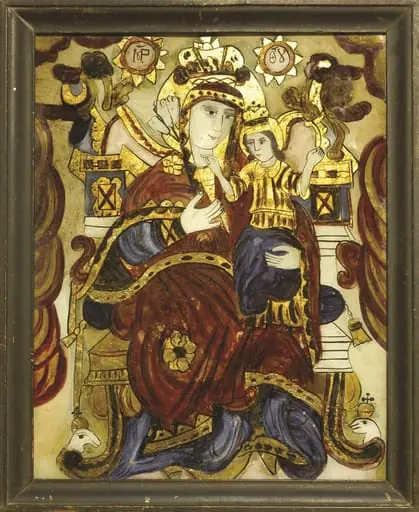
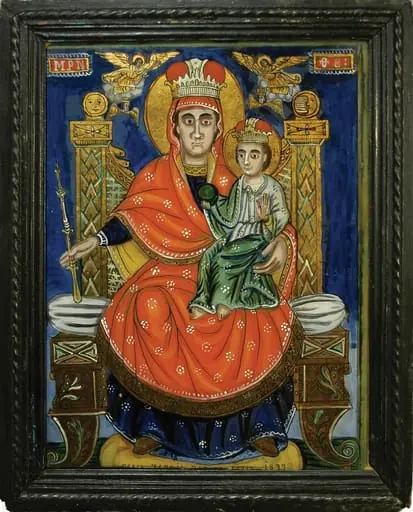
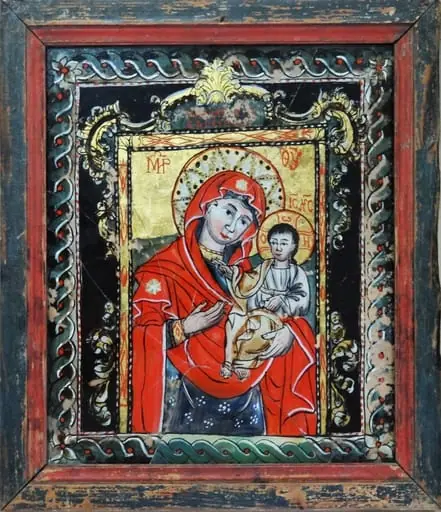
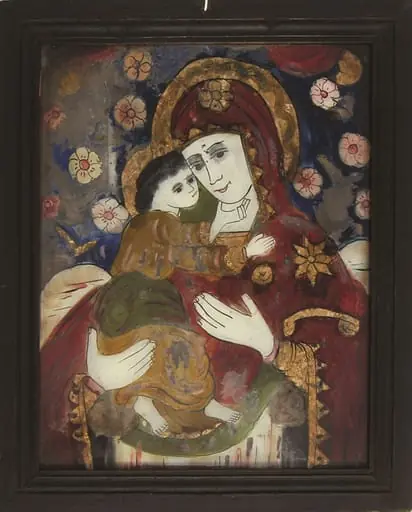
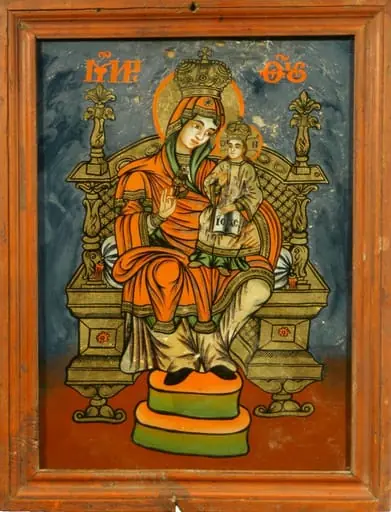
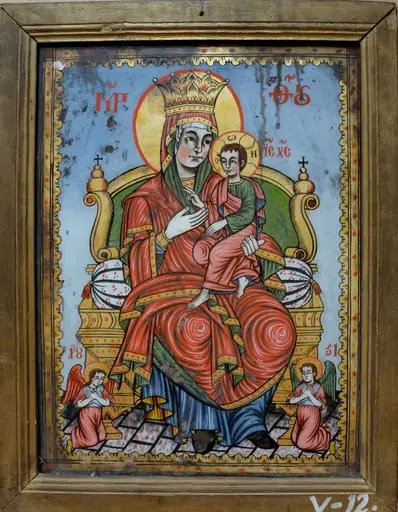
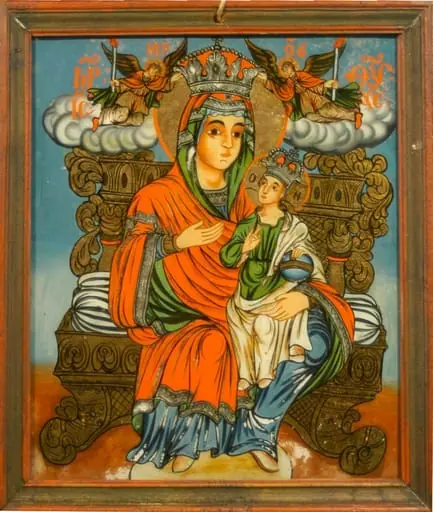
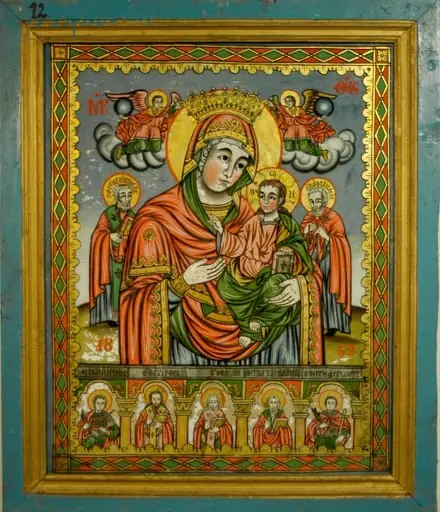
Maica Domnului cu Pruncul împărăteasă, tronând is an unspecified painting by Petru Prodan. It is held in the collection of the Alba Iulia Orthodox Archdiocese. This icon portrays the Virgin Mary enthroned with the Christ Child, a traditional subject in Byzantine religious art.
About this work
Overview
Rich gold leaf and deep red pigments dominate the composition, while the blue sky behind them suggests a celestial realm.
This icon portrays the Virgin Mary enthroned with the Christ Child, a traditional subject in Byzantine religious art. The figures are rendered with formal symmetry and hierarchical scale, emphasizing their divine status. Rich gold leaf and deep red pigments dominate the composition, while the blue sky behind them suggests a celestial realm. The work reflects the liturgical function of such images in Eastern Christian worship.
Subject & Meaning
The Virgin, titled 'Empress' in this depiction, is shown as the Theotokos—Mother of God—seated on a royal throne to signify her role as Queen of Heaven. The Christ Child, dressed in dark robes with a golden halo, holds a scroll, symbolizing divine wisdom. Their regal attire and crowns merge earthly monarchy with spiritual authority, reinforcing theological concepts of Christ’s kingship and Mary’s intercessory power.
Technique & Style
The painting employs tempera on wood, typical of Byzantine iconography, with meticulous brushwork and gold leaf outlining garments and throne details. Facial features are stylized rather than naturalistic, following canonical models that prioritize spiritual presence over individual likeness. The flat, non-perspectival space and emphasis on patterned textures reflect established liturgical conventions rather than secular artistic trends.
History & Provenance
Though the artist is not definitively identified, stylistic elements align with late medieval Romanian icon painting, possibly linked to workshops in Moldavia or Transylvania. The work likely originated in a monastery or noble chapel during the 15th or 16th century. Its survival suggests it was venerated locally, possibly moved for protection during periods of conflict or political change.
Context
This icon emerged in a region where Byzantine religious traditions merged with local artistic practices after the fall of Constantinople. Romanian principalities maintained strong ties to Orthodox liturgy and iconography, commissioning such works to affirm both spiritual devotion and cultural identity. The use of imperial imagery reinforced the Church’s authority amid Ottoman expansion and shifting political borders.
Legacy
The icon remains an example of how Byzantine visual language persisted in Eastern Europe beyond the empire’s collapse. It influenced later Romanian religious art, preserving compositional norms and symbolic codes. Today, it is studied as evidence of regional adaptation within a broader Orthodox artistic tradition, valued for its historical continuity rather than individual innovation.
Artist & collection
Artist
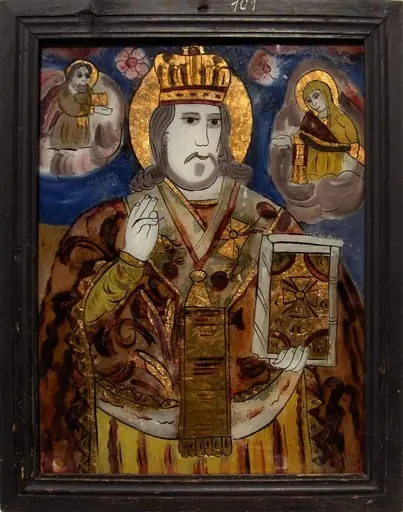
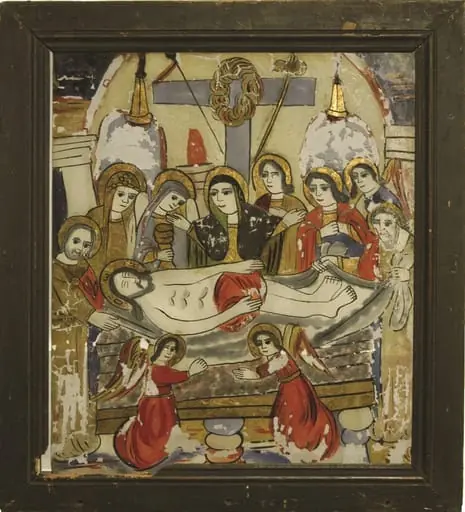
Petru Prodan painted religious scenes in the icon tradition. His works include *Sf. Nicolae* and *Prohodul lui Iisus*, showing saints and biblical figures in gold-leaf settings. The figures are stiff and frontal,…