Artwork
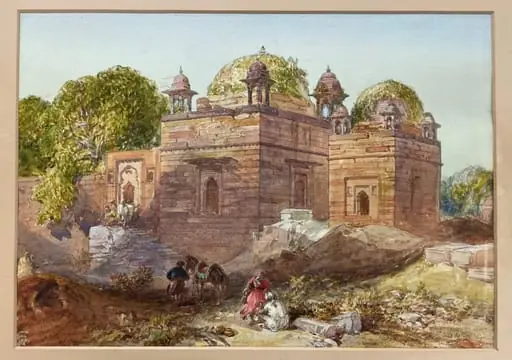
The Mosque of Aurangzeb and Panchganga Ghat from the Ganges, Benares.
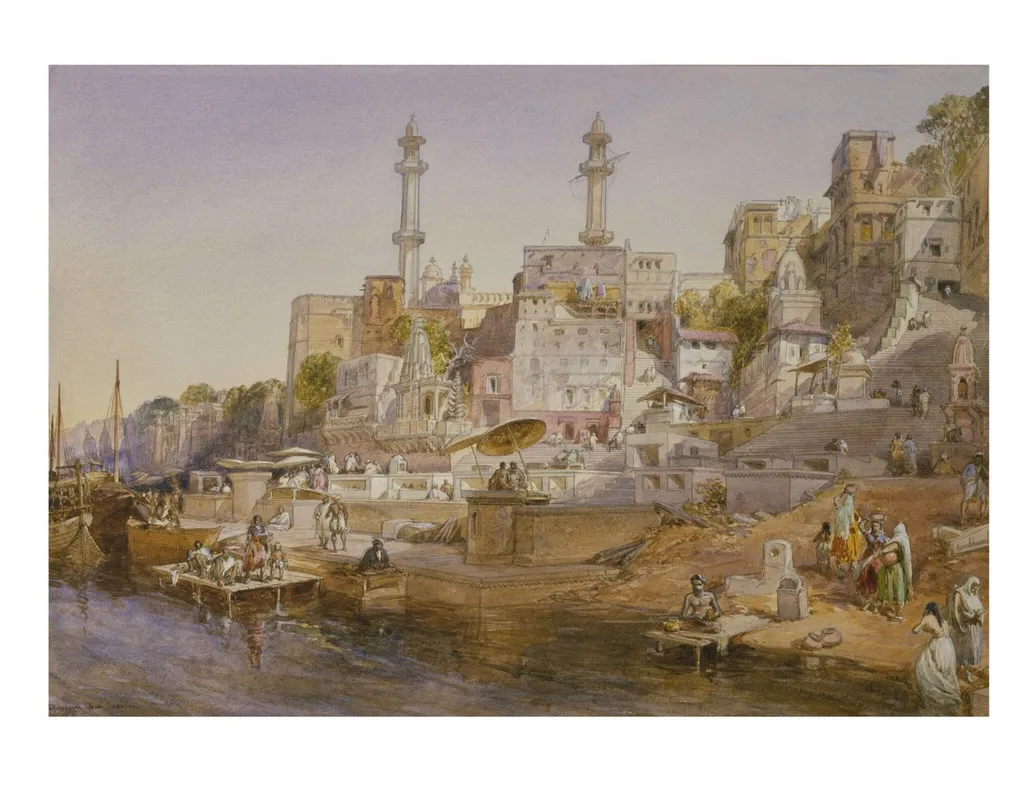
The Mosque of Aurangzeb and Panchganga Ghat from the Ganges, Benares. is a paint painting by the Impressionist artist William Simpson. It dates from 1860 and is held in the collection of the Victoria and Albert Museum.
About this work
William Simpson painted a scene of the Mosque of Aurangzeb and Panchganga Ghat from the Ganges in Benares in December 1860.
William Simpson painted a scene of the Mosque of Aurangzeb and Panchganga Ghat from the Ganges in Benares in December 1860. The work blends Impressionism and Realism, typical of Simpson’s style. It’s held at the Victoria and Albert Museum.
Simpson first visited India in 1859. He was sent to document places linked to the 1857–58 uprising. His rapid sketches later became finished watercolors back in London.
See more of Simpson’s India work at the Victoria and Albert Museum.
Overview
The Mosque of Aurangzeb and Panchganga Ghat from the Ganges, Benares, is a watercolor painting by William Simpson, created in December 1860. It captures a scene of the mosque and ghat in Varanasi, blending Impressionist and Realist styles. The work is part of the Victoria and Albert Museum's collection.
Subject & Meaning
The painting depicts the bustling Mosque Ghat in Varanasi, highlighting the city's significance as a Hindu sacred site. The scene showcases the convergence of religious and everyday life along the Ganges River.
Technique & Style
Simpson's work combines Impressionism's emphasis on light and color with Realism's attention to detail. Initially, rapid pencil sketches were heightened with color washes, later developed into finished watercolors upon his return to London.
History & Provenance
Commissioned as part of a project to illustrate sites of the 1857-58 uprising, this painting was one of 250 intended for lithographic reproduction. However, due to the publisher's bankruptcy in 1867, the project was abandoned, and the collection was sold off in 1869.
Context
Created during Simpson's first Indian tour (1859-1860), this piece reflects his assignment to document key locations following the uprising. His subsequent visits to India over 25 years deepened his engagement with the subcontinent's landscapes and cultures.
Legacy
Though the original project never materialized, Simpson's Indian watercolors, including this piece, are now valued for their historical and artistic significance, with a substantial collection housed at the Victoria and Albert Museum.
Artist & collection