Artwork
Great Malvern Station
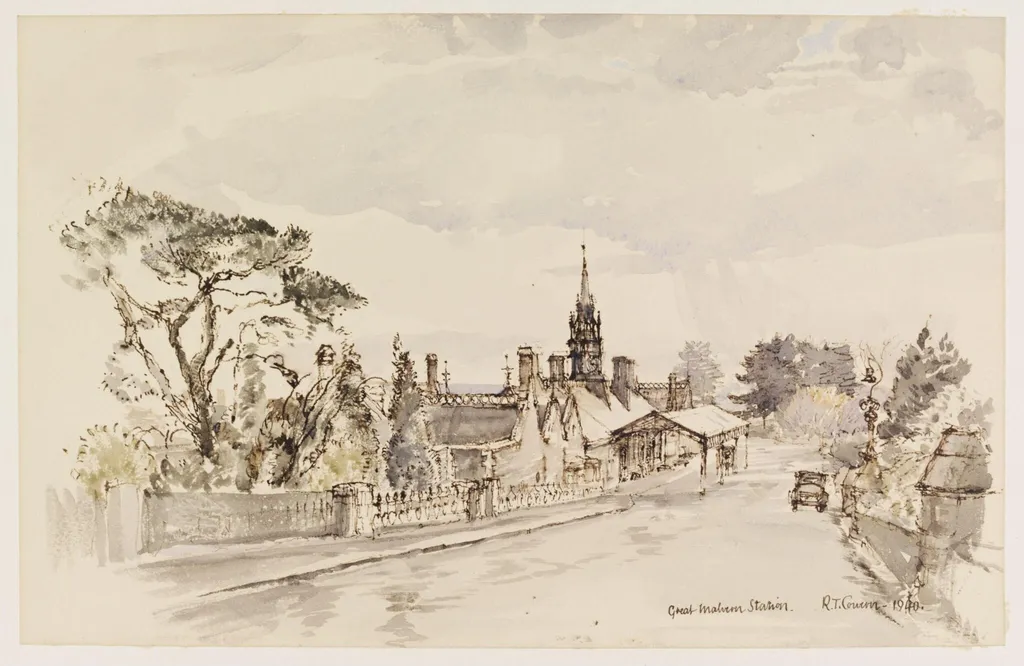
Great Malvern Station is a watercolor work on paper by Raymond Teague Cowern. It dates from 1940 and is held in the collection of the Victoria and Albert Museum.
About this work
A few buildings sit behind a low fence, and a single car drives along the road on the right.
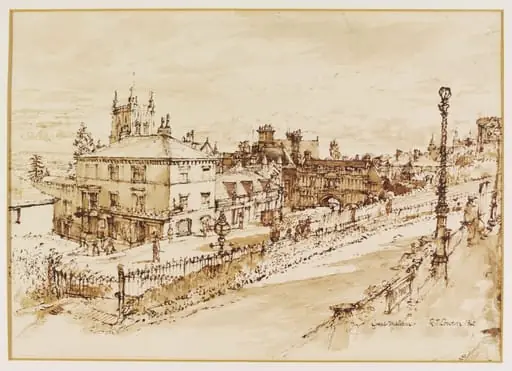
This sketch shows a quiet train station with a tall church spire in the background. Trees line the left side, their branches bare and twisted. A few buildings sit behind a low fence, and a single car drives along the road on the right. The whole scene is painted in soft grays and whites, with loose, quick brushstrokes.
The artist signed it "Great Malvern Station" and dated it 1940. The loose, sketchy style suggests it was done fast, maybe while sitting outside.
Look up Victoria and Albert Museum to see more works like this.
Overview
Great Malvern Station is a 1940 watercolour by Raymond Teague Cowern, created under the Recording Britain project. The piece captures a serene depiction of Great Malvern Station in Worcestershire, set against a backdrop of a tall church spire, bare trees, and surrounding buildings, all rendered in soft grays and whites with loose, quick brushstrokes.
Subject & Meaning
The subject, Great Malvern Station, was documented to preserve a visual record of Britain's landscapes and architecture under threat from wartime destruction and modernization. The inclusion of a church spire and traditional surroundings emphasizes the project's focus on capturing elements of national identity.
Technique & Style
Characterized by loose, quick brushstrokes and a muted color palette of grays and whites, the watercolour suggests a rapid, possibly outdoor execution. This style aligns with the project's practical demands while conveying a sense of tranquility in the depicted scene.
History & Provenance
Commissioned as part of the Recording Britain project (1940), led by Sir Kenneth Clark and funded by the Pilgrim Trust, with oversight from the Ministry of Labour and National Service. The project aimed to support artists and document threatened sites, resulting in a collection of over 1,500 works.
Context
Created during World War II, the piece reflects broader concerns about the preservation of cultural and architectural heritage amidst wartime threats and the onset of modernization. The project's scope primarily focused on England, with limited representation of Wales and Scotland.
Artist & collection
Artist
Raymond Teague Cowern painted quiet watercolors of mid-century Worcestershire life during the Second World War.

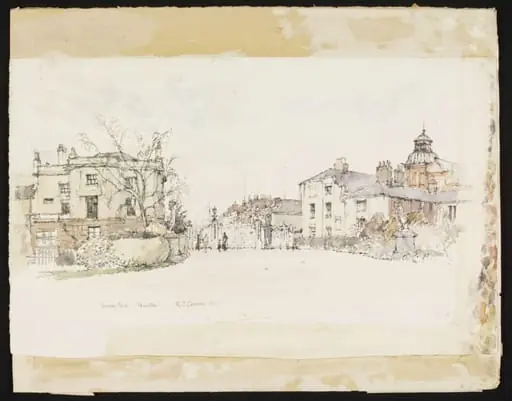 Vivary Park, Taunton
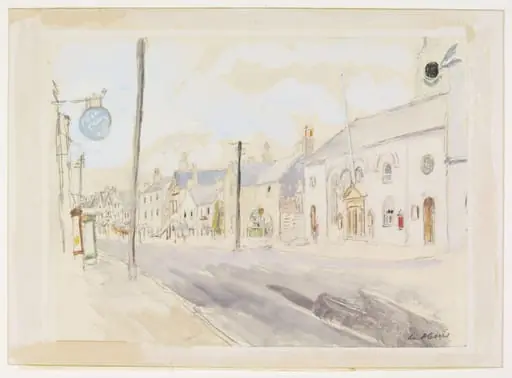 Cowbridge, Glamorganshire
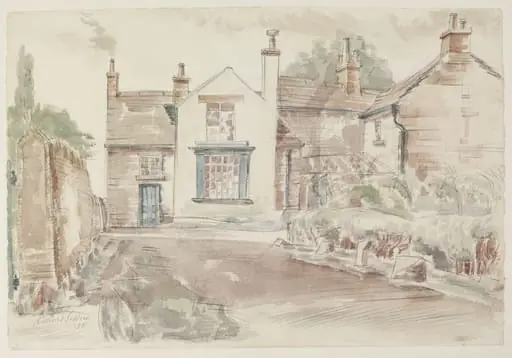 Cottages at Norton, No.1
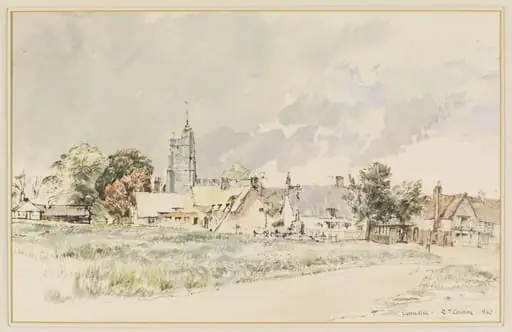 Cavendish
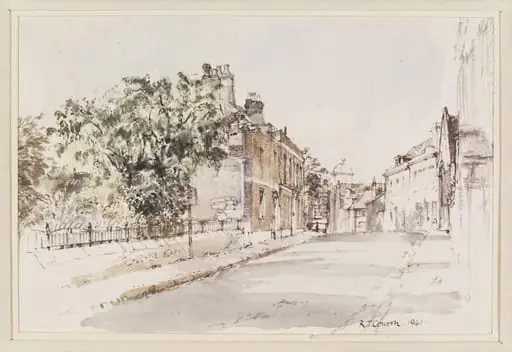 St. Thomas Street, Winchester
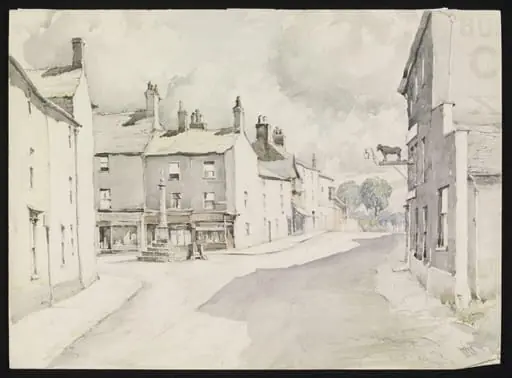 Market Place, Poulton-le-fylde, near Blackpool
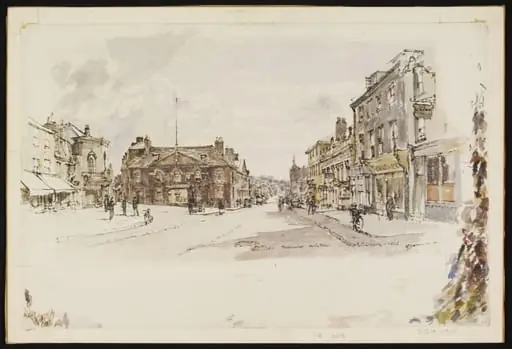 High Street and Rutland Arms, Newmarket
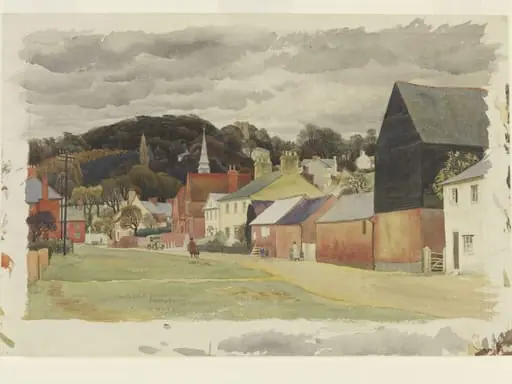 Bow Brickhill, Bletchley, Buckinghamshire
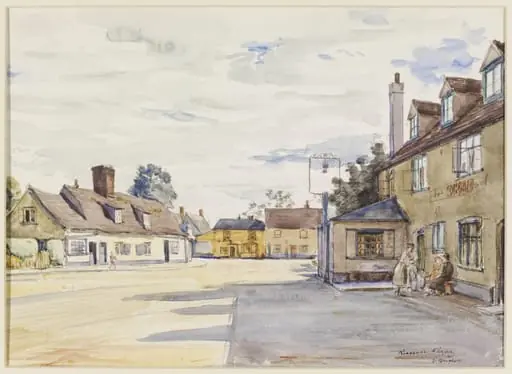 East Bergholt
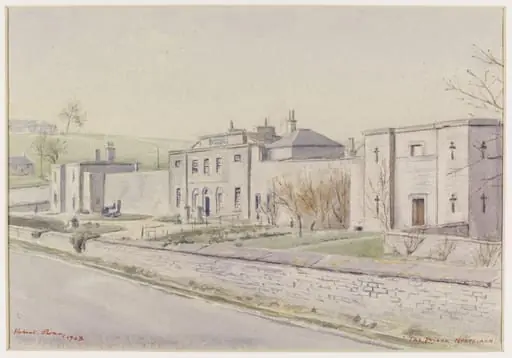 The Old Prison, Northleach
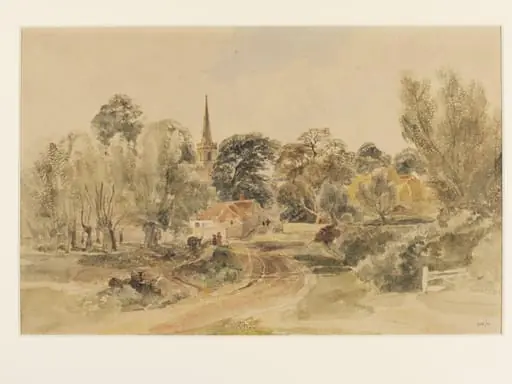 Wilsford, Lincolnshire
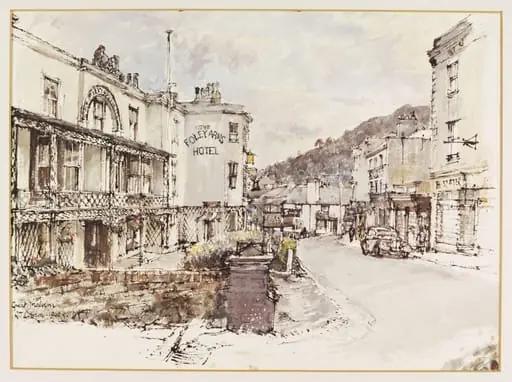 The Foley Arms, Great Malvern