Artwork
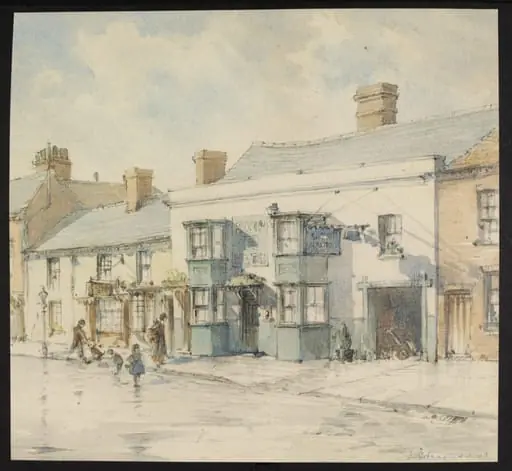
The Foley Arms, Great Malvern
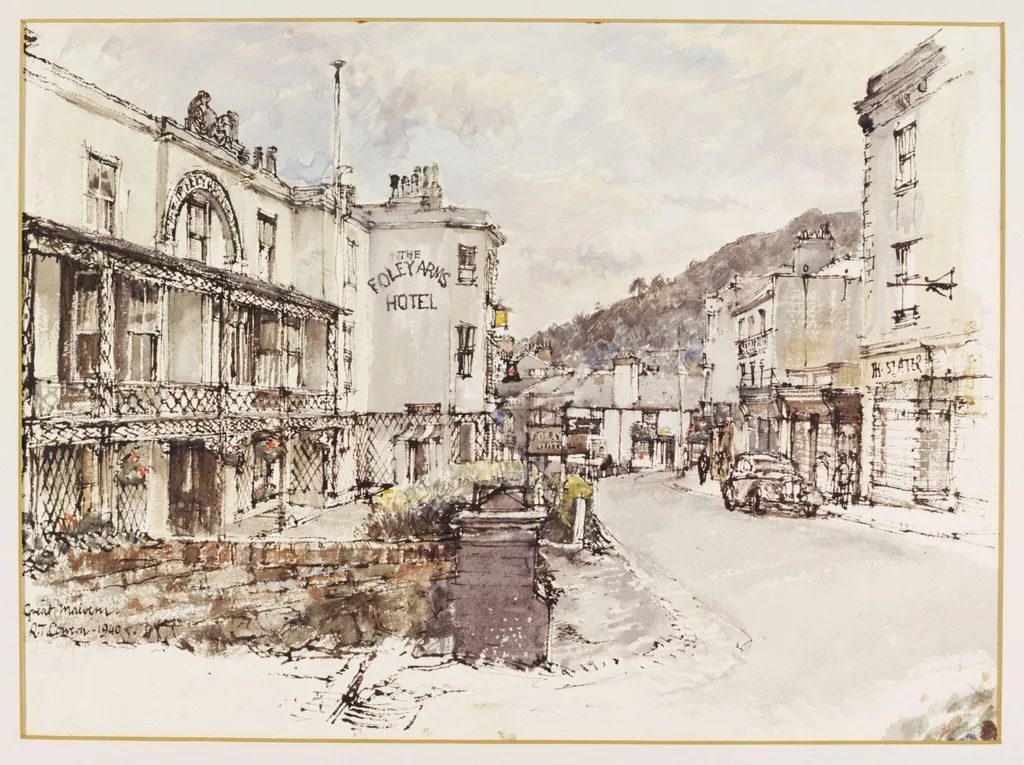
The Foley Arms, Great Malvern is a watercolor work on paper by Raymond Teague Cowern. It dates from 1940 and is held in the collection of the Victoria and Albert Museum.
About this work
Overview
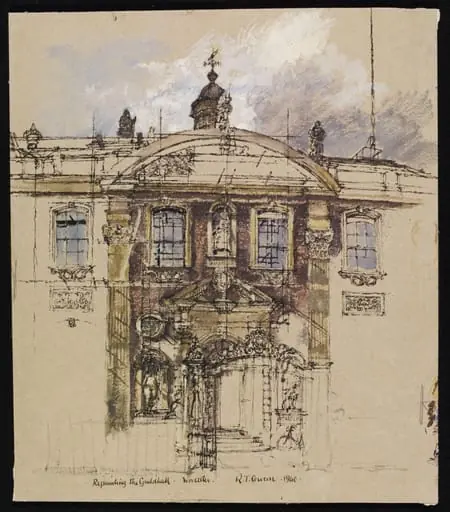
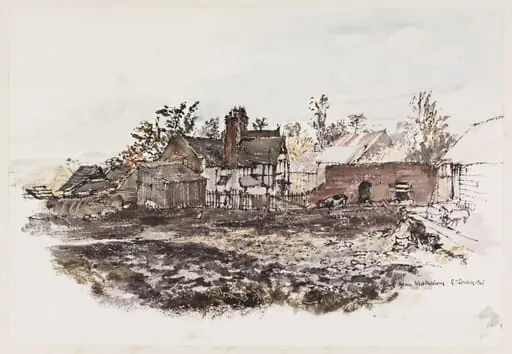
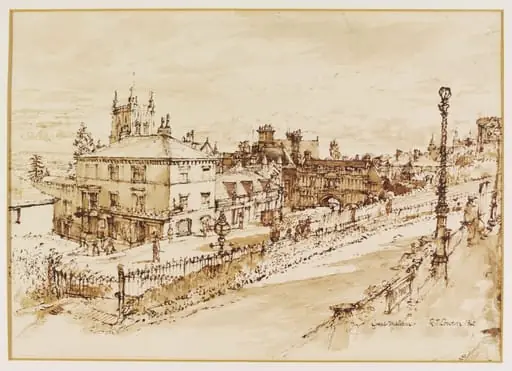
Created in 1940, this watercolour by Raymond Teague Cowern is one of over 1,500 works produced for the Recording Britain project.
Created in 1940, this watercolour by Raymond Teague Cowern is one of over 1,500 works produced for the Recording Britain project. The initiative, launched during World War II, sought to document the English countryside and small-town architecture deemed vulnerable to wartime destruction or rapid modernization. Cowern’s depiction of the Foley Arms in Great Malvern exemplifies the project’s mission to preserve visual records of ordinary, everyday places before they disappeared.
Subject & Meaning
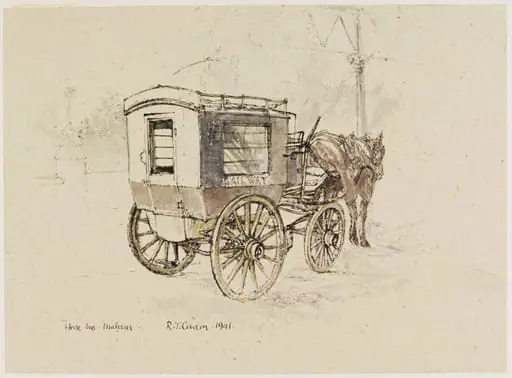
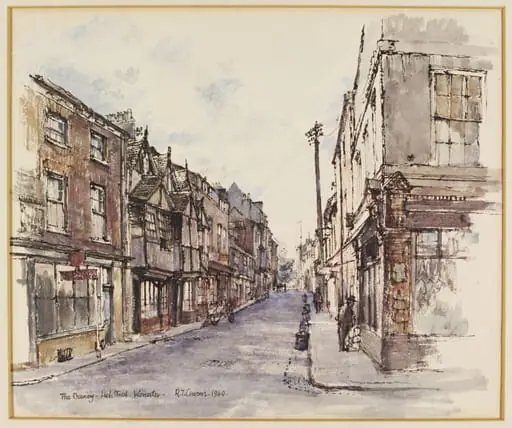
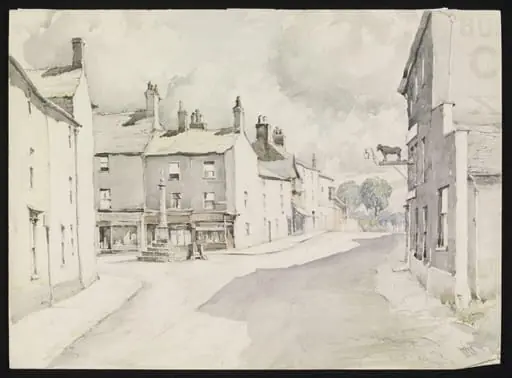
The painting captures the Foley Arms Hotel, a modest two-story building on a quiet street corner in Great Malvern. Its prominent sign, iron balcony, and weathered façade reflect the quiet dignity of provincial architecture. The presence of a horse-drawn cart and distant pedestrians underscores the persistence of traditional modes of life amid wartime uncertainty. The scene is not grand or dramatic, but deliberately unassuming—emphasizing the value of the commonplace in a time of national disruption.
Technique & Style
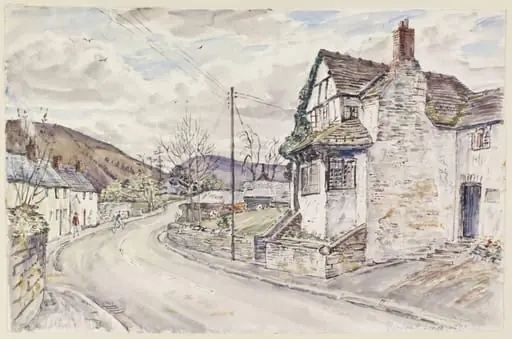
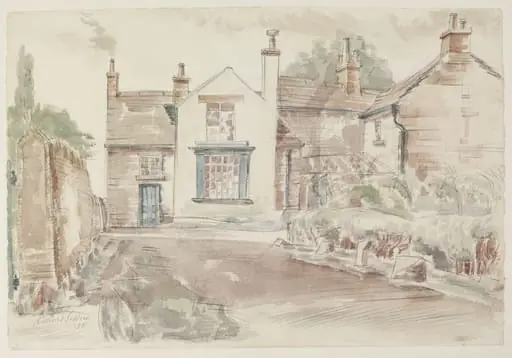
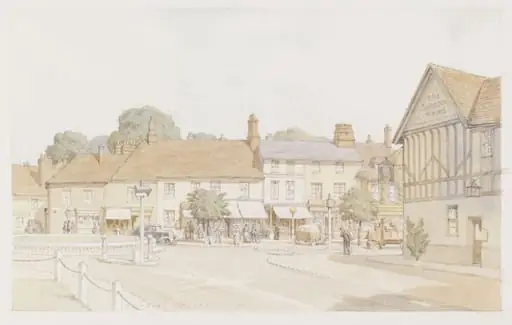
Cowern employed loose, fluid brushwork to convey the damp atmosphere of a overcast day. Puddles on the pavement and soft shadows suggest recent rain, while the building’s textures emerge through layered washes rather than detailed rendering. The palette is muted, dominated by greys and earth tones, reinforcing the somber mood of the era. The sketch-like quality avoids idealization, favoring immediacy and observation over polished finish.
History & Provenance
Commissioned as part of the Recording Britain project, the work was produced between 1940 and 1943 under the direction of Sir Kenneth Clark and funded by the Pilgrim Trust. The project enlisted 97 artists to document threatened landscapes and vernacular architecture. Cowern’s watercolour entered the collection of the Victoria and Albert Museum alongside hundreds of others, forming a cohesive archive of Britain’s visual heritage during wartime.
Context
During the early years of World War II, fears of aerial bombardment and postwar redevelopment prompted efforts to preserve Britain’s architectural identity. The Recording Britain project responded to this anxiety by turning artists into documentarians. Their works, often of unremarkable buildings and streetscapes, were intended as cultural insurance—records of a way of life that might not survive the conflict or the changes it would bring.
Legacy
The Recording Britain collection remains a vital historical resource, offering insight into the nation’s built environment during a pivotal moment. Cowern’s watercolour, like others in the series, resists heroism or nostalgia, instead offering quiet testimony to the resilience of ordinary places. Today, these works are studied not for artistic innovation alone, but for their role in preserving a collective memory of place during a time of profound uncertainty.
Artist & collection
Artist
Raymond Teague Cowern painted quiet watercolors of mid-century Worcestershire life during the Second World War.