Artwork
Upton-on-Severn; houses by the river
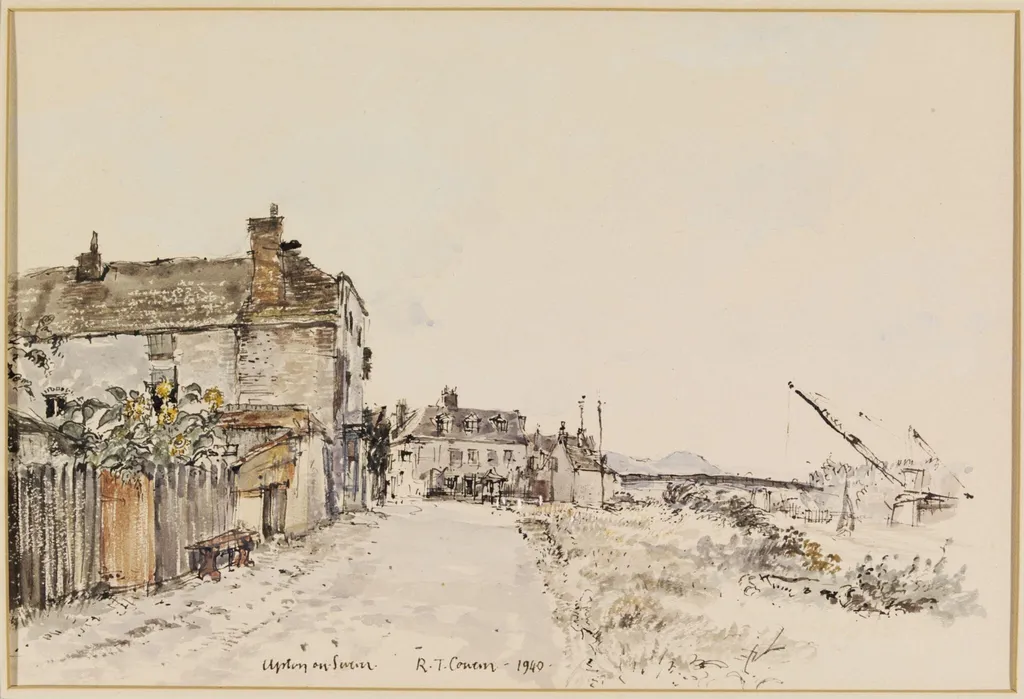
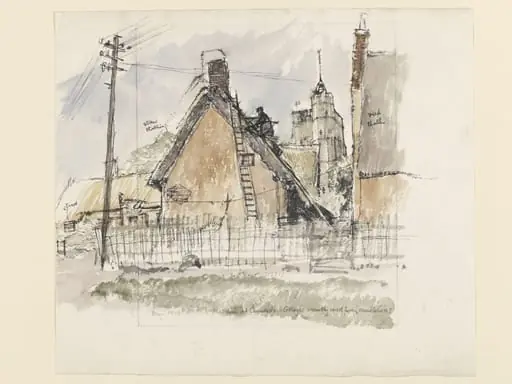
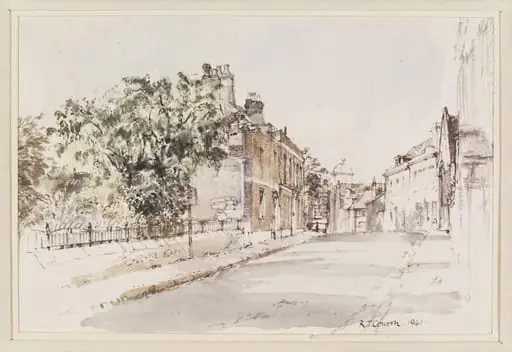
Upton-on-Severn; houses by the river is a watercolor work on paper by Raymond Teague Cowern. It dates from 1940 and is held in the collection of the Victoria and Albert Museum.
About this work
Overview
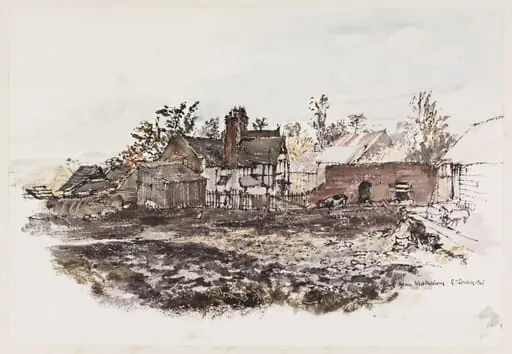
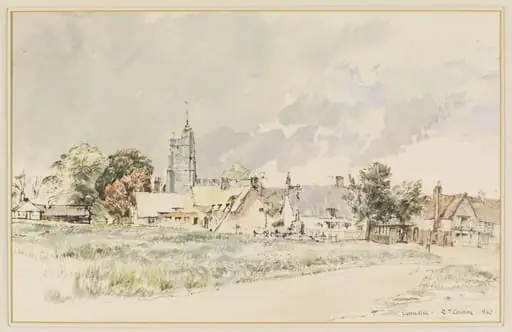
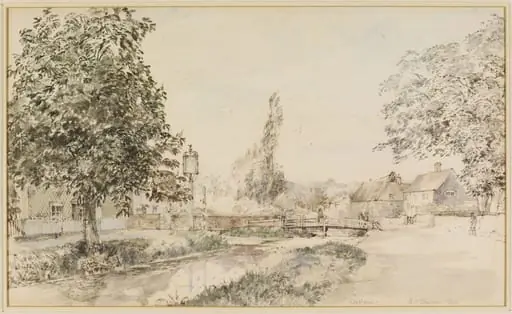
Raymond Teague Cowern’s watercolour portrays a modest row of stone houses set back from the River Severn at Upton-on‑Severn. The composition captures a quiet, unpaved street flanked by a low fence, with muted tones of gray, brown and occasional touches of green and yellow that suggest the modest vegetation and a bench outside one dwelling.
Subject & Meaning
The scene records everyday domestic architecture along a riverbank, emphasizing the simple character of the buildings—dark‑tiled roofs, small windows and weathered stone façades. By focusing on an ordinary street, the work reflects a concern for preserving the visual memory of local, often overlooked, environments.
Technique & Style
Cowern employed rapid, economical brushwork, favoring broad shapes and a limited palette to convey form and light. The watercolour’s loose handling suggests a sketch‑like immediacy, allowing the viewer to sense the atmosphere of the place without elaborate detail.
History & Provenance
Created as part of the Recording Britain project, the piece was commissioned in 1940 by the Committee for the Employment of Artists in Wartime. Funding came from the Pilgrim Trust, and the initiative was overseen by Sir Kenneth Clark, then director of the National Gallery, to document sites deemed culturally significant during the war.
Context
Recording Britain gathered over 1,500 works from 97 artists, aiming to safeguard visual records of the nation’s landscapes and architecture against wartime destruction and rapid post‑war change. Cowern’s contribution reflects both the immediate anxieties of the Second World War and broader concerns about the transformation of rural and urban settings.
Artist & collection
Artist
Raymond Teague Cowern painted quiet watercolors of mid-century Worcestershire life during the Second World War.