Artwork
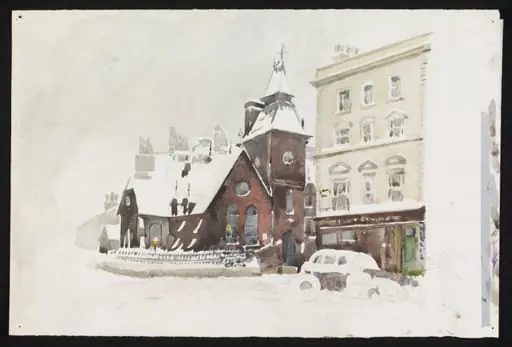
Groom Place, Westminster
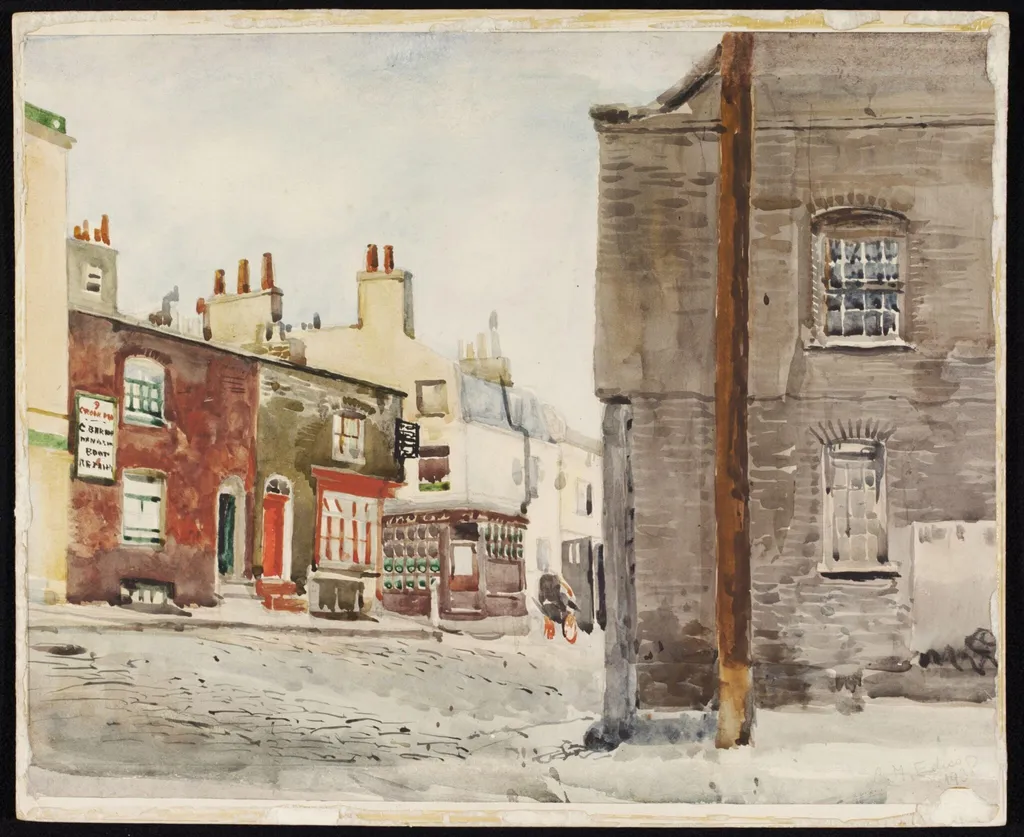
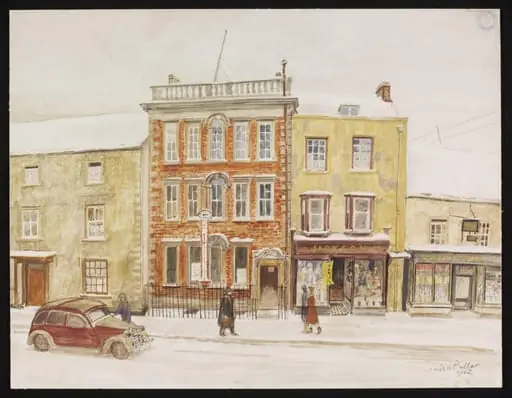
Groom Place, Westminster is a watercolor work on paper by Ediss. It dates from 1938 and is held in the collection of the Victoria and Albert Museum.
About this work
Overview
Commissioned by the Pilgrim Trust and directed by Sir Kenneth Clark, the initiative sought to document sites vulnerable to conflict or modernization.
Created in 1938 by Ediss, this watercolour is part of the Recording Britain project, a wartime effort to visually archive the nation’s architectural and rural heritage. Commissioned by the Pilgrim Trust and directed by Sir Kenneth Clark, the initiative sought to document sites vulnerable to conflict or modernization. The work contributes to a larger collection of over 1,500 pieces by 97 artists, primarily focused on English landscapes and structures.
Subject & Meaning
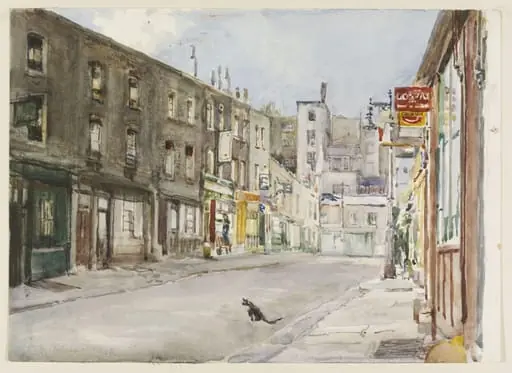
The scene captures a modest street corner in Westminster, centered on a building marked 'Groom Place.' Its weathered brickwork, aged windows, and red door suggest a quiet, enduring presence amid urban change. The inclusion of a prominent stone chimney and uneven ground emphasizes the site’s physical history, reflecting the project’s aim to preserve ordinary, overlooked places before they disappeared.
Technique & Style
Ediss employed loose, expressive brushwork to convey texture—rough stone, worn wood, and uneven earth. The palette is restrained, dominated by muted browns and grays, with the red door serving as a subtle focal point. The watercolour technique allows for transparency and spontaneity, capturing the atmosphere of decay and time rather than idealized detail.
History & Provenance
The work was produced during the early phase of the Recording Britain project, which began before full wartime mobilization but responded to looming threats to cultural heritage. It entered the Victoria and Albert Museum’s collection alongside other project works, preserved as part of a national effort to safeguard visual records of Britain’s built environment during a period of uncertainty.
Context
The Recording Britain initiative emerged amid fears of aerial bombardment and rapid urban redevelopment. Artists were commissioned to document structures that embodied regional character, often in areas untouched by grand architectural narratives. This work reflects a broader cultural impulse to record the everyday, resisting the erasure of vernacular spaces during wartime.
Legacy
Ediss’s watercolour remains one of many quiet testimonies in the Recording Britain archive, offering a modest yet deliberate record of a specific place at a specific moment. Its value lies not in grandeur but in its attentive observation of ordinary architecture, contributing to a collective visual memory of pre-war England.
Artist & collection
Artist
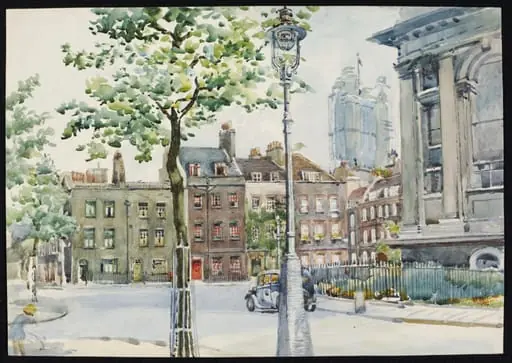
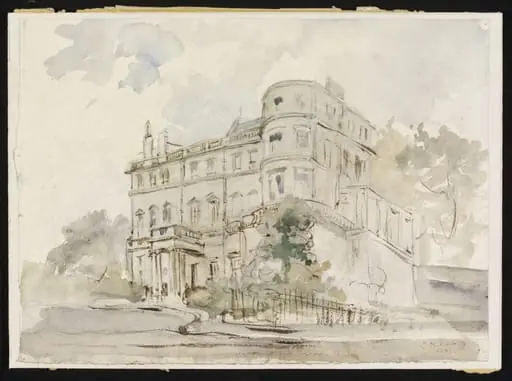
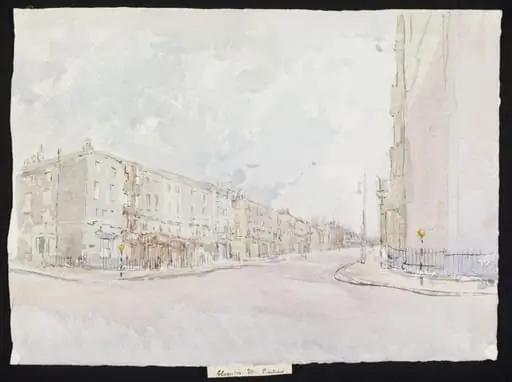
Ediss painted London’s quiet streets and squares in delicate watercolours during the early 1940s.

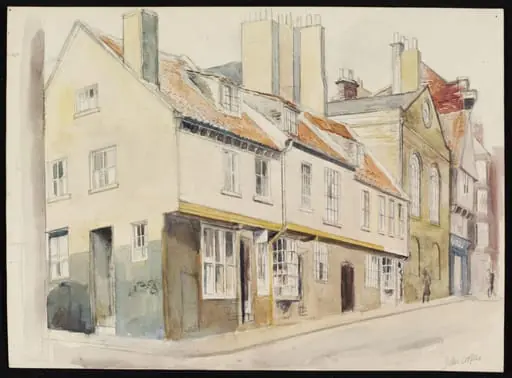 Tudor Houses, Church Street, Whitby
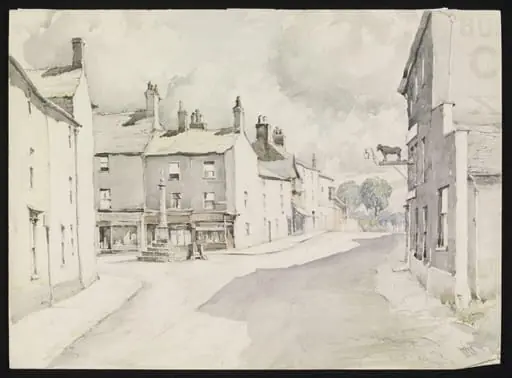 Market Place, Poulton-le-fylde, near Blackpool
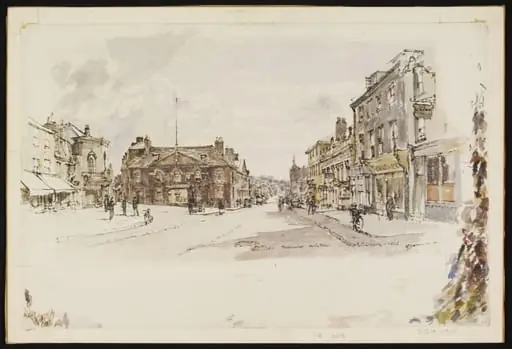 High Street and Rutland Arms, Newmarket
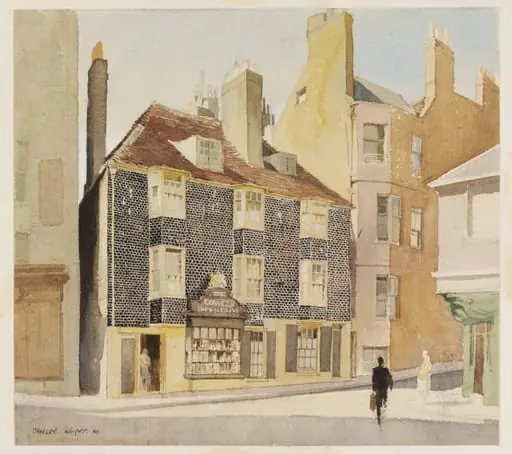 House and Shop in Pool Valley, Brighton
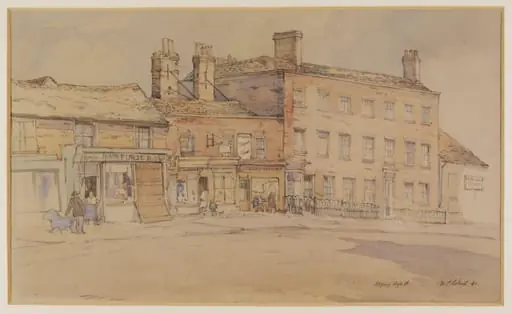 Epping High Street
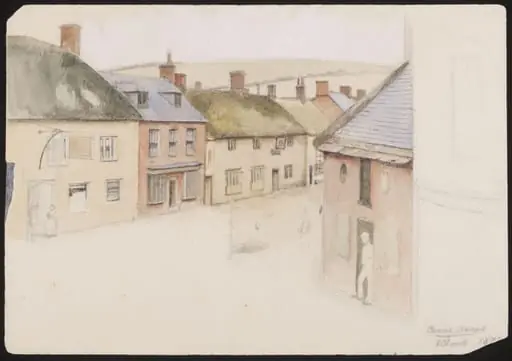 Cerne Abbas
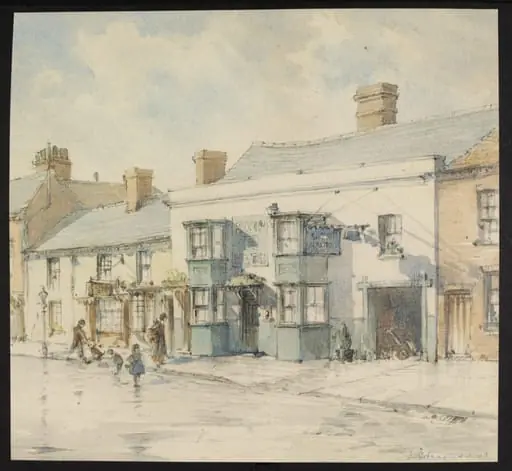 The Ship Inn, Tenbury Wells
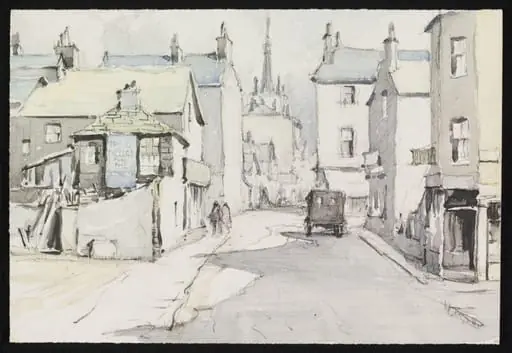 Deansgate, Blackpool
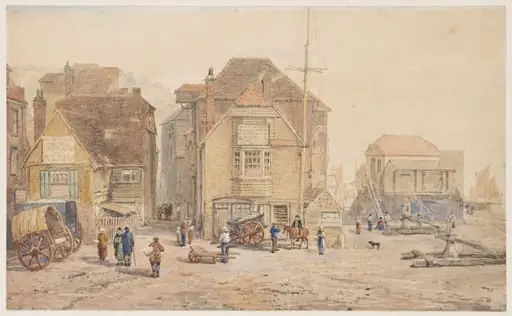 The old fishmarket at Hastings
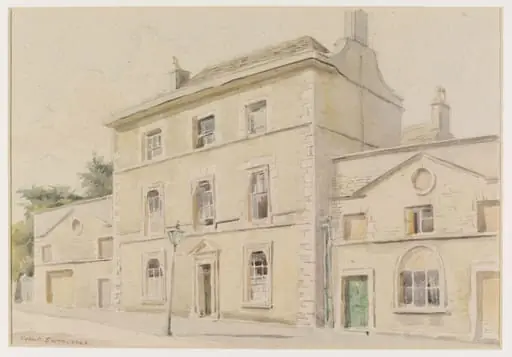 Georgian House, Cecily Hill, Cirencester
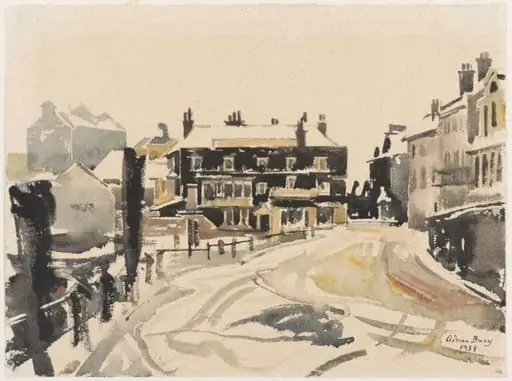 Winter at Isleworth
 Rural District Council Office and Shops, High Street, Malmesbury