Artwork
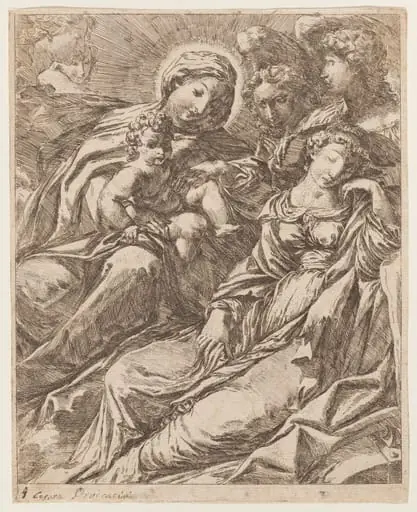
Virgin and Angels Watching Over the Sleeping Infant Jesus
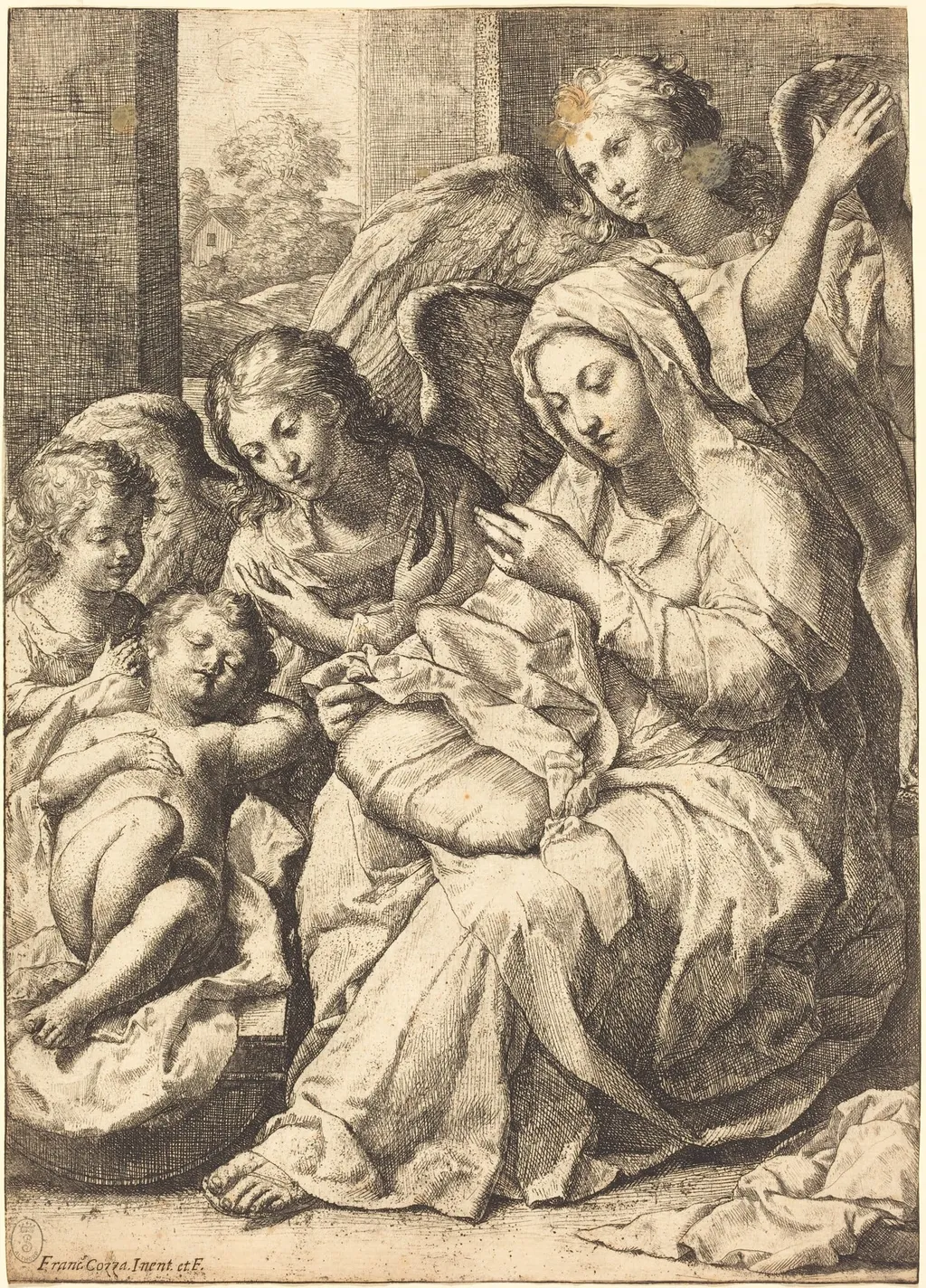
Virgin and Angels Watching Over the Sleeping Infant Jesus is an ink print by the Baroque artist Francesco Cozza. It dates from 1644 and is held in the collection of the National Gallery of Art.
About this work
Overview
Francesco Cozza’s 1644 etching, titled Virgin and Angels Watching Over the Sleeping Infant Jesus, presents a nocturnal scene rendered entirely in black ink. The composition centers on a swaddled infant lying in a cave-like setting, attended by three angels whose gestures convey both vigilance and reverence.
Subject & Meaning
The work depicts the infant Jesus in repose, a motif common to Counter‑Reformation devotional imagery. The surrounding angels, one hovering with outstretched arms and two kneeling, embody guardianship and the celestial acknowledgment of the newborn's divine nature, reinforcing themes of protection and holy watchfulness.
Technique & Style
Cozza employed the etching process, incising lines into a metal plate and using varying densities of hatching to suggest volume. The stark contrast between the infant’s serene visage and the angels’ alert expressions is achieved through careful manipulation of line weight and cross‑hatching, creating a sense of three‑dimensionality despite the monochrome medium.
History & Provenance
Created in 1644, the print reflects Cozza’s activity during the mid‑seventeenth century, a period when religious prints circulated widely for private devotion. While specific ownership records are scarce, the etching aligns with the era’s prolific production of devotional imagery for both ecclesiastical and domestic audiences.
Context
The piece belongs to a broader tradition of Italian Baroque religious prints that emphasized emotional engagement and dramatic chiaroscuro. By situating the holy family within a cavernous interior, Cozza echoes contemporary visual tropes that juxtapose the earthly realm’s ruggedness with the spiritual serenity of the divine infant.
Artist & collection

 Vision of Saint Catherine of Alexandria
 The Madonna of the Swallow
 The Holy Family
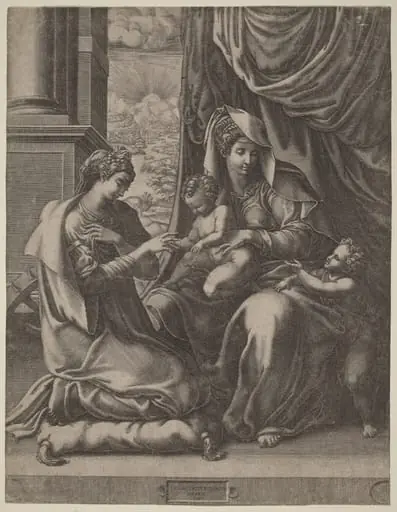 The Mystic Marriage of Saint Catherine
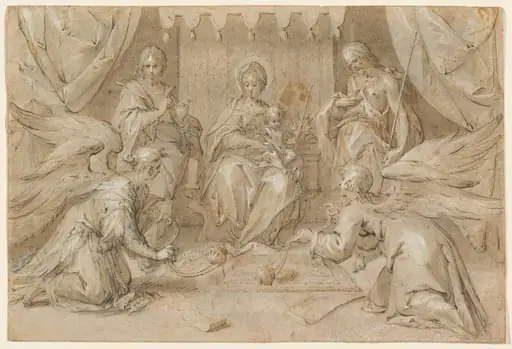 The Madonna Enthroned with Saint John the Baptist and Saint John the Evangelist
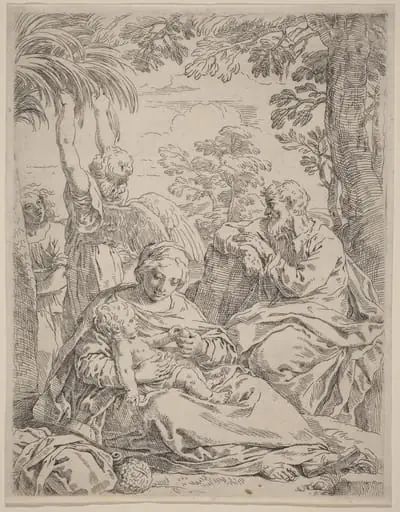 The Rest on the Flight into Egypt
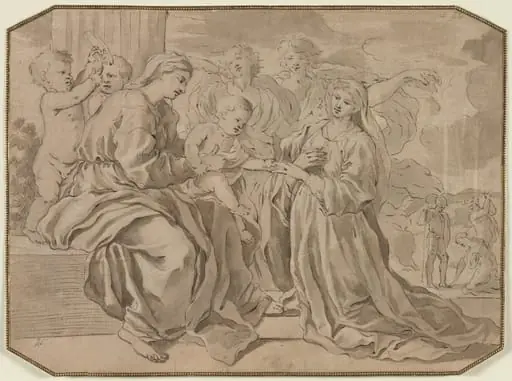 Mystic Marriage of St. Catherine
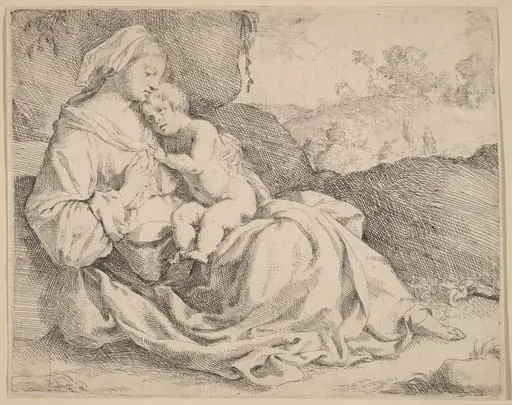 The Virgin and Child on a Grassy Bank
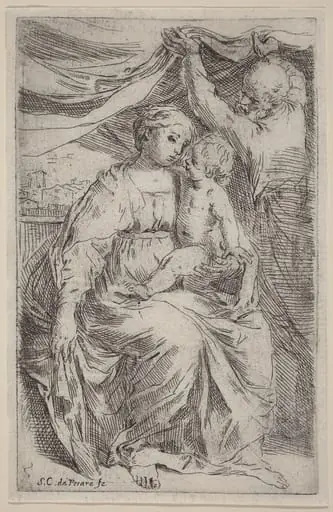 The Holy Family
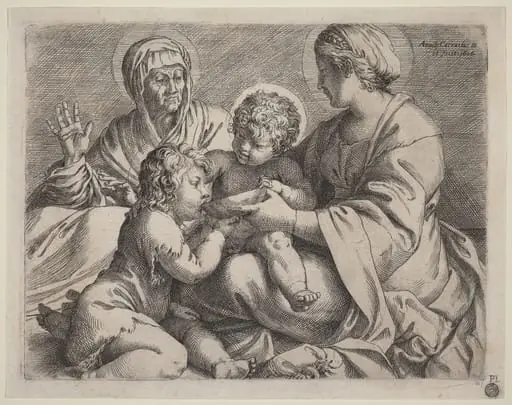 The Madonna della Scodella