Artwork
Saint Matthias
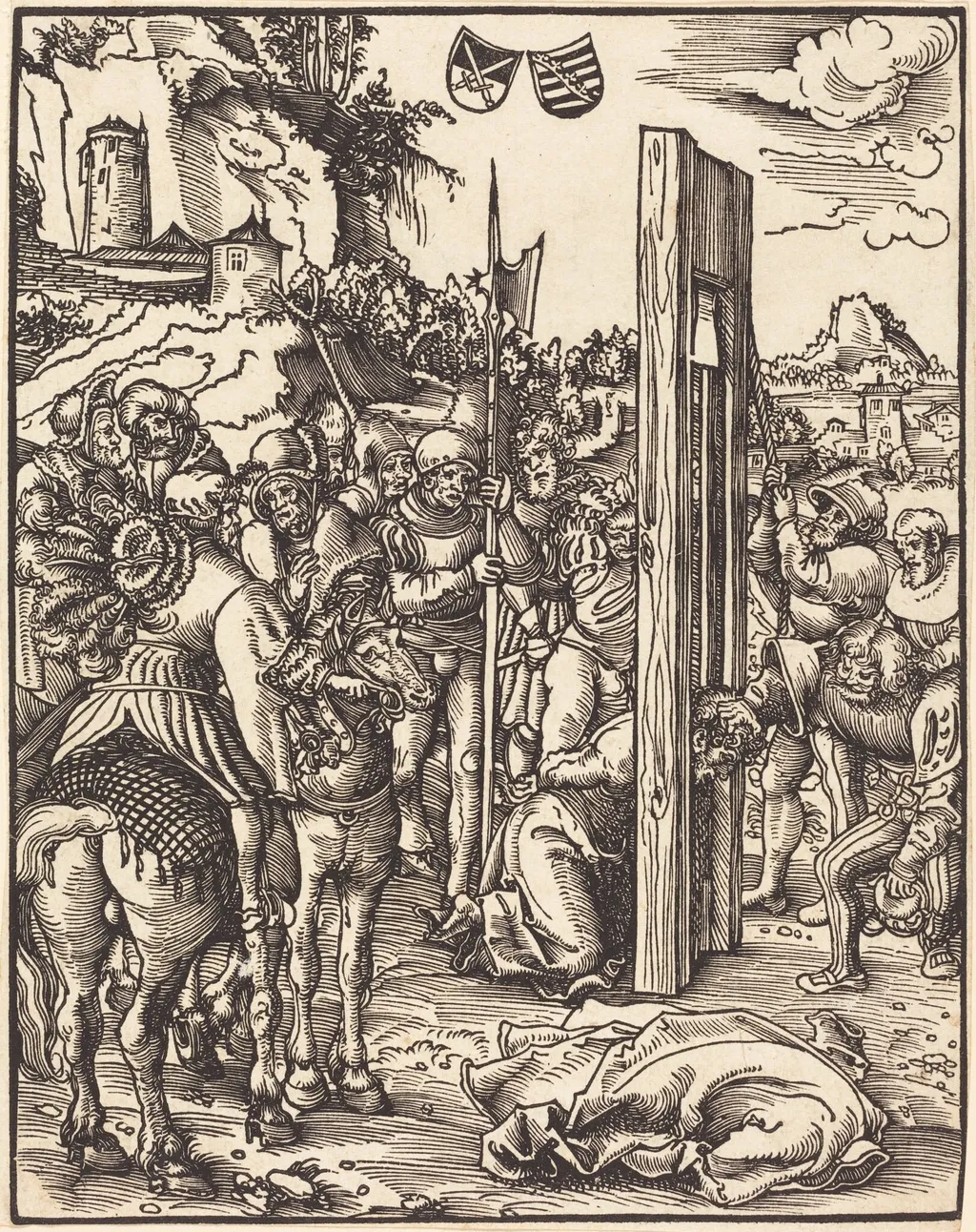
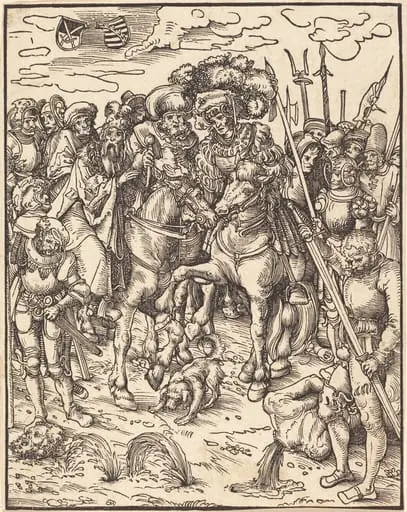
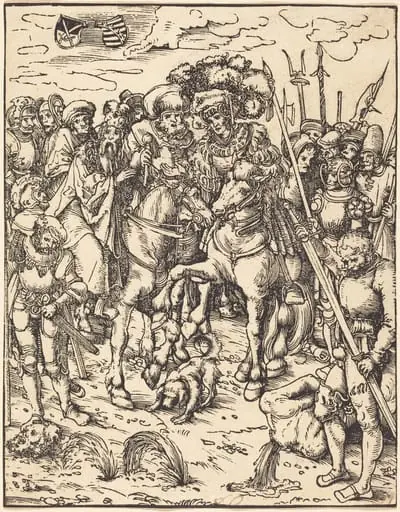
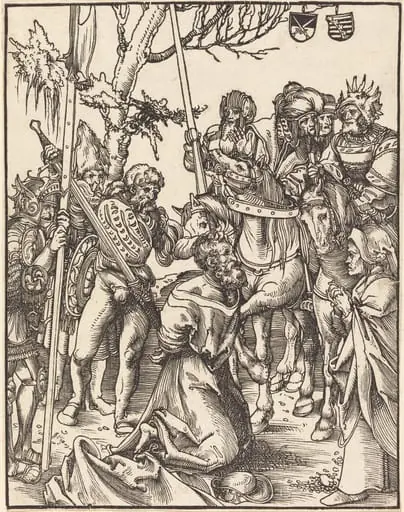
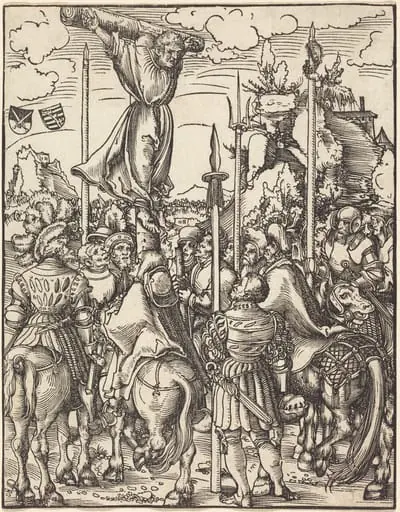
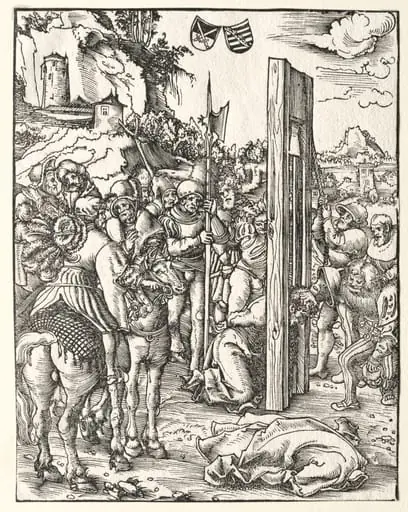
Saint Matthias is an ink print by the Renaissance artist Lucas Cranach the Elder. It dates from 1512 and is held in the collection of the National Gallery of Art.
About this work
Overview
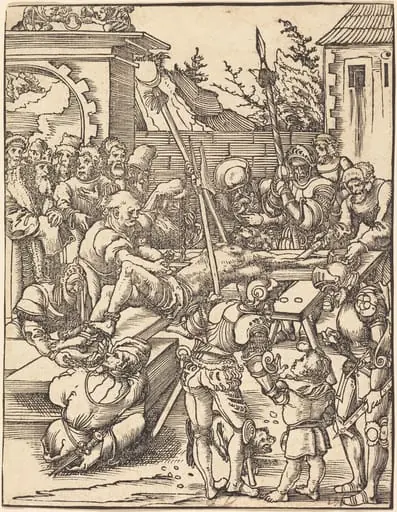
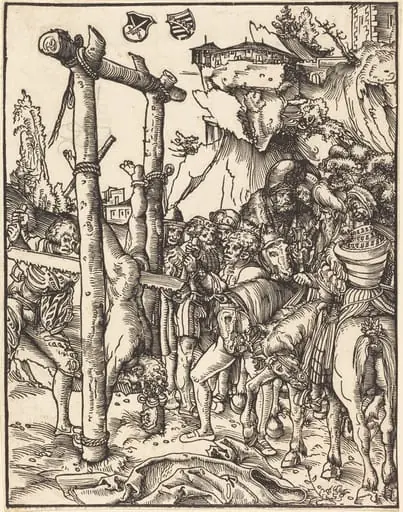
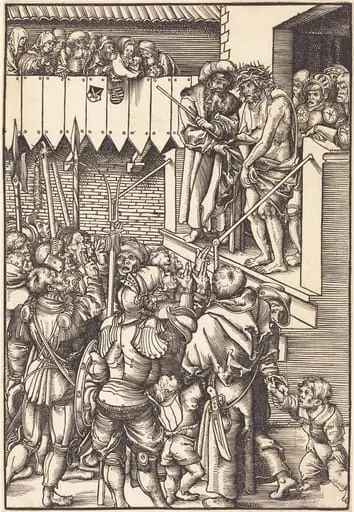
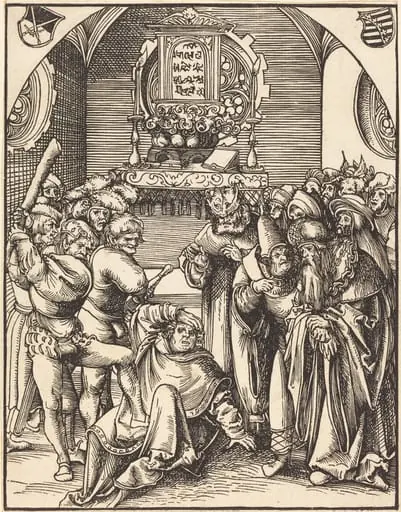
Lucas Cranach the Elder’s 1512 woodcut titled *Saint Matthias* presents a densely populated scene centered on a saintly figure. The composition is framed by a distant castle, trees, and a winding path, while numerous individuals—some kneeling, others standing, one collapsed—surround the focal point. Heavy black lines contrast with a light background, creating a vivid, dynamic tableau.
Subject & Meaning
The print portrays Saint Matthias, one of the early Christian apostles, surrounded by a crowd that suggests veneration and communal prayer. The presence of two flags—a wheel and a cross—may allude to martyrdom and the Christian faith, reinforcing the devotional purpose of the image within a Catholic context.
Technique & Style
Executed as a woodcut, the work relies on carved wooden blocks to transfer ink onto paper, resulting in bold, crisp lines and stark contrasts. Cranach’s handling of the medium yields intricate detail in the figures and architecture, while the heavy ink application emphasizes the dramatic density of the scene.
History & Provenance
Created while Cranach served as court painter to the Electors of Saxonia, the print belongs to a period when he produced primarily Catholic religious imagery. It reflects his early career focus on devotional subjects before his later involvement in Reformation-themed works.
Context
The woodcut emerges from the early sixteenth‑century German artistic milieu, where printmaking was a key vehicle for disseminating religious narratives. Cranach’s dual expertise in woodcut and engraving allowed him to meet the demand for accessible devotional images among both elite patrons and a broader lay audience.
Artist & collection
Artist
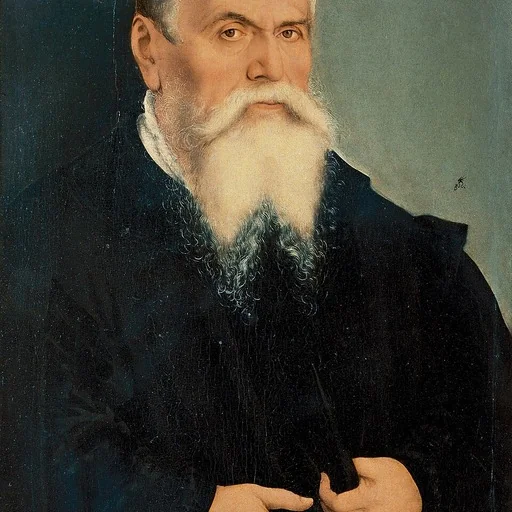
Lucas Cranach the Elder was a German Renaissance painter and printmaker in woodcut and engraving.