Artwork
Saint Jude
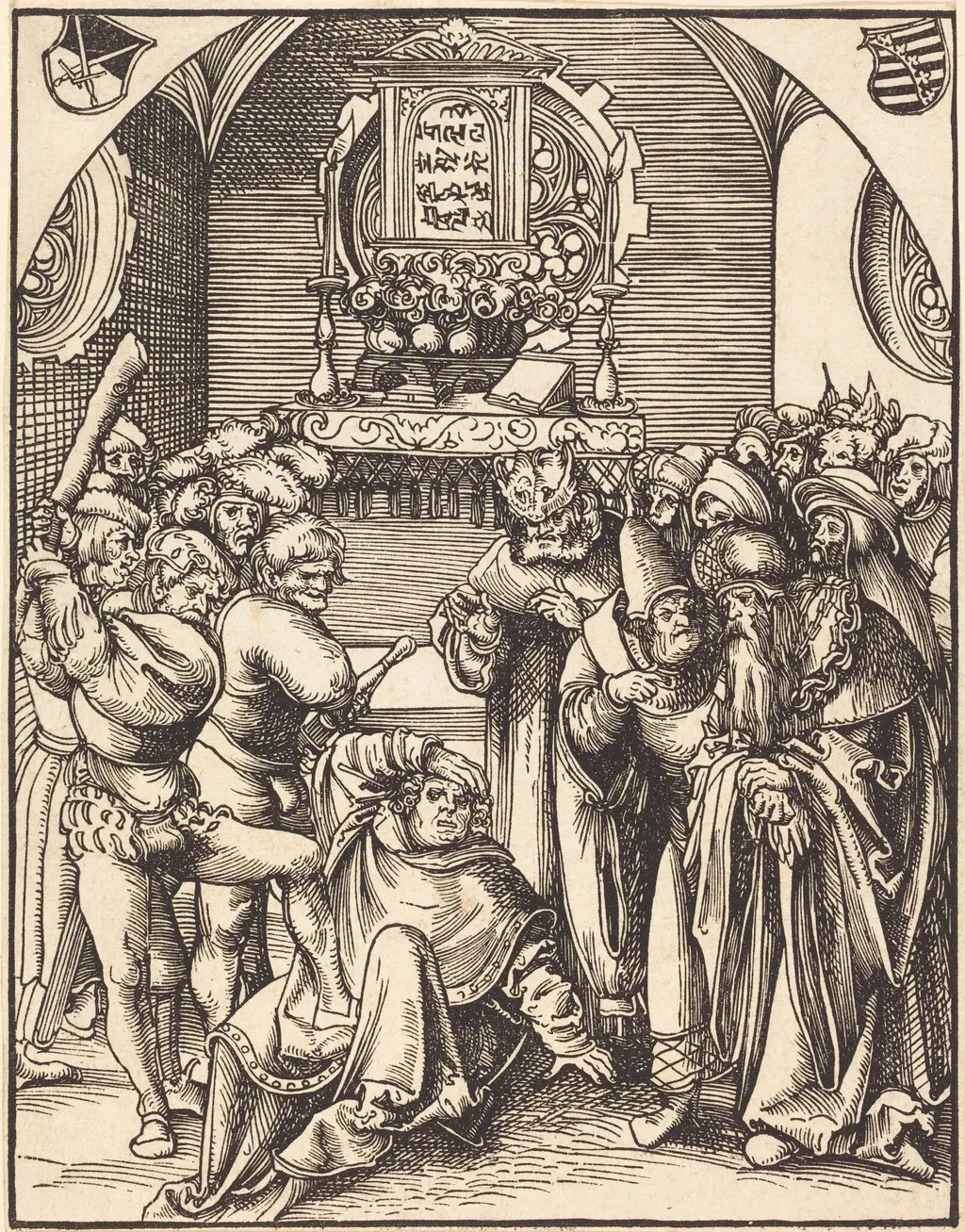
Saint Jude is an ink print by the Renaissance artist Lucas Cranach the Elder. It dates from 1512 and is held in the collection of the National Gallery of Art.
About this work
Overview
As a print made from carved wood blocks, the image relies on strong, linear contrasts to define form and space.
Created in 1512, this woodcut by Lucas Cranach the Elder portrays Saint Jude, one of the twelve apostles. As a print made from carved wood blocks, the image relies on strong, linear contrasts to define form and space. Cranach, active in Wittenberg, produced this work during a transitional period in his career, before his full alignment with Protestant reformers, yet after early Catholic commissions.
Subject & Meaning
Saint Jude is depicted with traditional attributes: a halo signifying sanctity, a staff representing authority, and a book symbolizing his epistolary writings in the New Testament. The figure stands solemnly against a plain background, emphasizing spiritual presence over narrative context. This image served devotional purposes, offering viewers a focal point for prayer and veneration in an era when such icons were widely circulated.
Technique & Style
The woodcut technique allows for sharp, rhythmic lines and dense black-and-white contrasts. Cranach’s handling of the block shows precision in rendering folds of fabric and the texture of the saint’s beard, while the background remains deliberately minimal. The medium’s inherent limitations are turned into strengths, with clarity and repetition enhancing the image’s accessibility for mass reproduction.
History & Provenance
This print was made during Cranach’s early years in Wittenberg, where he worked closely with Martin Luther and other reformers. Though created before his overtly Protestant output, the image reflects the continued demand for traditional religious imagery even as theological shifts began. Its survival in multiple collections suggests it was widely distributed and valued in early 16th-century German households.
Context
In the early 1500s, woodcuts were the primary means of disseminating religious imagery across Europe. Cranach’s workshop produced hundreds of such prints, meeting both Catholic and emerging Protestant needs. This image exists within a broader network of devotional graphics, where standardized iconography helped unify belief across regions despite growing doctrinal divisions.
Legacy
Cranach’s Saint Jude exemplifies how printmaking bridged sacred tradition and emerging reform. While later works would abandon saintly imagery entirely, this piece captures a moment when visual piety was still widely accepted. Its technical clarity and compositional restraint influenced generations of German printmakers, establishing a model for religious imagery in the age of mechanical reproduction.
Artist & collection
Artist
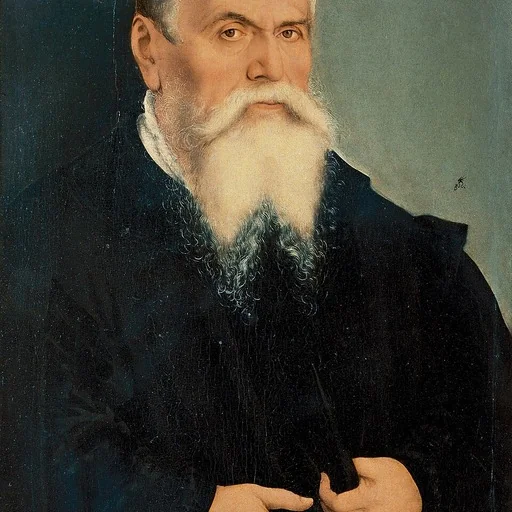
Lucas Cranach the Elder was a German Renaissance painter and printmaker in woodcut and engraving.

 Saint Bartholomew
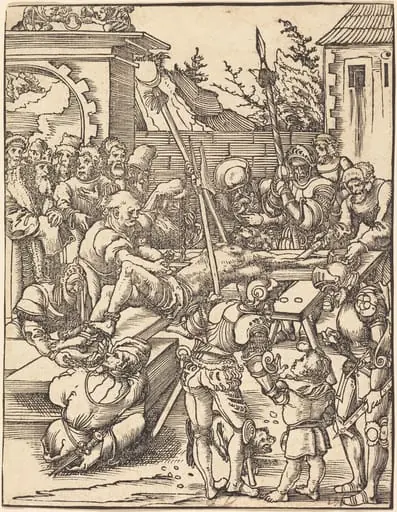
 Martyrdom of St. Judas Thaddeus
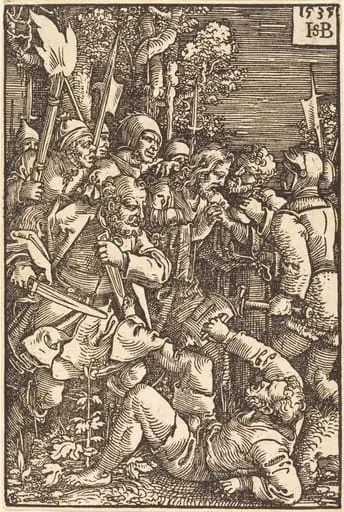 The Betrayal of Christ
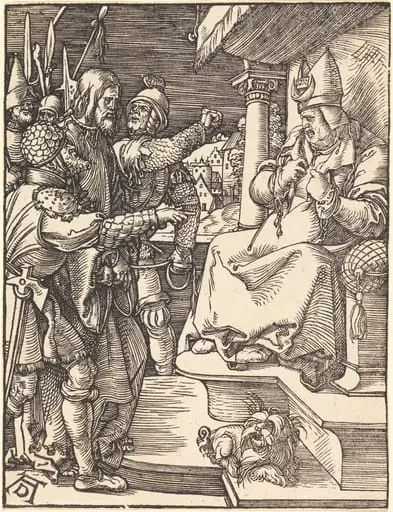 Christ before Caiaphas
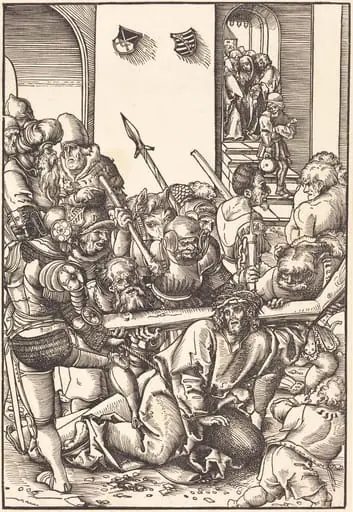 Christ Bearing the Cross
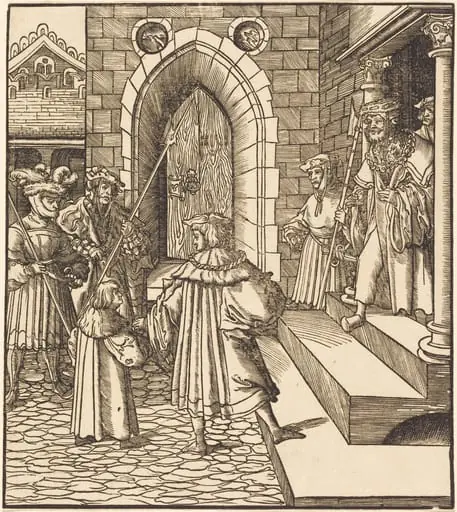 Three Men and a Boy in the Court of a Castle, to the Right Three Men on a Staircase
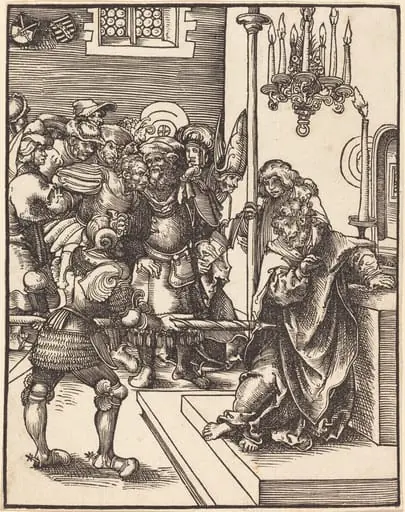 Saint Thomas
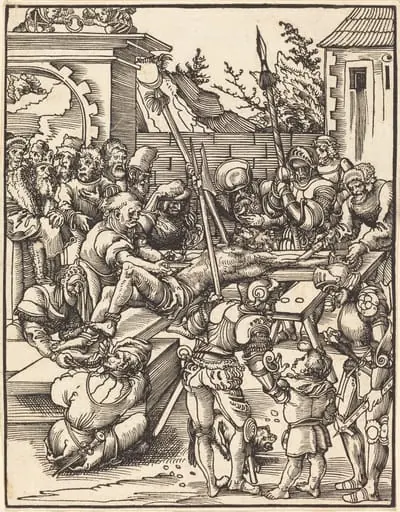 Saint Bartholomew
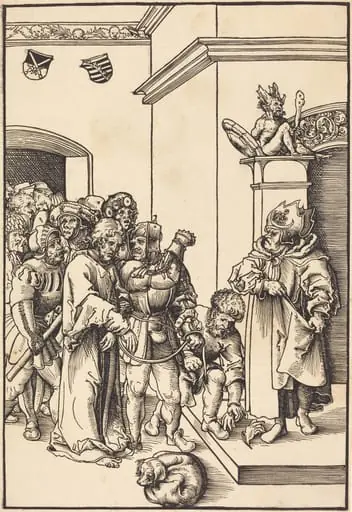 Christ before Annas
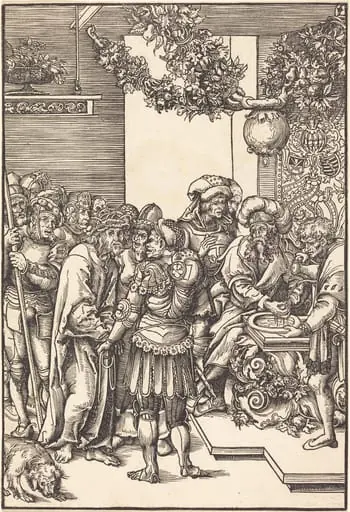 Pilate Washing His Hands
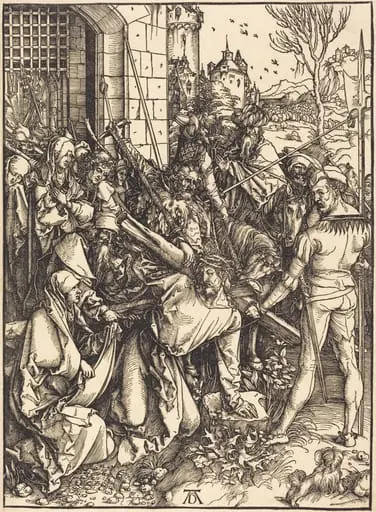 Christ Carrying the Cross
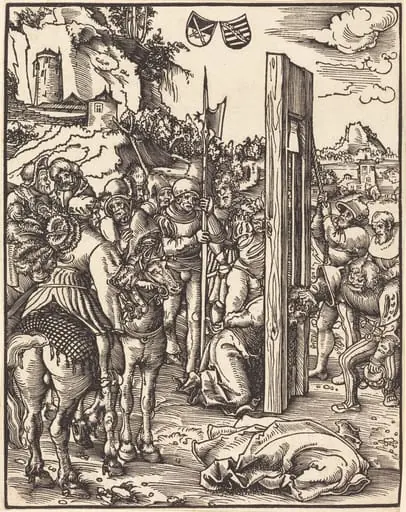 Saint Matthias