Artwork
The Ecstasy of Saint Mary Magdalene
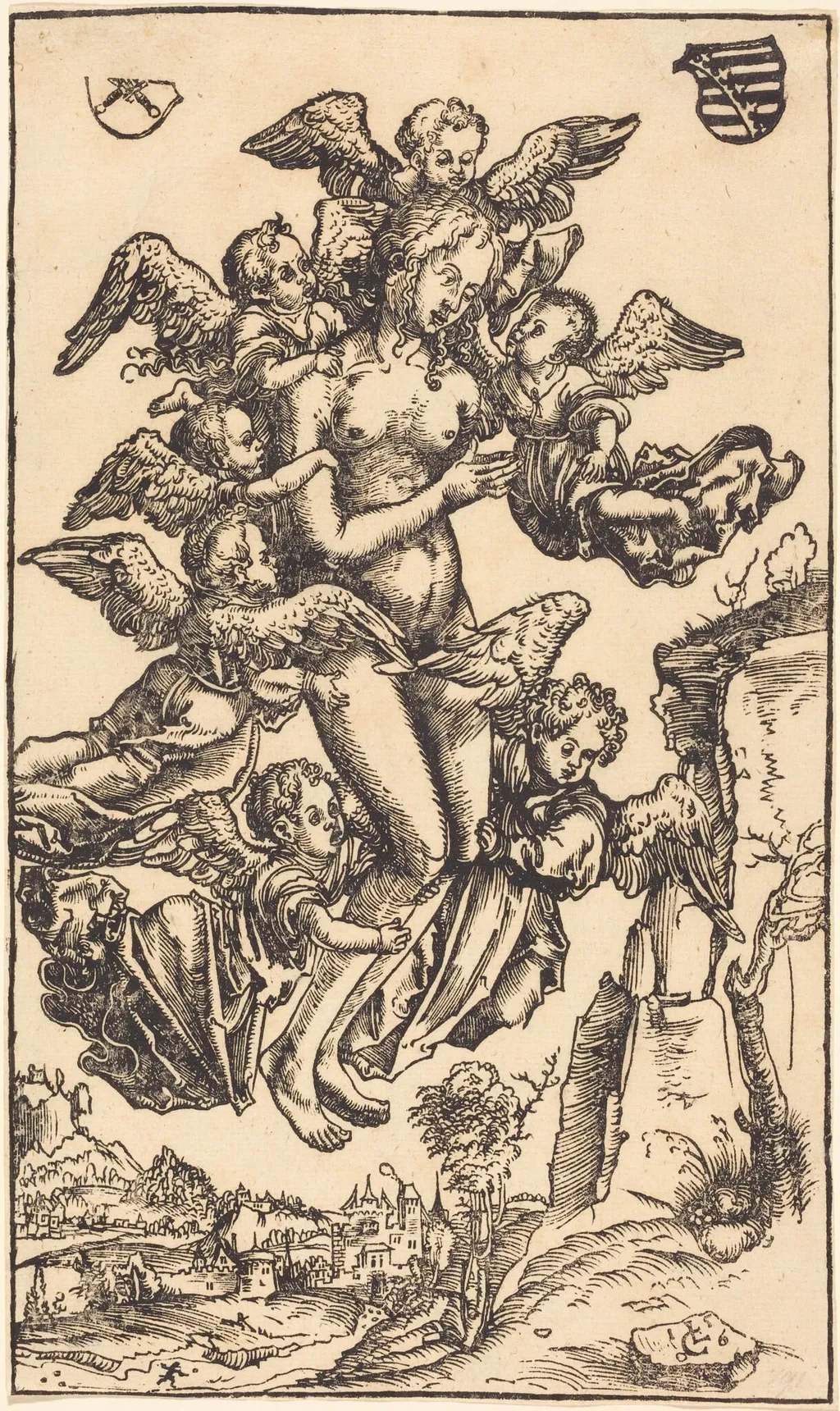
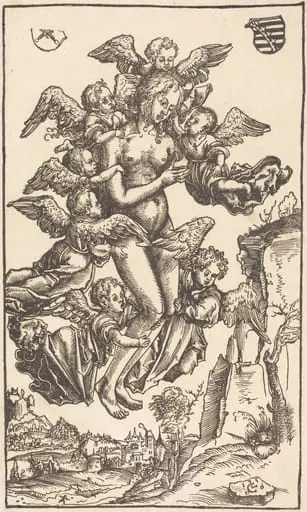
The Ecstasy of Saint Mary Magdalene is an ink print by the Renaissance artist Lucas Cranach the Elder. It dates from 1506 and is held in the collection of the National Gallery of Art.
About this work
Overview
Lucas Cranach the Elder produced the woodcut *The Ecstasy of Saint Mary Magdalene* in 1506. Executed in the print medium of woodcut, the work portrays a saint caught in a moment of heightened spiritual experience, aligning it with the religious subject matter common to the period.
Subject & Meaning
The composition centers on Saint Mary Magdalene, surrounded by a multitude of winged angels that seem to whirl around her. The crowded, almost chaotic arrangement suggests an intense, ecstatic encounter between the holy figure and the celestial realm, emphasizing the saint’s devotional fervor.
Technique & Style
Cranach employed the traditional woodcut process, carving the image into a wooden block and transferring it onto paper. The print is characterized by crisp, dark lines that contrast sharply with a light background, while the angels are rendered with rounded faces and flowing drapery, softening the overall dynamism of the scene.
History & Provenance
As a leading German Renaissance artist, Cranach served as court painter to the Electors of Saxony and was closely linked to the early Protestant movement. Although primarily known for portraiture of nobility and reformers, this religious print reflects his broader engagement with devotional imagery during a time of theological change.
Context
The work belongs to a period when woodcut printing was a primary means of disseminating religious ideas. Cranach’s production of such prints complemented his painted output, allowing his visual interpretations of sacred themes to reach a wider audience beyond elite patrons.
Artist & collection
Artist
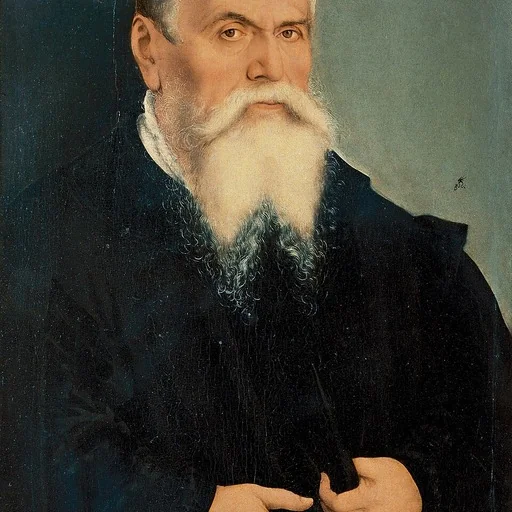
Lucas Cranach the Elder was a German Renaissance painter and printmaker in woodcut and engraving.

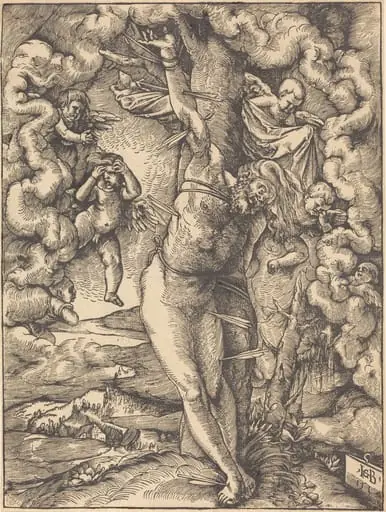 Saint Sebastian
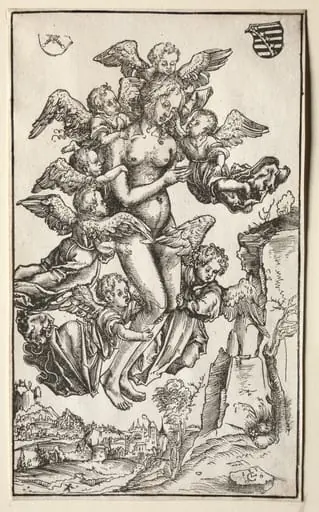 The Ecstasy of Saint Mary Magdalene
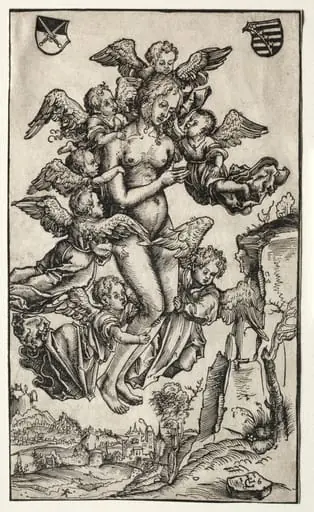 The Ecstasy of St. Mary Magdalene
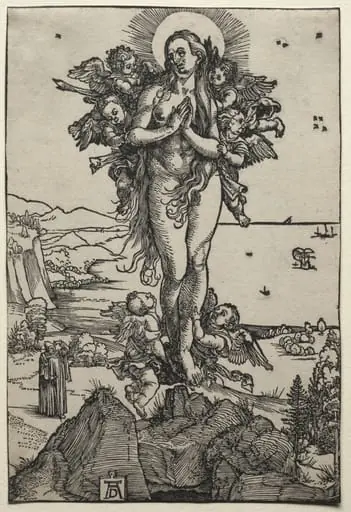 The Ecstasy of Mary Magdalene
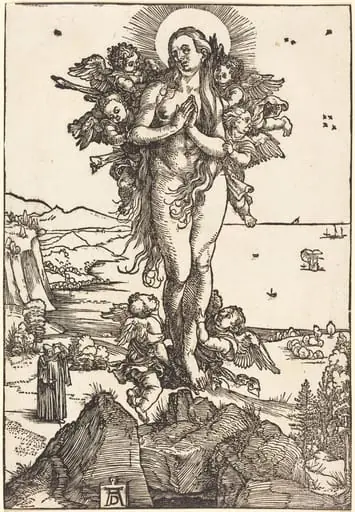 The Elevation of Saint Mary Magdalene
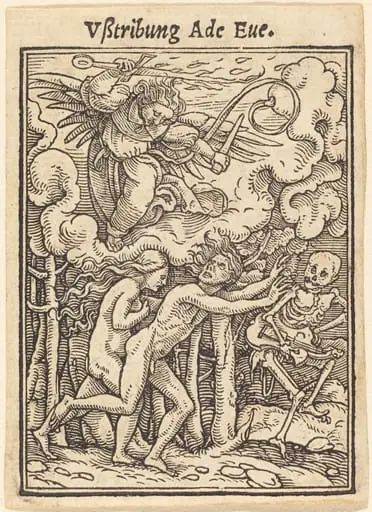 Vßtribung Ade Eue (Expulsion of Adam and Eve)
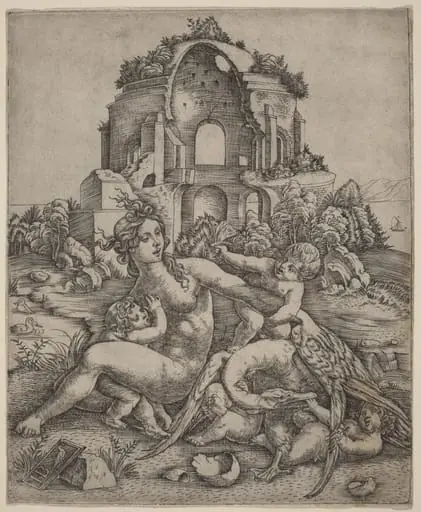 Leda and the Swan
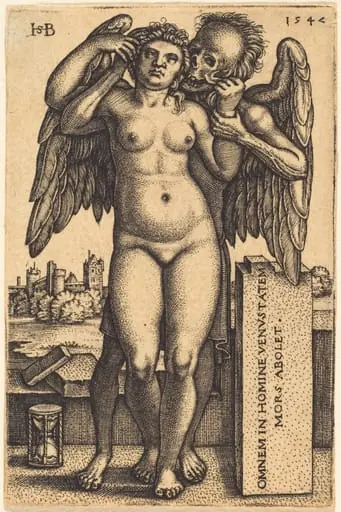 Death and the Maiden
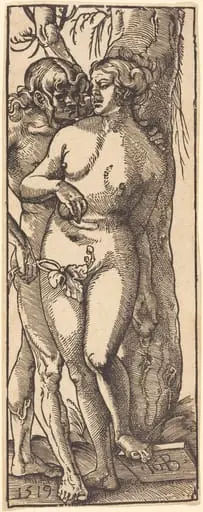 Adam and Eve
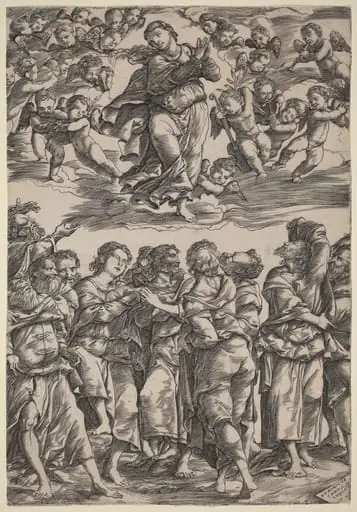 The Assumption of the Virgin
 The Dream of the Doctor
 The Ecstasy of Saint Mary Magdalene