Artwork
Doubting Thomas
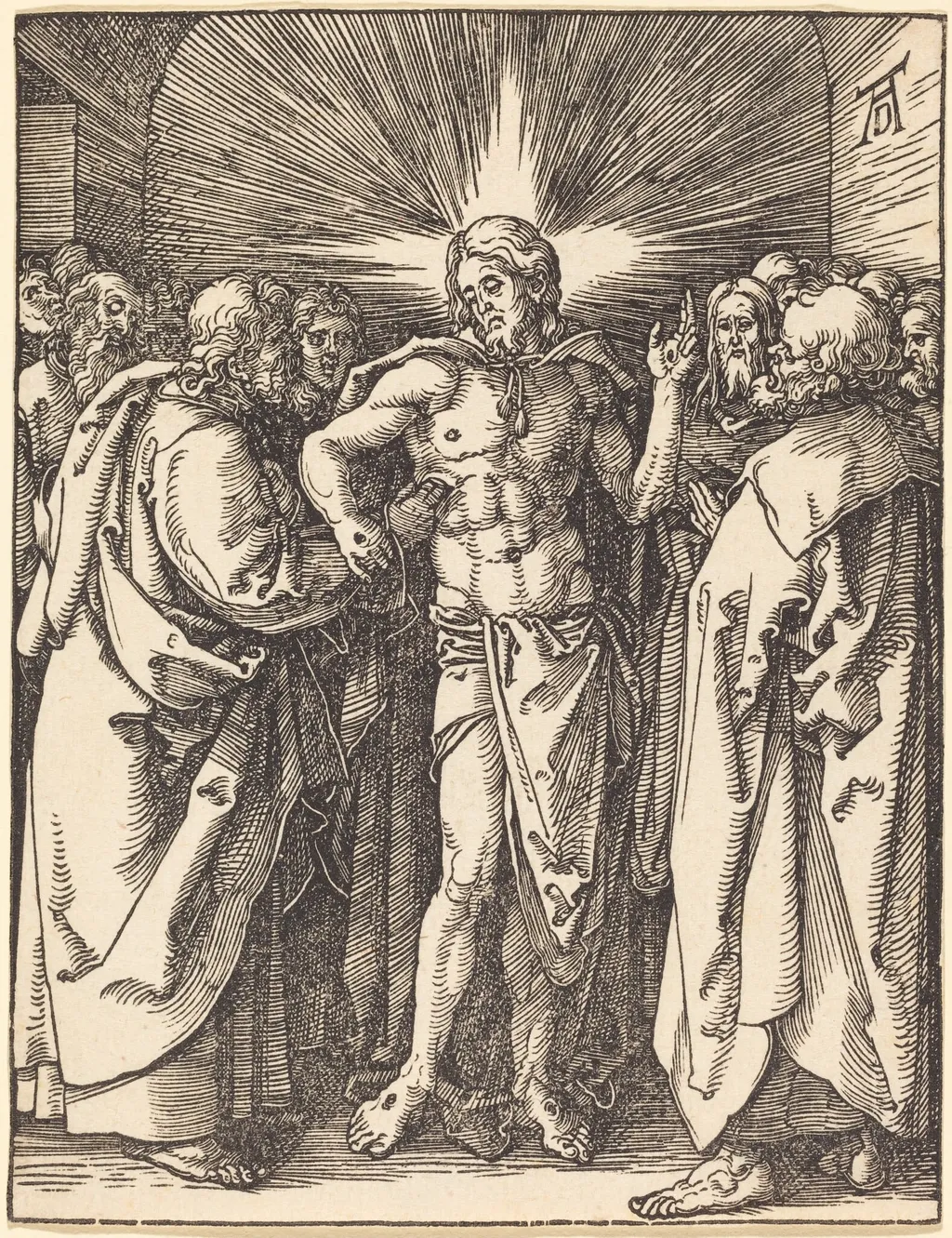
Doubting Thomas is an ink print by the Northern Renaissance artist Albrecht Dürer. It dates from 1510 and is held in the collection of the British Museum.
About this work
Overview
The composition centers on Christ, who stands calmly while lifting his robe to expose his side, inviting Thomas to insert his finger into the spear wound.
Albrecht Dürer's 'Doubting Thomas' is a woodcut created in 1510, depicting the biblical moment from the Gospel of John where the Apostle Thomas verifies the resurrected Christ's wounds. The composition centers on Christ, who stands calmly while lifting his robe to expose his side, inviting Thomas to insert his finger into the spear wound. Thomas leans forward with intense focus, his hand guided by Christ's own, while two other apostles observe the interaction from the background, framing the central theological assertion of physical resurrection. Executed on laid paper, the work demonstrates Dürer's mastery of the woodcut medium, utilizing precise hatching and cross-hatching to model volume and convey the texture of drapery and flesh. This piece belongs to a series of religious prints produced during Dürer's second Italian journey and subsequent return to Nuremberg, a period marked by his synthesis of Northern European detail with Italian Renaissance ideals of proportion and perspective. The image serves as a didactic tool for Catholic devotion, emphasizing the tangible reality of the Incarnation against contemporary skepticism. It remains a significant example of Dürer's ability to translate complex theological narratives into accessible, visually rigorous graphic art that influenced subsequent generations of printmakers.
Subject & Meaning
The composition captures the moment described in the Gospel of John when Thomas, skeptical of the resurrection, reaches to touch the nail marks in Jesus’ side. By focusing on the tactile verification, Dürer underscores themes of faith, doubt, and the demand for physical proof that characterize the episode.
Technique & Style
Created through the woodcut process, Dürer carved the design into a block of wood, inked the raised surfaces, and transferred the image onto paper. The fine lines and careful hatching reveal his mastery of the medium, while the use of laid paper provides a subtle texture that enhances the work’s tonal depth.
Context
Produced during the height of the Northern Renaissance, the print reflects contemporary interest in disseminating biblical stories to a broad audience. Woodcuts like this one allowed Dürer to circulate religious imagery beyond the confines of altarpieces and manuscripts, aligning with the period’s expanding print culture.
Artist & collection
Artist
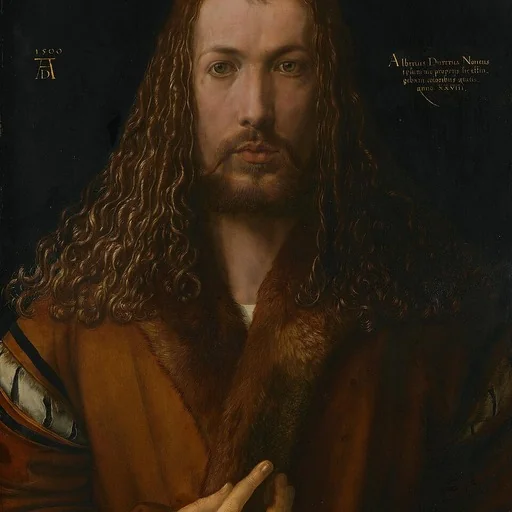
Albrecht Dürer spent his life in Nuremberg, a busy German city where artists traded prints like currency.

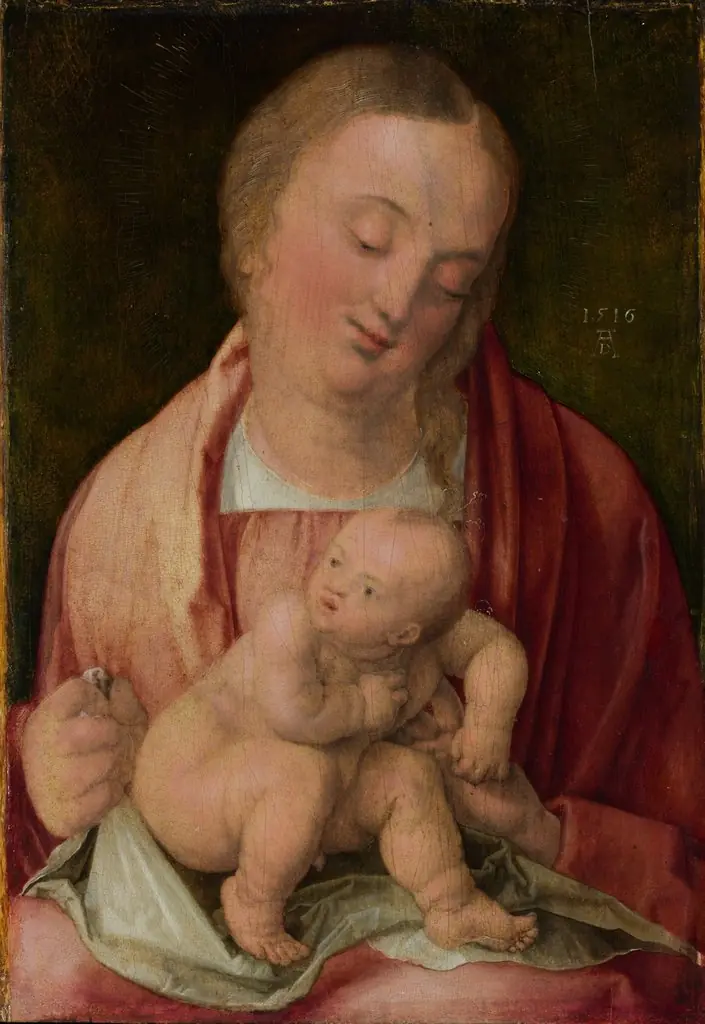
![Madonna and Child [obverse], by Albrecht Dürer](https://artifactworldgallery.com/img/albrecht-durer--madonna-and-child-obverse--d7b8ebf05d22ebe5-w320.webp)
![Lot and His Daughters [reverse], by Albrecht Dürer](https://artifactworldgallery.com/img/albrecht-durer--lot-and-his-daughters-reverse--b4ebf9b282faa17a-w320.webp)
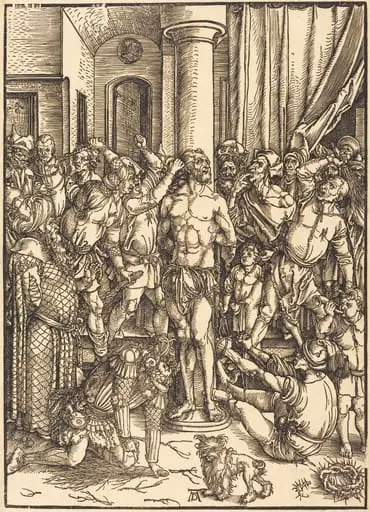 The Flagellation
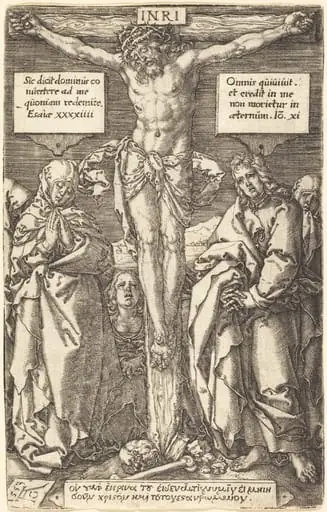 Christ on the Cross
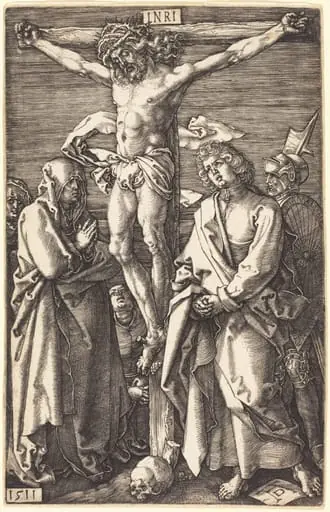 The Crucifixion
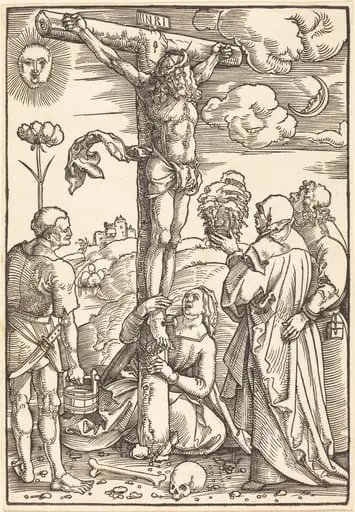 Christ on the Cross
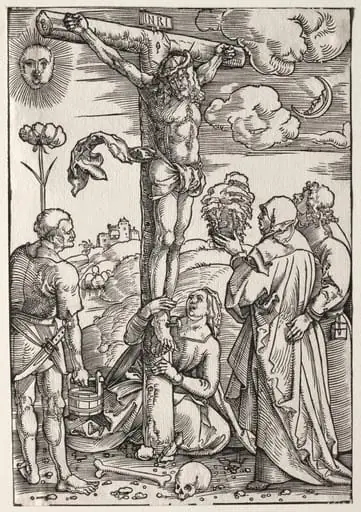 Christ on the Cross with Mary, St. John, Mary Magdalen and St. Stephen
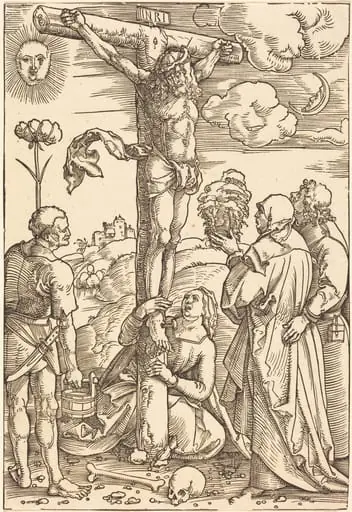 Christ on the Cross
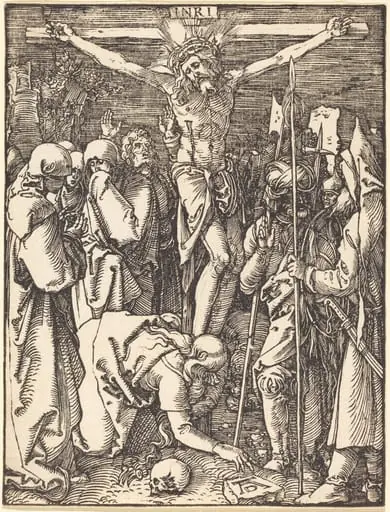 The Crucifixion
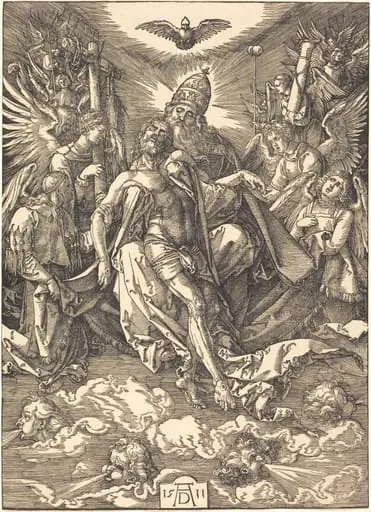 The Trinity
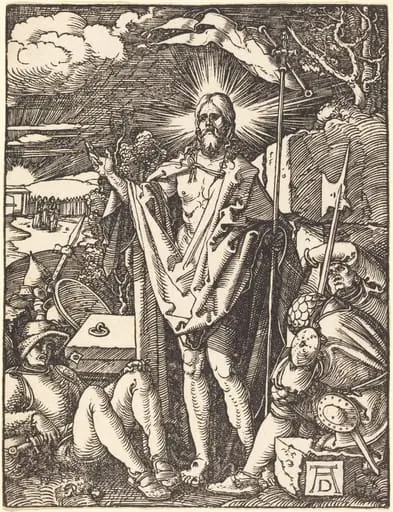 The Resurrection
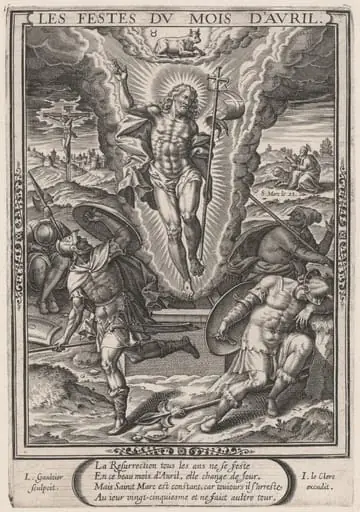 Les Festes du mois d'Avril (April: The Resurrection)
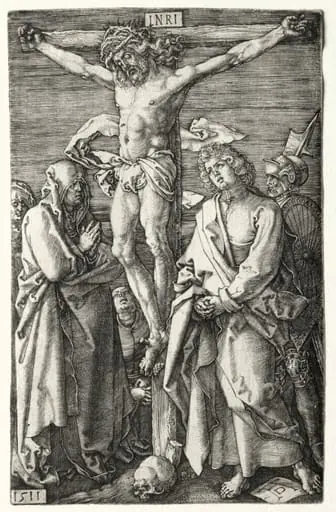 The Crucifixion
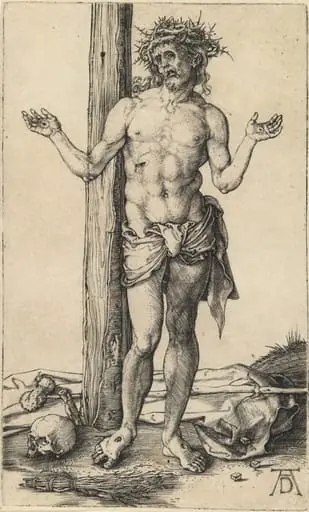 The Man of Sorrows with Arms Outstretched