Artwork
The Virgin and Child on the Crescent
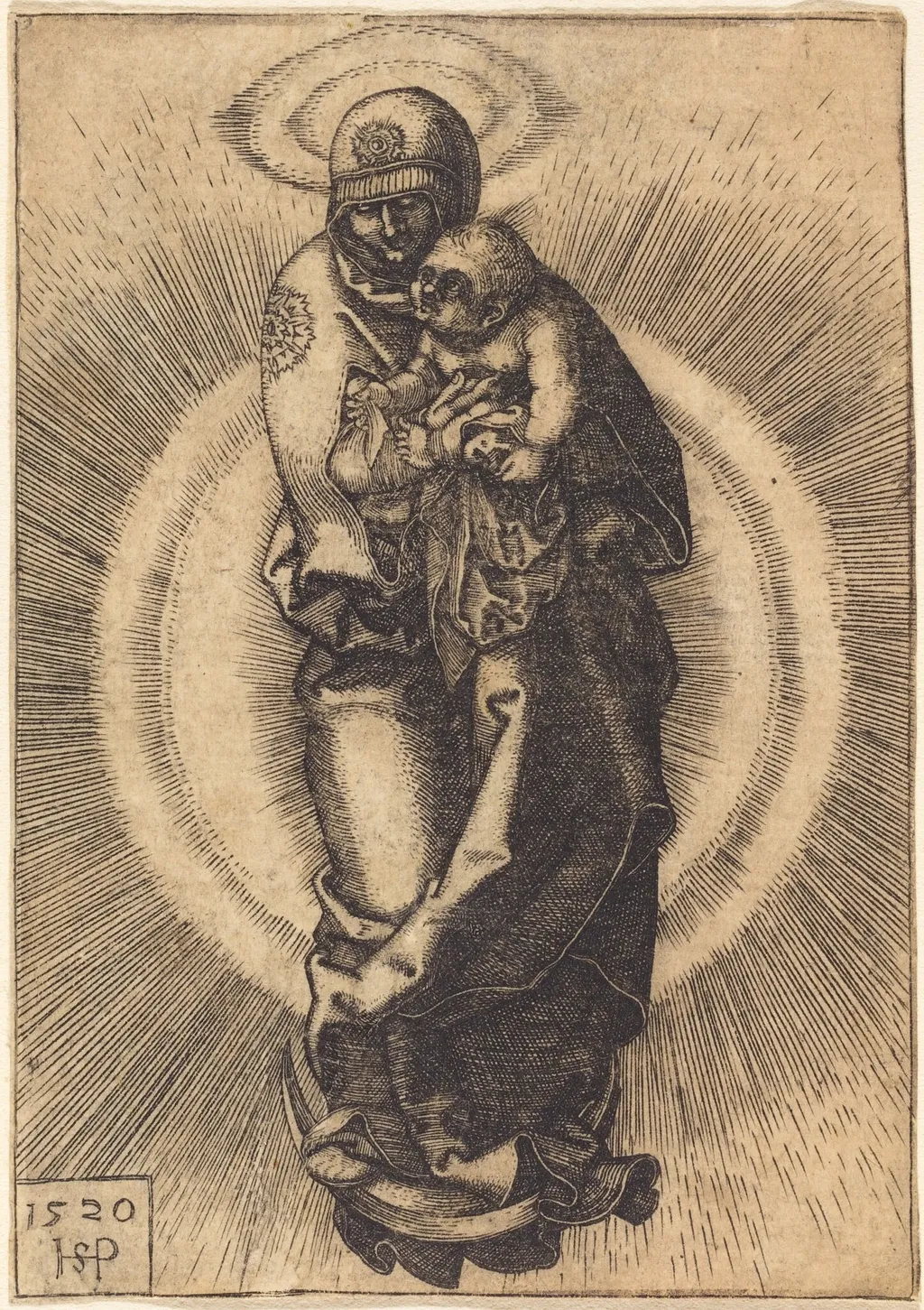
The Virgin and Child on the Crescent is an ink print by the Renaissance artist Sebald Beham. It dates from 1520 and is held in the collection of the National Gallery of Art.
About this work
Overview
Sebald Beham, a German printmaker active around 1520, produced an engraving titled *The Virgin and Child on the Crescent*. Executed in black‑and‑white, the work presents the Virgin Mary holding the infant Christ, both rendered with solemn expressions and set against a radiating background of linear rays.
Subject & Meaning
The image belongs to the religious tradition of Marian iconography, placing Mary and the Christ child upon a stylized crescent moon—a motif linked to the Woman of the Apocalypse and to themes of purity and divine illumination.
Technique & Style
Beham employed fine parallel hatching to model forms and suggest shadow, a hallmark of early 16th‑century engraving. The composition is compact and densely detailed, reflecting the “Little Masters” approach of creating intricate, small‑scale prints that invite close viewing.
History & Provenance
Created in Nuremberg, where Beham began his career, the print later circulated after his relocation to Frankfurt. It is part of a prolific output that includes hundreds of engravings and woodcuts, many of which were distributed among collectors of devotional imagery.
Context
During the early Reformation period, German artists like Beham produced devotional prints for both private devotion and the emerging market for affordable religious art. The work’s modest size and intricate execution align with contemporary demand for portable, personal objects of faith.
Artist & collection
Artist
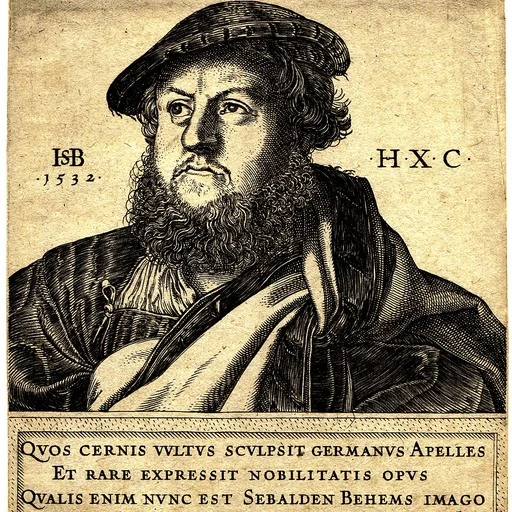
Sebald Beham (1500–1550) was a German painter and printmaker, mainly known for his very small engravings.


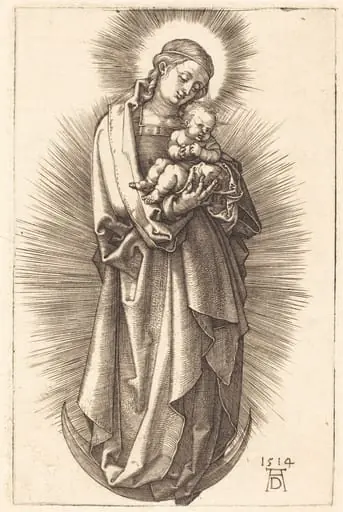 The Virgin and Child on a Crescent with a Diadem
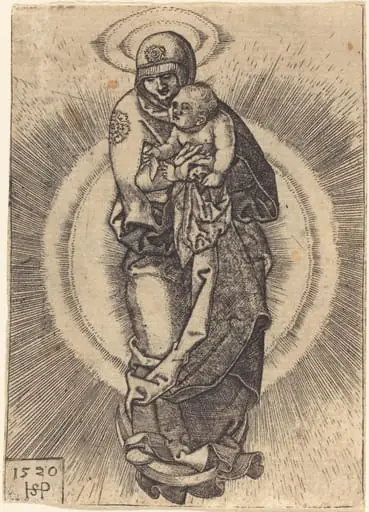 The Virgin and Child on the Crescent
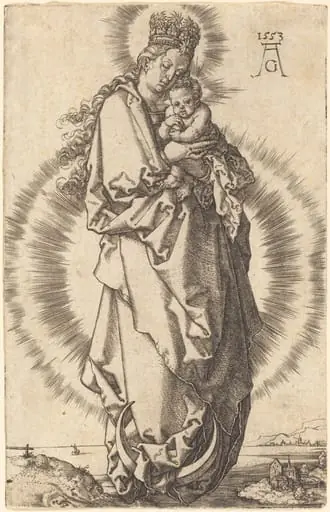 The Virgin with the Child on the Crescent
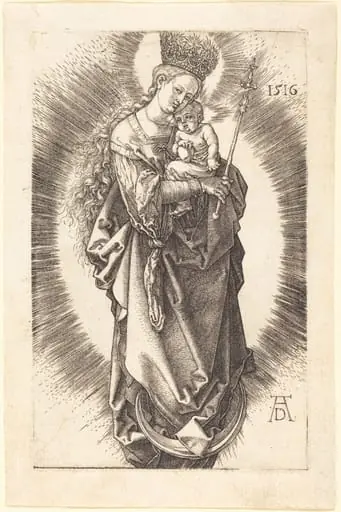 The Virgin and Child on a Crescent with a Sceptre and a Starry Crown
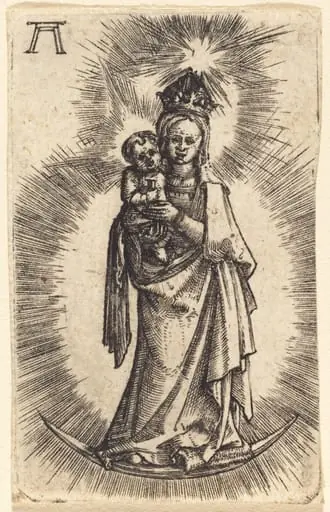 The Virgin on the Crescent
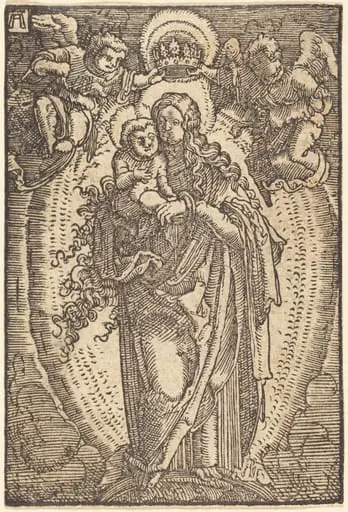 The Virgin and Child on a Crescent
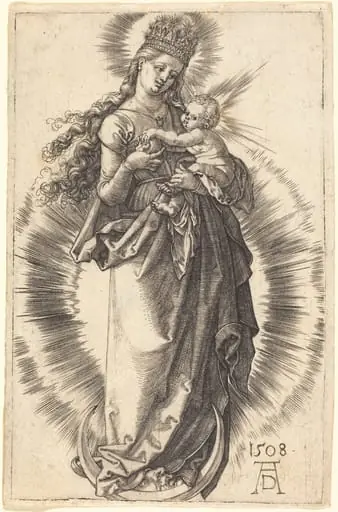 The Virgin and Child on a Crescent with a Starry Crown
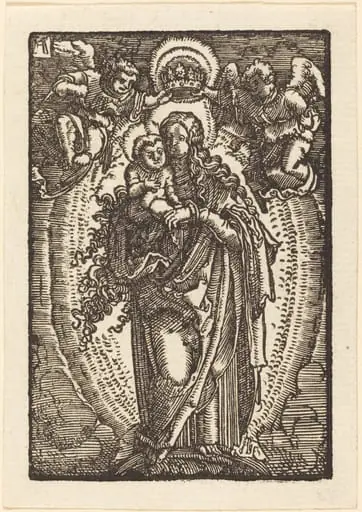 The Virgin and Child on a Crescent
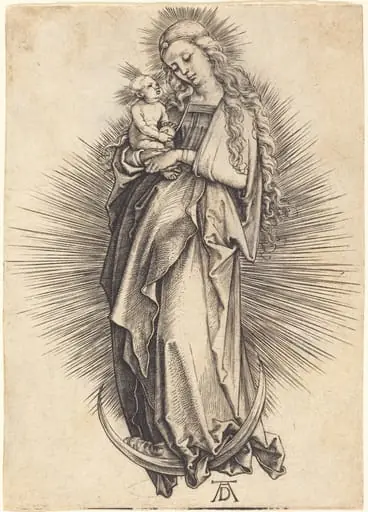 The Virgin on the Crescent