Artwork
The Virgin and Child on the Crescent
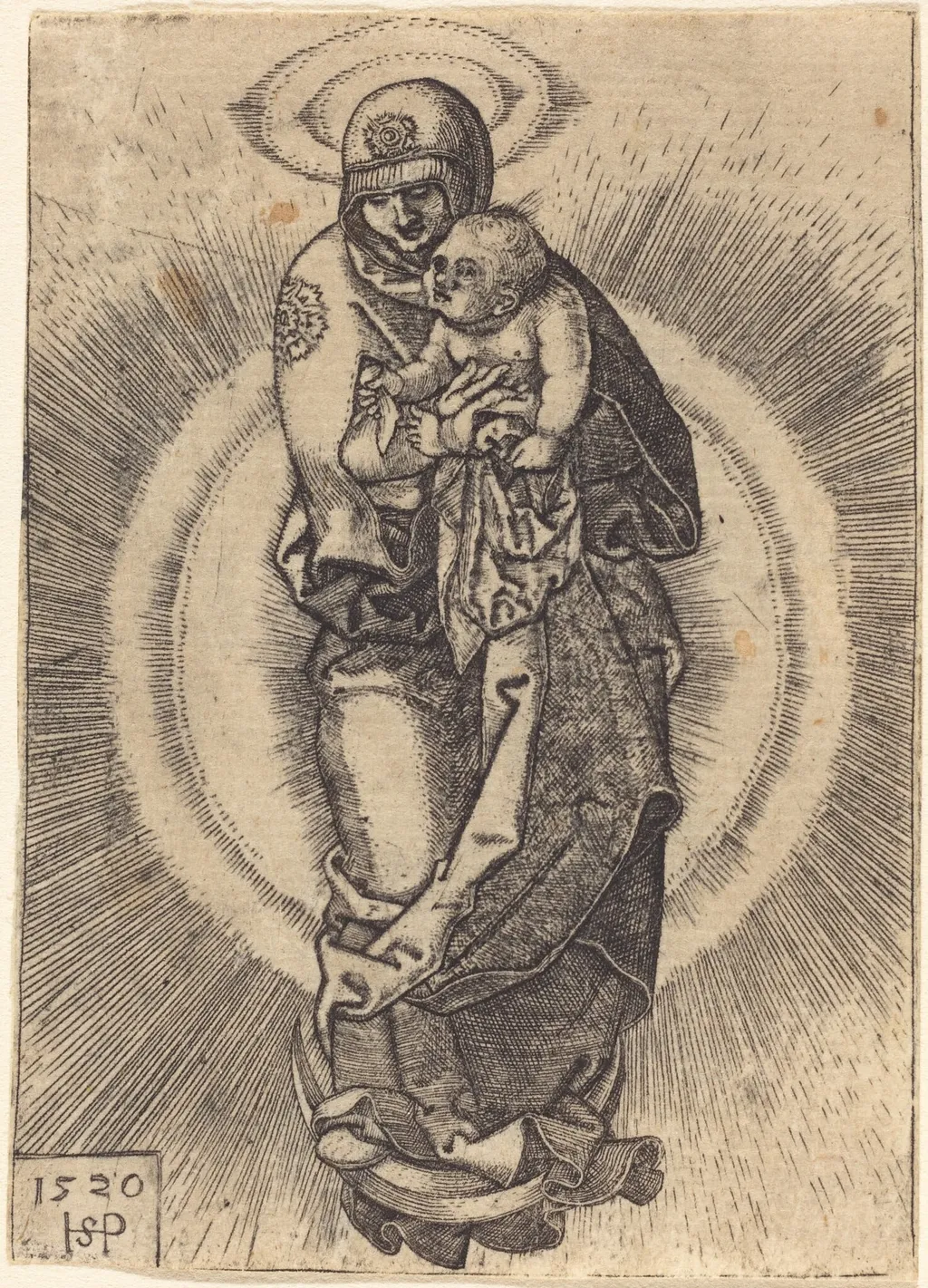
The Virgin and Child on the Crescent is an ink print by the Renaissance artist Sebald Beham. It dates from 1520 and is held in the collection of the National Gallery of Art.
About this work
Overview
The Virgin and Child on the Crescent is a 1520 engraving by Sebald Beham, a German artist of the early 16th century. This small-scale print exemplifies the detailed work of the 'Little Masters,' a group of artists following in the tradition of Albrecht Dürer.
Subject & Meaning
The engraving depicts a serene religious scene: the Virgin Mary, haloed and robed, holds the Christ Child, who gazes up at her. They are poised on a crescent moon, a motif common in Christian iconography of the time, symbolizing Mary's association with the Virgin of the Apocalypse.
Technique & Style
Characterized by fine detail and intricate lines, the engraving showcases Beham's mastery of the medium. A circular background with radiating lines adds a sense of dynamic energy, contrasting with the overall serene and devotional mood of the composition.
History & Provenance
Created in 1520, this work is part of Sebald Beham's extensive oeuvre of prints, which also includes etchings and woodcuts. Specific provenance details for this engraving are not provided.
Context
This work is rooted in the Renaissance movement, reflecting both the religious themes prevalent at the time and the artistic innovations of German printmaking that followed Dürer's influence.
Artist & collection
Artist
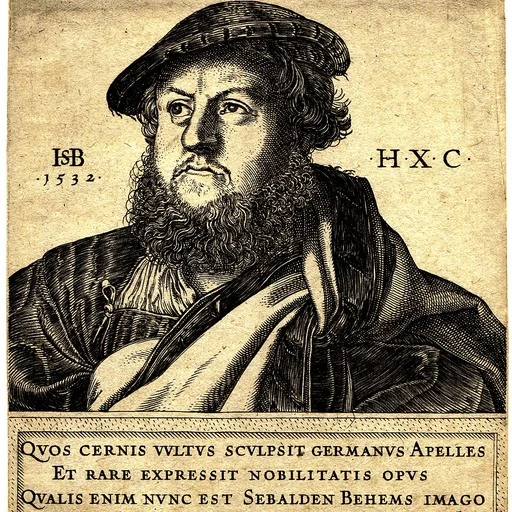
Sebald Beham (1500–1550) was a German painter and printmaker, mainly known for his very small engravings.


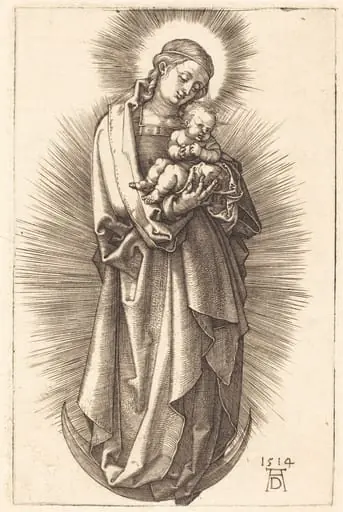 The Virgin and Child on a Crescent with a Diadem
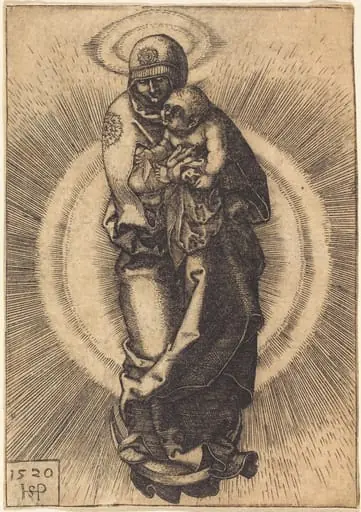 The Virgin and Child on the Crescent
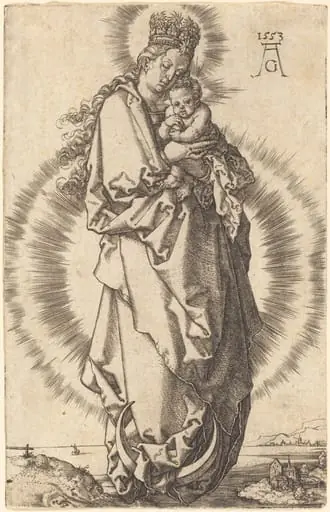 The Virgin with the Child on the Crescent
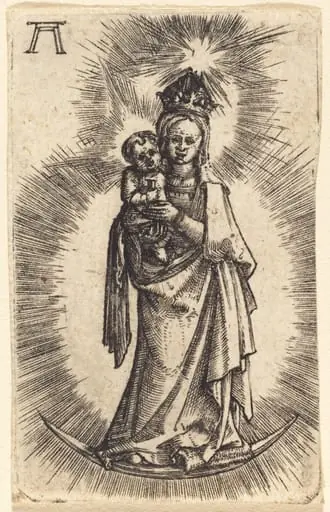 The Virgin on the Crescent
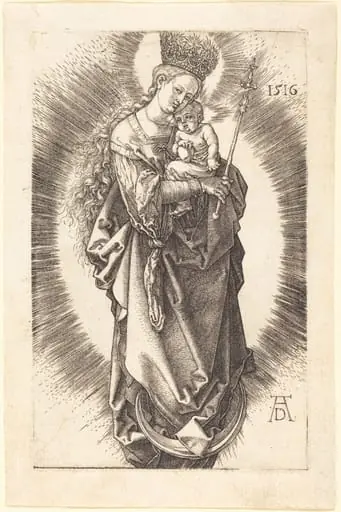 The Virgin and Child on a Crescent with a Sceptre and a Starry Crown
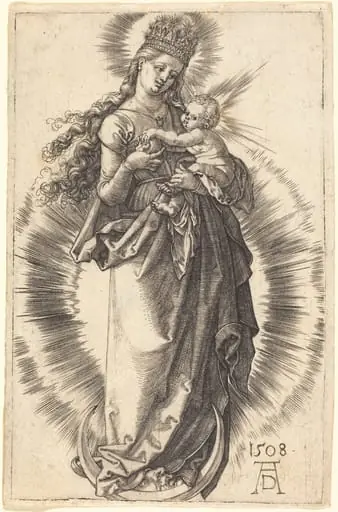 The Virgin and Child on a Crescent with a Starry Crown
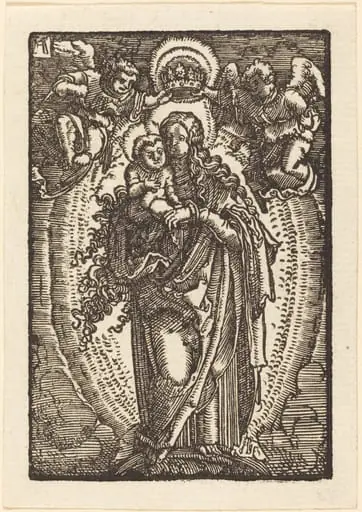 The Virgin and Child on a Crescent
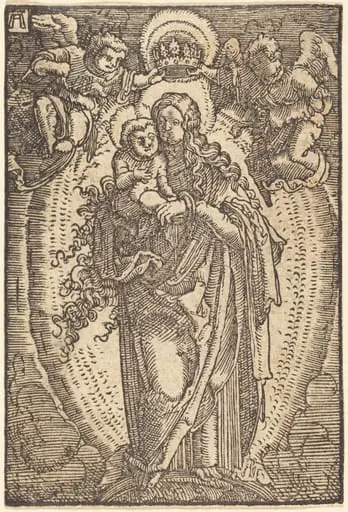 The Virgin and Child on a Crescent
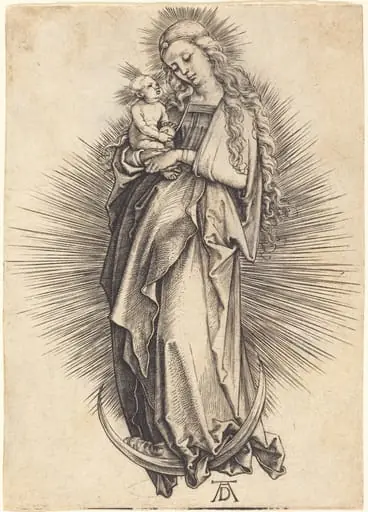 The Virgin on the Crescent