Artwork
Carotte du calicot
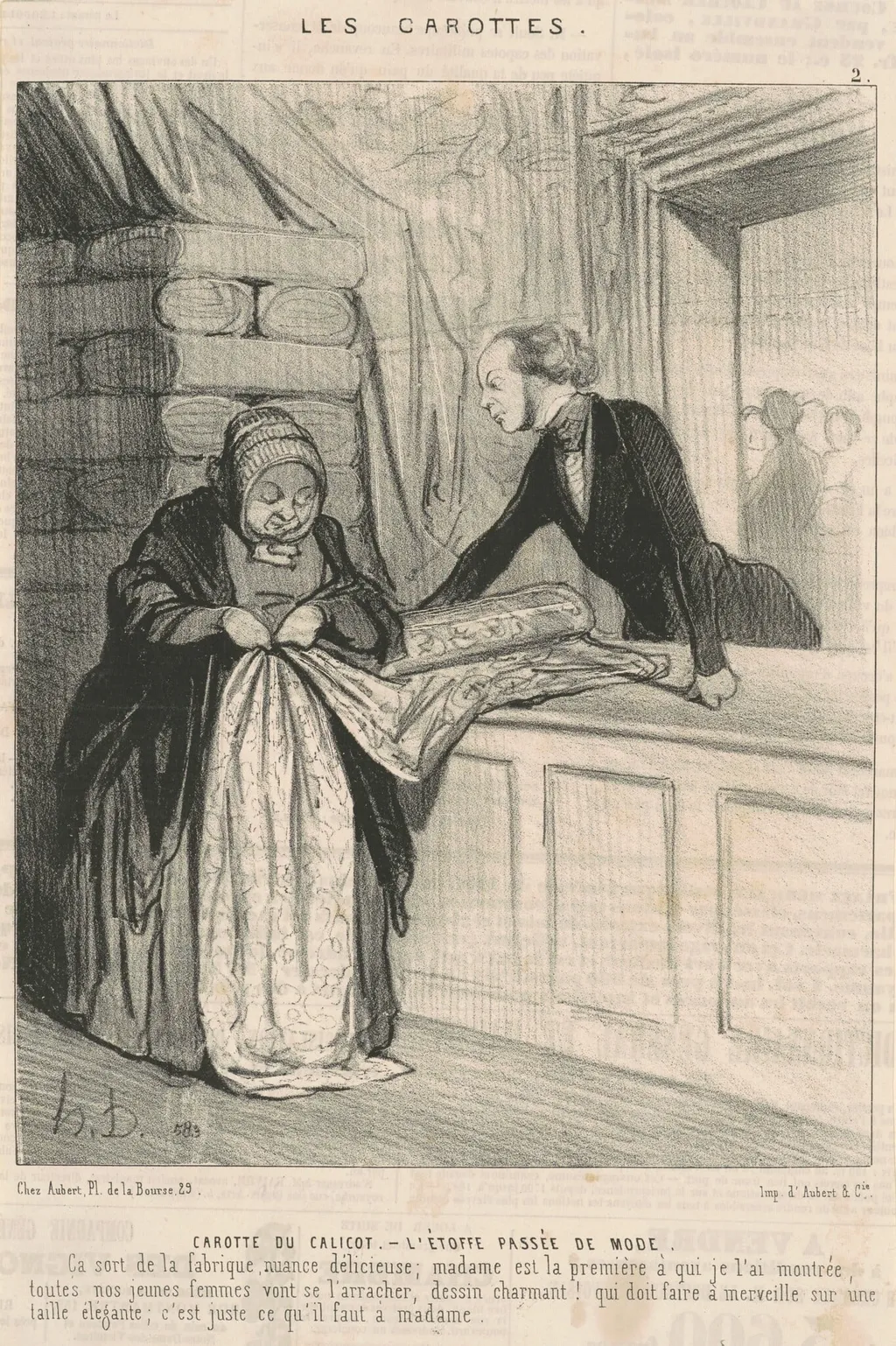
Carotte du calicot is an ink print by the Romanticist artist Honoré Daumier. It dates from 1844 and is held in the collection of the National Gallery of Art.
About this work
Overview
Carotte du calicot is a lithograph by Honoré Daumier, depicting a quiet interaction within a fabric shop. The scene focuses on two figures—an older woman and a younger companion—engaged with bolts of patterned cloth. Daumier captures a fleeting, unremarkable moment, typical of his interest in ordinary urban life, rendered with subtle emotional nuance and minimal detail.
Subject & Meaning
The figures are caught in a moment of deliberation, their expressions suggesting contemplation rather than commerce. The elderly woman’s solemn gaze contrasts with the younger person’s focused attention, hinting at generational differences in taste, value, or economic constraint. The fabric, though central, remains unnamed and unadorned, emphasizing the weight of everyday choices over spectacle.
Technique & Style
Executed in lithography, the work uses tonal gradations and loose, expressive lines to suggest texture and form without heavy detail. Daumier’s brushwork on stone captures movement and mood efficiently, favoring suggestion over precision. The contrast between soft shadows and sharp contours directs attention to the figures’ postures and the fabric’s folds, reinforcing the scene’s intimacy.
History & Provenance
Created during the mid-19th century, the print likely originated as part of Daumier’s broader series documenting Parisian commerce and class interactions. It was produced for broad circulation, aligning with his practice of making art accessible beyond elite circles. No specific early ownership records are documented, but its survival reflects its resonance within contemporary print culture.
Context
Daumier worked amid rapid urbanization and expanding consumer markets in Paris. Fabric shops, once specialized, became sites of social negotiation where class and taste intersected. This print reflects the growing importance of textiles in daily life and the quiet labor of selection—often performed by women—amidst the city’s commercial bustle.
Legacy
The lithograph contributes to Daumier’s reputation for observing the unnoticed rhythms of bourgeois and working-class life. While not widely exhibited today, it remains a representative example of his humanist approach to printmaking, influencing later realist artists who sought dignity in mundane scenes.
Artist & collection

Artist
Honoré-Victorin Daumier was a French painter, sculptor, and printmaker, whose many works offer commentary on the social and political life in France, from the Revolution of 1830 to the fall of the Second French Empire in 1870.









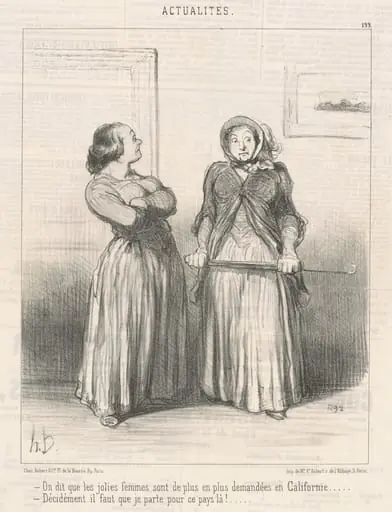 On dit que les jolies femmes sont ...
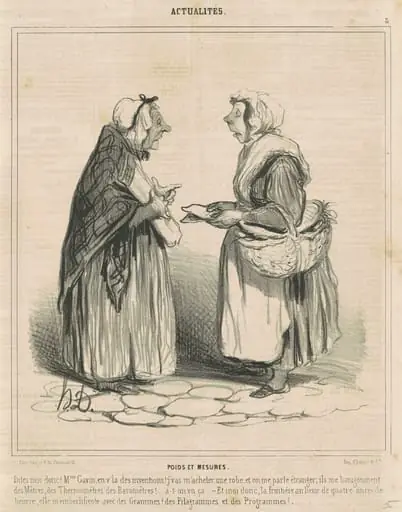 Poids et mesures
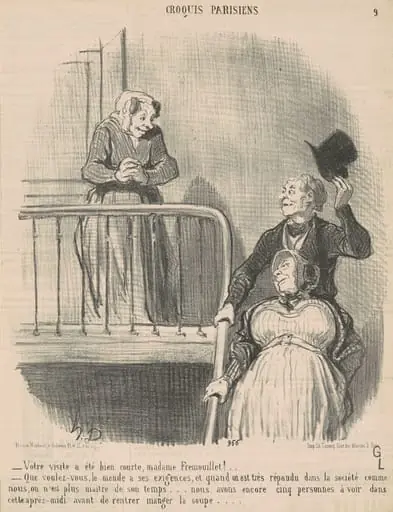 Votre visite a été bien courte ...
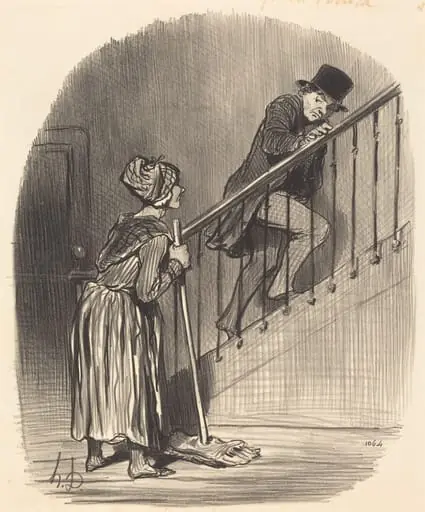 Ma femme est-elle a la maison?
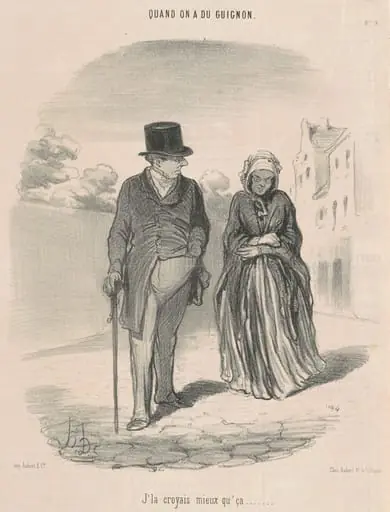 J'la croyais mieux qu'ça ...
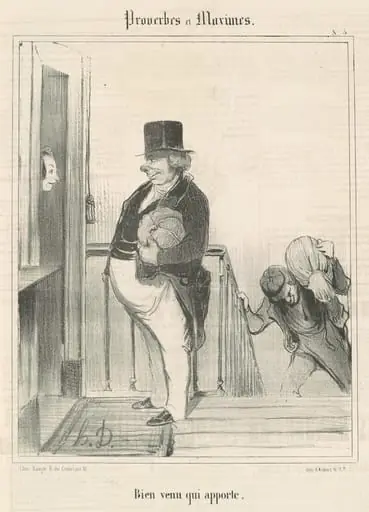 Bien venu qui apporte
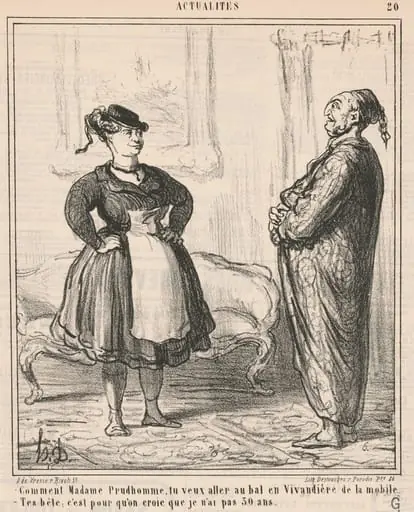 Comment Madame Prudhomme ... En vivandière ...
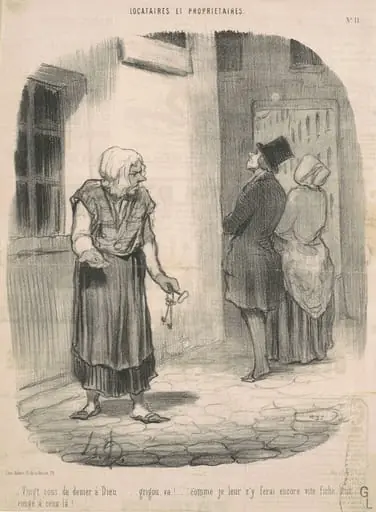 Vingt sous de denier a Dieu...
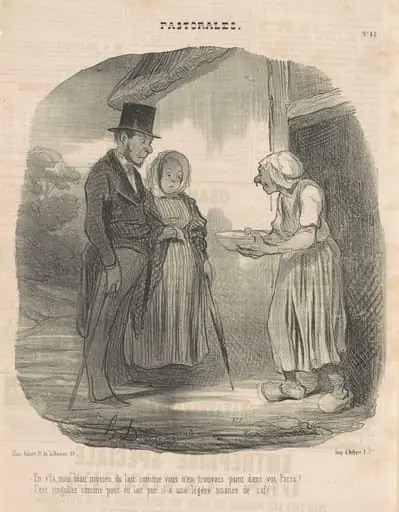 Femme de lettre humanitaire se livrant sur l'homme ...
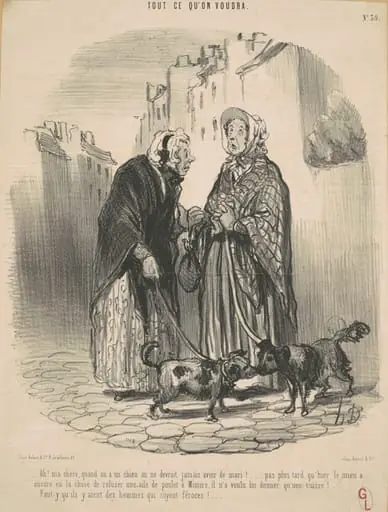 Ah! Ma chère, quand on a un chien ...
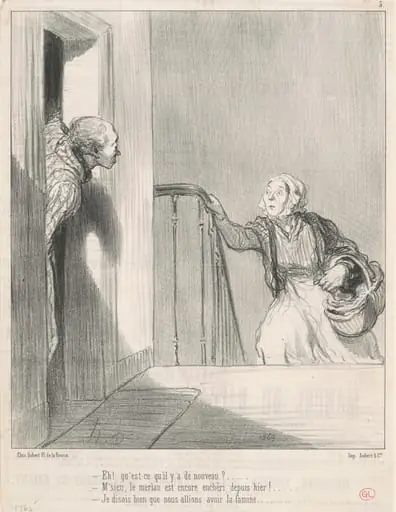 Eh! Qu'est-ce qu'il y a de nouveau? ...
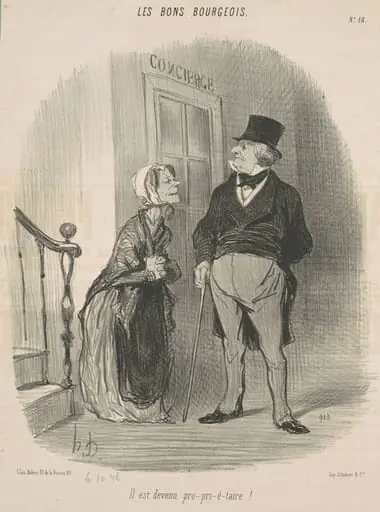 Il est devenu pro-pri-é-taire!