Artwork
Deux bons voisins
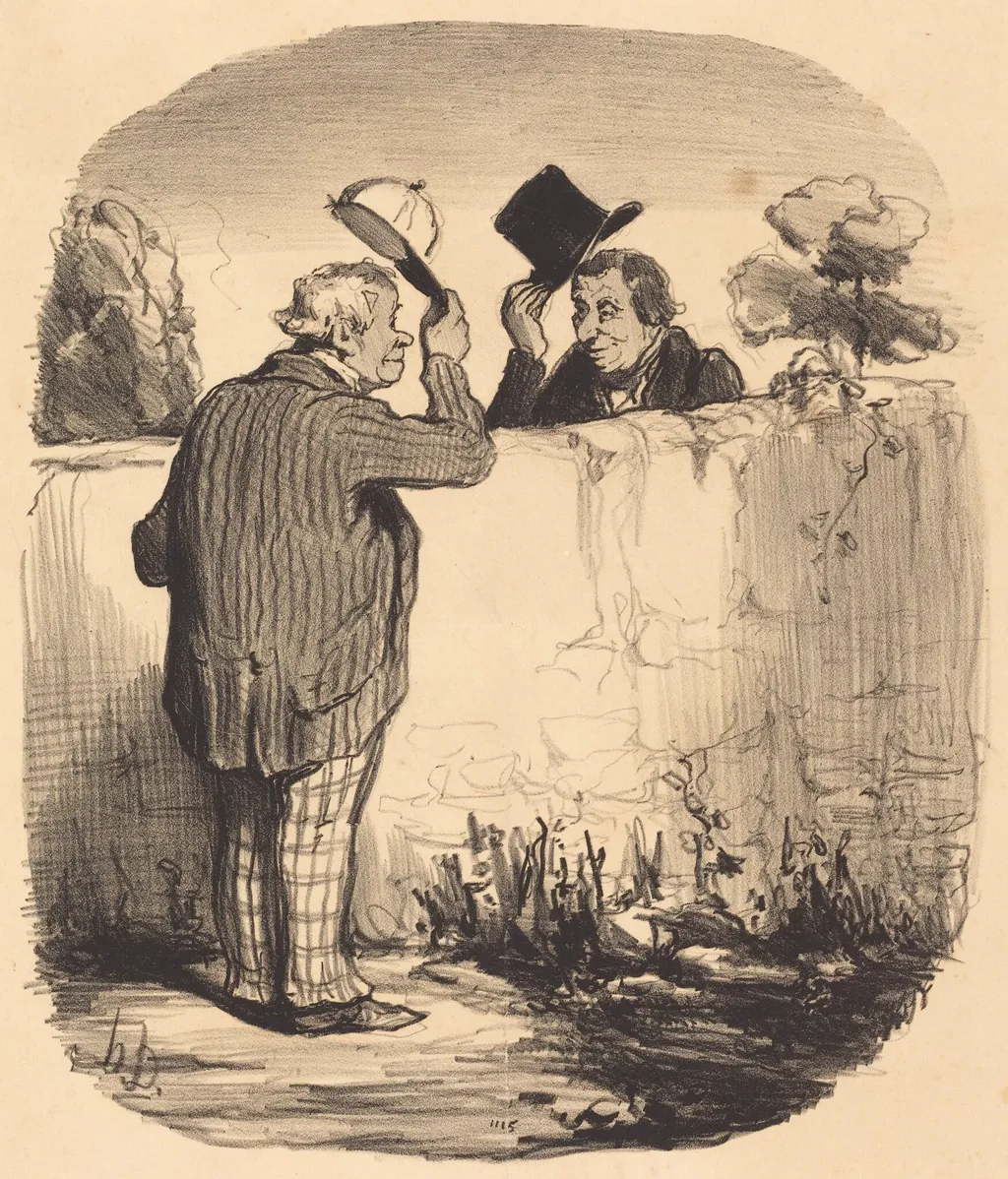
Deux bons voisins is an ink print by the Romanticist artist Honoré Daumier. It dates from 1847 and is held in the collection of the National Gallery of Art.
About this work
Overview
Deux bons voisins is a lithograph created by French artist Honoré Daumier in 1847. The print captures a scene of two men engaged in conversation outside a wall, set against a natural backdrop of trees and bushes.
Subject & Meaning
Contrary to Daumier's typical satirical depictions of authority figures, this work portrays a cordial interaction between two ordinary individuals, suggesting a theme of amicable neighborhood relations rather than social commentary.
Technique & Style
Executed in lithograph, a medium Daumier frequently used for its accessibility to a broad audience, the piece reflects his characteristic expressive line work, though here applied to a serene, everyday scene.
History & Provenance
Produced in 1847, during Daumier's active period of contributing to periodicals like *La Caricature* and *Le Charivari*, the lithograph aligns with his republican and democratic leanings, yet stands out for its lack of overt satire.
Context
While much of Daumier's work from this era critiqued figures of power, *Deux bons voisins* offers a glimpse into his capacity to depict ordinary, positive human interactions, potentially reflecting a desire to also highlight harmony among the common populace.
Legacy
This lithograph, while not a hallmark of Daumier's satirical genius, contributes to the broader understanding of his artistic range and ability to capture the mundane aspects of 19th-century French life.
Artist & collection
Artist
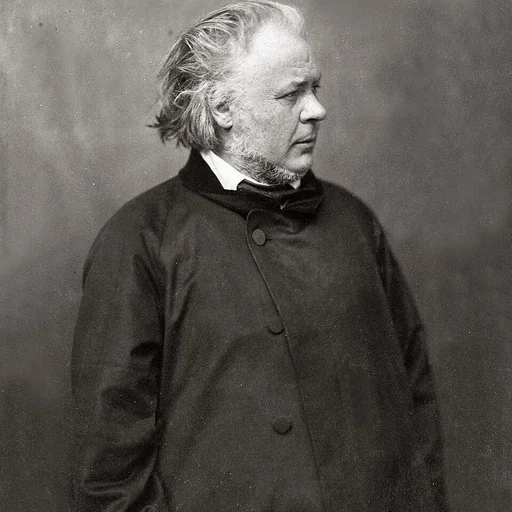
Honoré-Victorin Daumier was a French painter, sculptor, and printmaker, whose many works offer commentary on the social and political life in France, from the Revolution of 1830 to the fall of the Second French Empire in 1870.









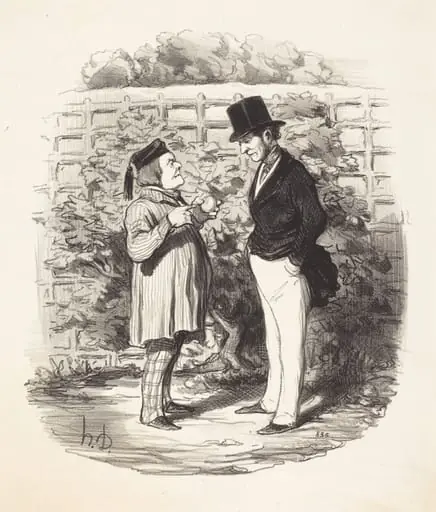 Monsieur voila vingt ans que je poursuis l'union de...
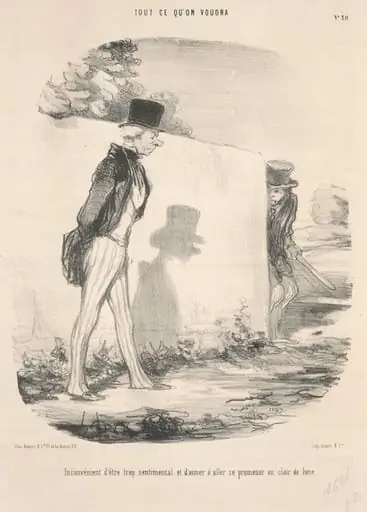 Inconvènient d'être trop sentimental ...
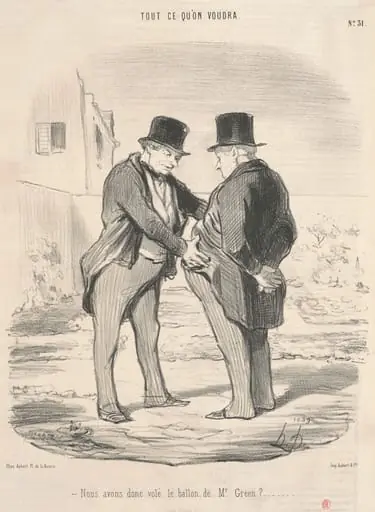 Nous avons donc volé le ballon de Mr. Green?
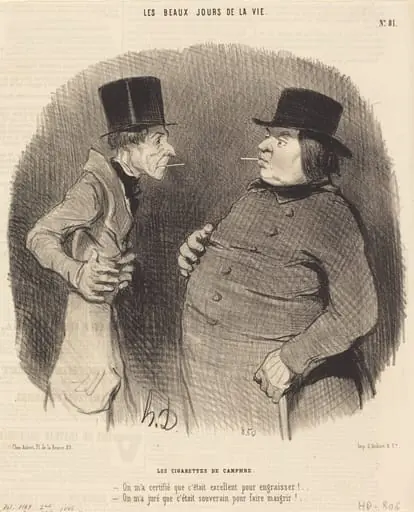 Les Cigarettes de camphre
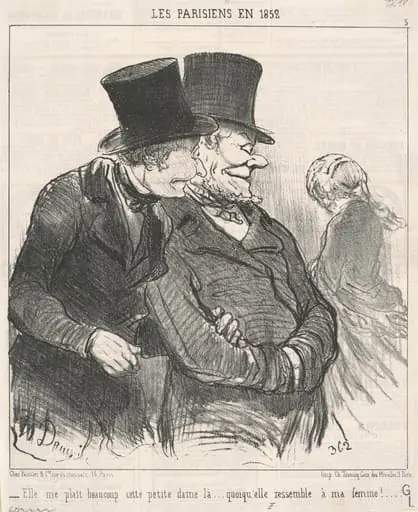 Ell me plait beaucoup ...
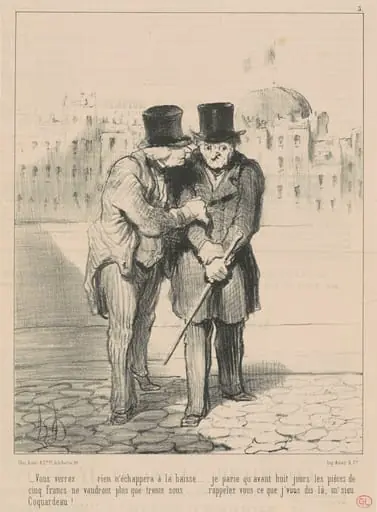 Vous verrez ... rien n'échappera a la baisse ...
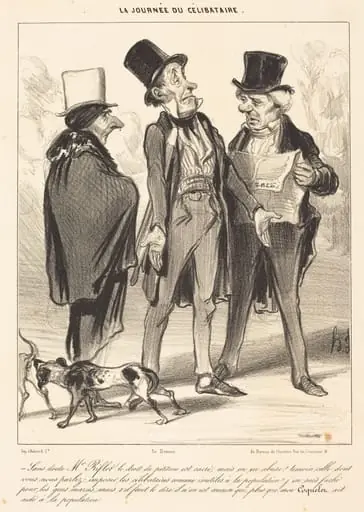 Sans doute M. Riflot le droit...
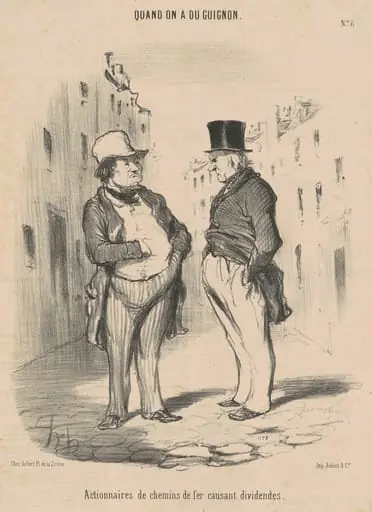 Actionnaires de chemins de fer causant dividendes
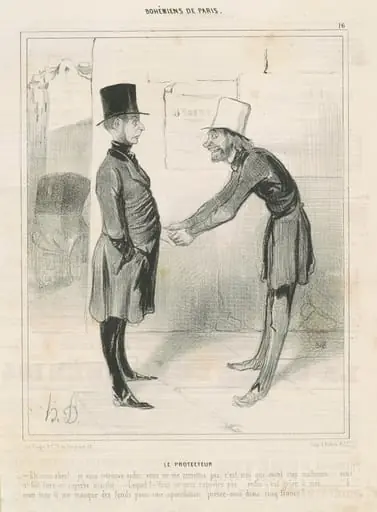 Le Protecteur
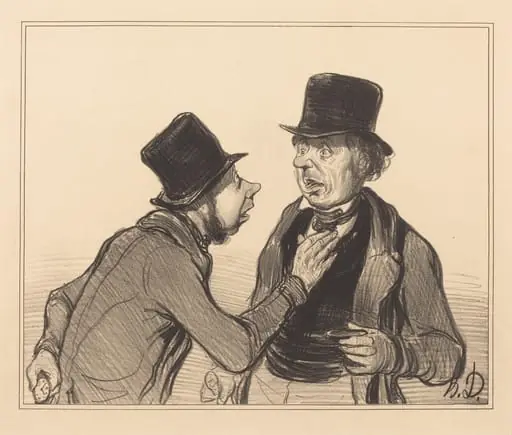 Oui Monsieur vous n'êtes pas de Paris...
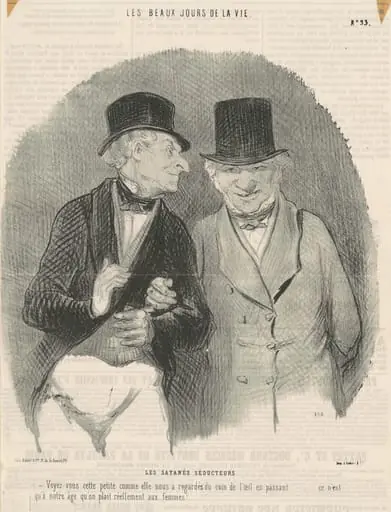 Les satanés séducteurs
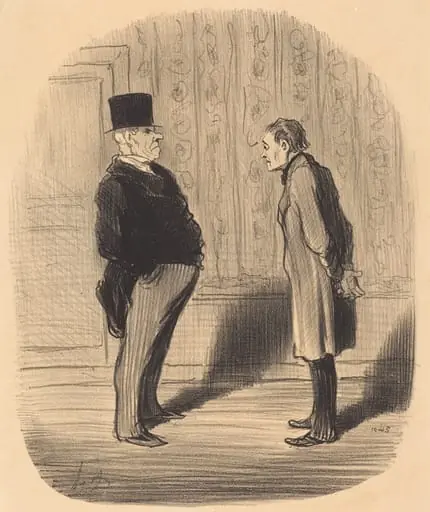 Eh! bien monsieur et mes trois termes...